Table of Contents
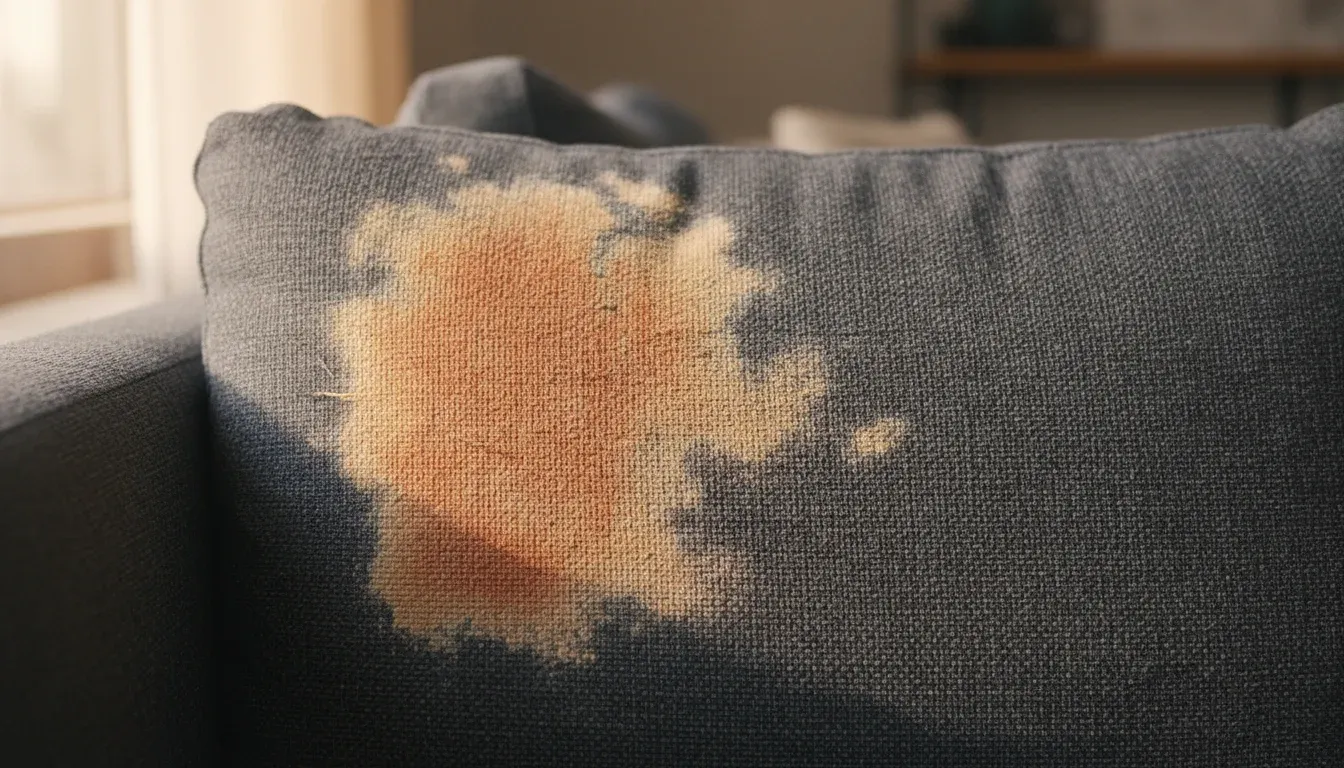
Bleach on upholstery is bad. Worse than clothes, because you can’t throw a couch in the washing machine and you can’t exactly take it to the dry cleaner. The bleach has chemically stripped the dye from the fabric, leaving a lighter patch that no amount of cleaning will fix. You’re not removing a stain. You’re restoring color to fabric that’s had its color destroyed.
The good news: upholstery sits still. Unlike clothes that get washed and worn, a couch cushion stays in place, which means even imperfect color fixes hold up well because nobody’s inspecting your sofa from 6 inches away.
First thing: if the bleach is still wet, neutralize it. Blot (don’t rub) with a sponge soaked in cold water. Keep rinsing and blotting until you’ve flushed out as much bleach as possible. Press a dry towel into the cushion to pull out moisture. Let it dry completely before attempting any color restoration. Wet fabric won’t take dye or marker evenly.
1. Fabric markers for small spots
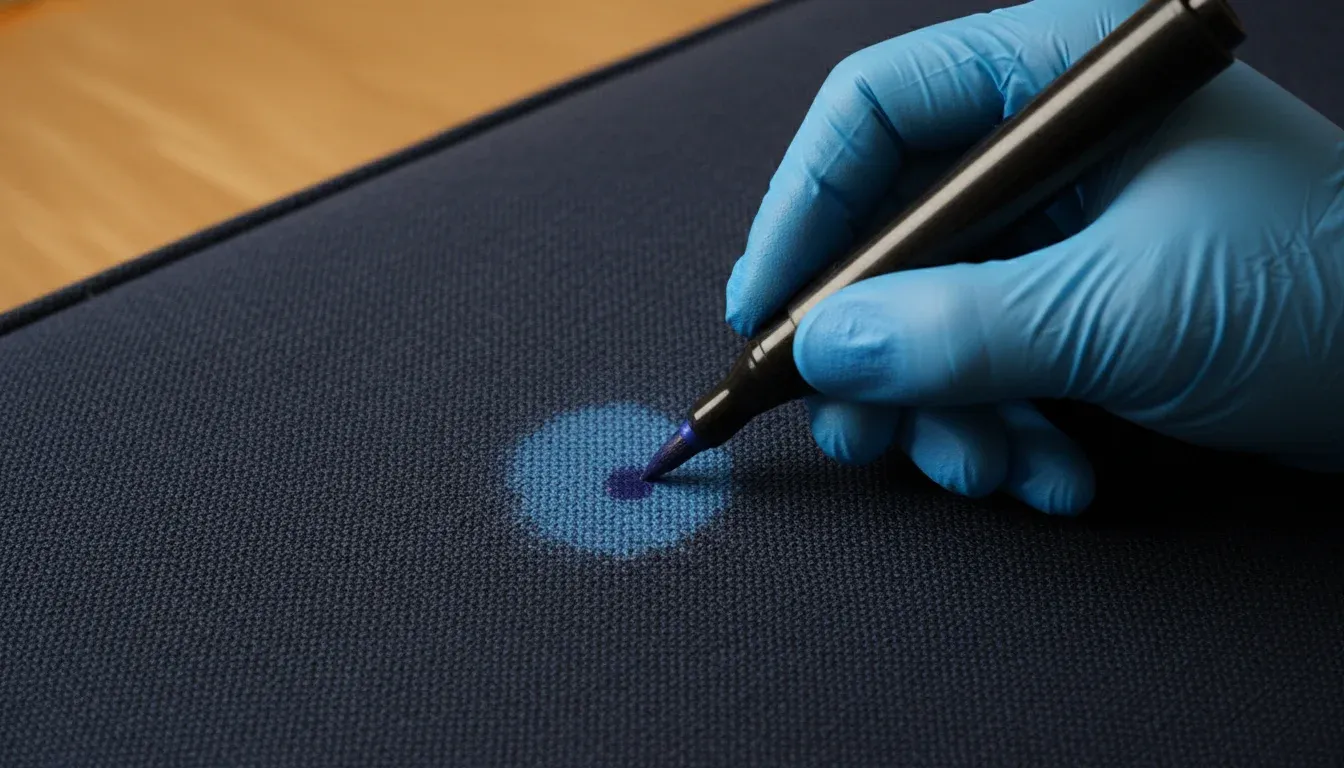
The go-to fix for most upholstery bleach stains. Take a fabric swatch (cut a tiny piece from the back or underside of the couch where nobody looks) to an art supply store and match the color. Permanent fabric markers or artist-grade markers in the right shade will cover a bleach spot convincingly.
Dab the marker in light layers. Don’t drag it across the fabric or you’ll get streaking. Let each layer dry before adding the next. Three thin coats look better than one thick one. Heat-set with a hairdryer on low for 30 seconds to lock the color in.
2. Upholstery spray dye
For larger bleach areas where markers would take forever. Upholstery spray dyes (Tulip, Simply Spray) are designed specifically for fabric furniture. They flex with the material and don’t crack like regular spray paint would.
Mask off the surrounding area with painter’s tape and newspaper. Spray in light, even passes from 6-8 inches away. Multiple light coats. Let each coat dry for 15 minutes. The color deepens as it dries, so go lighter than you think you need on the first pass.
3. Fabric dye for removable cushion covers
If your cushion covers unzip, you’ve got the best option available. Pull the cover off, strip the remaining dye with a color remover, and re-dye the whole cover to match. Rit and Dylon both work. Use a plastic tub, follow the package temperatures, and dye all the covers at once so they match each other (even the ones without bleach stains).
This is the only method that gives you a genuinely even, factory-looking result. Worth the effort.
4. Leather repair kit
Leather upholstery is a different situation entirely. Fabric dye won’t adhere to leather. You need a leather repair kit with color-matched dye.
Clean the bleached area with the prep solution included in the kit. Lightly sand the spot with the provided sandpaper to help the dye bond. Apply the leather dye in thin layers and let it dry between coats. Most kits include a sealant for the final step. The fix is surprisingly invisible on leather because the smooth surface takes dye evenly.
5. Fabric patch from a hidden area
Steal fabric from somewhere nobody sees. The back of the couch against the wall. The underside of a cushion. The dust cover underneath. Cut a piece slightly larger than the bleach stain, apply fabric glue around the edges, and press it over the damaged area. Smooth out any bubbles.
This works best on patterned fabrics where a patch blends into the visual noise. On solid-color fabric, the seam edges are harder to hide. Use fray-check on the patch edges before gluing to prevent unraveling.
6. Slipcover the whole piece
Sometimes the damage is too large or too visible for spot fixes. A slipcover solves it completely and gives your furniture a new look in the process. Custom-fit slipcovers from places like Comfort Works or SureFit look intentional, not like you’re hiding something.
Measure your couch carefully. Ill-fitting slipcovers look worse than the bleach stain.
7. Strategic cushion and throw placement
The quickest fix and honestly the most common one. A throw pillow over the spot, a blanket draped across that arm. If the stain is on a seat cushion, flip it over (assuming both sides are upholstered). Most couch cushions are reversible and people forget this.
Not a permanent solution, but it buys you time while you decide whether to attempt a real fix or just live with it.
Test any dye, marker, or spray on a hidden spot first. Upholstery fabrics react differently depending on the blend (cotton, polyester, microfiber, velvet), and what works on one can look terrible on another. Five seconds of testing saves you from making things worse.