Table of Contents
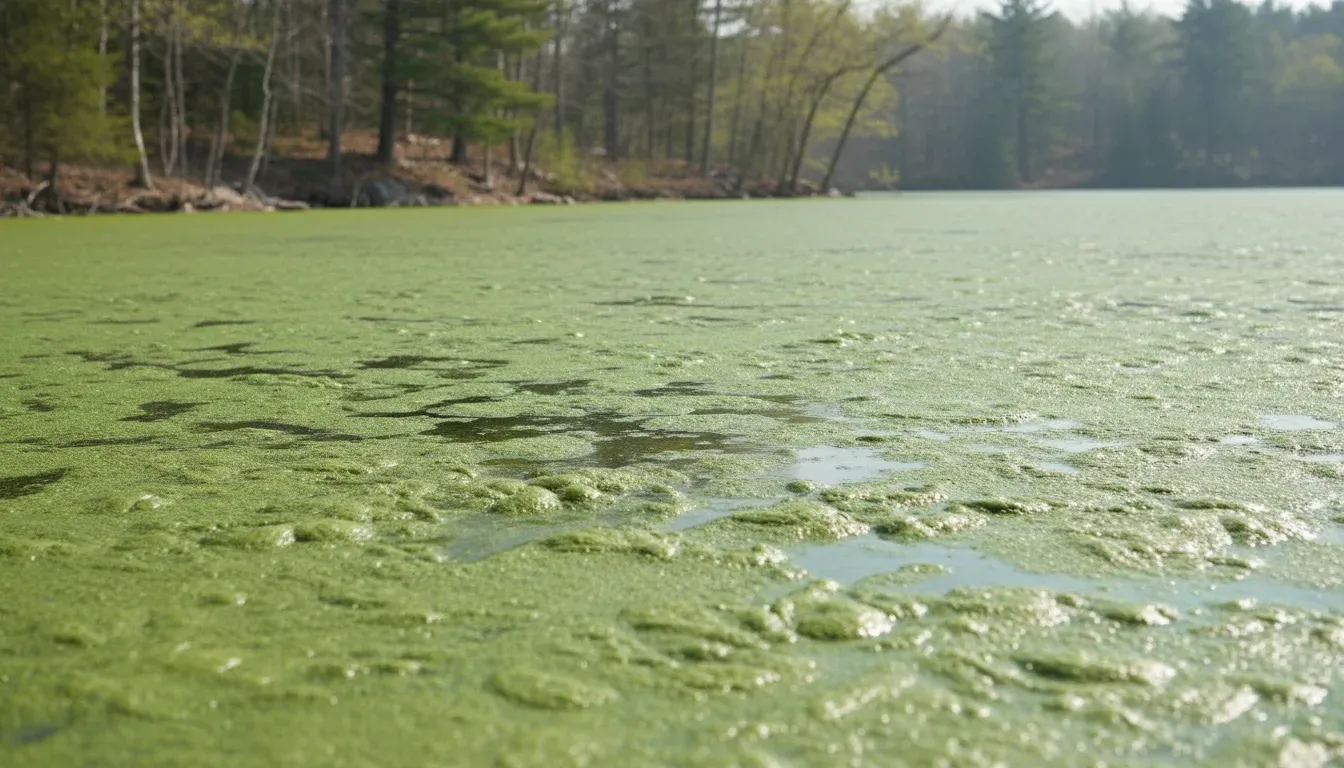
Lake algae turns your water green, stinks when it dies, and chokes out everything else that lives there. Most blooms happen because there’s too much phosphorus in the water (runoff from lawns, failing septic systems, sediment churning up from the bottom). Cut off the food supply and oxygen, and you’ll start winning.
These methods work for private ponds and larger lakes. Some you can do yourself. Some require contractors with specialized equipment.
1. Install a Diffused Aeration System
Bottom diffusers pump air through hoses to the lake floor, creating columns of bubbles that circulate the water. This mixes the oxygen-rich surface layer with the oxygen-poor bottom layer, which prevents anaerobic conditions that release stored phosphorus from sediment.
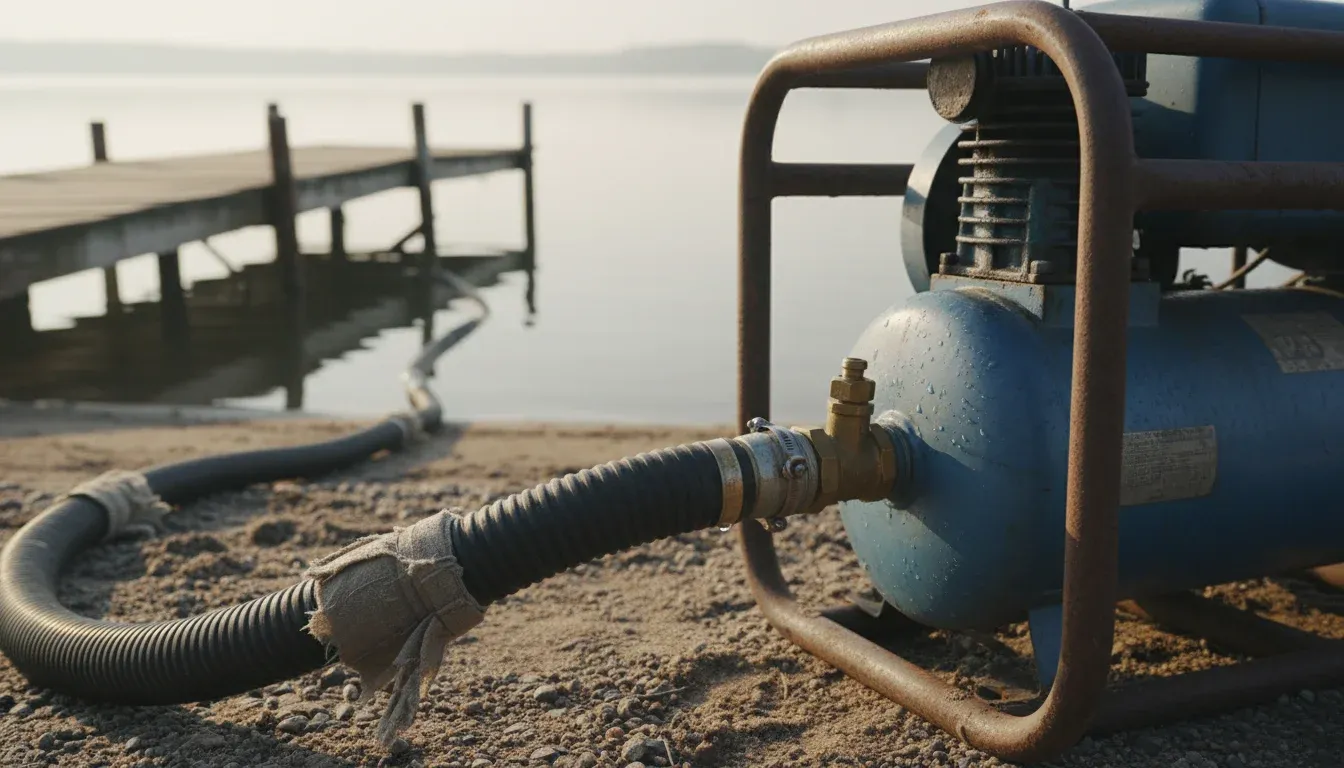
You need a shore-based compressor (usually 1/4 to 2 HP depending on lake size) and weighted airline that runs out to one or more diffuser stations. Position diffusers in the deepest parts of the lake. Run the system continuously during warm months.
This isn’t instant. It takes weeks to see clear results, but it’s one of the most reliable long-term solutions for lakes deeper than 8 feet.
2. Use Nanobubble Technology
Nanobubbles are microscopic oxygen bubbles (smaller than 200 nanometers) that stay suspended in water for weeks instead of rising to the surface like normal bubbles. They deliver oxygen throughout the entire water column and disrupt algae’s ability to photosynthesize by creating oxidative stress.
The equipment costs more than standard aeration (systems start around $15,000 for small lakes), but it works in shallow lakes where diffused aeration struggles. Some studies show nanobubbles also help bind phosphorus in sediment, preventing it from feeding algae.
This is newer technology. Not every lake needs it, but if you’ve tried standard aeration and still have algae problems, it’s worth considering.
3. Add Beneficial Bacteria
Bacterial products (like pond-specific blends of Bacillus species) consume the same nutrients algae need. They also break down organic muck on the bottom, which reduces the phosphorus bank that fuels blooms.
Apply liquid or dry formulations every 2-4 weeks during the growing season. Follow dosage instructions based on your lake’s surface area. You’ll need to keep applying it – bacteria don’t colonize permanently in most lake conditions.
This works best as part of a broader plan. Bacteria alone won’t fix a lake that’s getting hammered with fertilizer runoff.
4. Apply Algaecides (Copper-Based or Chelated)
Copper sulfate and chelated copper products kill algae on contact. Use them for spot treatment of heavy blooms, not as a maintenance strategy. Copper is toxic to fish and invertebrates at high concentrations, and it accumulates in sediment over time.
Calculate your lake volume carefully. Overdosing kills fish. Underdosing wastes money and creates resistant algae. Apply early in the day so dying algae don’t decompose overnight and crash oxygen levels.
Check local regulations before using any algaecide. Some states restrict or ban copper products in natural water bodies.
5. Install a Floating Fountain
Surface fountains create visual appeal and some aeration, but they’re not as effective as bottom diffusers. They only circulate the top few feet of water, leaving the deeper zones stagnant.
That said, they’re better than nothing for shallow ponds (under 6 feet deep) where diffused aeration doesn’t make sense. The spray also helps dissipate algae mats and reduce surface scum.
Don’t expect a fountain alone to solve a serious algae problem. Think of it as a supplemental tool or a way to buy time while you address nutrient sources.
6. Reduce Nutrient Loading from Shoreline
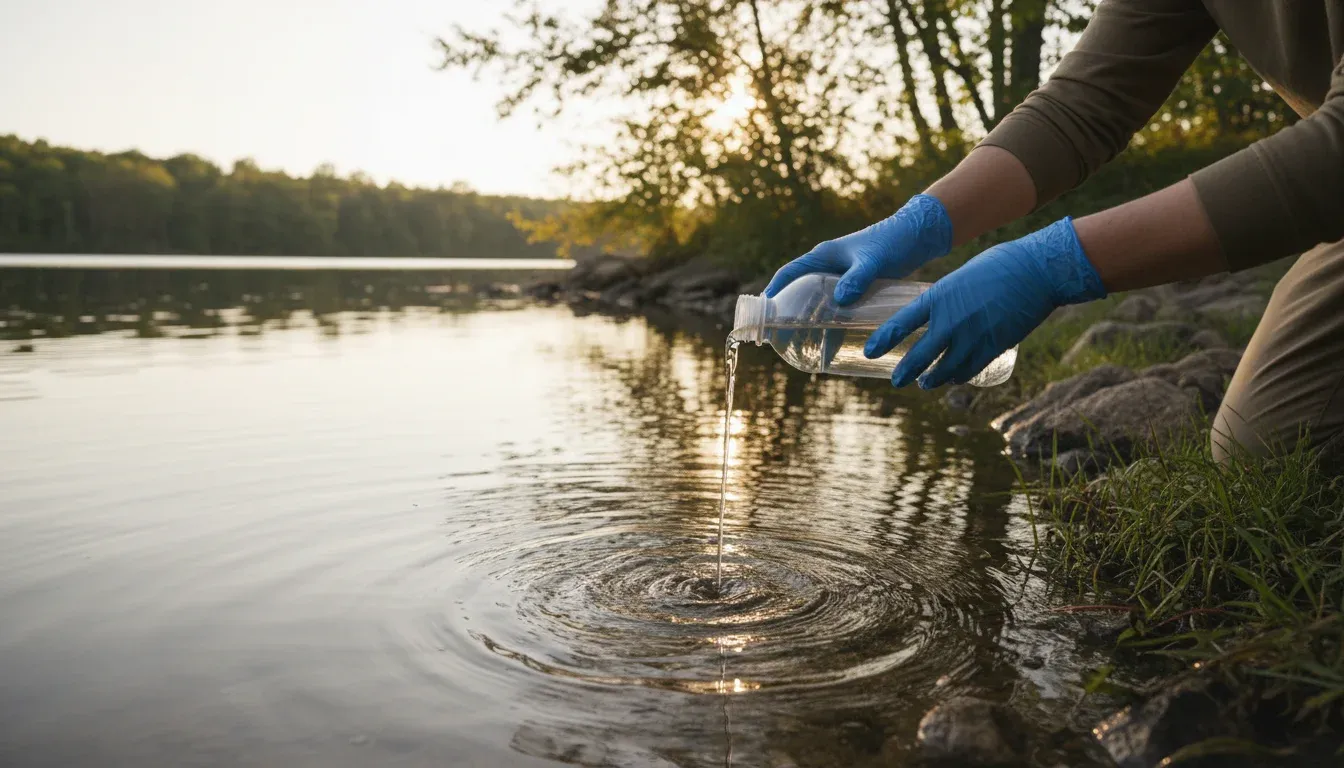
Algae blooms are often a watershed problem, not a lake problem. If fertilizer, pet waste, failing septic systems, or eroding soil are dumping phosphorus into your lake, you’re fighting a losing battle no matter what you do in the water.
Create buffer zones with native plants between lawns and the shoreline. Stop fertilizing grass near the water (or switch to phosphorus-free blends). Fix septic systems that are too close to the lake. Redirect downspouts and stormwater away from direct discharge into the lake.
This takes years to show full results, but it’s the only way to fix the root cause.
7. Use Barley Straw or Extract
Barley straw releases compounds as it decomposes that inhibit algae growth (not kill existing algae). Toss bales into the lake in early spring before algae blooms start. Use about 250 grams of straw per square meter of surface area.
Barley extract is a liquid concentrate that works faster than straw bales but costs more. Apply it every 2-3 weeks during algae season.
Results are subtle and slow. This works best for mild algae problems or as a preventive measure, not for clearing a heavy bloom.
8. Dredge Nutrient-Rich Sediment
If your lake has decades of accumulated muck on the bottom, that sediment is a phosphorus time bomb. Dredging physically removes it, but it’s expensive (often $50,000+ for small lakes) and disruptive.
Only consider this if you’ve tried everything else and sediment testing confirms high phosphorus levels in the muck. Hydraulic dredging or mechanical excavation are the two main methods. You’ll need permits, and the lake will be unusable during the work.
This is a reset button, not a maintenance plan. If you dredge but don’t fix the nutrient sources feeding the lake, the muck will just come back.
Algae control isn’t one-and-done. You’re managing an ecosystem, and that means multiple methods working together over months or years. Start with aeration and nutrient management (those give you the most leverage), then layer in bacteria or algaecides as needed. If your lake is part of a neighborhood or municipality, get everyone involved in reducing runoff – one property can undo the work of ten others.