Table of Contents
Sawflies look like flies but act like caterpillars, and they’re chewing through your plants faster than you’d think. They’re the larvae that do the damage (the adults just lay eggs), and by the time you notice the holes in your roses or stripped pine needles, they’ve been at it for days. The good news: sawflies are easier to control than most garden pests because they feed in groups and don’t hide well. Catch them early and you can wipe out a whole generation before they pupate in the soil.
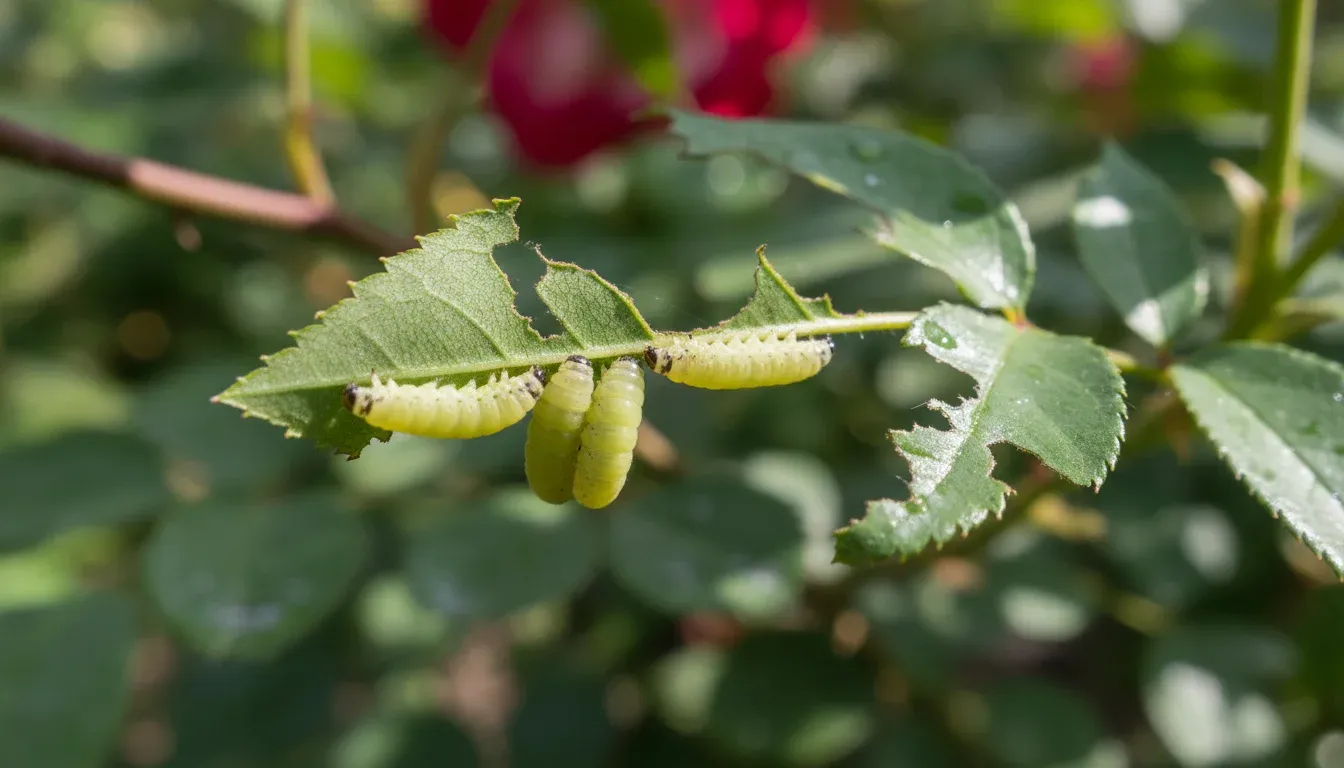
Most people spot sawfly damage before they spot the sawflies. Look for leaves with ragged edges, skeletonized foliage, or entire branches stripped bare. The larvae cluster together when they’re young, making them obvious targets if you’re paying attention.
1. Manual Removal
If you’ve only got a few affected branches, just knock them off. Sawfly larvae have a weak grip and drop easily when disturbed. Shake the branch over a bucket of soapy water or directly onto the ground and stomp them. They won’t crawl back up.
This works best in the morning when they’re sluggish. Check the undersides of leaves, that’s where they hang out between feeding sessions.
2. Strong Water Spray
Hit them with a hard blast from the hose. Sawfly larvae aren’t anchored like true caterpillars, so water pressure alone will knock them off. Once they’re on the ground, they rarely make it back to the plant.
Do this early in the day so foliage dries before evening (wet leaves overnight invite fungal problems). Repeat every few days if you’re seeing new larvae hatch.
3. Insecticidal Soap
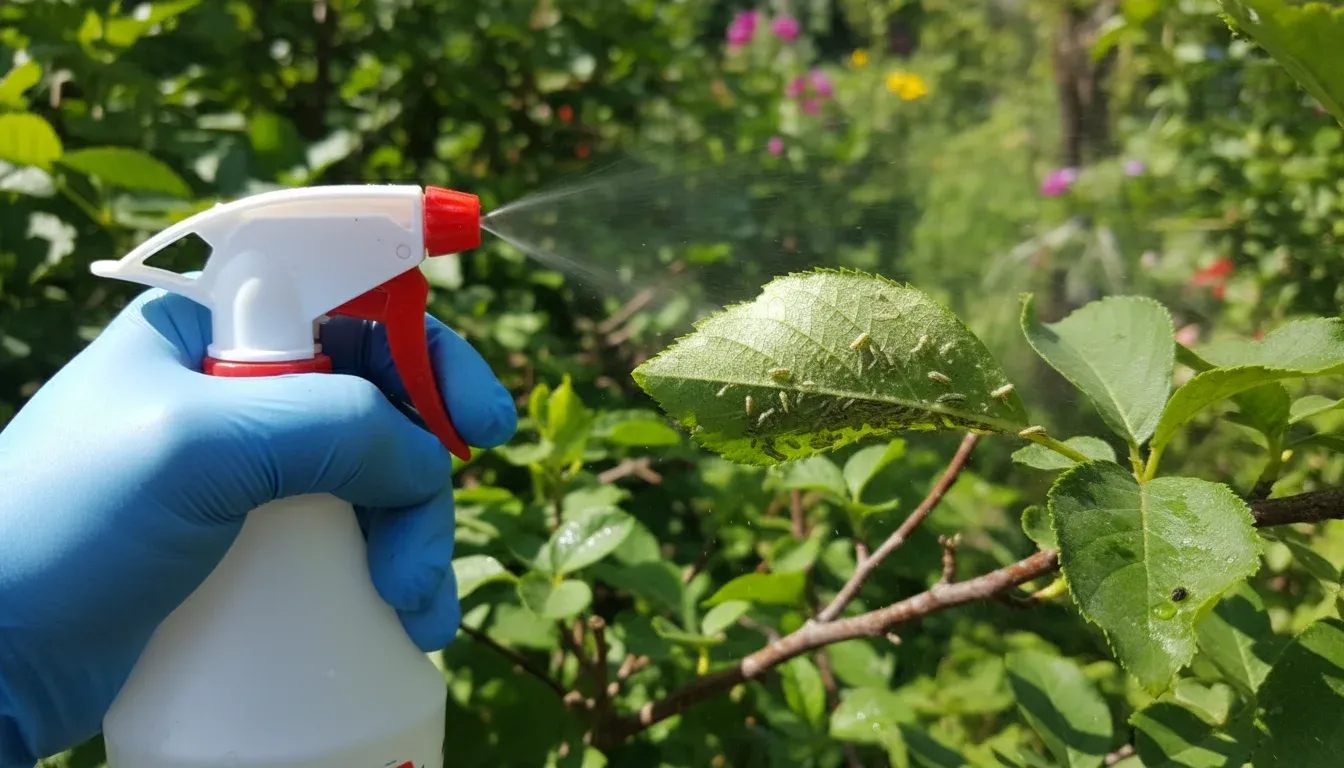
This is your go-to if you’ve got a bigger infestation. Insecticidal soap kills on contact by breaking down the larvae’s outer coating, but it won’t harm plants, beneficial insects that aren’t directly sprayed, or anything that shows up after it dries.
Spray thoroughly, hitting the undersides of leaves where larvae hide. Reapply after rain or every 5-7 days until you stop seeing new damage. Use it in the early morning or late evening to avoid leaf burn in direct sun.
4. Neem Oil
Neem works as both a contact killer and a feeding deterrent. It disrupts the larvae’s molting cycle, so even if it doesn’t kill them immediately, they won’t mature into egg-laying adults.
Mix according to the bottle instructions (usually 2 tablespoons per gallon of water) and spray every 7-14 days. Neem has a strong smell that fades after a few hours. Don’t use it on plants that are stressed from drought or heat, it can cause more harm than the sawflies.
5. Beneficial Nematodes
Sawfly larvae drop to the soil to pupate, and that’s when beneficial nematodes (microscopic worms) hunt them down. You’re not going to see immediate results like you would with a spray, but nematodes establish long-term control by breaking the sawfly’s life cycle underground.
Apply nematodes to moist soil in the evening (sunlight kills them). Water the area before and after application. They’re most effective when soil temps are between 15-27°C. One application can provide control for an entire season.
6. Natural Predators
Birds, parasitic wasps, and predatory beetles already eat sawfly larvae if you give them a reason to stick around. Skip broad-spectrum insecticides (they kill predators along with pests), plant nectar-rich flowers to attract parasitic wasps, and leave some areas of your garden a little wild so beneficial insects have habitat.
This won’t save a plant that’s currently under attack, but it keeps sawfly populations manageable year after year without you doing anything.
7. Prune Damaged Branches
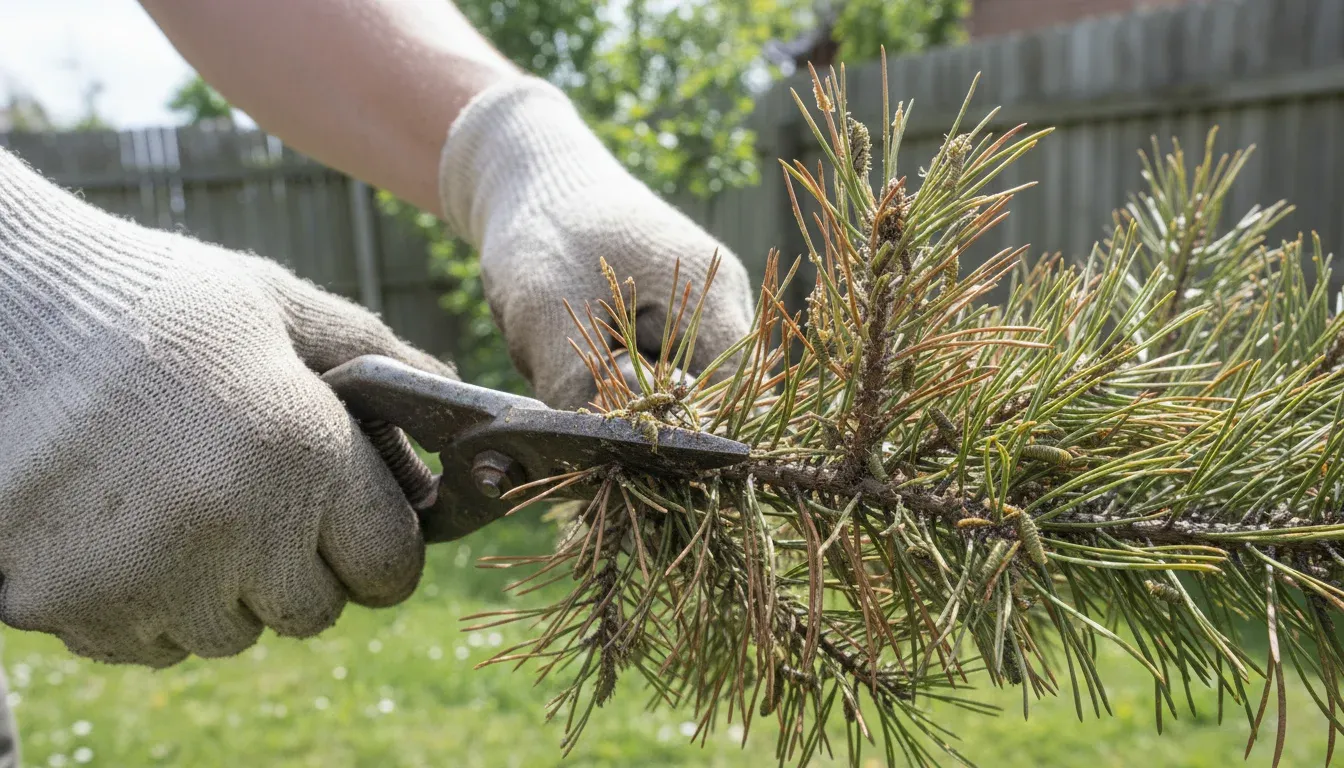
If a branch is heavily infested, just cut it off and bin it (don’t compost sawfly larvae, they’ll pupate in the pile). This removes the larvae and the damaged foliage in one go, and most plants recover quickly from targeted pruning.
Prune back to a healthy bud or branch junction. Disinfect your pruners between cuts if you’re working on multiple plants to avoid spreading any fungal issues that might have set in on damaged tissue.
8. Monitor and Catch Early
Sawflies hatch in waves, so even if you clear out one generation, a second or third might show up weeks later. Walk your garden every few days during peak season (late spring through summer) and scan for new clusters of larvae or fresh feeding damage.
Early catches mean you can handle the problem with a quick manual removal instead of repeated sprayings. Set a phone reminder if you need to; two minutes of checking beats an hour of damage control later.
Sawflies are aggressive feeders but they’re not subtle about it. Once you know what to look for, they’re one of the easier pests to stay ahead of.