Table of Contents
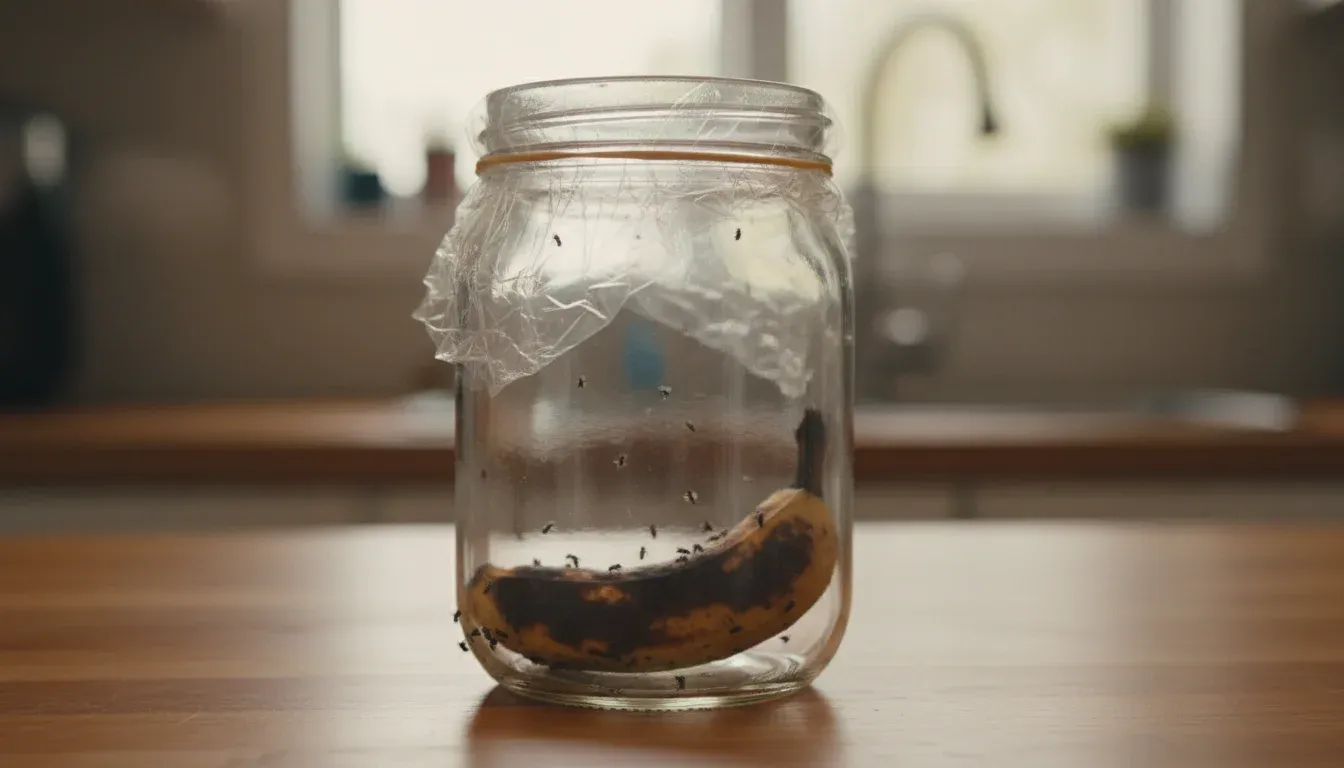
Traps catch the adults. Drain cleaning kills the larvae. But fruit flies keep coming back if your kitchen gives them what they need: moisture, food residue, and damp surfaces. These methods cut off the daily supply chain. None of them are exciting. All of them work.
What Causes This Problem
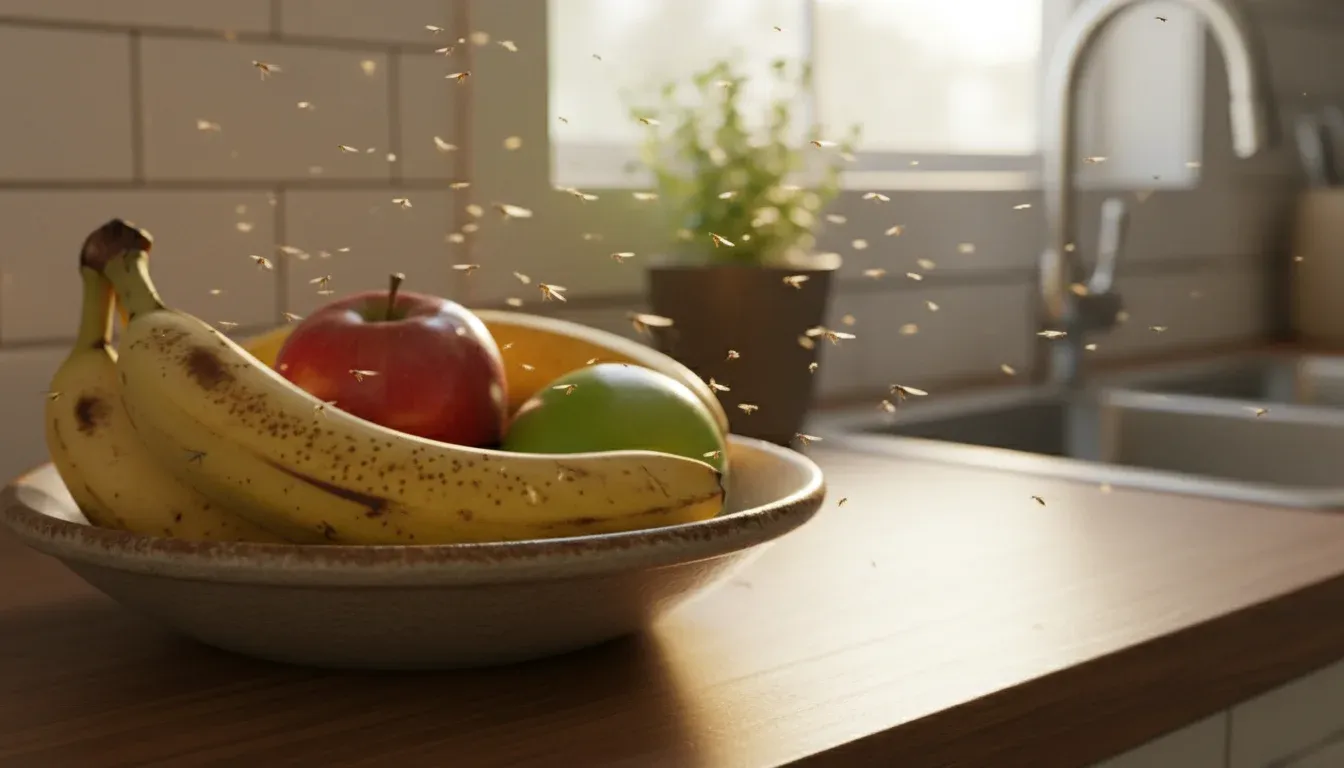
Fruit flies breed in anything organic and moist. A sticky patch behind the trash can, a damp sponge left in the sink, juice residue in a recycling bin, stagnant flower water. One female lays up to 500 eggs, hatching in 24 hours. A kitchen that looks clean to you still has enough food residue to support a full colony if you’re not hitting the spots they actually use.
1. Just Keep Cleaning
Hit the whole kitchen. Stovetop, microwave interior, sink bowls, countertops, floors, under the fridge. Fruit flies breed in places you forget about (that sticky patch behind the trash can, the drip tray under your fridge, the shelf liner in the pantry).
Clean spills when they happen, not later. Wipe up crumbs as you see them. If you’re living with roommates or family, get everyone on board. One person’s dirty coffee mug undoes everyone else’s work.
2. Clean Spills Immediately
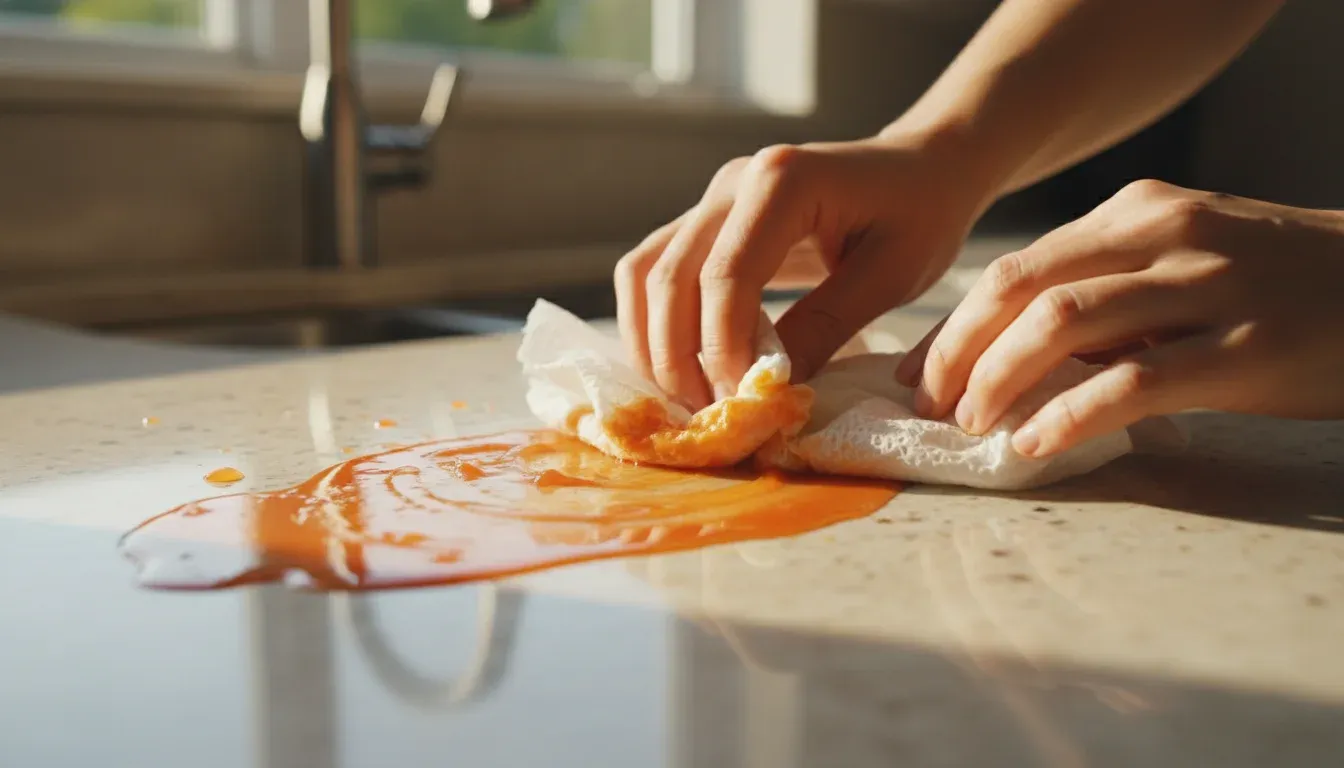
Fruit flies detect fermentation from across the room. The juice splash on the counter, the wine drips on the table, the residue in the bottom of a glass. Wipe it up as soon as it happens.
Check under appliances and furniture with a flashlight. A splash of orange juice that dripped under the fridge two weeks ago could be supporting a whole colony. They find spills you didn’t even know were there.
3. Rinse. Clean. Repeat
Rinse every soda can, beer bottle, and wine bottle before recycling. Leftover liquid in containers is fruit fly paradise. Takes ten seconds per bottle and cuts your fly population significantly.
Wash your dishes right after using them. Not later. Not tomorrow. Now. Dirty plates stacked in the sink give fruit flies everything they need.
4. Keep Dishcloths and Sponges Squeezed Dry
After washing dishes, wring out your dishcloth and sponge completely. Don’t leave them sitting damp in the sink. A wet sponge left overnight becomes egg-laying territory.
Hang your dishcloth to dry between uses or drape it over the faucet so air circulates. Store your sponge on a dry dish on the counter, not in a puddle by the drain. Cheap fix that most people skip.
5. Replace Sponges Regularly
Kitchen sponges stay damp and collect food particles. Fruit flies breed in the sponge itself, which means you’re spreading flies every time you wipe a counter. Replace every week during an infestation.
Between replacements, microwave damp sponges for two minutes to kill eggs and larvae. Or run them through the dishwasher on the hot cycle. Better yet, switch to dish brushes that dry faster and don’t provide the same breeding habitat.
6. Replace Flower Water Regularly
Cut flowers start decomposing the moment you bring them home. That decomposition attracts fruit flies fast. Change vase water every two days. Rinse the vase completely before refilling. Wipe down the stems where they sit in water because that’s where slime builds up.
If you’ve got a fly problem and fresh flowers in the house, you’re choosing between the two. No middle ground works.
7. Wash Reusable Shopping Bags
Food residue accumulates in the corners and seams of reusable bags. Flies lay eggs there, and next time you use the bag, you’re transporting flies straight into your kitchen.
Wash fabric bags in the machine weekly. Wipe out plastic or nylon bags with hot soapy water. Turn them inside out to get the seams. Store bags clean and dry.
Prevention
Keep surfaces dry and food residue gone. That’s it. The kitchen never needs to be spotless, but it does need to be free of organic moisture. Empty the drip tray under the fridge monthly. Wipe the inside of trash cans weekly. Run the garbage disposal with cold water every time you use it. And if you bring flowers inside, commit to changing the water or skip them entirely during warm months.
When to Call a Professional
Almost never for a cleaning-based approach. If you’ve been doing all of this for two weeks and the population isn’t dropping, the breeding site is somewhere you haven’t found. A pest professional can locate hidden sources (inside walls, under flooring, in plumbing they can scope). But that’s rare. Most kitchen infestations resolve within two weeks of cutting off moisture and food residue consistently.