Table of Contents
Stage fright isn’t just a thought pattern – it’s a full-body experience. Racing heart, shallow breathing, tight chest, shaking hands. Trying to talk yourself out of those symptoms rarely works. Physical techniques work differently: they interrupt the anxiety response at the body level, bypassing the mental loop entirely. Use these before you go on, during, or both.
Practice Deep Belly Breathing
The single most reliable physical intervention for acute stage fright. Close your eyes. Breathe in slowly through your nose for a count of four. Hold for a count of two. Breathe out through your mouth for a count of six, letting your belly expand with each inhale rather than your chest rising.
Here’s why this works: shallow chest breathing, which is what most people default to when nervous, actually starves your brain of oxygen and makes you feel lightheaded and more anxious. It feeds the spiral directly. Deep diaphragmatic breathing activates the vagus nerve and the parasympathetic nervous system, which directly counteracts the fight-or-flight response. Even 60 seconds of deliberate belly breathing measurably drops heart rate and cortisol.
The extended exhale is the key part – a longer out-breath than in-breath is what triggers the calming response. Some people find it useful to put a hand on their belly to confirm the belly is rising, not the chest.
You can do all of this in a bathroom stall two minutes before you walk out. Nobody has to know.
Use Expansive Body Language
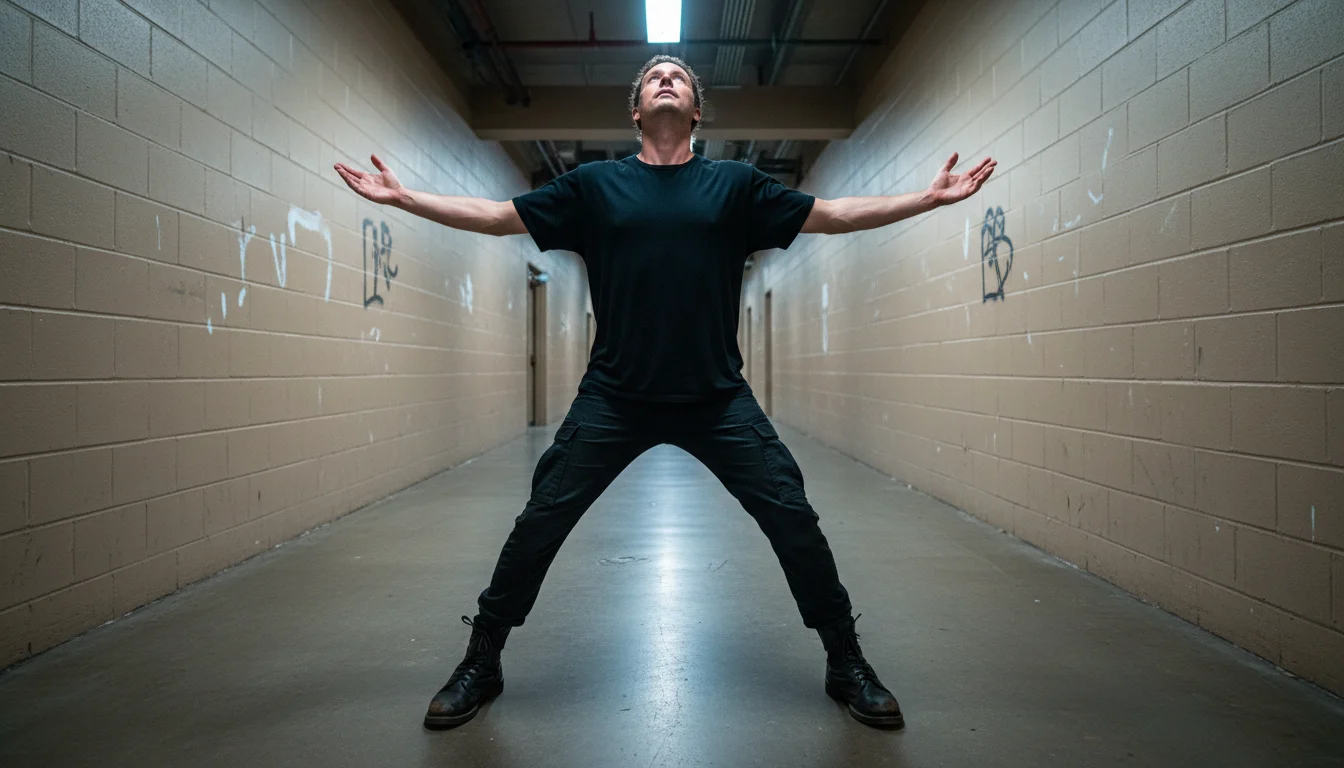
Before going on, make your body physically large. Legs wide, hands on hips or arms overhead. Stretch. Take up space deliberately. The opposite of what anxious people instinctively do, which is shrink – crossed arms, hunched shoulders, chest caved in.
That closed posture reinforces the feeling of vulnerability. Open, expansive postures do the opposite. Research shows they increase feelings of confidence and reduce cortisol – you don’t need to believe in "power posing" as a mystical trick to notice that standing tall and open physically prevents the collapsed posture that feeds nervousness. If doing this in public feels strange, find a bathroom or an empty hallway beforehand and spend two minutes taking up space. Then walk out.
Use an Anxiety Focal Point
Pick a physical object – a pen on a table, a spot on the back wall, a ring on your finger – and when anxiety spikes, imagine it flowing out of your body and into that object. Then set it down, look away, or move on.
This sounds odd but it works. You’re giving your anxiety somewhere to go instead of letting it loop inside your head. Your brain processes the gesture as letting go, which signals your nervous system to ease up. Sports psychologists use this technique with Olympic athletes. The specific object doesn’t matter; what matters is the deliberate act of externalizing and releasing.
Use a Mental Focus Anchor
Give your brain a small, specific task to run alongside your performance. Count heads in the back row. Scan for people in blue shirts. Silently repeat the last word someone said. Pick any concrete task that occupies attention without competing with what you’re doing on stage.
Nerves thrive on scattered thoughts. A wandering mind invents disasters; a busy mind doesn’t have bandwidth for them. The anchor task should be simple enough to run in the background but specific enough to displace anxious self-monitoring. Switch anchors as needed – count heads at the start, hunt colors during a natural pause, echo words during Q&A.
Focus on Your Body Center
Bring your attention to the spot about two inches (5 cm) below your navel and two inches inward. This is your physical center of gravity. Tai chi and martial arts practitioners have used this centering technique for centuries – directing mental attention to this point grounds you physically and interrupts the upward spiral of anxious thought.
When anxiety pushes your awareness into a racing mental loop, pulling attention back to a body sensation is one of the fastest ways to break it. The body is always present; the mind can be anywhere. By anchoring to a physical point, you bring yourself back to the room you’re actually in.
Combine the centering point with slow breathing – imagine each inhale reaching that spot, each exhale releasing from it – for a stronger grounding effect. It takes about 20-30 seconds to notice a difference. Do it before you’re introduced, or during any natural pause in the performance when your thoughts start running ahead of where you actually are.