Table of Contents
Most stage fright isn’t about lack of ability. It’s about novelty. The unfamiliar room, the new outfit, the equipment you’ve never touched – your nervous system treats all of it as unknown threat and piles it on top of the genuine social pressure of being watched. Preparation strips those unknowns away one by one, so by the time you perform, almost everything feels like something you’ve done before.
Rehearse Under Real Conditions
Practice wearing the same outfit you’ll wear on the day. Stand or sit as you will during the event. Use the same materials, the same setup, the same equipment. If you’ll be standing at a podium, practice standing at a podium. If you’ll be holding a microphone, hold something similar.
Most nervousness spikes because the performance moment feels alien – first time in those shoes, first time under those lights, first time holding that specific object. Your nervous system flags novelty as potential threat. Matching your practice conditions to your performance conditions removes that novelty factor. Your body has done this before. The anxiety response is weaker because there’s less to be uncertain about.
Record yourself at least once during preparation. It’s uncomfortable, but watching the playback is far more useful than any amount of untaped rehearsal. You’ll see posture issues, notice filler words, spot moments where confidence visibly dips. Fix those in the practice room, not on stage.
Add mild distractions during later rehearsals – background noise, TV on low, someone else in the room reading. You’re building tolerance for imperfect conditions, because the real performance almost never happens in silence with perfect attention.
Visit the Venue Beforehand
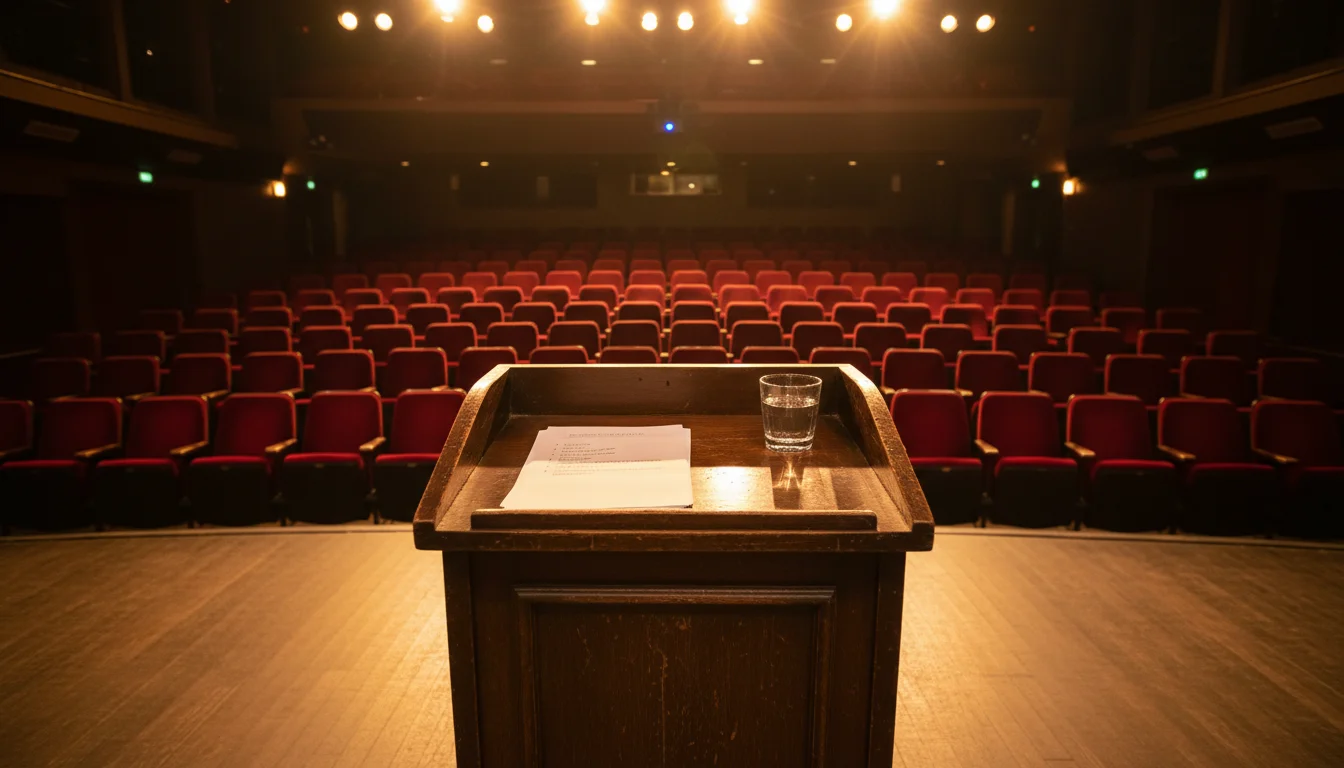
Go to the location before the day of the event. Walk on the stage. Look around the room from the performer’s position. Sit in the audience seats and look at where you’ll be standing. Test the equipment if you can. Get the feel of the space into your body before any pressure is attached to it.
Unfamiliarity amplifies anxiety. Your brain treats an unknown environment as a potential threat, and that compounds the social pressure of being watched. Removing the environmental unknown lets you focus entirely on the performance itself. Even a 10-minute walkthrough changes how the room feels when you step into it for real – it goes from strange to familiar.
If you can’t visit in person, ask for photos, a floor plan, or a video of the space. Something is better than nothing.
Avoid Caffeine Before Events
Caffeine amplifies jitteriness, racing heart, and sweaty palms – the exact symptoms you’re trying to manage. Studies link caffeine intake to increased anxiety and, at high doses, greater likelihood of panic attacks. Cut it on event day, or at minimum scale back to a small amount if you normally depend on it. Skip the pre-show coffee. Skip energy drinks entirely.
Replace it with water or herbal tea. Eat something filling and sustained – oats, eggs, a proper meal – you need stable energy, not a caffeine spike that crashes while you’re mid-presentation. The same logic applies to refined sugar. A big sugary snack before going on gives you a short high followed by shakiness at the worst possible moment.
If you’re a heavy caffeine user, don’t go cold turkey on performance day – withdrawal headaches are their own problem. Scale back gradually in the days before. Half your usual coffee intake two days out, a small cup on the day itself, or switch to green tea which delivers lower, slower caffeine without the spike.
Invite a Supportive Person to the Audience
Ask someone you trust – a friend, partner, or family member – to come to the event and sit where you can easily see them. When nerves spike mid-performance, find them. Make eye contact. Speak to them directly and let everyone else blur into background.
A familiar face gives your brain a safe anchor. Instead of scanning a wall of strangers for signs of judgment, you lock onto someone who is unconditionally on your side. That collapses the abstract threat of "the audience" into a conversation with one person who cares about you.
Make sure they arrive early so you know exactly where they’re sitting before you go on. Spending the first 30 seconds of your performance scanning for a face you can’t find is worse than having no anchor at all.