
Table of Contents
It’s 4 PM on Sunday. You were fine an hour ago. Now there’s a pit in your stomach that’s growing by the minute, and all you can think about is that inbox, that meeting, that project you didn’t finish on Friday. Welcome to the Sunday scaries – a form of anticipatory anxiety that roughly 80% of workers experience, according to a LinkedIn survey. If you want to know how to get rid of the Sunday scaries, the good news is: it’s fixable. And the best fix starts before the weekend even begins.
Why This Happens
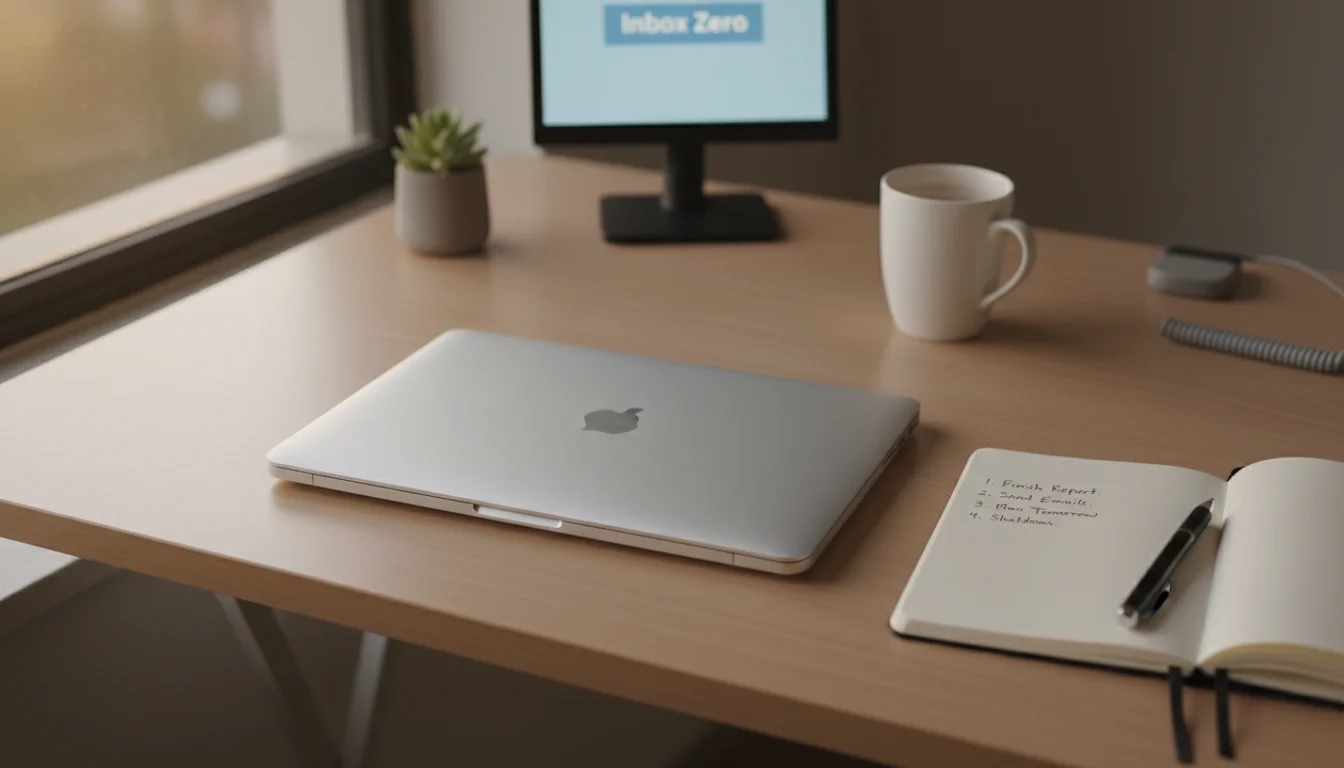
Your brain runs at two very different speeds on weekdays versus weekends. During the week, your cognitive load is high – deadlines, decisions, social navigation. On weekends, it drops. You sleep later, move slower, think less. By Sunday evening, your nervous system has to slam back into work mode, and it rebels.
Sleep scientists call the weekend schedule shift "social jet lag." Stay up two hours later Friday and Saturday, sleep in Sunday, and by Sunday night your circadian rhythm thinks you flew to a different time zone. Add the Zeigarnik effect (your brain’s refusal to let go of unfinished tasks) and you’ve got the recipe: vague dread, racing heart, stomach knots, and the overwhelming sense that Monday is a wall you’re about to hit face-first.
1. Clear Your Desk Before You Leave on Friday
The single most effective thing you can do about Sunday doesn’t happen on Sunday. It happens in the last 15-20 minutes of your Friday.
Reply to the emails that take under two minutes. Write a quick note on anything in progress – where you left off, what’s next. Close all those browser tabs. The point is creating a psychological "closed door" between you and work. Your brain keeps unfinished tasks in active memory like background apps draining your battery. Closing them out (or at least documenting them) gives your mind permission to power down for the weekend.
2. Brain Dump Your Monday To-Do List
Spend 10 minutes writing down everything waiting for you. Every task, every email you remember, every meeting. Paper, notes app – doesn’t matter. Then close the list and stop looking at it.
"I have so much to do" is terrifying because it’s shapeless. "I have 7 things, and the first one is answering that email from Sarah" is manageable. Psychologists call this the Zeigarnik effect: your brain treats unwritten tasks as emergencies. Once they’re captured somewhere external, the mental alarm quiets down. Do this Saturday afternoon if you can – waiting until Sunday night means you’ve already spent the whole day marinating in dread.
3. Actually Disconnect
Close the email app. Turn off Slack notifications. Don’t "just check one thing" because that one thing becomes two hours of low-grade work anxiety while you’re supposed to be watching a movie.
Research by Sabine Sonnentag at the University of Mannheim found that psychological detachment from work is one of the strongest predictors of recovery and reduced burnout. People who fully disconnect on weekends perform better during the week, not worse. If your job requires weekend availability, set a specific check-in window (say, 9-10 AM Saturday) and shut it down after. The boundary is what matters.
And yes, LinkedIn doom-scrolling counts as work exposure. Your brain doesn’t distinguish between working and thinking about work.
4. Fill Your Sunday Afternoon
An empty schedule is an open invitation for anxiety to move in. Plan something for the hours when dread typically peaks – usually late afternoon and evening. It doesn’t matter much what: a hike, a workout, cooking something involved, meeting someone for coffee.
Activities that require concentration work better than passive ones. TV leaves room for your mind to wander toward Monday. Cooking, gaming, or a workout demand your attention and leave less space for the "what if" reel to run.
5. Move Your Body
Exercise floods your brain with endorphins and serotonin – the same chemicals that tank when anxiety takes hold. A 30-minute run, a gym session, even a long walk in a park with actual trees and no car noise. The specific activity matters less than getting your heart rate up.
If you’re already exercising during the week, make Sunday your guaranteed day. The mood boost peaks about 30 minutes after you finish and the residual calm lasts hours.

6. Try 10 Minutes of Meditation
Sit somewhere quiet. Set a timer. Focus on breathing. When your mind wanders to Monday’s problems (and it will, constantly), notice it wandered and pull it back. That’s the entire practice.
You’re not trying to empty your mind. You’re training it to stop running tomorrow’s disaster reel on autopilot. A 2014 meta-analysis in JAMA Internal Medicine found that mindfulness meditation showed moderate evidence of improving anxiety – comparable to antidepressants for mild-to-moderate cases. The catch: you have to do it regularly. Once-a-week meditation does almost nothing. Apps like Headspace or Insight Timer can guide you if sitting in silence feels like torture.
7. Catch the Doom Loop Early
When your brain defaults to "tomorrow is going to be terrible," interrupt it. Not with toxic positivity – with facts. "I handled last week fine" or "the first hour is always the worst, then I settle in." The goal isn’t to feel pumped about Monday. It’s to stop the spiral before it picks up speed.
Write down three things that went well recently if the dread is strong. Your brain fixates on threats by default, so you have to manually show it the counter-evidence.
8. Don’t Wreck Your Sleep Schedule
Go to bed at the same time you would on a weeknight. Staying up three hours later on Saturday feels great until Sunday night, when your body thinks it’s two time zones west and refuses to sleep. That’s social jet lag, and it’s the reason Monday morning feels like getting hit by a truck.
If you can’t fall asleep because your brain won’t shut up, get up after 20 minutes and do something boring (not your phone) until you feel drowsy. Lying in bed stressing about not sleeping trains your brain to associate the bed with anxiety.
Room temperature matters: keep it between 65-68°F (18-20°C). Your body needs to drop its core temperature to fall asleep, and a warm room fights that.
9. Make Monday Easier
Stop front-loading your hardest tasks on the first day back. Start with the easy wins – quick emails, simple admin, things you can knock out in 15 minutes. Build momentum before hitting the big stuff.
This is sometimes called "Bare Minimum Monday" and it works because the contrast between weekend rest and high-pressure work is what triggers the dread. Studies on task sequencing show total daily output is similar regardless of order. The difference is how miserable you feel getting started.
10. Plant Something Good in Monday
Give yourself a specific reward on the day you’re dreading. Good coffee from the place you actually like, lunch with a friend, leaving 30 minutes early. Not expensive. Not elaborate. Just something concrete and scheduled.
Your brain scans the future for threats. A planted reward gives it something positive to land on. It won’t kill the anxiety, but it changes the math from "tomorrow is all bad" to "tomorrow has this one thing."
When to Talk to Someone
Sunday scaries that clear up by Tuesday morning are normal. Sunday scaries that feel like every night, that come with severe physical symptoms, or that make you unable to function? That’s beyond lifestyle fixes.
If the dread isn’t about Monday specifically but about your workplace being genuinely toxic, no amount of meditation or brain dumps will fix a bad environment. Talk to a therapist if the anxiety is persistent, or reconsider the job if the job is the problem. Those are two different issues that need two different solutions.
Frequently Asked Questions
Are the Sunday scaries a sign of something bigger?
Sometimes. Occasional Sunday dread is normal and shared by the vast majority of workers. But if it happens every week, spreads to other days, or comes with panic symptoms (racing heart, difficulty breathing, trembling), it could be generalized anxiety disorder. A therapist can tell the difference in one or two sessions.
When do Sunday scaries usually start?
Most people notice them in the late afternoon or evening. But some wake up with them. The trigger is typically the first moment you think about Monday – for early risers, that’s morning; for people who stay busy all day, it hits when things quiet down.
Do Sunday scaries go away on their own?
They can, especially if you change the conditions causing them (new job, better boundaries, less stressful workload). But if nothing changes, the pattern tends to repeat. The methods above are about breaking the cycle rather than waiting it out.
What is the 3-3-3 rule for anxiety?
Name 3 things you can see, 3 sounds you can hear, and move 3 parts of your body. It’s a grounding technique that pulls your attention back to the present when anxiety has you spiraling about the future. Takes about 30 seconds. Won’t cure anything, but it interrupts the panic loop long enough for your breathing to settle.