Table of Contents
Pubic lice won’t go away on their own. No amount of showering, shaving, or wishful thinking will clear an infestation. They’re a different species from head lice (Pthirus pubis vs Pediculus humanus capitis), they live in coarse body hair, and they need treatment to die. The good news: treatment is fast, cheap, and available without a prescription. Most people clear them in under two weeks.
Here’s what actually works.
What Causes Pubic Lice
Pubic lice spread through close body-to-body contact, most commonly during sex. They can also hitch a ride on shared towels, bedding, or clothing, though that’s less common since lice can’t survive long away from a human host.
They don’t come from toilet seats. They don’t jump. They crawl from one person’s body hair to another’s. And they’re not a hygiene issue – anyone can get them regardless of how clean they are.
1. Over-the-Counter Treatments
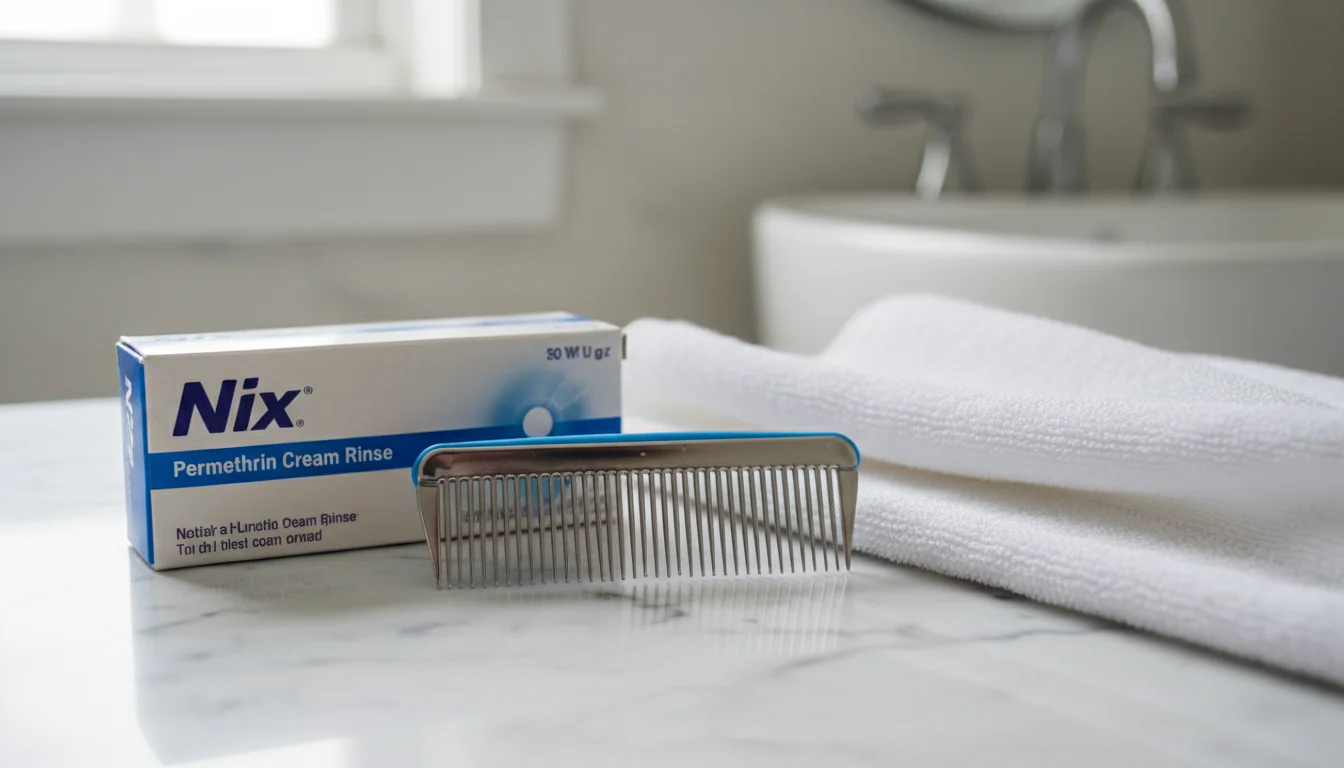
This is your first move. A permethrin 1% cream rinse (like Nix) or a pyrethrin-based product kills live lice on contact. Apply to the affected area, leave on for exactly 10 minutes, then rinse thoroughly.
You’ll need a second treatment 7-10 days later. That gap matters – it catches any nits that hatched after the first round, since the chemicals don’t penetrate the egg shells.
If you’ve treated twice correctly and still see live bugs crawling, the lice may have developed resistance to permethrin. That’s your cue to switch methods.
2. Wet Combing
The mechanical follow-up to any chemical treatment. OTC products kill lice but don’t dissolve the glue anchoring nits to your hair. You need to comb them out.
Wet the area, apply conditioner to help the comb slide, then work through small sections with a fine-toothed metal nit comb. Wipe the comb on a white paper towel after each pass so you can see what you’re pulling out. Repeat every few days for two weeks.
It’s tedious. But it’s also chemical-free and the only way to confirm the treatment is actually working.
3. Suffocation Methods
Dimethicone-based products (NYDA, LiceMD) coat lice in a silicone film that blocks their breathing holes. No pesticides involved, and lice can’t develop resistance to being suffocated.
Apply to dry hair, saturate the area completely, and leave it on for the recommended time (usually several hours or overnight depending on the product). Wash out, then comb. Repeat in 7-10 days.
This is a solid option if you want to avoid insecticides or if permethrin hasn’t worked.
4. Hot Water Wash and Dry
Treating your body is only half the job. Everything your body has touched needs decontamination too.
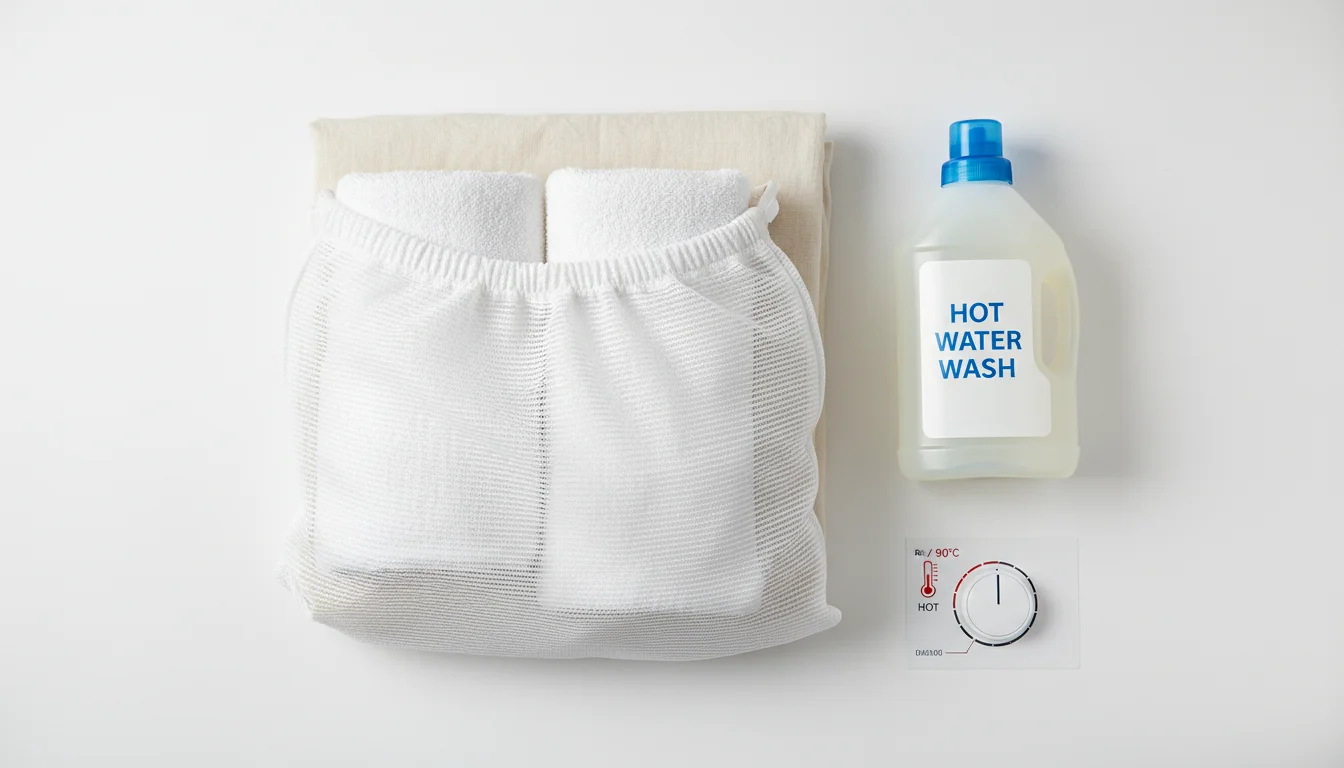
Wash all bedding, towels, underwear, and any clothing that’s been in contact with the affected area in hot water – 130°F (54°C) or higher. Run everything through a full high-heat dryer cycle for at least 30 minutes. The heat kills lice and eggs, not the detergent.
Items you can’t machine wash (delicate fabrics, dry-clean-only pieces) go in the dryer alone on high heat for 30-40 minutes. Anything you can’t treat either way gets sealed in a plastic bag for two weeks – lice can’t survive that long without a blood meal.
5. Essential Oil Treatments
Tea tree oil comes up constantly in home remedy searches. The evidence is thin. A few small studies on head lice show some promise, but nothing conclusive for pubic lice specifically.
If you go this route, dilute the oil in a carrier (coconut or olive oil) before applying to sensitive areas. Undiluted essential oils will burn. Leave on for several hours, then wash and comb thoroughly.
Be realistic about expectations. Essential oils might help as a supplement alongside proven treatments, but they’re not reliable as a standalone fix.
6. Prescription Options
If OTC treatments fail after two proper rounds, see a doctor. They can prescribe stronger options like ivermectin lotion (topical), oral ivermectin, or malathion lotion. These target resistant lice that shrug off permethrin.
Prescription treatments cost more but may clear the infestation in fewer applications. You still need to comb out dead nits afterward.
Prevention
There’s no preventive product or vaccine for pubic lice. The only reliable prevention is avoiding skin-to-skin contact with someone who has them.
If you’ve been diagnosed, tell your sexual partners from the past month so they can check and treat if needed. Treat all current partners at the same time – otherwise you’ll just pass lice back and forth. Avoid sharing towels and bedding until everyone is clear.
When to See a Doctor
Most cases resolve with OTC treatment. See a doctor if:
- Two rounds of permethrin haven’t worked
- You find lice on your eyelashes or eyebrows (these need a different treatment – petroleum jelly or prescription eye ointment, not standard lice products)
- You’ve developed a secondary skin infection from scratching (look for increasing redness, warmth, or pus)
- You’re pregnant or breastfeeding (some treatments aren’t safe)
Frequently Asked Questions
Will pubic lice go away on their own?
No. They feed on human blood and will continue breeding until treated. They won’t leave voluntarily.
Can you get rid of pubic lice by shaving?
Shaving removes the hair lice cling to, but it won’t kill lice or eggs already on your skin. It’s not a treatment. You still need an actual pediculicide.
What naturally kills pubic lice?
Nothing natural is reliably proven. Tea tree oil shows limited promise in studies on head lice, but medical organizations don’t recommend home remedies as primary treatment for pubic lice. Use permethrin or pyrethrin first.
Do you need to tell your partner?
Yes. Pubic lice spread through close contact and your partner likely has them too. Both of you need to treat simultaneously or you’ll reinfect each other.