
Table of Contents
Most wrinkle advice is noise. Egg whites, banana masks, olive oil – none of it has meaningful evidence. Two things actually reduce wrinkles on your face: retinoids (the only OTC ingredient with solid clinical backing) and, to a lesser extent, vitamin C serum. Everything else either prevents further damage (sunscreen, quitting smoking) or makes wrinkles temporarily less visible (moisturizer). That distinction matters, because the realistic outcome of home treatment is slowing and reducing – not erasing. If you’ve got that straight, here’s what to do, in order of impact. For other wrinkle contexts, see the wrinkles hub.
1. Retinoid Creams
The clear winner in OTC skincare. Retinoids are the only topical ingredient with strong, replicated clinical evidence for actually reducing existing wrinkles on face – not just hiding them.
Prescription tretinoin is more potent. OTC retinol works too, just more slowly. Either way, the mechanism is the same: retinoids increase cell turnover and stimulate collagen production, which gradually thickens the dermis and smooths fine lines. Tretinoin (0.025% to 0.1%) requires a dermatologist prescription. Retinol at 0.3% to 1% is available over the counter and is what most people start with.
Apply a pea-sized amount to your entire face at night. Not spot-treating – retinoids work by changing how the whole skin surface behaves, so applying only to wrinkles misses the point entirely. Start at 2-3 nights per week for the first month to build tolerance. Your skin will get dry, flaky, and likely irritated early on. That’s expected and normal – it’s called the retinoid purge, and it passes. Push through if it’s tolerable; back off to every third night if you’re peeling badly.
Takes 8-12 weeks to see meaningful change. That’s the timeline. Not 7 days, not overnight. People give up at week 4 when it hasn’t visually done anything yet – that’s the exact wrong moment to quit. At 12 weeks, the difference is usually visible in photos side-by-side.
One practical note: retinoids increase UV sensitivity. Use sunscreen every morning without fail while you’re on them, or you’re working against yourself.
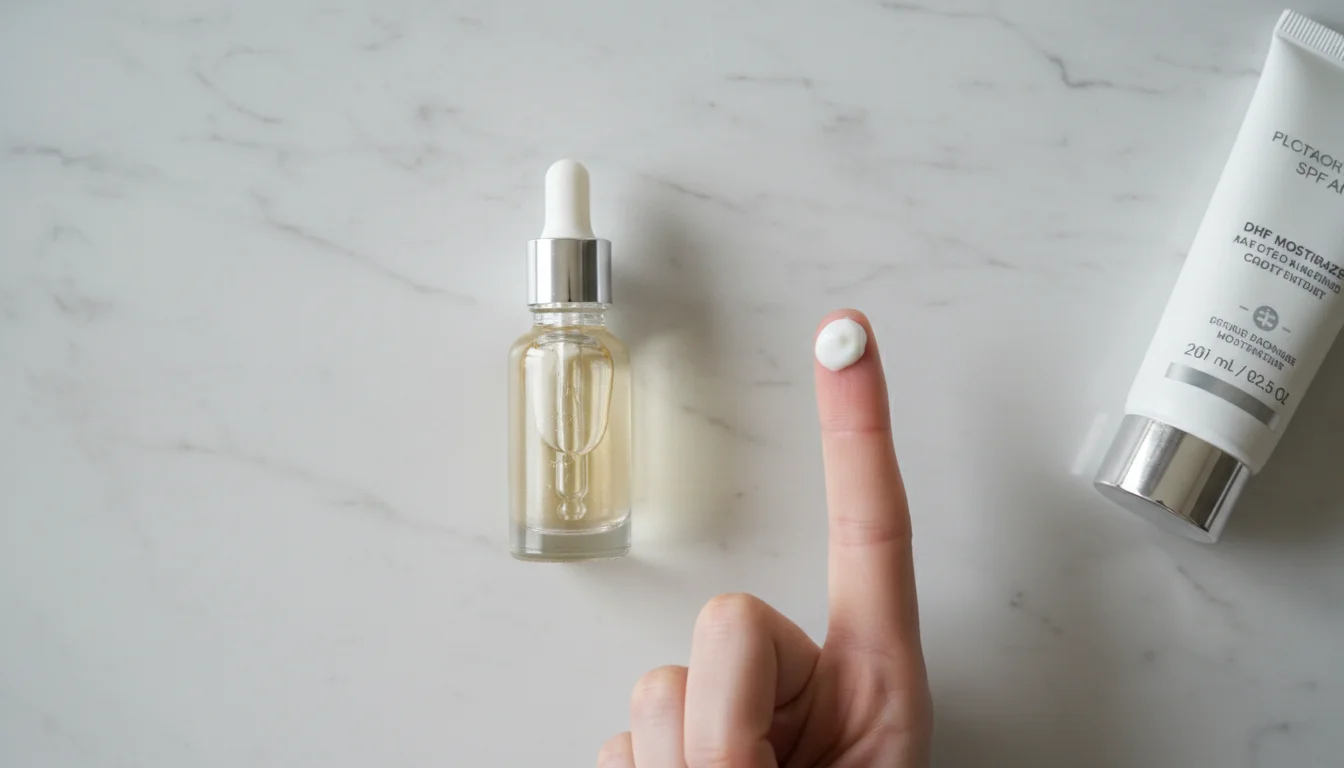
2. Broad Spectrum Sunscreen Daily
UV radiation is the primary cause of premature facial wrinkles. It breaks down collagen and elastin in the dermis directly, and that degradation is cumulative and largely irreversible without professional treatment. The reason some people age visibly faster than others is almost entirely sun exposure, not genetics.
SPF 30 or higher, every day – not just when it’s sunny. UV comes through clouds and through windows. UVA rays (the ones that cause aging) penetrate glass; sitting near a window for years adds up the same way outdoor exposure does. "Broad spectrum" on the label means it blocks both UVA and UVB. SPF number alone only measures UVB.
Mineral sunscreens (zinc oxide or titanium dioxide) sit on the skin’s surface rather than absorbing in, which makes them better for daily facial use – less likely to irritate skin, no concern about chemical penetration. The downside is the white cast, which lighter formulations have largely solved. Chemical sunscreens (oxybenzone, avobenzone) are fine if that’s your preference; the protection level matters more than the filter type.
Apply a nickel-sized amount after moisturizer and before makeup or anything else. Reapply if you’re spending time outdoors. This doesn’t reverse existing wrinkles on face. What it does is stop the process that keeps creating new ones – which is the precondition for anything else on this list to actually work.
3. Vitamin C Serum
Vitamin C’s role here is antioxidant protection and collagen support, not direct wrinkle reduction. UV radiation generates free radicals that break down collagen; vitamin C neutralizes those free radicals before they can do structural damage. It also plays a role in collagen synthesis itself – the body uses vitamin C to build the hydroxylated collagen chains that form the dermis.
The evidence is weaker than for retinoids, but it’s real. Think of it as sunscreen’s partner: sunscreen blocks UV photons from hitting the skin; vitamin C handles the free radical cascade that gets set off by the UV that makes it through.
Look for 10-20% L-ascorbic acid (the active form). Concentrations below 10% don’t do much. Apply in the morning before sunscreen – this is a morning ingredient, not a night one. The sequence matters: vitamin C first, then sunscreen on top.
Vitamin C oxidizes fast once exposed to air. When the serum turns orange or brown, it’s degraded and won’t do anything useful – replace it. Keep it in a dark bottle away from heat and light. Some people refrigerate it to extend shelf life. Products with vitamin E or ferulic acid in the formula are more stable and stay active longer.
4. Moisturizer
Moisturizer doesn’t reduce wrinkles on face – that needs to be said upfront. What it does is temporarily plump the skin’s surface, which makes fine lines look shallower. The plumping happens because moisturizer draws water into the outer layers of skin; dehydrated skin looks more textured and creased than hydrated skin. It’s a cosmetic improvement, not a structural one, and it wears off in a day.
Still worth doing, for two reasons. One: skin that’s well-hydrated functions better as a barrier and supports everything else you’re doing. Two: retinoids make skin dry as a side effect, so moisturizing alongside them is basically mandatory if you want to stay on them without your face falling apart.
Apply to slightly damp skin right after cleansing – the dampness helps lock moisture in rather than letting it evaporate. Fragrance-free formulas are less likely to irritate skin that’s already dealing with retinoid adjustment. For ingredients, look for hyaluronic acid (draws water), ceramides (repairs barrier), or glycerin. Thick creams work better than lightweight gels for this purpose, especially at night.
Skip any moisturizer that bills itself primarily as anti-aging – you’re paying a premium for the marketing, not better hydration.
5. Sleep on Your Back
Sleep lines are real. Pressing one side of your face into a pillow for 7-8 hours a night, for years, creates compression creases that eventually become permanent wrinkles. Side sleepers consistently show more lines on their dominant sleep side – specifically on the cheek, around the eye, and along the chin on whichever side they sleep on. The asymmetry is visible in people who’ve been committed side sleepers for decades.
Training yourself to sleep on your back takes a few weeks of conscious effort. Put a pillow under your knees to reduce lower back strain, which is the main reason people roll onto their sides during the night. Some people use a travel pillow (the U-shaped kind) around their neck to prevent rolling. It sounds ridiculous until you’re comparing photos.
If back sleeping genuinely isn’t happening, a silk or satin pillowcase reduces friction against skin significantly compared to cotton. It doesn’t eliminate compression, but friction is part of the mechanism too.
The prevention angle here is underrated. Spending money on retinoids while simultaneously pressing your face into a cotton pillow for 56 hours a week is working against yourself.
6. Quit Smoking
Only relevant if you smoke, but if you do, it’s the highest-impact single change you can make. Smoking accelerates facial aging through two distinct mechanisms.
First, the chemicals in tobacco smoke generate free radicals that directly degrade collagen and elastin – the same process UV does, just from inside out. Nicotine also constricts blood vessels, cutting oxygen and nutrient delivery to the dermis and slowing collagen synthesis.
Second, the physical act of smoking creates perioral lines – the vertical lines above the upper lip. Pursing your lips around a cigarette uses the same muscle groups responsible for those lines. A pack-a-day smoker makes that motion thousands of times daily for years. Those lines form earlier and more deeply than in non-smokers.
Quitting stops both processes cold. It doesn’t reverse wrinkles already there. But within a few months, skin tone improves as circulation normalizes. Studies show the skin of ex-smokers continues improving for years as oxidative damage gradually repairs. Whatever cessation method actually works for you is the right one.
7. Stay Hydrated
The weakest entry on this list in terms of direct wrinkle evidence, but worth including because chronically dehydrated skin looks more wrinkled than it structurally is. Dehydration reduces skin turgor – the plumpness and elasticity that gives skin a smooth appearance. You can see the test: pinch the back of your hand. Hydrated skin snaps back immediately; dehydrated skin holds the tent briefly before returning.
The target is 2-3 liters (68-100 fl oz) of water daily. Spread throughout the day, not front-loaded in the morning and forgotten. Coffee and alcohol both pull water out of skin – not enough to panic about, but worth compensating for.
This isn’t a treatment; it’s a baseline condition. Combined with topical moisturizer, you’re addressing hydration from both directions – systemically and at the surface. Dehydration lines around the eyes and mouth can look noticeably better within a couple of days of consistent hydration. The effect reverses equally fast if you stop.
FAQ
Can face wrinkles go away?
Not on their own, and not completely with home treatment. Retinoids can noticeably reduce fine lines over 8-12 weeks by accelerating cell turnover and rebuilding collagen density in the upper dermis. Deep wrinkles respond less – they’re structural grooves in the dermis, not just surface texture. Professional treatments (laser resurfacing, fillers, Botox) can do significantly more. The honest framing for home treatment: improvement and slowing, not erasure.
Can I get rid of wrinkles naturally?
Retinol (OTC vitamin A) is the most effective "natural" approach with actual clinical evidence. Sunscreen prevents further UV damage. The folk remedies – egg whites, banana masks, olive oil, essential oils – don’t have meaningful evidence for reducing wrinkles. They won’t hurt, but they also won’t do much. Consistent retinoid use over months is the best home treatment available; whether that counts as "natural" depends on your definition.
How do you get rid of deep wrinkles on your face fast?
You don’t, at home. Deep wrinkles are structural – permanent grooves in the dermis. Moisturizer temporarily plumps the surface so they look shallower. Botox relaxes the muscles that create expression lines. Fillers physically fill the groove. Nothing available at home creates that kind of change quickly. For deep wrinkles specifically, a dermatologist consultation is the honest next step.
How do I make my face look younger than my age?
The highest-leverage combination: consistent SPF daily (stops UV damage, the main driver of facial aging), retinol at night (increases cell turnover and stimulates collagen), and not smoking. Those three account for most of the visible aging difference between people at the same age. Everything else – serums, supplements, home LED devices – is incremental compared to those three habits done consistently over years.