Table of Contents
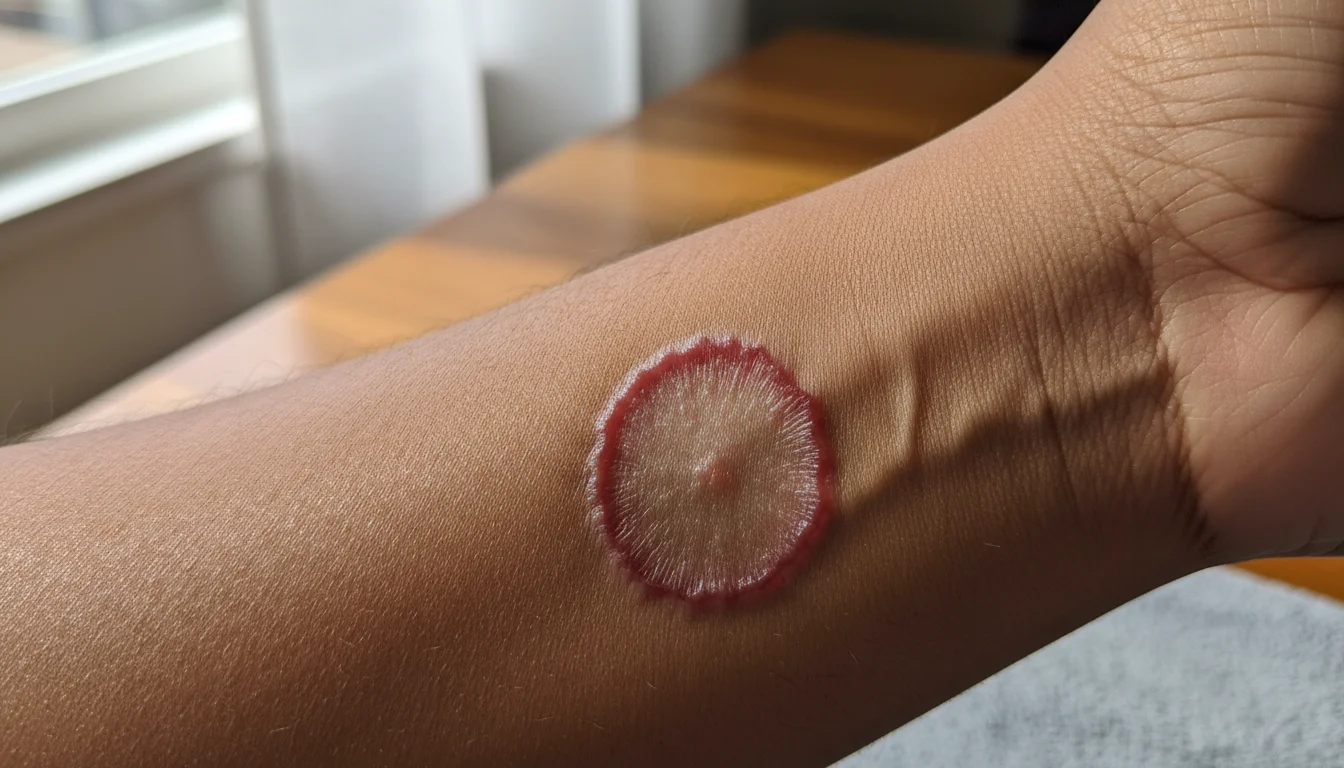
Ringworm isn’t a worm – it’s a fungal infection (dermatophyte) that produces a ring-shaped rash on skin or scalp. Body ringworm is easily treated at home with OTC antifungal cream. Scalp ringworm is different and needs a doctor for oral medication – topical cream won’t penetrate deeply enough to clear it. For everything else: antifungal cream applied correctly for long enough clears the infection reliably. Most treatment failures come down to two mistakes – stopping too early and not applying far enough beyond the visible rash.
1. Apply Topical Antifungal Cream
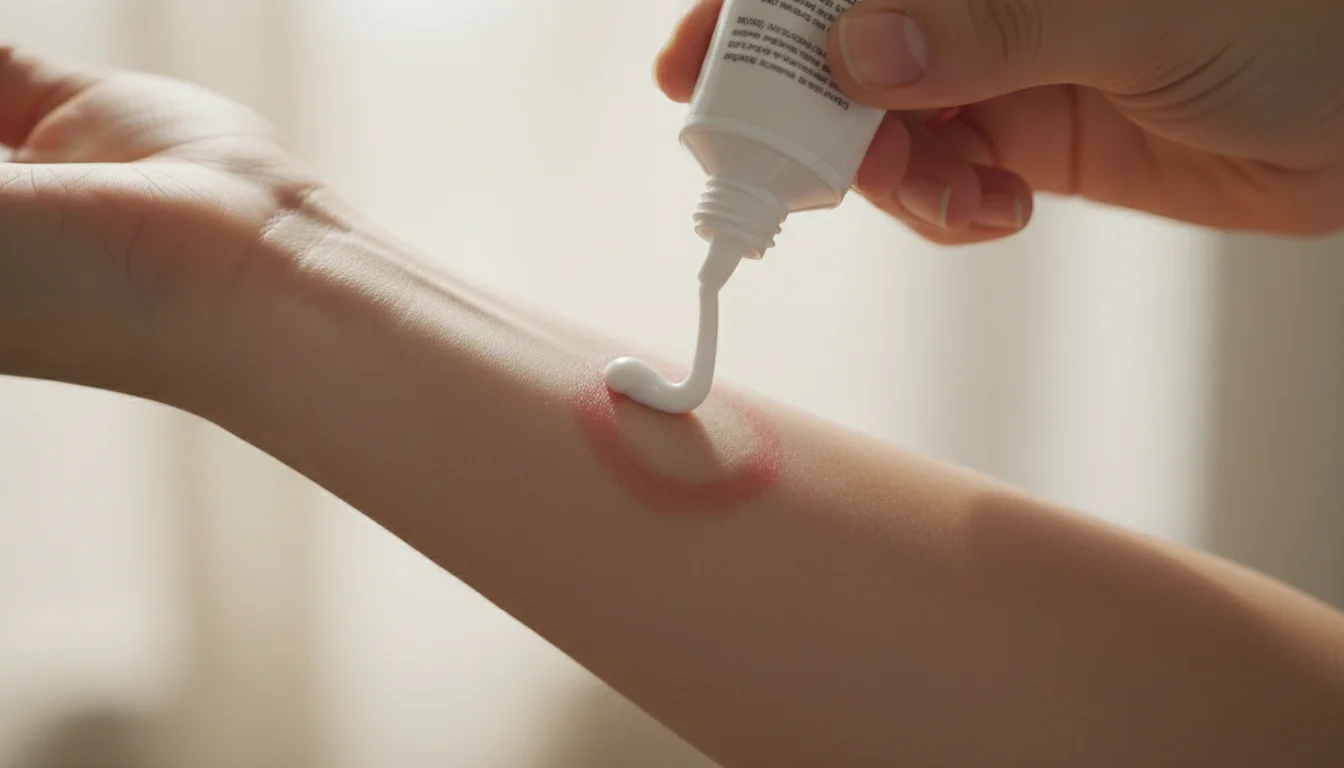
The definitive treatment for body ringworm. OTC antifungal creams – clotrimazole (Lotrimin AF), terbinafine (Lamisil AT), miconazole – are effective and available without a prescription.
Choose terbinafine if you want the fastest result. It’s fungicidal (actually kills the fungus) versus clotrimazole and miconazole which are fungistatic (inhibit reproduction but rely on your immune system to finish the job). In practice: terbinafine typically clears body ringworm in 1-2 weeks; clotrimazole and miconazole take 2-4 weeks. Both are effective – terbinafine is just faster.
Application matters as much as product choice. Apply twice daily to the entire rash and extend the cream 1 inch (2.5 cm) beyond the visible edge. That margin is not optional. Dermatophytes spread outward ahead of the visible rash – the outer border of what you can see is already behind the actual infection front. People who apply cream only to the visible rash and stop when it looks gone are the ones who call back with recurrence three weeks later.
Continue for at least one week after the rash has completely cleared. The rash disappears before the fungal cells are fully gone. Stop at apparent clearance and the survivors regrow.
Two weeks of consistent twice-daily application clears the vast majority of body ringworm cases. If there’s no meaningful improvement at two weeks, see a doctor – the infection may be deeper than topical cream reaches, or it may not be ringworm at all.
2. Hot Water Wash and Dry
Whatever touched the infected skin – towels, clothing, bed sheets, pillowcases – needs washing in hot water. Dermatophytes survive in fabric and cause reinfection if you keep using the same items.
Wash at 140°F (60°C) or hotter. This temperature kills dermatophytes. Most household washers reach 140°F (60°C) on the hot setting; if yours doesn’t, follow with a full drying cycle on high heat for at least 30 minutes. The heat does the killing.
During active infection: wash towels after every single use. Don’t let them hang and dry for reuse – damp, warm fabric is an ideal environment for fungal survival. Wash clothing that contacts the affected area the same day it’s worn, not at end of the week.
This is the most common gap in ringworm management. People apply cream twice daily and wonder why it keeps coming back, while reusing the same bath towel that’s been colonized for weeks.
3. Avoid Sharing Personal Items
No shared towels, clothing, hairbrushes, hats, or sports equipment while the infection is active. Dermatophytes spread easily through contaminated fabric that makes direct skin contact. A towel used on an infected area carries viable fungal cells for several hours – long enough to infect the next person who uses it.
This applies in both directions: protect household contacts from your infection, and protect yourself from reinfection from others. Ringworm that keeps coming back despite correct treatment is almost always explained by an unidentified source in the household or environment – a person who’s infected but hasn’t noticed, or a pet.
The pet reservoir is a real and commonly missed factor. Cats carry dermatophytes asymptomatically with no visible symptoms. They can reinfect a treated person repeatedly through normal petting and handling. If you’ve treated ringworm correctly and it keeps recurring, get the cat (or dog, or guinea pig – though cats are the most common culprit) checked by a vet. Treating the human without treating the pet is running in circles.
At gyms and sports facilities: use your own mat where possible, wipe shared mats with antifungal spray before use, shower immediately after contact sports, and don’t walk barefoot in communal changing rooms and showers. Wrestling teams have chronic dermatophyte problems (tinea gladiatorum) specifically because of skin-to-skin contact in warm humid conditions.
4. Use Antifungal Shampoo
This method applies specifically to scalp ringworm (tinea capitis). Important framing upfront: antifungal shampoo alone cannot cure scalp ringworm. The dermatophytes establish in hair follicles at a depth topical treatment can’t reach. Scalp ringworm requires oral antifungal medication prescribed by a doctor (griseofulvin or terbinafine tablets). The shampoo is adjunct treatment, not the cure.
What shampoo does do: it reduces the number of fungal spores on the hair and scalp surface, which lowers the risk of spreading to household contacts during the treatment period. It also reduces surface inflammation and itch.
Use selenium sulfide 2.5% (Selsun) or ketoconazole 1% (Nizoral). Regular anti-dandruff shampoos with zinc pyrithione have some antifungal activity but not enough for this purpose. Apply to the whole scalp, lather well, and leave on for 5-10 minutes before rinsing. Don’t rinse immediately – the contact time matters. Use twice weekly while taking oral antifungal medication.
Household contacts (especially children sharing beds or pillows with the infected person) can use the same shampoo as a precautionary measure during an outbreak.
5. Keep the Affected Area Dry
Dermatophytes thrive in warm, moist conditions. Everything that traps moisture against the skin is making the environment more hospitable for the infection, not less.
After washing, pat the infected area dry rather than rubbing. Rubbing can spread fungal cells from the rash edge to surrounding skin and adds unnecessary irritation on top of the existing inflammation. Keep the area dry throughout the day.
For groin ringworm (tinea cruris): loose-fitting cotton underwear, changed immediately when sweaty, makes a meaningful difference. Synthetic fabrics trap moisture. Let the area air out when you can. For foot ringworm (tinea pedis, athlete’s foot): breathable shoes, socks changed when wet or sweaty, barefoot at home when possible. Throw out shoes that have been worn through an untreated infection – they can harbor fungus and reinfect.
If the infected area is in a skin fold that stays persistently moist – under the breast, inner thigh, between toes – a thin layer of absorbent powder applied after the antifungal cream has fully dried can help maintain dryness between applications. This is supporting treatment, not replacing it, but keeping the microenvironment dry works in the same direction as the cream rather than against it.
6. Tea Tree Oil
The weakest entry on this list in terms of evidence, included because it’s widely tried and worth addressing honestly. Tea tree oil does have in-vitro antifungal activity against several dermatophyte species. The gap between in-vitro activity and real-world clinical effectiveness is significant, and the human studies on tea tree oil for ringworm specifically are limited and methodologically weaker than those supporting OTC antifungal creams.
If you want to try it: dilute to approximately 5% concentration in a carrier oil (about 1 part tea tree oil to 19 parts coconut, almond, or olive oil). Undiluted tea tree oil on already-inflamed skin will cause contact irritation and potentially make the rash look worse than the infection itself. Apply to the rash and surrounding skin with a cotton pad twice daily.
Use it alongside antifungal cream, not instead of it. The cream is doing the treatment. Tea tree oil as an adjunct is unlikely to cause harm and may provide some additive antifungal benefit – but as a primary treatment, it’s not reliable enough for an infection that clears predictably within two weeks of terbinafine. Anyone using tea tree oil as their only treatment and wondering why it’s slow or incomplete should switch to OTC cream.
When to See a Doctor
Home treatment handles the majority of ringworm cases. See a doctor if:
- The affected area is the scalp – scalp ringworm (tinea capitis) always requires oral antifungal medication, which needs a prescription
- No improvement after 2 weeks of twice-daily OTC antifungal cream
- The rash involves the face, nails, or large areas of the body
- You’re immunocompromised (diabetes, HIV, on immunosuppressants) – ringworm can be more aggressive and harder to treat
- The rash is spreading or has become painful, weeping, or crusted – this may indicate secondary bacterial infection
Prescription-strength antifungal creams and oral terbinafine are available when OTC treatment fails. Don’t keep repeating 14-day courses of OTC treatment if the first one didn’t work – that’s the signal to get a proper diagnosis.
FAQ
What gets rid of ringworm fast?
Terbinafine cream (Lamisil AT) is the fastest OTC option – it’s fungicidal, meaning it kills the fungus directly rather than just inhibiting reproduction. Applied twice daily to the rash and 1 inch (2.5 cm) beyond the visible edge, body ringworm typically clears in 1-2 weeks. Clotrimazole and miconazole work too but take 2-4 weeks because they’re fungistatic rather than fungicidal. There’s no home remedy that approaches this speed. Keep applying for a week after the rash looks gone – the infection outlasts its visible symptoms and will regrow from surviving cells if you stop at apparent clearance.
Will rubbing alcohol kill ringworm?
Not effectively. Alcohol kills surface fungal cells on contact but evaporates in seconds, long before penetrating the skin layers where the infection is established. It won’t clear the infection and can irritate already-inflamed skin, making the rash look angrier without doing anything useful. OTC antifungal cream is the correct tool. Alcohol persists as a remedy because it has an antiseptic quality that feels like it should work – but fungi aren’t bacteria, surface contact evaporation doesn’t reach an established dermatophyte infection, and it leaves no residual activity. Use it to clean tools between uses if you want, but not as treatment.
Does ringworm go away on its own?
Rarely, and slowly. A healthy immune system can eventually suppress a ringworm infection, but this takes months, and the infection expands and spreads during that period. Untreated ringworm grows outward in its characteristic ring pattern, can spread to other body areas, and transmits readily to household contacts and pets. Two weeks of OTC antifungal cream reliably clears it. Waiting it out makes no sense when effective treatment costs a few dollars and takes two weeks.
What causes ringworm?
Dermatophytes – a group of fungi that live on dead skin cells and keratin in the skin’s outer layers. Despite the name, there’s no worm involved. Transmission routes: direct skin contact with an infected person, contact with contaminated objects (towels, gym equipment, shared clothing, soil), or from infected animals. Cats are the most commonly overlooked source – they frequently carry dermatophytes without showing symptoms, and households with a persistently reinfecting case should check pets. Warm, moist conditions accelerate spread, which is why gyms, swimming pools, and communal showers are common pickup points.