Table of Contents
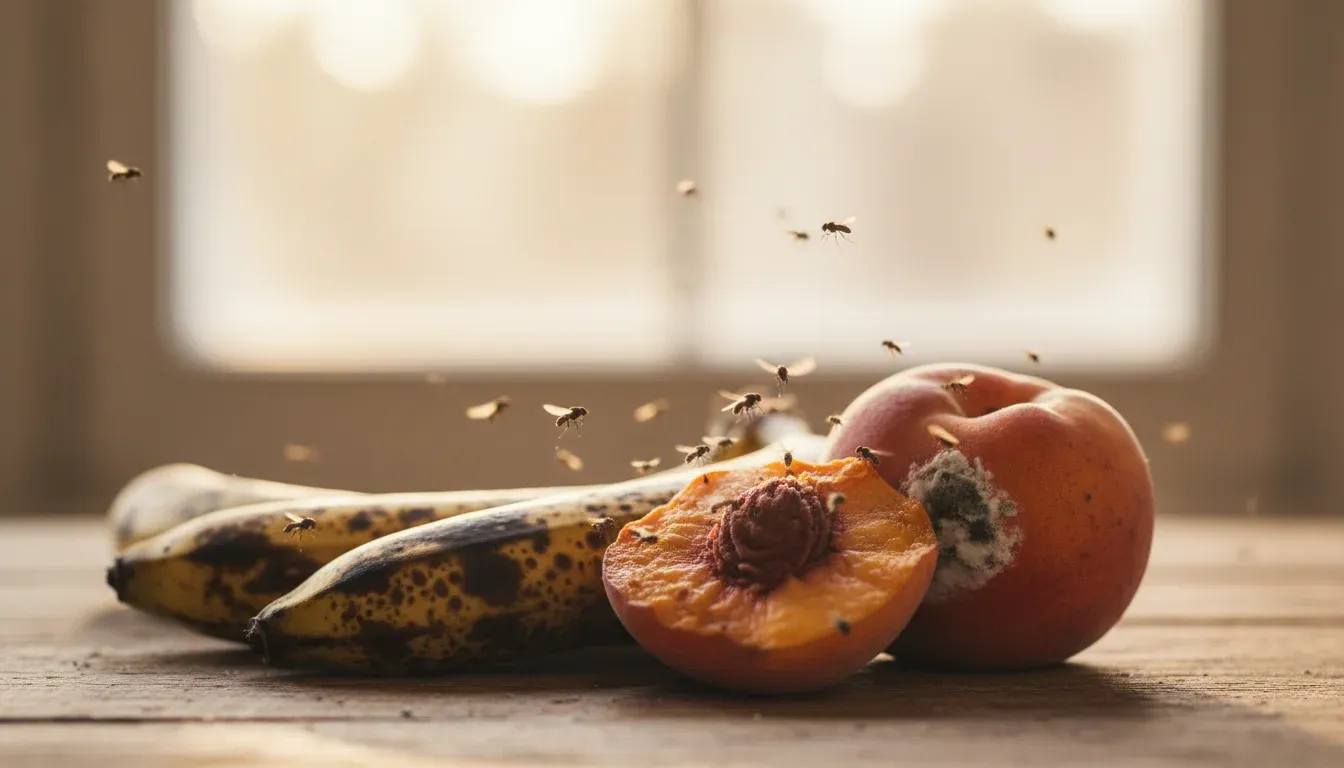
Fruit flies are the houseguest that won’t leave. One banana sits on the counter too long and suddenly there’s a cloud of tiny flies in your face every time you walk into the kitchen. A single female lays up to 500 eggs at a time, and those eggs hatch into adults within a week. So that "few flies" you noticed on Monday? Full-blown infestation by Friday.
The frustrating part is that killing the adults barely dents the problem. You need to break the breeding cycle: trap the adults, destroy their breeding sites, cut off their food supply, and keep the kitchen clean enough that new flies have nowhere to lay eggs. Miss any one of those steps and you’re back to swatting.
Here’s how to hit them from every angle.
Traps and Baits
The fastest way to knock down a visible infestation is trapping. Apple cider vinegar is the go-to bait because it smells like fermenting fruit, which is exactly what these flies evolved to find. A shallow bowl with about a quarter cup of vinegar and three drops of dish soap (to break the surface tension so they sink and drown) will start catching flies within hours. Place one near your fruit basket, another by the sink, another by the trash. Swap them out every two days. Don’t use white vinegar – fruit flies prefer the sweeter smell of cider vinegar.
For a longer-lasting setup, jar traps with plastic wrap and small holes work well. Pour an inch of cider vinegar into a mason jar, cover the top tightly with plastic wrap, and poke five or six holes with a toothpick. Flies crawl in, can’t figure out how to leave. They’re not smart. Empty the jar outside every couple of days and reset it.
Red wine makes an equally effective bait if you’ve got an open bottle going to waste. Leave half an inch in the bottom of the bottle and the narrow neck acts as a natural funnel trap. Overripe fruit in a covered jar catches flies faster than vinegar alone because rotting fruit is exactly what they evolved to seek out.
Don’t rely on traps by themselves. They kill adults but do nothing about the hundreds of eggs already laid in your drains and trash. Traps buy you time while you tackle the real problem.
Source Elimination
Traps are offense. Source elimination is defense. And defense wins.
Start by finding every breeding site. The obvious ones: rotting fruit on the counter, compost bins, slow drains. The sneaky ones: the drip pan under your fridge, the garbage disposal rubber flap, old flower water in a vase, sticky residue on canning jar lids. Fruit flies can smell a single drop of fermenting liquid from across the room, so anything you missed is keeping them alive.
Rotting produce goes first. Bag it, take it straight to an outside bin. Don’t leave it in your kitchen trash overnight. Indoor compost bins need daily emptying, even sealed ones.
Drains need special attention. Food particles collect in pipe walls and create perfect breeding conditions. Pour a full kettle of boiling water down the drain twice a day for three days. Follow with a half-and-half mix of vinegar and baking soda to scrub the buildup loose. Before bed, pour another kettle down and close the stopper so steam stays trapped overnight. The heat kills eggs and larvae in pipe gunk you can’t see.
Slow drains need a drain brush (under $10 at any hardware store). Scrub hard, rinse with more boiling water, repeat until water drains fast.
Food Storage and Handling
Fruit flies arrive on your groceries. They lay eggs on produce surfaces at the store, and you carry their nursery straight into your kitchen. First defense: fill a bowl with three parts water to one part white vinegar and dunk your produce when you bring it home. Give it a gentle rub, rinse under cold water, then store. The vinegar kills eggs on contact. Berries and stone fruits carry eggs most often. Takes two minutes at unpack time.
Be selective at the store. Check every piece before you bag it. Skip anything with soft spots, cuts, or visible damage. Organic produce is especially vulnerable because there’s no preservative coating. Buy smaller amounts more often instead of stocking up.
Cold storage shuts down the buffet. Most fruits do fine in the fridge: apples, grapes, berries, citrus, stone fruits. Even bananas can go in once they hit the ripeness you want. Opened wine, juice, kombucha, anything that ferments: tight seal, cold storage.
Keep bins sealed with actual lids (not swing-tops that leak smell) and take trash out daily during fly season. Wipe the inside weekly.
Sanitation and Maintenance
The boring part that makes everything else work. Hit the whole kitchen: stovetop, microwave interior, sink bowls, countertops, floors, under the fridge. Check behind the trash can for that sticky patch you forgot about. Pull out the fridge and check the drip tray.
Clean spills the moment they happen. That tiny splash of juice, the wine drops, the residue in the bottom of a glass. Use a flashlight to check under appliances. A splash of orange juice that dripped under the fridge two weeks ago could be supporting a whole colony.
Sponges and dishcloths are breeding grounds when they stay damp. Wring them out completely after every use. Replace sponges every two weeks during fly season. Rinse every can and bottle before recycling. Wash dishes immediately. Fresh flowers need water changes every two days or they become breeding grounds.
Where They Show Up
The kitchen is ground zero. That’s where the food is, where the drains are, and where the trash sits. But fruit flies follow fermentation wherever it happens, and different aspects of the problem need different approaches:
- Fruit Flies from Kitchen – daily cleaning habits that starve them out
- Fruit Flies from Drains – killing larvae and eggs in pipe buildup
- Fruit Flies from Produce – food storage and handling to stop the cycle at the source
- Fruit Flies in Traps – DIY trapping methods to knock down the adult population
How They Get In
They usually arrive on produce from the grocery store or farmer’s market. Eggs are already on the fruit surface when you buy it, and they hatch in the warmth of your kitchen. They’re also small enough to come through window screens and gaps around doors.
Once inside, the speed of their life cycle does the rest. Eggs hatch in 24 hours, larvae feed for about a week, then pupate and emerge as adults. A single banana supports hundreds of flies in ten days. Speed matters.
When to Call a Professional
Two weeks of consistent trapping and cleaning should eliminate any fruit fly infestation. If you’re still seeing flies after that, you’ve got a breeding site you haven’t found. A pest control professional can locate hidden problem areas and treat them.
This is rarely necessary. Most infestations fold once you cut off the breeding sites and food sources. Keep up prevention even after the flies disappear, or they’ll be back the next time a banana sits out too long.