Table of Contents
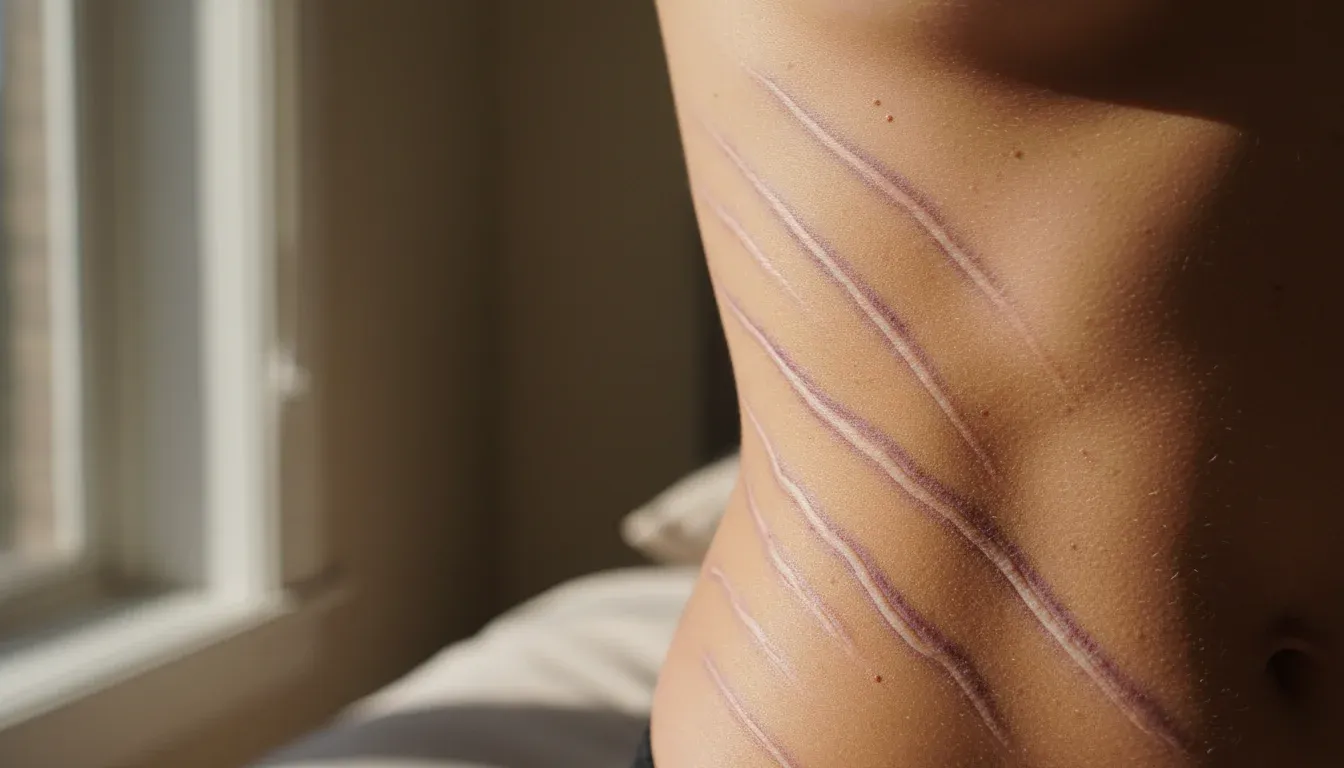
Stretch marks happen when your skin stretches faster than its fibers can handle. The dermis literally tears. Pregnancy, rapid weight gain, puberty growth spurts, bodybuilding splits (those bulking phases get ambitious). The marks show up on legs, abdomen, buttocks, upper arms, breasts. They start red or purple, then fade to white over several months.
Prevention beats treatment by a mile. Once they’re there, you’re playing damage control.
1. Preventing Stretch Marks
Your skin stretches beyond its limits, it tears. Simple as that. So either increase elasticity or slow down the stretching. Can’t always control the second one (pregnancy doesn’t negotiate), so focus on the first.
2. How to Increase Elasticity of Your Skin
Lotions and creams with cocoa butter. Cocoa butter gets all the press for stretch mark prevention, and it’s earned it. Look for thick creams designed for elasticity, not just generic moisturizers. Apply twice daily to high-risk areas. If you’re pregnant, check with your doctor first since some ingredients absorb into breast milk.
Vitamins A, E, and C. These three build collagen strength and elasticity from the inside. Take them as supplements or eat foods loaded with them (citrus, leafy greens, nuts). Your skin needs the building blocks before it can stay flexible.
Water. Hydrated skin stretches better. Drink enough that your urine runs pale yellow. Boring advice, works anyway.
3. How to Remove Stretch Marks
Already got them? Here’s what actually helps.
Time. Stretch marks are scars. They fade naturally over 6-12 months. Red marks turn white, white marks get less obvious. Not glamorous, costs nothing, definitely works.
Tretinoin cream (prescription only). A 1996 study in Archives of Dermatology showed tretinoin significantly reduces stretch marks when applied to new (still red) ones. Your doctor writes the script. Don’t use this while pregnant or breastfeeding.
Vick’s Vapor Rub. Yes, really. Rub it on with a washcloth at night, apply pressure. People report marks fading after a couple weeks. The menthol increases circulation, the friction exfoliates. Costs $6 and smells like your grandma’s medicine cabinet.
Daily exfoliation. Use a loofah or scrubby in the shower. Removes dead skin, encourages cell turnover. Pair it with any of the creams below for better absorption.
Massage. Increases blood flow to the scar tissue. Spend 5 minutes rubbing the area in circles with firm pressure. Hot baths help too.
Tanning (if the marks are minor). Makes them less visible by darkening the surrounding skin. Use sunscreen to avoid trading one skin problem for another.
Vitamin E oil. Break open the gel capsules, rub the oil directly on marks. Do this daily for two weeks. Some people swear by it, some see nothing. Cheap enough to try.
Weight loss (if applicable). Stretch marks can disappear when the skin returns to normal size. The scar’s still there, but the canvas isn’t stretched anymore.
Stretch mark creams and lotions. Dozens on the market. The good ones contain some combo of cocoa butter, emu oil, rosehip oil, jojoba oil, castor oil, shea butter, vitamins A/C/E. Read ingredient lists, not marketing copy.
4. Stretch Mark Medical Procedures
Microdermabrasion. Spas and salons do this. They remove the top skin layer mechanically (think tiny sandblaster) or chemically. Multiple sessions required, costs add up fast.
Endermologie. Machines massage the skin to boost circulation and supposedly expel toxins. The circulation part is real, the toxin claims are marketing.
Laser therapy. Multiple types exist. Some target redness in new marks, others stimulate collagen in old white scars. Your dermatologist knows which one fits your situation. Expensive but effective for stubborn cases.
Cosmetic surgery. Tummy tucks remove skin below the belly button, taking stretch marks with it. If your marks are elsewhere (thighs, arms), there’s probably a lift procedure for that area. This is the nuclear option. Only makes sense if you’re already getting the surgery for other reasons.