Table of Contents
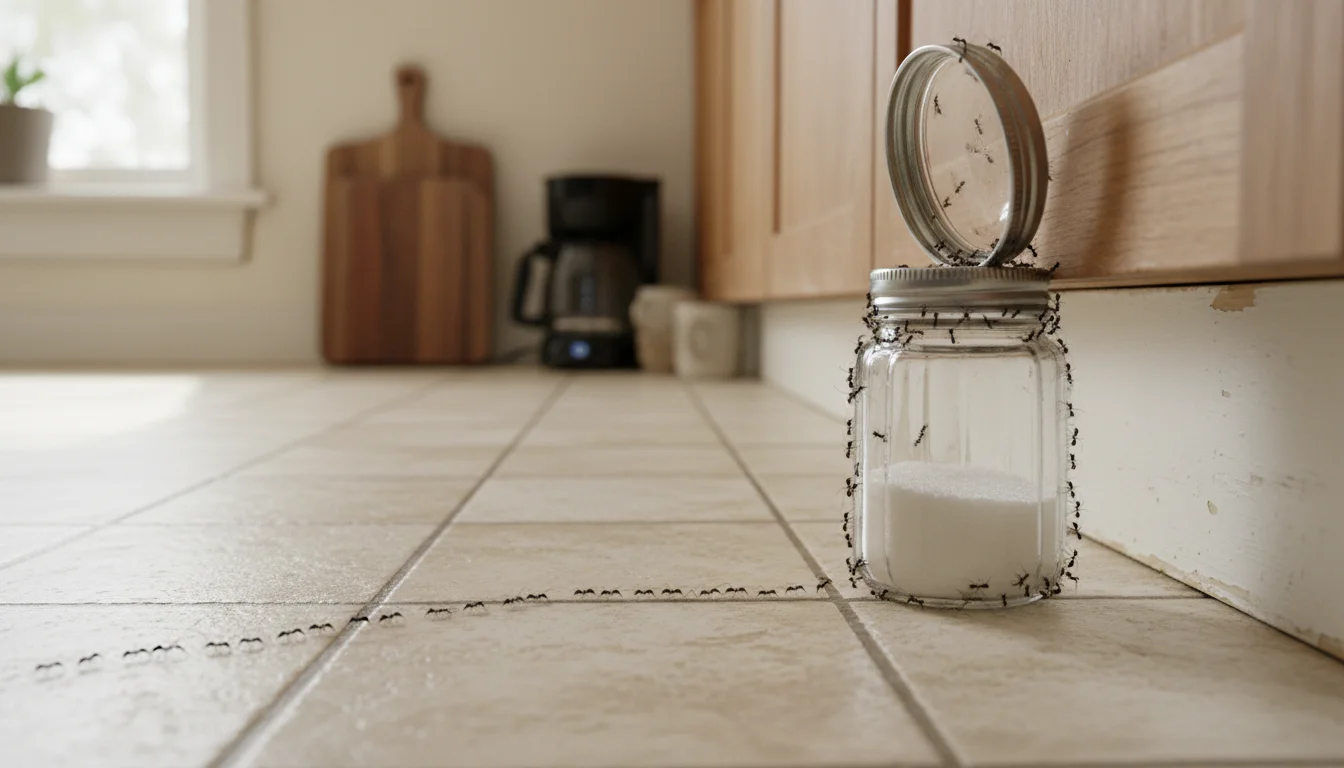
You spot one ant on the kitchen counter. Then two. Then a line of them marching from behind the baseboard toward the sugar bowl like they’ve got blueprints. The kitchen is ground zero for ant problems because it has everything they need: food, water, and entry points they can exploit. Getting rid of them takes a combination of killing the colony and removing what attracted them in the first place.
1. Set Out Bait Traps
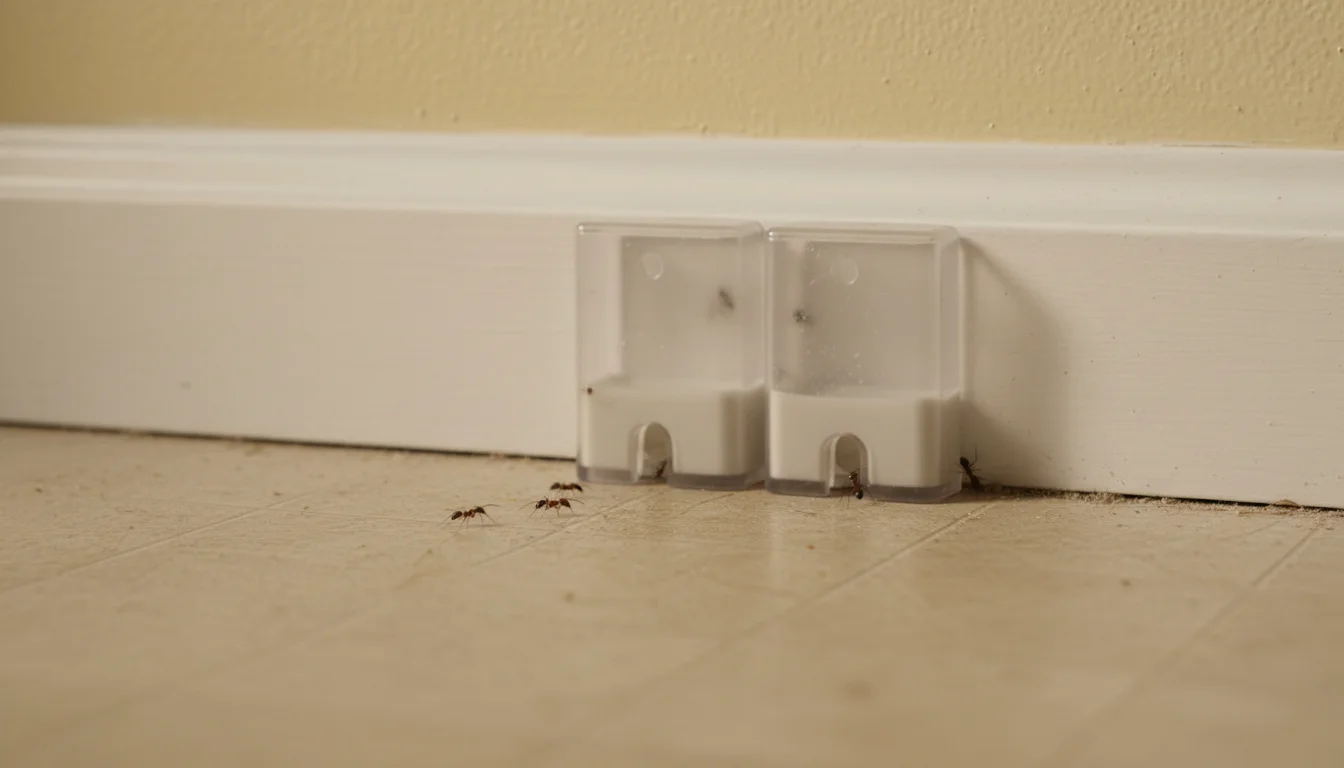
This is the most effective long-term solution, and it works by being counterintuitive. You don’t want to kill the ants you see. You want them to carry poisoned bait back to the colony, where it spreads to the workers and eventually the queen.
Place liquid or gel bait stations along ant trails, near entry points, and anywhere you’ve noticed activity. Under the kitchen sink, along baseboards, and near the window sill are solid starting spots. Give it a few days. You’ll actually see more ants at first as they swarm the bait. That’s a good sign.
2. Make DIY Boric Acid Bait
Mix 1 tablespoon of boric acid with 3 tablespoons of sugar and enough water to form a paste. The sugar attracts them, the boric acid kills them slowly enough that they carry it back to the colony.
Place small amounts on cardboard or plastic lids along trails near your kitchen. Keep this away from pets and children. For liquid bait, mix 1 teaspoon boric acid with 8 teaspoons sugar in 1 cup of warm water. Soak cotton balls in the solution and tuck them where ants travel but hands don’t reach (behind the fridge, under the stove). Replace every few days until activity stops.
3. Stomp Scouts Before They Return with Reinforcements
That lone ant wandering across your counter? That’s a scout. Its job is to find food and report back. If it makes it home alive with good news, it’ll recruit hundreds of workers within hours.
Kill scouts on sight. This is especially effective early in an infestation before organized trails form. Once you see a highway of ants, bait traps take priority. But for random loners near the fruit bowl, immediate elimination prevents tomorrow’s invasion.
4. Spray Vinegar and Water on Trails
Mix equal parts white vinegar and water in a spray bottle. Spray directly on ant trails and around entry points. The vinegar disrupts their scent trails (the chemical breadcrumbs they use to navigate between the colony and your kitchen).
This won’t kill ants or eliminate a colony. But it confuses them and buys time while your bait traps do the real work. Keep a bottle under the sink for quick deployment.
5. Use Dish Soap and Water
A squirt of dish soap in warm water makes a surprisingly effective contact killer. Spray it directly on ants you see. The soap breaks down their waxy exoskeleton and they dehydrate quickly.
Short-term fix only. It handles the visible problem while colony-level solutions kick in. Good for that moment when you open the pantry and find thirty ants on the honey jar.
6. Store Food in Airtight Containers
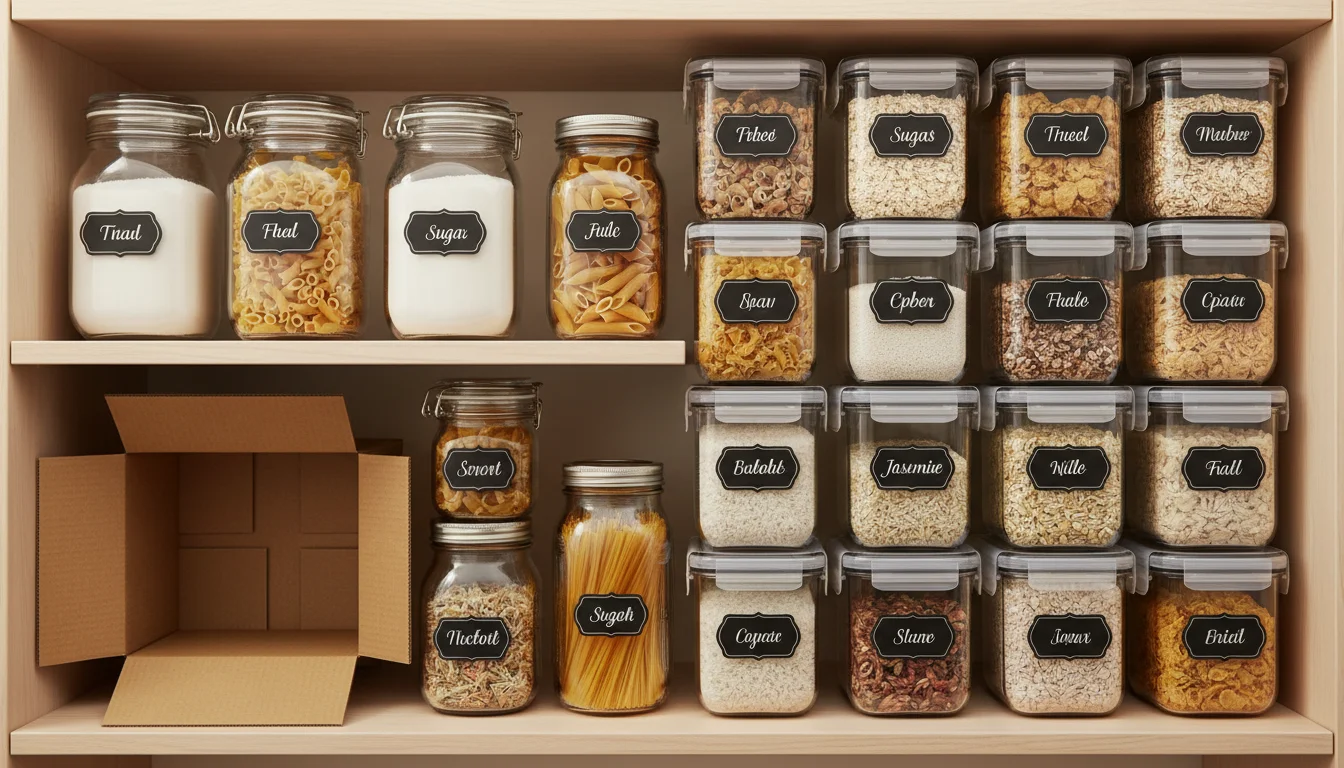
Ants detect food through packaging that seems sealed to us. Standard cardboard boxes, thin plastic bags, and even some containers with loose lids won’t stop them. Once a scout finds a food source, the entire colony gets the address.
Transfer all pantry staples to hard plastic, glass, or metal containers with tight-sealing lids. Flour, sugar, cereal, crackers, pasta, rice, pet food – anything in cardboard or flimsy bags. Mason jars work for smaller quantities. Larger bins with gasket seals handle bulk items. Store ripe fruit in the refrigerator. A well-sealed pantry removes the primary reason ants invade kitchens.
7. Take Out Trash Regularly
Kitchen trash cans are ant magnets. Food residue and packaging scraps create a concentrated scent signal that scouts can detect from across your house.
Empty kitchen trash daily, not when it’s full. Use cans with tight-fitting lids. Line them with bags that seal completely when tied. Clean the can itself weekly with soap and water to remove the residue collecting in the bottom. Regular trash removal eliminates the primary attractant that brings ants into kitchens.
8. Wash Dishes Promptly
Dishes in the sink overnight are an all-you-can-eat situation. Even plates that look clean have microscopic food residue. One dirty dish left out can establish a trail that brings dozens of ants by morning.
Wash immediately after meals or load the dishwasher. If you must let dishes sit, rinse thoroughly and fill the sink with soapy water (ants won’t cross it). Wipe counters after meal prep. Check behind the toaster and coffee maker where crumbs accumulate. Zero accessible food means zero reason to visit.
9. Clean Thoroughly to Erase Pheromone Trails
Ants navigate by chemical trails. Even after you’ve dealt with the scouts, those invisible pheromone highways remain, telling the next wave exactly where to go.
Wipe counters after every meal using the vinegar solution from method 4. Sweep floors regularly. Clean behind small appliances where food debris collects. Don’t leave pet food bowls out overnight. The goal is eliminating both the food source and the chemical map leading to it.
10. Seal Entry Points with Caulk
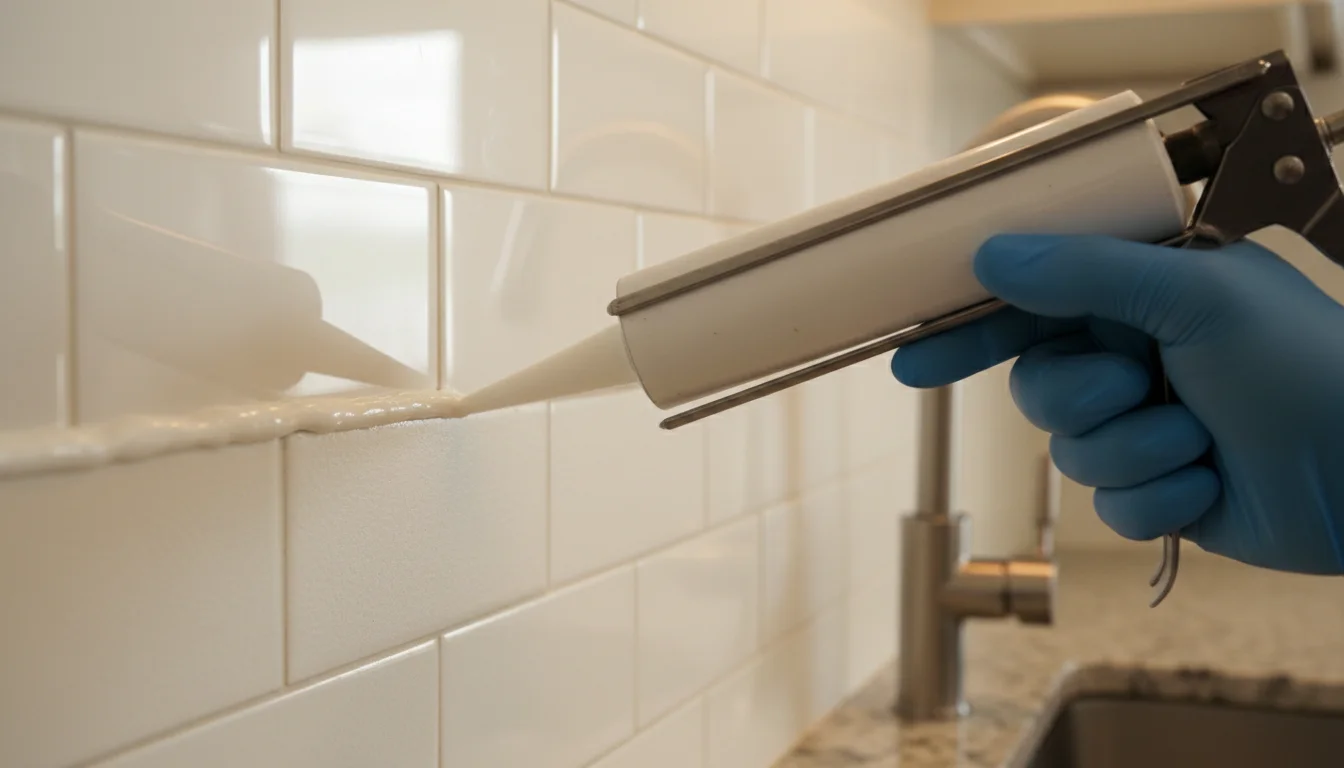
Ants are tiny. They’re getting into your kitchen through cracks you haven’t noticed. Check around windows, where the counter meets the wall, around pipes under the sink, and wherever cables enter.
Use silicone or latex caulk to seal cracks and gaps around baseboards, window frames, and utility penetrations. Pay attention to where pipes come through the wall under the sink. Even hairline cracks admit hundreds of ants. This won’t fix an existing infestation (those ants are already inside) but it stops reinforcements.
11. Add Weatherstripping and Door Sweeps
Gaps under the kitchen door and around windows are highways for ants. Stand inside at night with the lights on. If you see daylight underneath the door, ants can get through.
Install adhesive-backed foam weatherstripping around door frames. Add a door sweep with a firm rubber blade that makes full contact with the threshold. Replace worn weatherstripping on windows. For the kitchen specifically, check the seal around any door leading outside or to the garage.
12. Fix Leaks and Eliminate Moisture Problems
Ants need water as much as food. A dripping kitchen faucet or leaky pipe under the sink will attract scouts even if your food storage is airtight.
Fix dripping faucets immediately. Check under the sink for dampness and address the source. Wipe up standing water around the dishwasher. Improve ventilation if condensation builds up near windows. Eliminating moisture removes half the reason ants target kitchens.