Table of Contents
Armyworms can devastate a healthy lawn in days, leaving behind brown patches and stripped grass blades. These voracious caterpillars feed at night and move in groups, which is how they earned their name. If you’ve noticed irregular brown patches, chewed grass blades, or small green pellets on your lawn, you likely have an armyworm infestation.
The good news is that armyworms are manageable with the right approach. This guide covers multiple methods from immediate chemical interventions to long-term biological controls. You’ll learn how to identify armyworm damage, stop active infestations, and prevent future outbreaks.
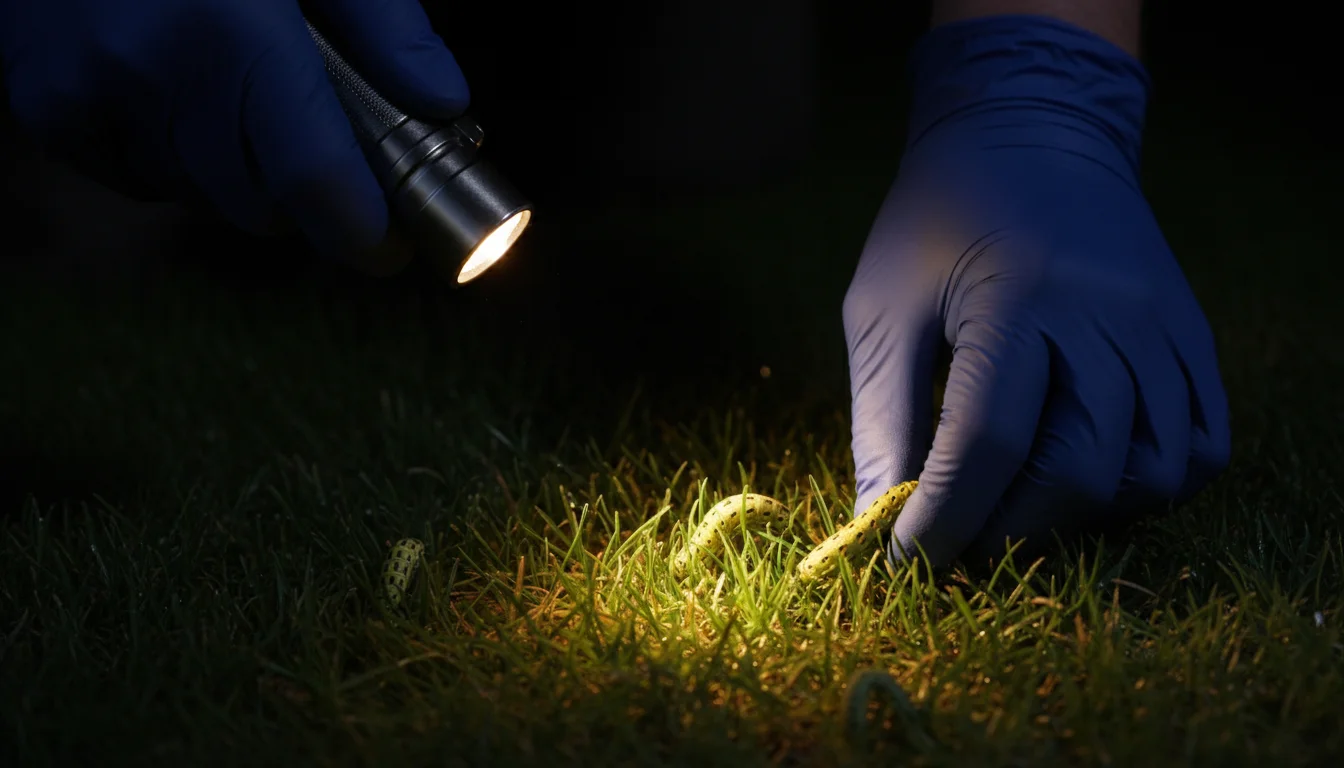
1. Inspect at Night with a Flashlight
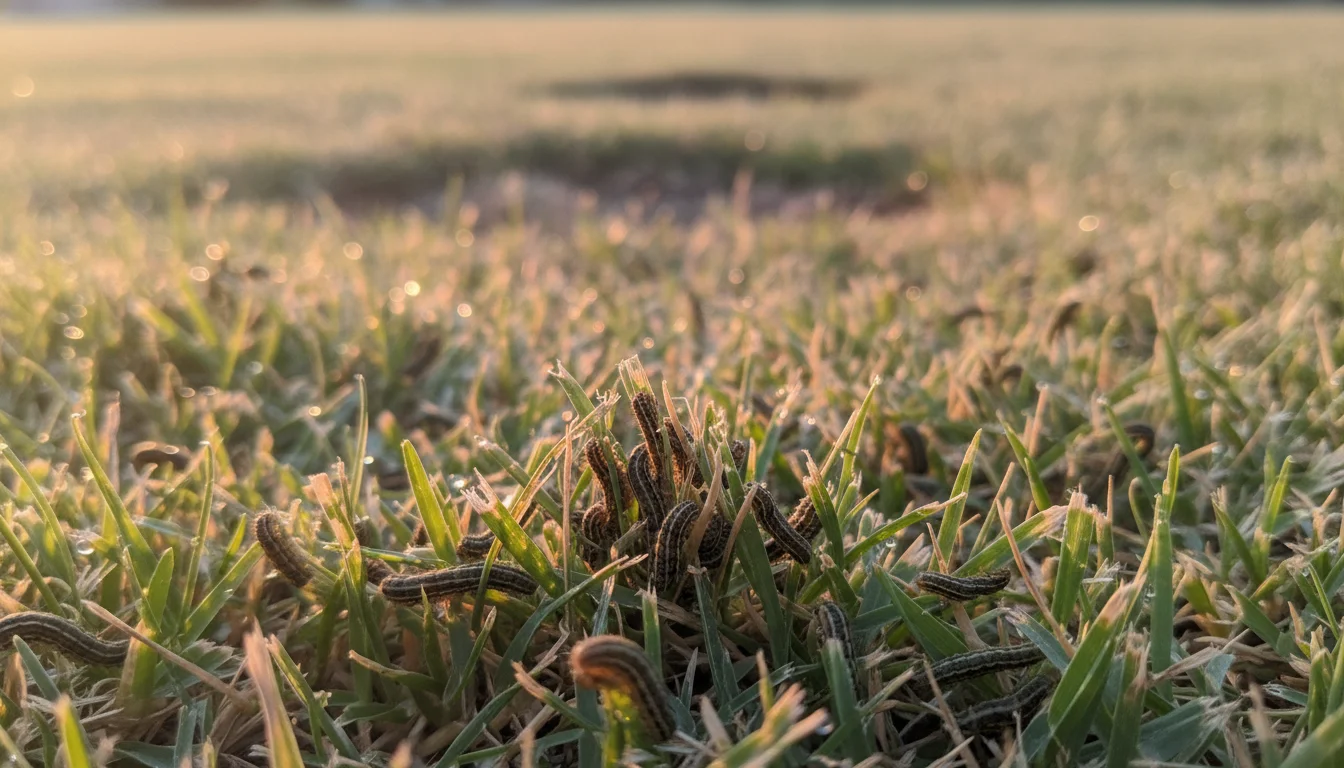
Armyworms feed primarily at night and hide in thatch or soil during the day. The most reliable way to confirm an infestation is a nighttime inspection. Go out after dark with a flashlight and look closely at the edges of damaged patches. You’ll see the caterpillars actively feeding on grass blades.
Check for green or brown caterpillars with distinct stripes running along their bodies. Early detection makes every other control method more effective because young larvae are easier to kill and haven’t caused extensive damage yet. If you find 3-4 armyworms per square foot, treatment is necessary.
2. Apply Spinosad-Based Insecticide
Spinosad is derived from soil bacteria and works well on young armyworm larvae while being safer for beneficial insects than broad-spectrum chemicals. Apply it in late afternoon so it’s active when armyworms emerge to feed at night.
Use a hose-end sprayer to cover the affected area thoroughly, making sure the spray reaches the thatch layer where larvae hide during the day. Spinosad breaks down quickly in sunlight, so timing is critical. Reapply every 7-10 days if you continue seeing larvae, particularly if rain washes away the initial application.
3. Use Synthetic Pyrethroids for Heavy Infestations
When armyworm populations are high and damage is spreading rapidly, synthetic pyrethroids like bifenthrin or lambda-cyhalothrin provide fast knockdown. These insecticides kill on contact and offer residual protection for 1-2 weeks.
Apply in early evening when armyworms are about to emerge. Water the lawn lightly before spraying to bring larvae closer to the surface, then avoid watering for 24 hours after application so the chemical isn’t diluted. Cover damaged areas plus a 10-foot buffer zone because armyworms migrate quickly.
4. Introduce Beneficial Nematodes
Beneficial nematodes are microscopic roundworms that parasitize armyworm larvae. Species like Steinernema carpocapsae actively hunt for caterpillars in soil and thatch. They’re completely safe for humans, pets, and plants.
Apply nematodes to moist soil in early morning or evening when temperatures are below 85°F. Water the lawn before and after application to help nematodes move through the soil. They work best on young larvae and can provide control for several weeks if conditions stay moist. This method pairs well with reduced insecticide use.
5. Encourage Birds and Predatory Wasps
Natural predators keep armyworm populations in check without any work from you. Birds like starlings, grackles, and robins actively hunt armyworms, especially when infestations are heavy. Parasitic wasps lay eggs inside armyworm caterpillars, killing them from within.
Make your lawn attractive to these predators by minimizing broad-spectrum insecticide use, which kills beneficial insects along with pests. Provide water sources and avoid using bird netting during armyworm season. You’ll often see flocks of birds working over an infested lawn, which is a sign they’re doing the work for you.
6. Mow High and Maintain Healthy Turf
Armyworms prefer stressed, thin lawns over thick, healthy grass. Raise your mowing height to 3-4 inches to promote deeper root growth and denser turf. Taller grass also shades the soil, making the environment less favorable for armyworm eggs.
Fertilize appropriately for your grass type and avoid excess nitrogen in late summer when armyworm flights are common. Overwatering creates lush, tender growth that armyworms prefer. A well-maintained lawn can tolerate some feeding without showing serious damage, giving you time to intervene before the problem escalates.
7. Apply Bacillus Thuringiensis (Bt)
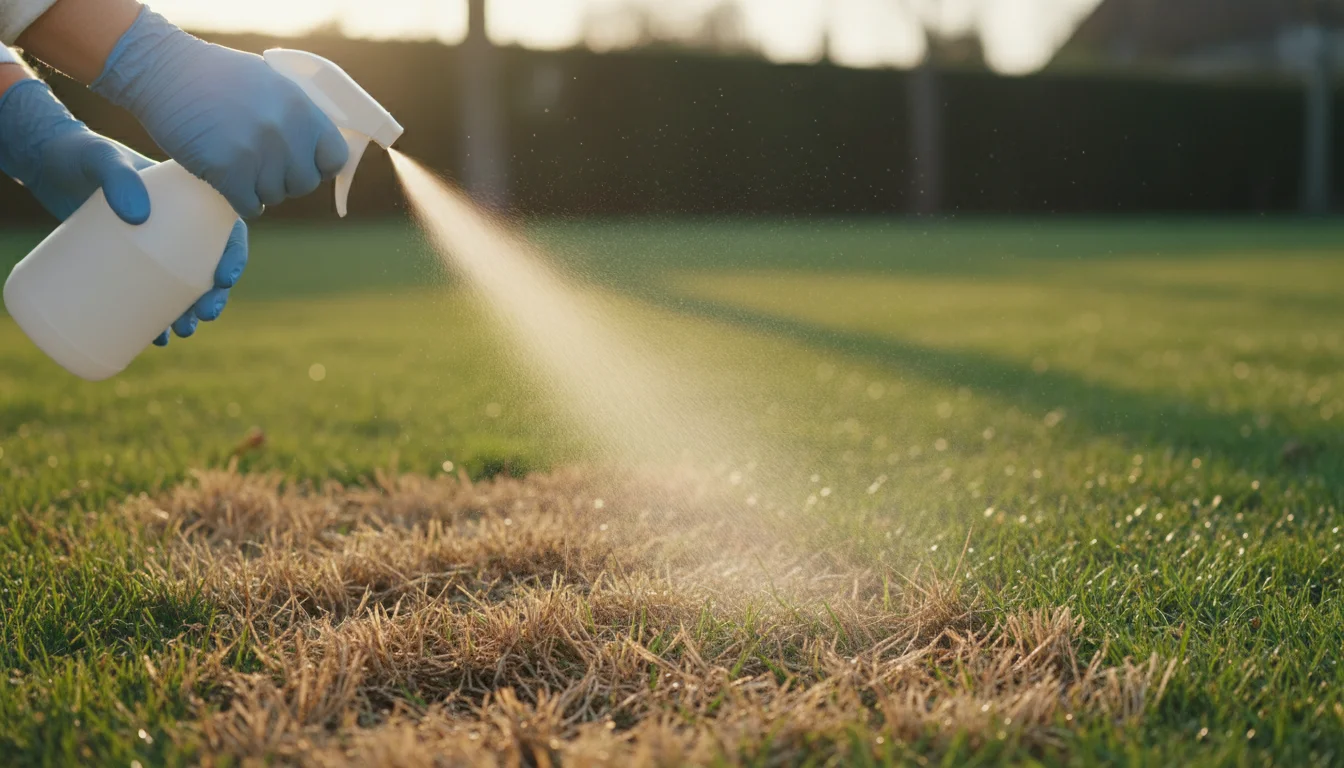
Bt is a naturally occurring bacterium that specifically targets caterpillars, including armyworms. When larvae ingest Bt-treated grass blades, they stop feeding within hours and die within 2-3 days. It’s harmless to people, pets, and beneficial insects.
Apply Bt in late afternoon when armyworms are about to feed. Use a formulation labeled for lawn pests and ensure thorough coverage. Bt loses effectiveness in strong sunlight, so evening application is critical. This works best on young larvae (under 1/2 inch long); older caterpillars are more resistant.
8. Monitor for Early Warning Signs
Armyworm moths are active in late summer and early fall. You can spot them flying low over the lawn at dusk. The presence of moths means eggs will be laid within days. Watch for small, ragged holes in grass blades – the first sign of newly hatched larvae.
Check the edges of your lawn regularly, especially near field crops or weedy areas where moths prefer to lay eggs. Catching an infestation when larvae are still small makes control far easier and less expensive. Set up a simple pheromone trap to monitor adult moth activity if armyworms are a recurring problem in your area.
Armyworms move fast, but so can you. The methods above range from immediate chemical knockdown to long-term biological control. Combine inspection, targeted treatment, and cultural practices to protect your lawn. Most infestations clear within 2-3 weeks once you intervene, and a healthy lawn recovers quickly from the damage.