Table of Contents
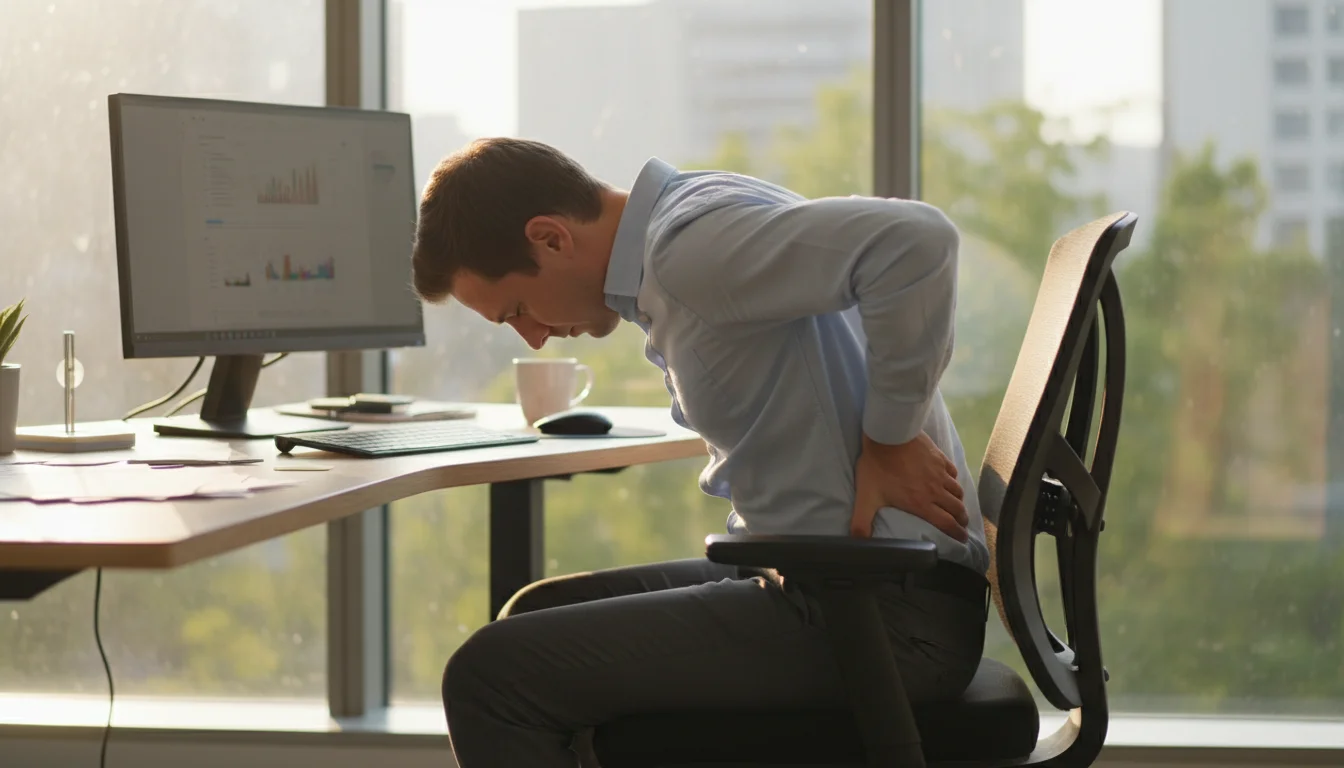
Back pain, achy joints, and leg discomfort usually share a common thread: you’re putting stress on your musculoskeletal system in ways it doesn’t appreciate. Could be how you sit, sleep, move, or don’t move. The good news is most of these issues respond well to lifestyle adjustments you can start today.
Note: This covers general discomfort and minor aches. Sharp pain, numbness, pain that radiates down your leg, or symptoms that persist beyond a few weeks need a medical evaluation to rule out herniated discs, nerve compression, or other structural issues.
1. Fix your sitting posture
Slouching compresses your lower back, rounds your shoulders forward, and puts uneven pressure on hip and knee joints. Hours of this daily adds up fast.
Sit with your weight distributed evenly on both hips. Keep your feet flat on the floor or a footrest. Your lower back should maintain its natural curve (use a small cushion or rolled towel if your chair doesn’t support it). Shoulders relaxed, not hunched up toward your ears.
If you work at a desk, check that your monitor is at eye level so you’re not craning your neck down all day.
2. Adjust your sleep setup
Your mattress and pillow can either support your spine or wreck it. A mattress that’s too soft lets you sag in the middle, straining your lower back. Too firm and your hips and shoulders don’t sink enough, creating pressure points.
Most people do well with medium-firm. If you’re a side sleeper, put a pillow between your knees to keep your hips aligned. Back sleepers benefit from a small pillow under the knees to reduce lower back arch.
Replace pillows every 1-2 years. If you wake up with neck or shoulder pain regularly, your pillow height is probably wrong.
3. Move more throughout the day
Staying in any position too long (sitting, standing, even lying down) causes stiffness. Joints need movement to pump synovial fluid around and keep cartilage healthy.
Set a timer to stand up and walk around for 2-3 minutes every hour. Doesn’t have to be exercise, just movement. Rotate your ankles, roll your shoulders, do a few squats while the coffee brews.
This helps way more than you’d think.
4. Apply targeted heat or cold
Cold reduces inflammation and numbs acute pain. Heat relaxes tight muscles and improves blood flow to achy areas.
Use cold (ice pack, frozen peas wrapped in a towel) for the first 48 hours after a new injury or if there’s swelling. 15-20 minutes at a time, never directly on skin.
Use heat (heating pad, warm bath, heat wrap) for chronic stiffness and muscle tension. Again, 15-20 minutes. Don’t fall asleep with a heating pad on.
Some people alternate between the two. Try both and see what works for your specific situation.
5. Strengthen your core
Weak core muscles make your back work harder to stabilize your spine during everyday movements. Your "core" isn’t just abs – it includes lower back muscles, obliques, and hip stabilizers.
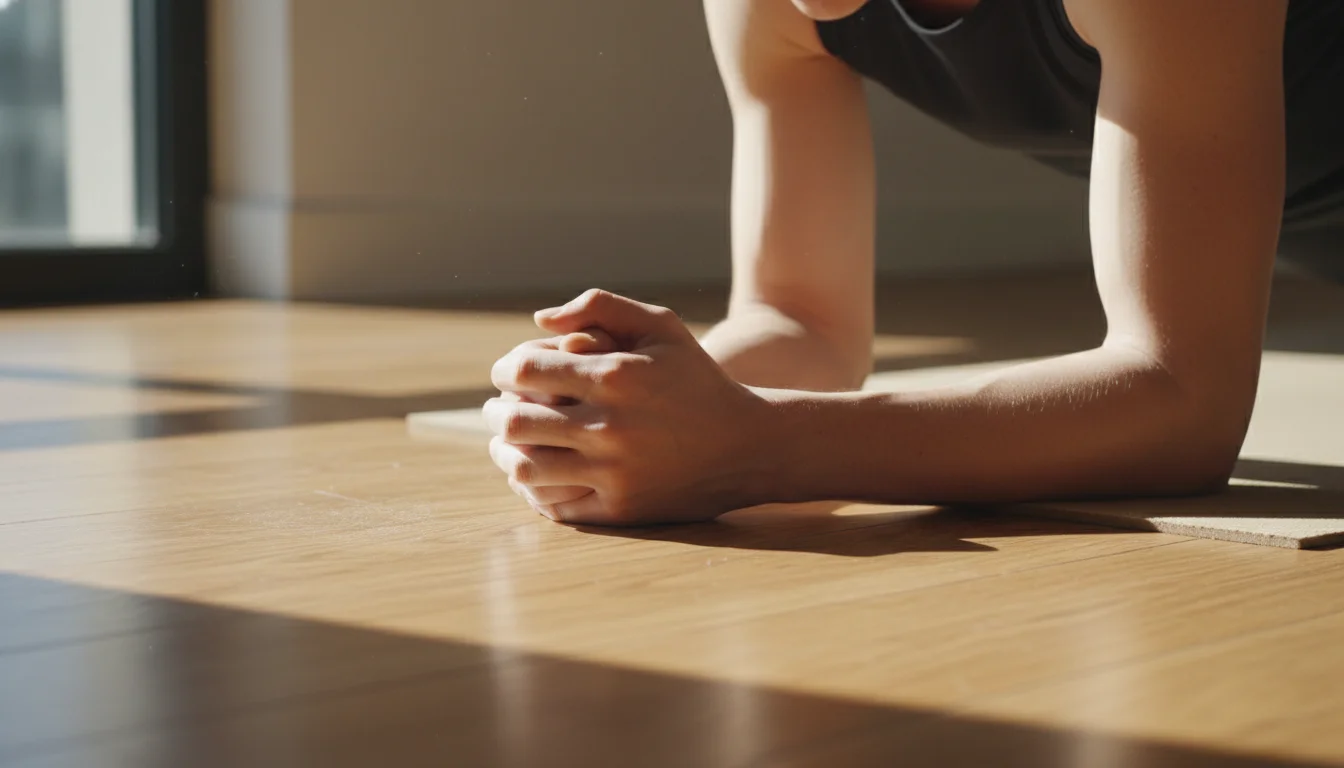
Start with simple exercises: planks (hold 20-30 seconds), bird dogs (opposite arm and leg extensions while on hands and knees), dead bugs (lying on your back, slowly lowering opposite arm and leg). Do these 3-4 times per week.
You don’t need heavy weights or complicated routines. Bodyweight exercises done consistently beat sporadic gym heroics every time.
6. Address your footwear
Worn-out shoes with no arch support throw off your alignment from the ground up. This affects your ankles, knees, hips, and eventually your lower back.
If you’re wearing the same shoes daily, check the wear pattern on the soles. Uneven wear indicates you’re walking with poor mechanics. Running shoes should be replaced every 500-800 km. Casual shoes should have adequate arch support and cushioning – those flat canvas shoes might look good but they’re not doing your joints any favors.
For people on their feet all day, investing in proper footwear is non-negotiable.
7. Modify your workspace ergonomics
If your back and joints hurt more on workdays than weekends, your workspace setup is probably the culprit.
Chair height: thighs parallel to the floor, feet flat. Desk height: elbows at 90 degrees when typing. Monitor: top of screen at or slightly below eye level, arm’s length away. Keyboard and mouse: close enough that you’re not reaching forward and rounding your shoulders.
If you’re working on a laptop, get a separate keyboard and prop the laptop up so the screen is at proper height.
Small adjustments here compound over thousands of hours.
When to escalate
See a healthcare provider if you have:
- Pain that wakes you up at night
- Numbness or tingling in your legs or feet
- Weakness in your legs
- Loss of bladder or bowel control (go immediately)
- Pain following a fall or injury
- Symptoms that don’t improve after 4-6 weeks of lifestyle modifications
Most musculoskeletal pain resolves with movement, better ergonomics, and time. But some conditions need imaging or professional treatment to prevent long-term damage.