Table of Contents
Stains happen. The question isn’t whether they’ll happen, it’s whether you’ll know what to do when they do.
1. Yellow Sweat Stains
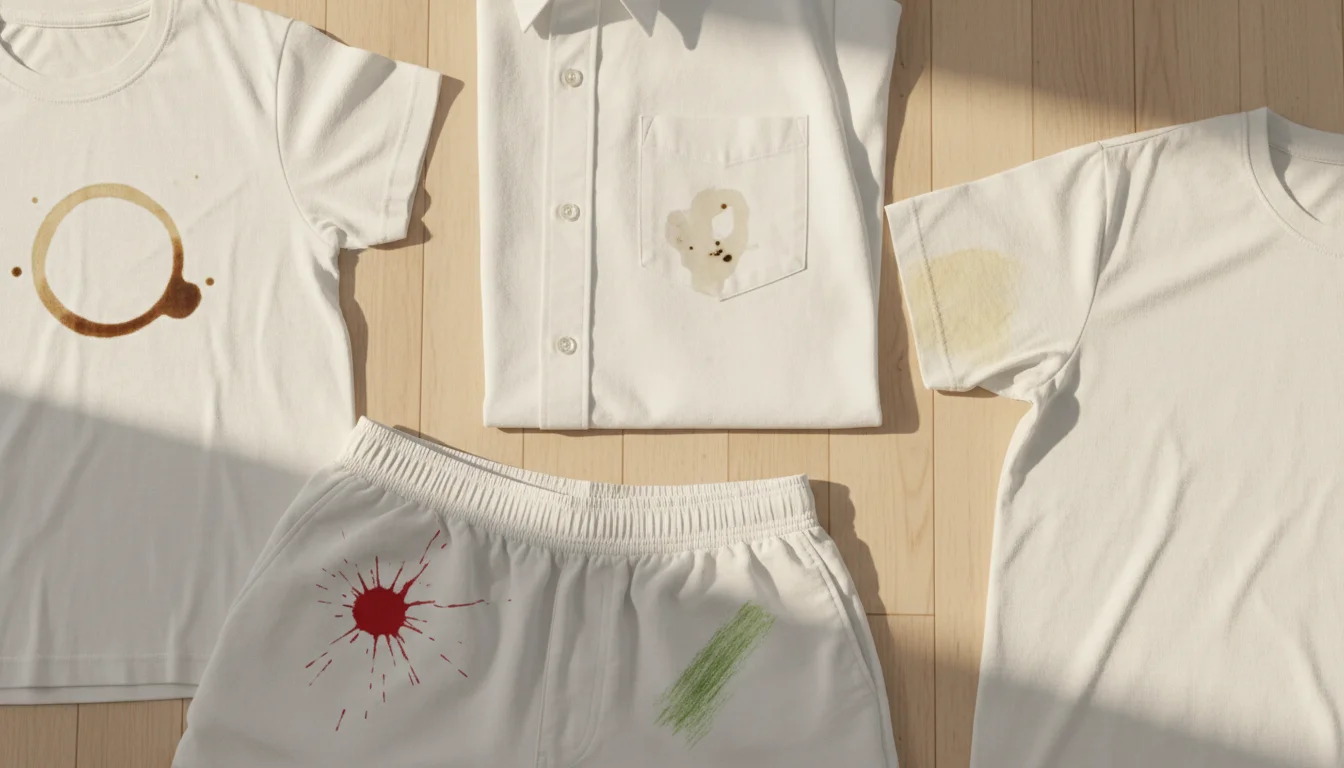
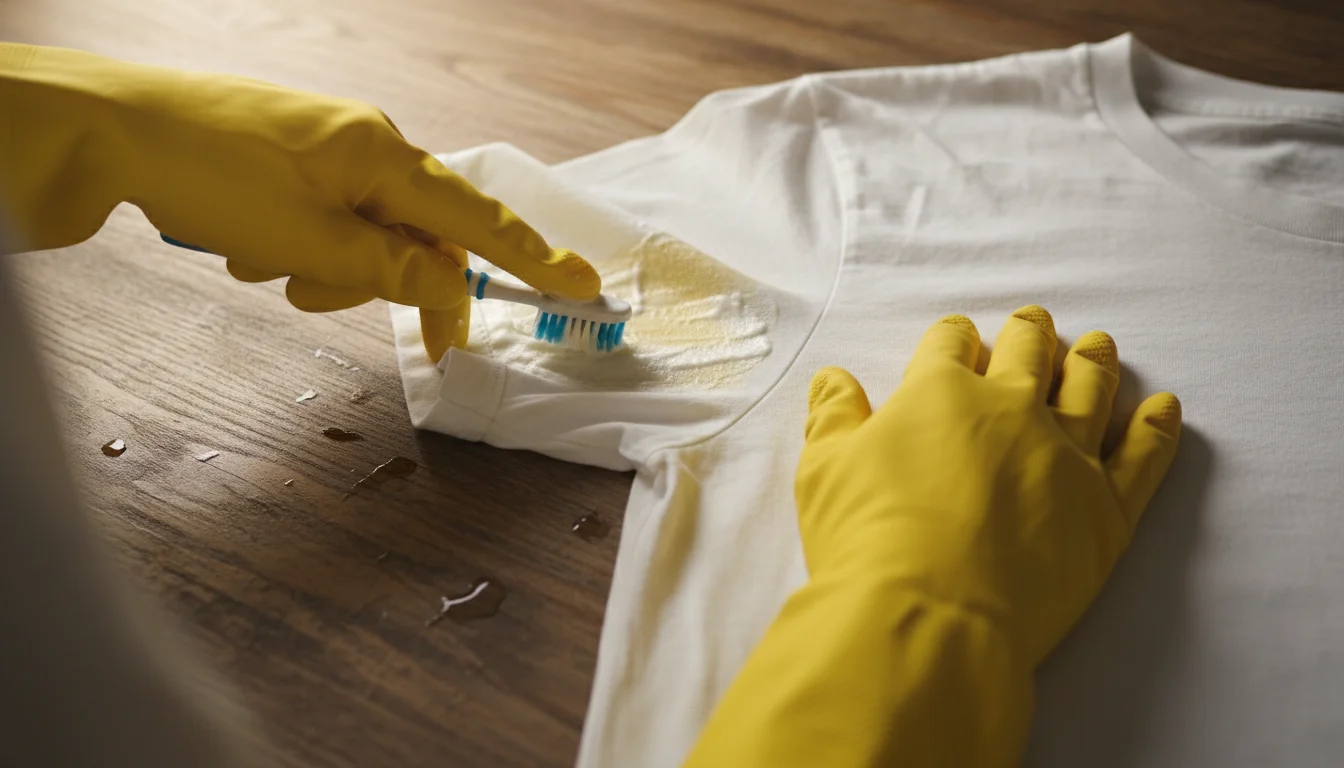
Your antiperspirant is lying to you. It’s supposed to stop sweat, but instead it’s creating those yellow armpit stains on your white shirts. The aluminum compounds in deodorant react with your sweat and body oils, and boom – permanent-looking yellow marks.
Mix equal parts hydrogen peroxide, baking soda, and water into a paste. Scrub it into the stain with an old toothbrush, let it sit for 30 minutes, then wash as normal. For stubborn stains, hit them before they dry. Once those yellows set in, they’re exponentially harder to shift.
2. Blood Stains
Blood stains are time-sensitive. If you catch them wet, they’re easy. If they dry, you’re fighting chemistry.
Pour hydrogen peroxide directly on the stain (it’ll foam – that’s it working). Dab it with a clean cloth until the stain lifts. Rinse with cold water. Never hot water – heat sets protein stains permanently.
For dried blood, soak the fabric in cold salt water for 2-3 hours before the peroxide treatment. It won’t be as clean as catching it fresh, but it’s your best shot.
3. Ring Around the Collar
Dead skin cells and body oils collect where your neck rubs against fabric. It’s gross, it’s visible, and it makes dress shirts look dingy fast.
Apply liquid laundry detergent or dish soap directly to the collar while it’s dry. Rub it in with your fingers, working it into the fabric. Let it sit for 15 minutes, then wash on the hottest setting the fabric can handle.
Better solution: treat collars before every wash, whether you see staining or not. Prevention beats removal.
4. Bleach Stains
Bleach doesn’t stain – it removes color. And you can’t put color back in. Your options are either live with it, dye the whole garment darker, or use a fabric marker to color in the bleached spot. None of these are great.
If the bleach spot is small and discrete, get a fabric marker that matches the garment color (test on a hidden seam first). Color in the spot with light strokes, blend the edges. It won’t be perfect, but it’s better than a white splotch on black jeans.
For bigger damage, you’re looking at dyeing the whole thing or accepting that it’s now loungewear.
5. Grease Stains
Grease is oil-based, so water alone won’t touch it. You need something that breaks down oils.
Cover the stain with dish soap (the kind marketed for cutting grease – Dawn works). Rub it in gently, then let it sit for 5-10 minutes. Rinse with hot water, then wash as normal. Check before you put it in the dryer – heat sets grease stains. If it’s still there, repeat the process.
Alternatively, sprinkle cornstarch or baby powder on fresh grease stains to absorb the oil before it spreads. Let it sit for 30 minutes, brush it off, then treat with dish soap.
6. Pasta Sauce Stains
Tomato-based stains are a pain because they’re both oily (from cooking oil) and acidic (from tomatoes). You need to attack both components.
Scrape off excess sauce, then run cold water through the back of the stain to push it out rather than deeper in. Apply liquid laundry detergent to the stain and let it sit for 10 minutes. Rinse. If there’s still a red tint, dab white vinegar on it to neutralize the tomato acid, then wash normally.
Don’t put it in the dryer until the stain’s completely gone. Even a faint pink shadow will set into a permanent mark.