Table of Contents
Dead body smell is caused by a specific mixture of compounds – putrescine, cadaverine, hydrogen sulfide, and volatile fatty acids – that bond chemically to porous materials. That’s why Febreze doesn’t work, why bleach doesn’t work, and why the smell returns a day after you thought you’d dealt with it. The compounds are inside the material, not on the surface.
The correct approach is a workflow, not a list of options to try randomly. Start with enzyme cleaning to break down the organic residue. Disinfect with hydrogen peroxide for pathogen control. Remove materials if contamination has soaked deep. Seal what’s left with shellac primer. Treat the airspace with ozone. Leave activated charcoal for the long tail. Call professionals when the scope exceeds what DIY can realistically handle. That sequence works. Skipping steps doesn’t.
1. Enzyme Cleaners
Standard cleaners – bleach, ammonia, most household disinfectants – kill bacteria on the surface but don’t break down the organic compounds that are actually causing the smell. The greasy residue remains, and it keeps off-gassing. Enzyme cleaners are different: they contain protease, lipase, and amylase enzymes that digest organic matter at a molecular level.
Apply generously to every contaminated surface. The cleaner needs to stay wet long enough for the enzymes to work – at minimum 15 minutes, ideally 30 minutes to an hour on porous surfaces. Don’t let it dry out mid-treatment. For carpet or subfloor contamination, apply enough to saturate through to the substrate – decomposition fluids wick down, so surface-only treatment leaves the source untouched.
Product selection matters here. Standard pet-odor enzyme cleaners (Nature’s Miracle, Rocco and Roxie) work but are formulated for urine and lighter contamination. Products specifically marketed for crime scene cleanup or trauma scene remediation are more concentrated and handle decomposition compounds more effectively. If you can source them, use them.
Expect 24-48 hours for full neutralization after treatment. The smell may be unchanged or slightly worse immediately after application – that’s the enzymes breaking down compounds, not failure. Air the space out after the dwell time.
2. Hydrogen Peroxide Disinfection
After enzyme treatment has broken down the organic compounds, disinfect. Decomposition isn’t just an odor problem – it’s a pathogen problem. Human remains carry bloodborne pathogens. If rodents are involved, add hantavirus and leptospirosis to the list. Disinfection isn’t optional.
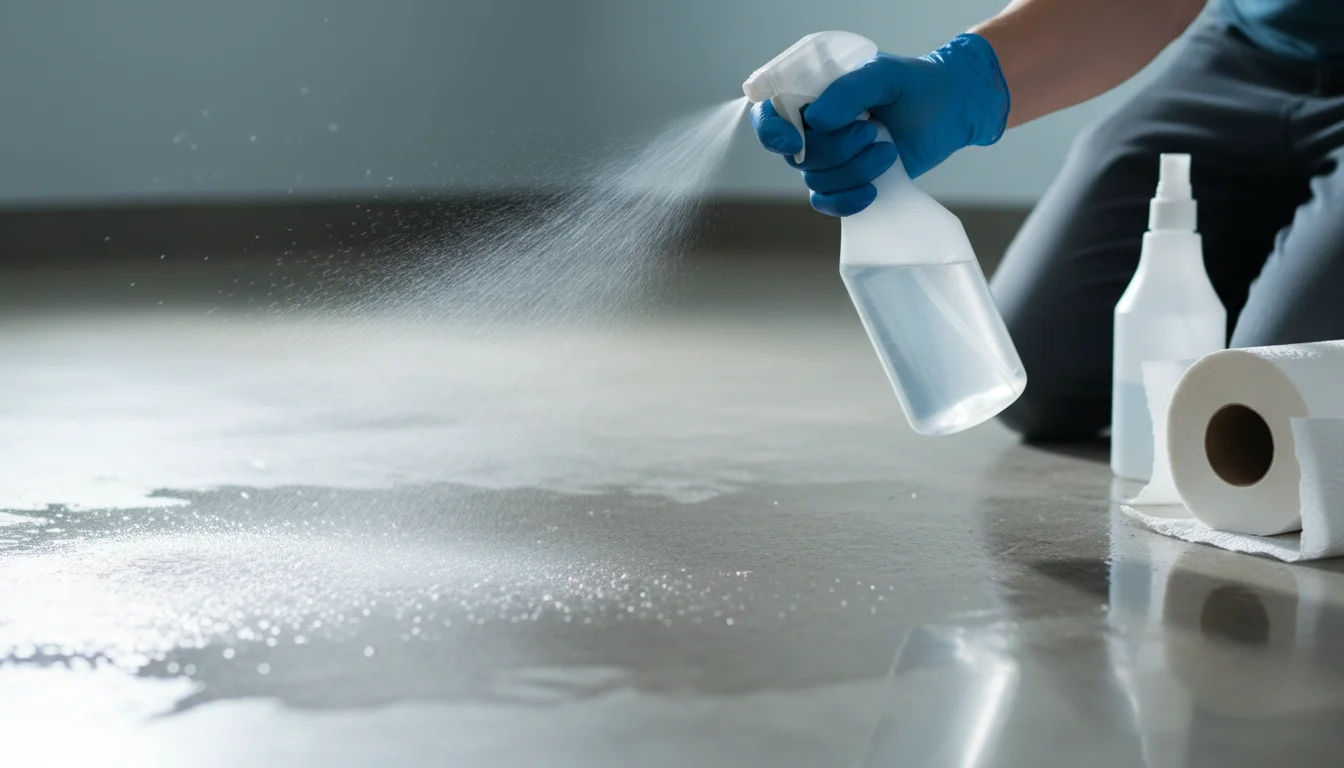
3% hydrogen peroxide (standard drugstore concentration) is what you want. Apply it directly to the treated surface and let it fizz for 10 minutes – the fizzing is the reaction with residual organic matter, and when it stops, the reaction is complete. Wipe with paper towels and bag them immediately in a sealed garbage bag. Double-bag if contamination was significant.
Hydrogen peroxide breaks down into water and oxygen, so there’s no chemical residue to worry about afterward. It’s also non-toxic once dry, which matters if children or pets will be in the space.
Wear nitrile gloves and eye protection during this step. A basic N95 mask is adequate for most scenarios; if you’re dealing with severe or prolonged decomposition, step up to a P100 respirator.
3. Remove Contaminated Building Materials
This is the step most people skip, and it’s why the smell comes back. Enzyme cleaners and ozone can reduce odor from surface contamination, but decomposition fluids wick into carpet, padding, subfloor, drywall, and concrete. Once the compounds are bonded inside porous building materials, no amount of surface treatment will eliminate them – the material continues to off-gas for months or years.
The signs that removal is necessary: visible staining or discoloration on flooring or walls, odor that persists after two rounds of enzyme treatment, or any scenario where the body was undiscovered for more than a few days.
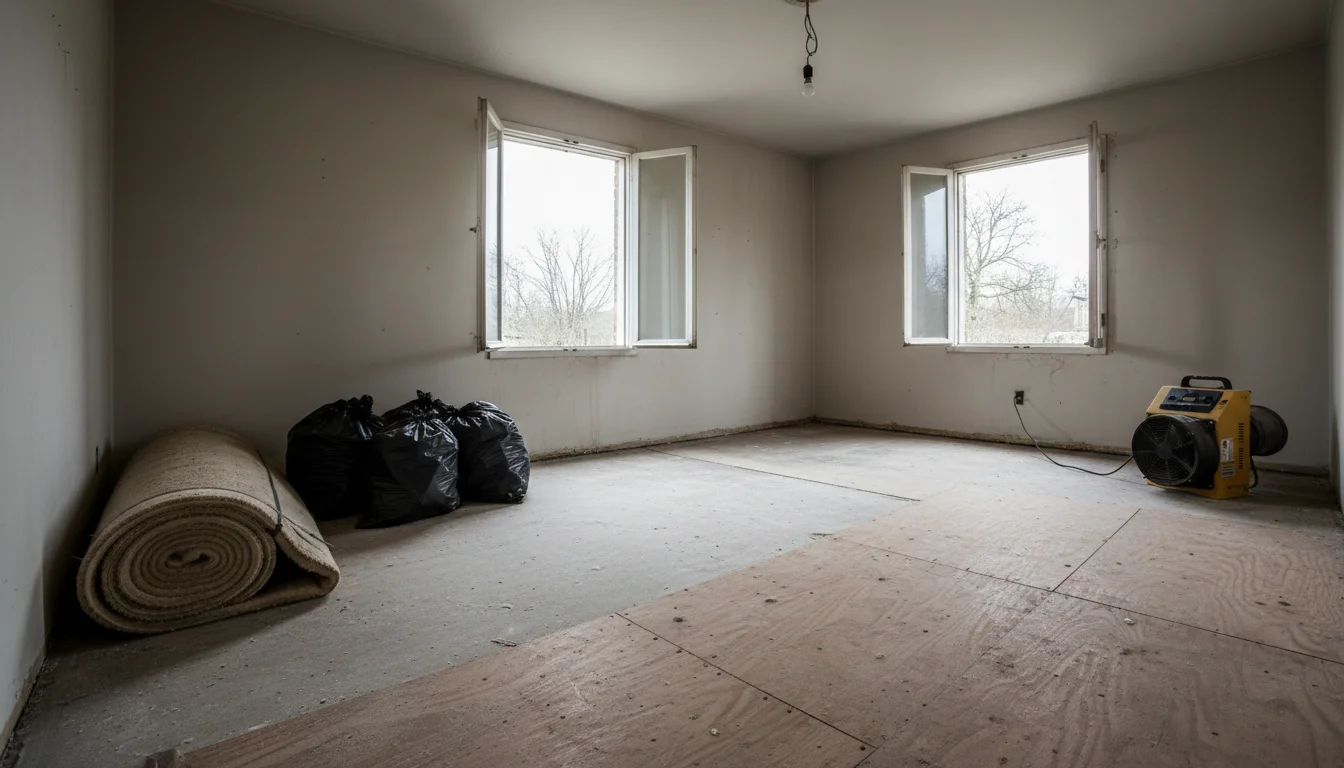
What typically needs to come out: carpet and pad (always, if directly contaminated), sections of subfloor if fluids reached it, and drywall in the affected area. Cut generously – go 12 inches (30 cm) beyond any visible contamination in all directions, because fluids spread laterally through materials. Double-bag everything in contractor-weight garbage bags before moving it through the rest of the house.
This is hard, dirty work and it’s emotionally brutal if it involves someone’s home. But it’s the only reliable path to permanent odor elimination when contamination is deep.
4. Odor-Sealing Primer
After enzyme treatment and material removal, any porous surfaces that remain – exposed subfloor, concrete, wall studs, drywall that wasn’t removed – need sealing before new materials go in. Shellac-based primer creates a vapor barrier that blocks residual odor compounds from off-gassing into the space.
Zinsser BIN is the standard product. It’s shellac-based, not latex – that distinction matters. Latex-based primers don’t seal odors effectively. Shellac does. Apply two coats with a brush or roller, allowing 30-45 minutes between coats for full drying. Cover the entire affected area, not just stained spots. Odor compounds migrate laterally through wood and concrete, so the contamination extends beyond what’s visible.
BIN has strong solvent fumes during application – ventilate thoroughly, keep flames away, and wear a respirator or work with windows open. Once dry, the fumes dissipate completely and the sealed surface is inert.
If you’re repairing and repainting afterward, BIN also provides excellent adhesion for topcoats. It’s genuinely useful beyond odor control.
5. Ozone Generator Treatment
Ozone generators produce O3 molecules that oxidize odor compounds on contact, breaking down their molecular structure. The key advantage over everything else on this list: ozone is a gas. It travels through air currents and diffuses into wall voids, ceiling cavities, HVAC ducts, and soft furnishings that surface cleaners can’t reach. For decomposition odor that’s spread into areas you couldn’t physically access, ozone reaches where sprays and wipes don’t.
Seal the room – close doors, block vents if possible – and run the generator for 2-4 hours depending on room size. Leave the space. Ozone at treatment concentrations is a lung irritant; everyone including pets must be out. After the treatment window, open windows and run fans for at least 2 hours before re-entry. Residual ozone converts back to oxygen within 30-90 minutes, but ventilation speeds this considerably.
You don’t need to own an ozone generator. Equipment rental shops carry commercial-grade units, which are more effective than consumer models. Rental runs $30-80 per day in most areas.
One critical caveat: ozone oxidizes odor compounds but doesn’t remove the physical contamination underneath. It’s the final-step air treatment after you’ve done the enzyme cleaning and material removal, not a substitute for them.
6. Activated Charcoal and Zeolite
After active remediation, a low-level residual smell often persists for weeks to months – particularly noticeable in warm weather when off-gassing increases. Activated charcoal and zeolite are the best passive absorbers for this long tail. Both significantly outperform baking soda on decomposition compounds.
Place mesh bags or open containers of activated charcoal throughout the affected area: near the original source, in corners, on shelves. The charcoal traps odor molecules on its porous surface and works continuously without any effort on your part. Reactivate it monthly by leaving it in direct sunlight for a few hours – the UV breaks down the trapped compounds and restores absorption capacity. Zeolite works the same way and refreshes with a simple rinse and dry.
Both are reusable and last much longer than disposable options like baking soda boxes. For a severely affected room, start with 1-2 lbs (450-900g) of charcoal distributed across the space. Replace or reactivate monthly until the odor is consistently absent.
7. Professional Biohazard Remediation
When contamination is beyond DIY scope – fluids into structural members, extended decomposition periods, or if you simply can’t face it – professional biohazard remediators are the right call. These aren’t general cleaning companies. They’re certified specifically for bloodborne pathogen exposure, licensed to handle and dispose of biological waste, and equipped with industrial-grade tools: HEPA air scrubbers, commercial enzyme formulations, and encapsulating sealants.
Costs run $1,000-$5,000 for a typical residential scene, more for severe or extensive contamination. Before hiring anyone, check your homeowner’s insurance policy. Many policies cover biohazard remediation as part of a covered loss when there’s been an unattended death on the property. The claim typically requires a police report or death certificate. Get the estimate in writing before work starts.
Look for companies certified by the American Bio Recovery Association (ABRA) or the Institute of Inspection, Cleaning and Restoration Certification (IICRC). Ask for proof of insurance and certification before they start. Legitimate companies will provide both without hesitation.
When to Call a Professional for Dead Body Smell
Call a biohazard remediation company if:
- The death was unattended for more than 2-3 days
- You can see visible staining on flooring, walls, or ceiling
- Fly activity or insect infestation at the scene
- The odor persists strongly after two rounds of enzyme treatment
- You’re a tenant or property manager and need documented remediation for liability purposes
- The structural impact is significant (subfloor contamination, wall cavity involvement)
- You don’t have the physical or emotional capacity to handle it yourself – that’s a completely legitimate reason
Don’t attempt to handle a scene with extensive decomposition without professional guidance. The pathogen risk is real and the cleanup is genuinely difficult.
FAQ
How do you get rid of dead body smell naturally?
Enzyme cleaners are the most natural option – the cleaning action is biological rather than chemical, and products like Bac-Out use plant-based enzymes. Activated charcoal is a natural mineral absorber. Ozone is naturally occurring (it’s what you smell after a lightning strike). That said, "natural" doesn’t solve severe contamination on its own. For deep saturation in building materials, you need to physically remove the material. There’s no natural shortcut for that step.
How long does dead body smell last?
Without treatment, months to years. The odor compounds bond to porous materials and continue volatilizing – warm weather and high indoor humidity accelerate this. With full remediation (enzyme treatment, primer sealing, ozone), most of the smell clears within a few weeks. Some faint residual odor can persist for one to three months even after thorough remediation, which is where charcoal absorbers earn their keep. If strong odor persists beyond 6 weeks after complete treatment, contamination in building materials is likely still present.
Can dead body smell make you sick?
The smell itself at typical residential exposure levels isn’t toxic. The concern is the source, not the odor molecules. Human decomposition carries bloodborne pathogen risk, and this is why proper PPE during cleanup matters. After thorough cleaning and disinfection, passive odor exposure from residual smell in walls or materials poses no meaningful health risk – it’s unpleasant, not dangerous. If you’re actively disturbing contaminated material, use gloves, eye protection, and at minimum an N95 mask.
How do you get dead body smell out of clothes?
Wash immediately on the hottest cycle safe for the fabric, with an enzyme laundry additive (Bac-Out Laundry Spray, Nature’s Miracle Laundry Treatment, or similar). Air dry outdoors if possible – sunlight and airflow help with residual odor more than the dryer does. For persistent smell after one wash, repeat rather than drying and setting the odor with heat. Dry-clean-only items with significant contamination may need professional treatment or disposal if the odor can’t be removed safely at home.