Table of Contents
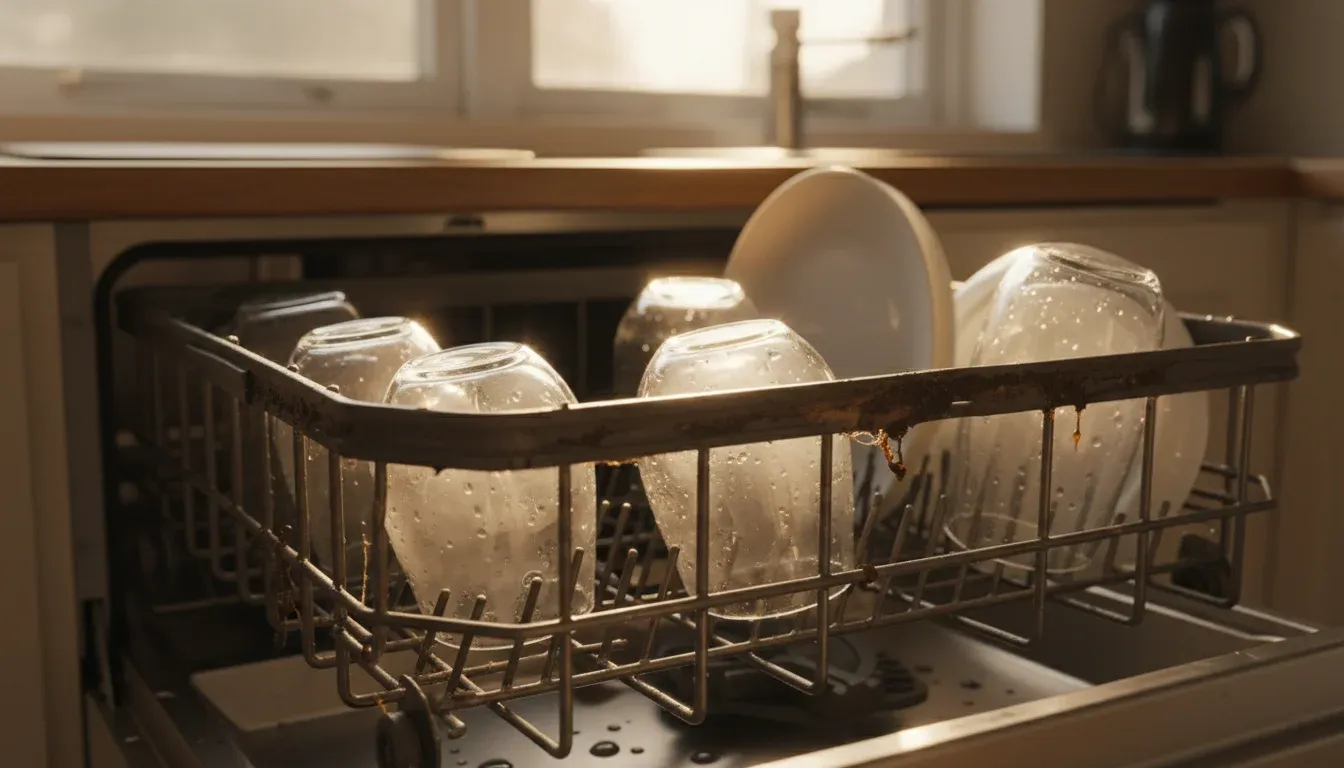
You open your dishwasher expecting clean dishes and get hit with a wave of musty, sour air instead. The machine designed to clean your dishes has become a source of foul odors, and your "clean" plates smell like wet dog and old food. This is more common than you think—and completely fixable.
Dishwasher odors develop when food particles, grease, and soap scum accumulate in hidden areas. The warm, damp environment breeds bacteria and mold, creating smells that transfer to your dishes. Regular cleaning prevents this buildup and keeps your dishwasher smelling fresh.
1. Clean with White Vinegar Monthly
Vinegar is the workhorse of dishwasher cleaning. Its acidity cuts through grease, dissolves mineral deposits, and kills odor-causing bacteria without harsh chemicals.
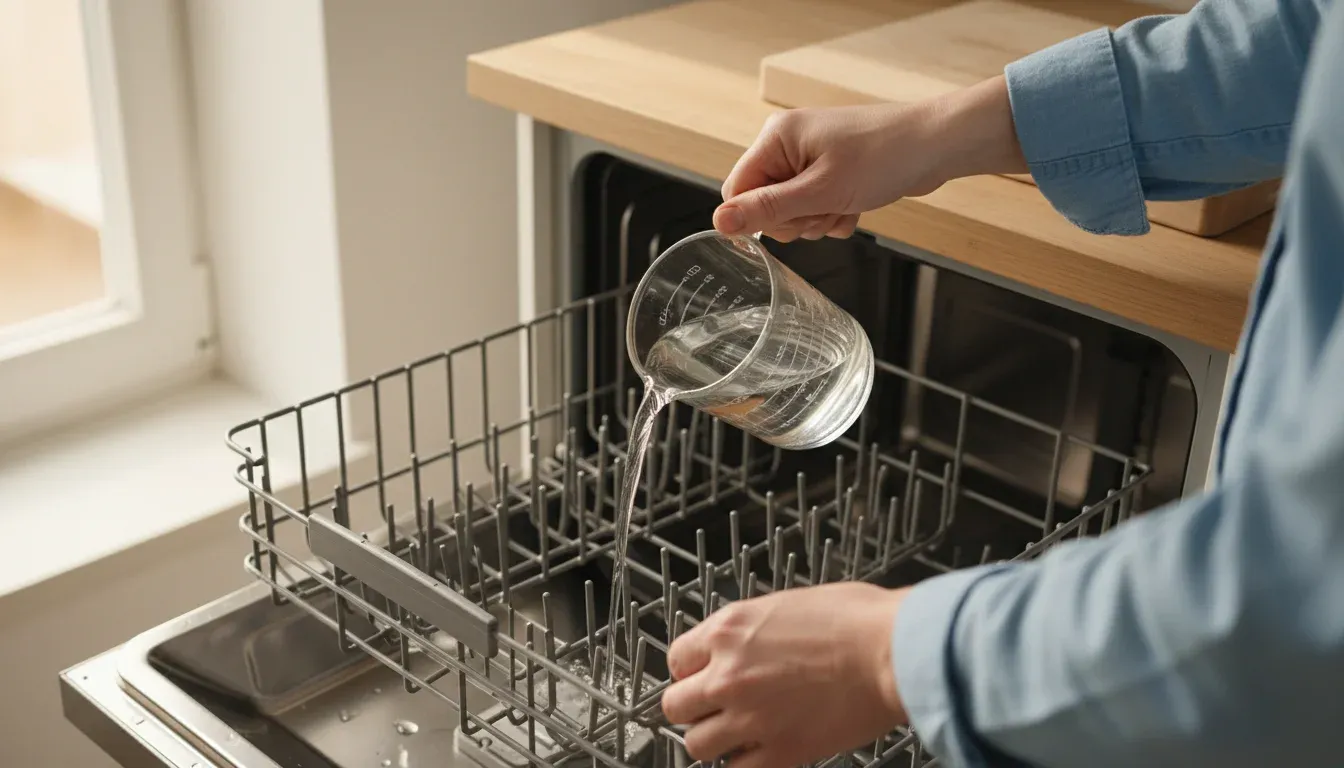
Start with an empty dishwasher. Place one cup of white vinegar in a dishwasher-safe bowl on the top rack. Run the hottest cycle available, skipping the drying cycle. The vinegar steam penetrates every corner, breaking down buildup as the cycle runs.
Leave the door open after the cycle finishes to air-dry. The vinegar smell dissipates within hours, taking other odors with it. Do this monthly for maintenance, or weekly if your dishwasher develops smells quickly.
Don’t add detergent during vinegar cycles—the chemicals can interact and reduce effectiveness. And never mix vinegar with bleach; this combination creates dangerous chlorine gas. Use vinegar alone or alternate with other cleaning methods on different days.
2. Deodorize with Baking Soda
Baking soda neutralizes odors rather than masking them. It absorbs smells and provides gentle abrasive action that scrubs away residue.
After a vinegar cycle (never mix them simultaneously), sprinkle one cup of baking soda across the bottom of the empty dishwasher. Run a short hot cycle. The baking soda scrubs the interior while neutralizing any remaining acidic or musty smells.
This combination—vinegar first, then baking soda—creates a thorough cleaning system. The vinegar handles grease and bacteria; the baking soda finishes with deodorizing and light scrubbing. Together they restore freshness without commercial cleaners.
For severe odors, let the baking soda sit overnight in the empty dishwasher before running the cycle. The extended contact time improves absorption of deep-set smells.
3. Deep Clean with Bleach for Mold and Mildew
When vinegar and baking soda aren’t enough, bleach handles stubborn mold, mildew, and severe bacterial buildup. Use this method only when necessary—bleach is powerful but harsh.
Pour one cup of bleach into a dishwasher-safe bowl and place it on the top rack. Run a full hot cycle without detergent. Skip the drying cycle and let the interior air out completely. The bleach kills mold spores and sanitizes every surface.
Important warnings: Never use bleach in stainless steel dishwashers—it causes pitting and corrosion. Never mix bleach with vinegar or baking soda—this creates toxic chlorine gas. If your dishwasher has stainless steel parts, stick to vinegar and baking soda methods.
Use bleach cleaning quarterly at most, or when you see visible mold or smell severe mustiness that vinegar can’t eliminate.
4. Clean the Drain Trap Regularly
The drain trap catches food particles but often gets overlooked during routine cleaning. When debris rots in the trap, it creates the worst dishwasher odors.
Locate the drain trap—usually a cylindrical filter at the bottom center of the dishwasher. Twist and lift it out according to your model’s instructions. Rinse it under hot running water, scrubbing with a soft brush to remove stuck-on food.
For deep cleaning, soak the trap in warm water mixed with vinegar for 20 minutes. This dissolves grease and kills bacteria in the mesh. Rinse thoroughly before reinstalling.
Clean the drain trap after each dishwasher load for best results. At minimum, clean it weekly. This single habit prevents most dishwasher odor problems before they start.
5. Clear and Clean the Filter
Modern dishwashers have filters that capture food particles during cycles. When filters clog, water can’t drain properly and food sits, rotting and smelling.
Remove the filter—usually located at the bottom of the dishwasher tub. Most twist out or lift out easily. Rinse under hot water, using a soft brush to scrub away trapped food and grease.
For thorough cleaning, wash the filter by hand in warm soapy water. Use a soft-bristle brush on stubborn particles. Rinse completely until water runs clear through the mesh.
Reinstall the filter securely. A loose filter allows food to bypass into the pump and drain system, creating bigger problems. Replace filters that are cracked, warped, or permanently stained—they’ll never clean properly.
Check your filter weekly. Clean it whenever you see food buildup, or at least monthly as preventive maintenance.
6. Prevent Future Odors with Smart Habits
Cleaning eliminates current odors; habits prevent new ones. Small changes to how you use your dishwasher keep smells from returning.
Scrape dishes thoroughly before loading. While modern dishwashers handle some food residue, large particles clog filters and rot in drains. Scrape plates into the trash or compost, then load.
Don’t pre-rinse dishes excessively. Most modern dishwashers have sensors that detect how dirty dishes are. When dishes are too clean, the dishwasher runs a lighter cycle that doesn’t clean the interior thoroughly. Scrape, don’t rinse.
Run your dishwasher regularly. Letting it sit for days with damp dishes creates mold and mildew. Run full loads, but don’t wait more than two days to start a cycle.
Leave the door slightly ajar after cycles complete. This allows air circulation that dries the interior and prevents moisture buildup. Even an inch of gap makes a significant difference.
A smelly dishwasher doesn’t mean your appliance is broken—it just needs attention. Start with monthly vinegar cycles and weekly filter cleaning. Add baking soda for stubborn odors, and use bleach only for severe mold problems. Establish smart loading and maintenance habits to prevent smells from returning. Your dishwasher will stay fresh, and your dishes will actually smell clean when the cycle finishes.