Table of Contents
Eczema doesn’t go away – not reliably, not permanently. Here’s how to get rid of eczema flares and keep them from coming back: the methods below work on different parts of that cycle. Emollients and bathing habits maintain the skin barrier day-to-day, topical corticosteroids treat active flares, trigger avoidance prevents the next one, antihistamines cut nighttime itch, and wet wrap therapy is the rescue option when a flare goes severe. Use them in combination. A single method in isolation is usually not enough.
1. Emollient moisturizer
This is the foundation of eczema management and the one thing every clinical guide agrees on. A compromised skin barrier is what makes eczema skin prone to flares in the first place – it doesn’t hold moisture well and lets irritants in. Emollients repair and reinforce that barrier continuously.
Thick formulations work better than thin ones. The hierarchy: petroleum jelly (Vaseline) and ointments like Aquaphor at the top, followed by creams (CeraVe Moisturizing Cream, Vanicream, Eucerin Original), with watery lotions at the bottom. Ointments are more occlusive and better for barrier repair, but some people find them too greasy for daytime use – creams are a reasonable compromise. What you don’t want is a fragrance-loaded hand lotion that evaporates in an hour.
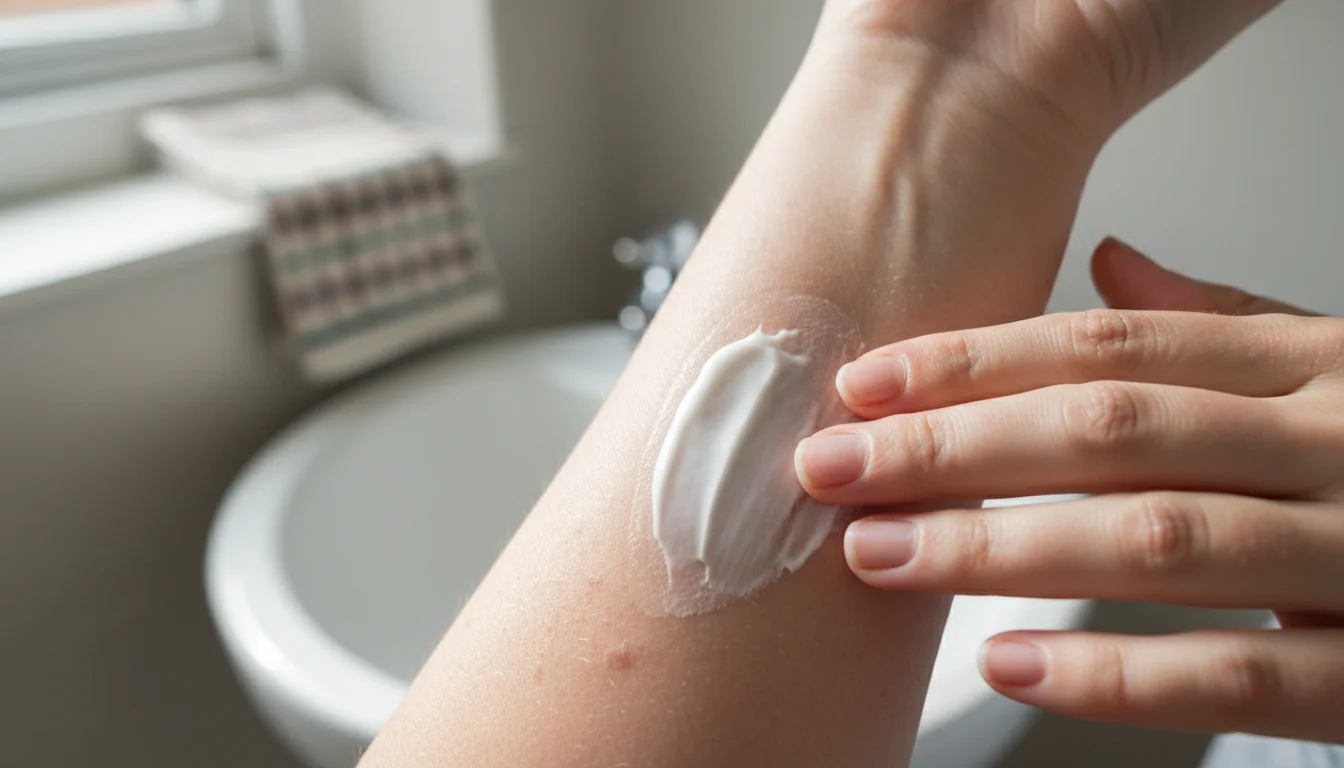
Apply at least twice a day, every day, not just during flares. After every handwash. After any water contact. Apply to damp skin for better absorption. If you’re using a topical steroid, apply the emollient on top of it within a few minutes – this locks in hydration and also means you need less total steroid to get the same result.
For children, use a fragrance-free, dye-free cream. Avoid products with preservatives that are known skin sensitizers (methylisothiazolinone shows up in a lot of "sensitive skin" products and is a common contact allergen in eczema patients).
2. The 3-minute rule (soak-and-seal bathing)
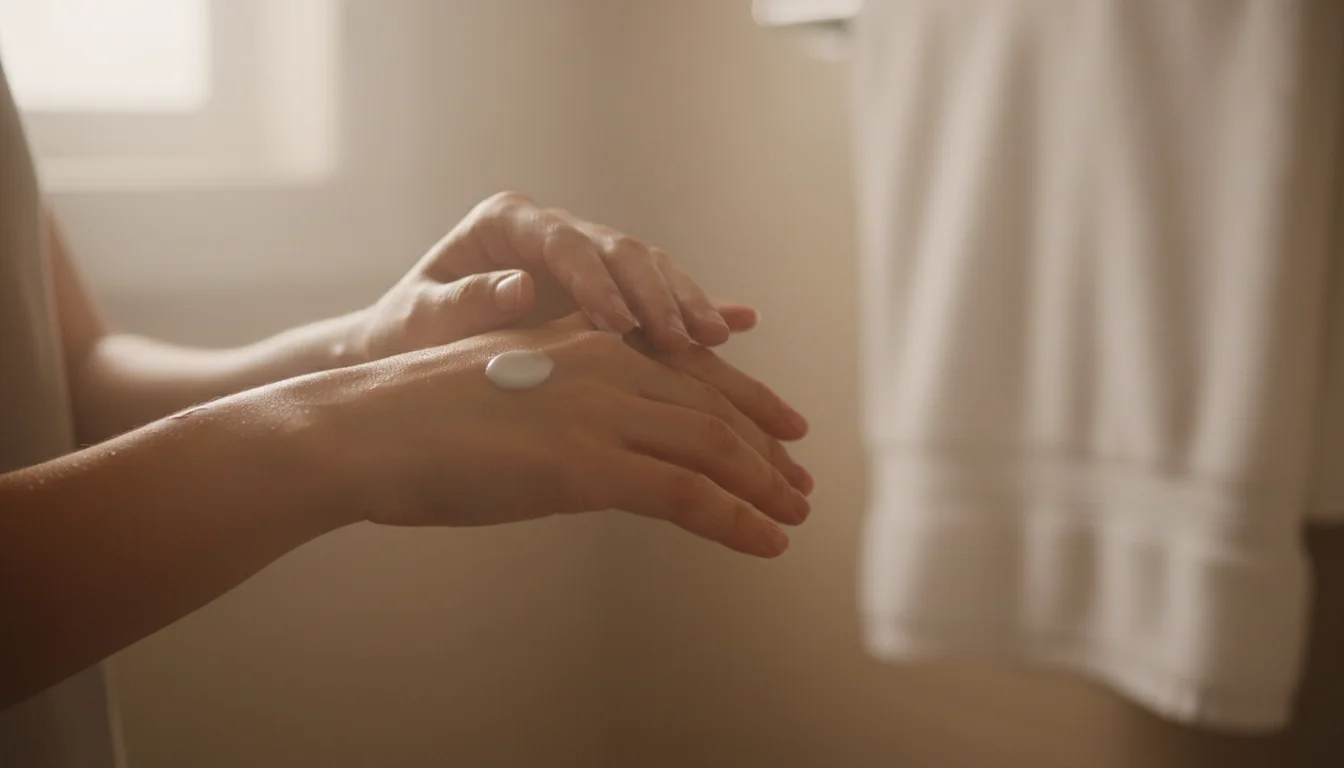
The 3-minute rule is a bathing protocol that significantly boosts what your moisturizer can do. The principle: take a short lukewarm bath or shower (five to ten minutes maximum), then apply emollient within three minutes of patting dry, while skin is still slightly damp. That window is when the outermost skin layer is hydrated and the emollient can lock that moisture in. Wait until skin is fully dry and you’ve lost the benefit – you’re replacing moisture instead of sealing it.
Temperature matters. Hot water strips barrier lipids faster than they regenerate and often triggers immediate itch through vasodilation. Lukewarm means comfortably warm, not hot enough to cause redness. If your skin looks pink after a shower, the water was too hot.
Duration matters. Five to ten minutes is enough to hydrate the skin. Every additional minute under hot water increases lipid stripping with no offsetting benefit.
Skip standard soap on affected areas. Soap is alkaline and disrupts the skin’s slightly acidic pH, which matters for barrier integrity and the skin microbiome. Use a fragrance-free syndet (synthetic detergent bar) or eczema-specific wash instead. The difference isn’t subtle – switching cleansers is one of the faster wins for people who haven’t tried it.
Pat dry with a soft cotton towel. Don’t rub – inflamed skin and friction don’t mix, and rubbing spreads bacteria.
3. Topical corticosteroids for flares
When a flare hits and emollient alone isn’t holding it, topical corticosteroids are the standard treatment. They suppress the local immune response driving the itch-scratch-inflammation cycle.
Potency tiers matter and this is where most people either undertreat or overthink it:
- OTC (mild): Hydrocortisone 1% – appropriate for face, neck, skin folds, and children’s skin. Safe for short-term use on most body areas.
- Moderate (prescription): Clobetasone butyrate 0.05%, triamcinolone acetonide 0.1% – for trunk and limbs when hydrocortisone isn’t cutting through the flare.
- Potent (prescription): Betamethasone valerate 0.1%, mometasone furoate – for thick plaques or resistant areas on the body. Not for face.
- Very potent (prescription): Clobetasol propionate 0.05% – short-term only, typically under specialist guidance.
Application technique: use a thin smear, not a thick layer. The fingertip unit (FTU) is the standard measure – one FTU is the amount squeezed from a 5mm tube nozzle from fingertip to first knuckle, roughly 0.5g. Two FTUs covers an adult hand. This prevents overuse without guesswork.
Apply to damp skin after bathing, then apply emollient on top within a few minutes. Use for three to seven days until the flare settles, then stop. Don’t use continuously as a preventive measure.
Steroid phobia is real and genuinely harmful. People underuse topical steroids during active flares because they’re worried about side effects, which means flares drag on longer and require more total steroid exposure to eventually control. For short-term flare treatment (three to seven days), the risk-benefit calculation strongly favors using them. Long-term daily use is a different story – that causes skin thinning, stretch marks, and reduced effectiveness over time.
For people with frequent flares in the same location, proactive weekend therapy is worth discussing with a doctor: applying corticosteroid cream to prone areas once or twice weekly during remission to prevent the next episode.
4. Avoid eczema triggers
This is the prevention layer – what keeps flares from starting in the first place. Triggers are individual, but the most common ones are:
Fragrances: The leading irritant in eczema. Found in soaps, laundry detergent, fabric softener, cleaning products, cosmetics, and candles. "Unscented" products sometimes still contain fragrance chemicals to mask the smell – look for "fragrance-free" specifically.
Wool and coarse synthetics: Direct contact with rough fabrics triggers itch and inflammation. Cotton, bamboo, and smooth synthetic athletic fabrics are better options. Check clothing tags and swap out anything that sits directly on affected skin.
Sweat: Sweat residue on skin is a common trigger. Rinse or shower after exercise, and wear moisture-wicking fabrics during it.
Temperature extremes: Both sudden cold and prolonged heat worsen eczema. Dry, cold air in winter increases transepidermal water loss dramatically – this is why many people’s eczema is significantly worse in winter. A humidifier in the bedroom (45-55% relative humidity) helps with indoor humidity.
Nickel: A common contact allergen. Found in jewelry, jean buttons, watch backs, metal clasps. If eczema tracks to spots that contact metal, nickel is the likely culprit.
Cleaning products: Dish soap, household cleaners, and hand sanitizers are all stripping agents. Wear gloves for dish washing. Rinse hands thoroughly and apply emollient immediately after any cleaning product contact.
Keeping a brief diary during flares – what you ate, wore, cleaned with, and did in the 24-48 hours before – is more useful than generic avoidance lists. Triggers are personal.
5. Antihistamines for nighttime itch
Histamine is not the primary driver of eczema itch – which is why non-drowsy second-generation antihistamines (loratadine/Claritin, cetirizine/Zyrtec) have limited specific evidence for eczema. The reason antihistamines are still recommended is more practical: sedating first-generation antihistamines (diphenhydramine/Benadryl, hydroxyzine) cause drowsiness, which breaks the itch-scratch cycle during sleep.
The cycle matters. Scratching during sleep happens below conscious control, causes skin damage, introduces bacteria, and prolongs flares. Taking diphenhydramine 25-50mg at bedtime during a flare reduces nocturnal scratching effectively.
Hydroxyzine (prescription) is stronger than OTC diphenhydramine and is sometimes specifically prescribed for eczema because of this. Ask your doctor if OTC options aren’t providing enough overnight relief.
Don’t take first-generation antihistamines during the day if you need to function – the cognitive impairment is real. If you want daytime itch relief and have a concurrent allergic component (seasonal allergies, pet allergies), cetirizine or loratadine can help with that piece. But for the itch of eczema specifically, the evidence is thin.
6. Wet wrap therapy (severe flares)
Wet wrap therapy is a rescue technique for severe flares that aren’t responding to the other methods. It’s not a daily routine – it’s what you do when a flare is bad enough to interfere with sleep or daily function for more than a day or two.
How it works: the damp inner wrap creates a semi-occlusive environment that boosts absorption of whatever topical you applied by up to 10-fold compared to open skin application. The outer dry layer prevents evaporation and provides a physical barrier against scratching overnight.
How to do it:
- Bathe in lukewarm water for five to ten minutes.
- Pat dry gently.
- Apply corticosteroid cream (or emollient only, if using for maintenance rather than active flare) to affected areas while skin is still slightly damp.
- Apply a layer of emollient over the top.
- Dampen bandages or tubular garments (Tubifast is a commonly used brand) in warm water. Wring out – damp, not dripping.
- Apply the damp layer over the treated skin.
- Cover with a dry layer: dry tubular bandages, cotton pajamas, or dry socks for hands and feet.
- Leave in place two to six hours, or overnight.
For children, wet pajamas covered by dry pajamas works well for body coverage without the need for bandaging.
Use for two to seven days during a severe flare, then return to standard emollient and steroid cream without the wrap. Don’t use wet wraps on skin that’s actively weeping, crusting, or showing signs of infection – a warm, damp environment accelerates bacterial growth, and infected skin needs antibiotics first.
When to see a doctor
Home management is appropriate for mild to moderate eczema. See a doctor if:
- Skin shows signs of infection: weeping, yellow crusting, increased warmth, red streaks, or the affected area is getting worse rather than better despite treatment
- A flare hasn’t responded to OTC hydrocortisone 1% after seven to ten days
- Eczema is affecting the face, eyelids, or genital area – these locations need medical guidance on appropriate treatment strength
- A child under two has significant eczema – prescription treatment and allergy assessment may be needed
- You have frequent severe flares (more than 3-4 per year) – a GP referral to dermatology is worth pursuing for prescription options and possible patch testing to identify contact allergens
- The eczema pattern doesn’t match typical atopic dermatitis – contact dermatitis, seborrheic dermatitis, and psoriasis can look similar and require different management
FAQ
How do you get rid of eczema fast?
For a flare already underway: topical corticosteroid applied twice daily (OTC hydrocortisone 1% for mild, prescription-strength for moderate to severe), with thick emollient applied on top. Apply to skin damp from bathing for better absorption. Results are typically visible in two to three days. For severe flares, wet wrap therapy after the corticosteroid cream boosts absorption up to 10-fold and provides a scratching barrier overnight – visible improvement in 24 to 48 hours. Nothing clears eczema in hours – anything claiming same-day results isn’t managing real eczema.
What triggers eczema?
The most common: fragrances in soaps and detergents (the leading irritant trigger – switch to fragrance-free everything first), wool and coarse synthetic fabrics in direct contact with skin, sweat, temperature extremes (cold dry air in winter is a major one), nickel in jewelry and metal clothing hardware, and cleaning products. Food triggers are less common in adults than people assume – in children, dairy, eggs, and wheat are the most implicated. Triggers are personal, not universal. A 48-hour diary kept during flares (what you wore, used, ate, and did) is more useful than any generic list.
Does eczema go away?
Childhood eczema clears completely in roughly 60-70% of cases by adulthood. Adult-onset eczema rarely resolves completely. The realistic expectation for most people is extended remission periods with occasional flares, where good management makes flares less frequent and less severe over time. There’s no cure currently. What changes with age and treatment isn’t the underlying tendency but how well you can keep it controlled.
What is the 3-minute rule for eczema?
Apply emollient within three minutes of getting out of the bath or shower, while skin is still slightly damp. At that point, bathing has hydrated the outermost skin layer and the emollient seals that moisture in rather than replacing it. Once skin dries fully, you’ve lost the window – you’re starting from a drier baseline. A short lukewarm shower (five to ten minutes, not hot) followed by immediate emollient application is measurably more effective than moisturizing dry skin hours later.