Table of Contents
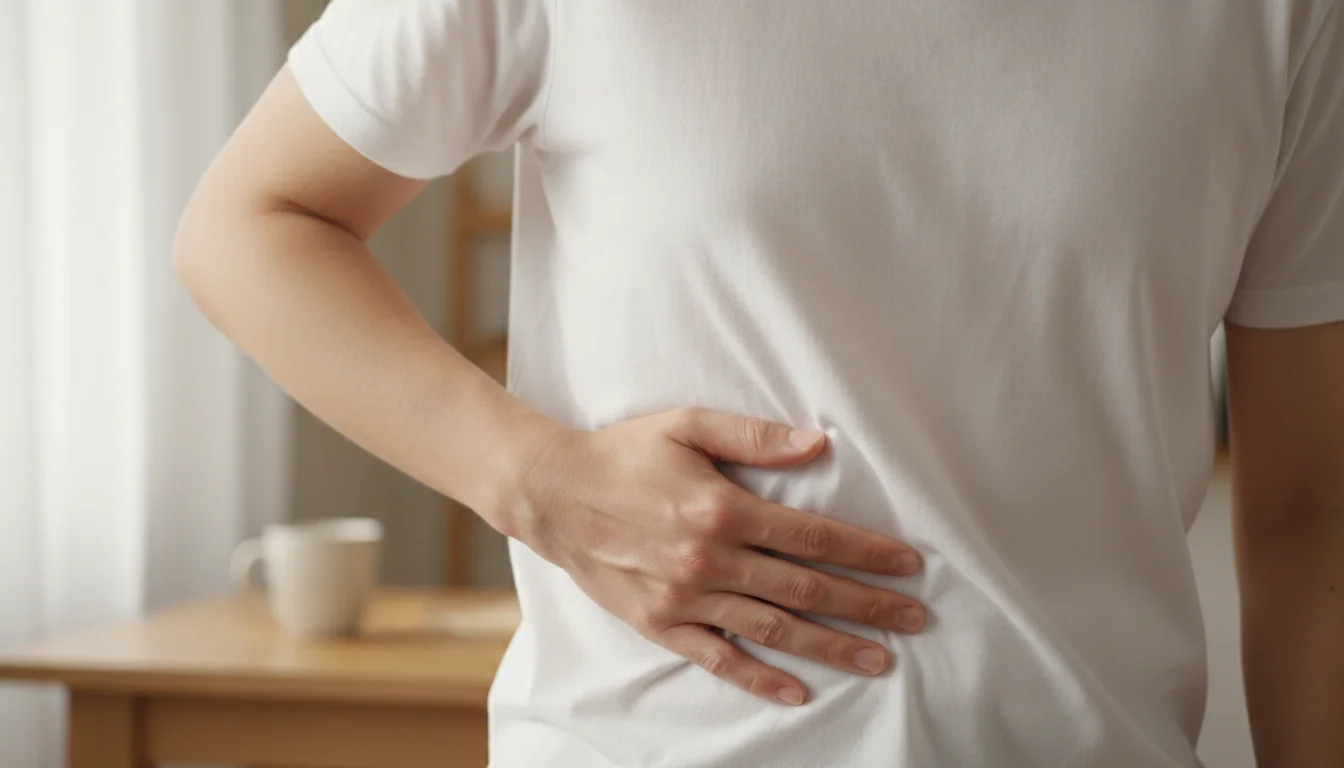
Most gallstones are silent – found incidentally on an ultrasound, causing no symptoms, requiring nothing. The ones that matter are the ones causing attacks: sharp pain in the right upper abdomen, often radiating to the back or shoulder, triggered by a fatty meal. If you’re trying to figure out how to get rid of gallstones without immediately resorting to surgery, here’s what you actually have to work with. A low-fat diet genuinely prevents attacks by reducing how hard the gallbladder contracts. OTC NSAIDs manage pain during an attack. Ursodiol (prescription) can dissolve small cholesterol stones over months. Surgery is the only definitive cure – and that’s not a bad thing. The gallbladder flush protocols you’ll find online (olive oil, apple juice, ACV) don’t dissolve stones. Studies confirm the "stones" people pass after cleanses are saponified fat globules, not gallstones.
1. Low-fat diet
Gallstone attacks are triggered by fat. When you eat fat, your gallbladder contracts to release bile into the small intestine. If stones are present, that contraction can push one into the bile duct – which is where the pain comes from. A low-fat diet doesn’t dissolve existing stones, but it dramatically reduces how often the gallbladder contracts hard enough to cause an attack. For people managing gallstones without surgery, this is the single most effective thing you can do day-to-day.
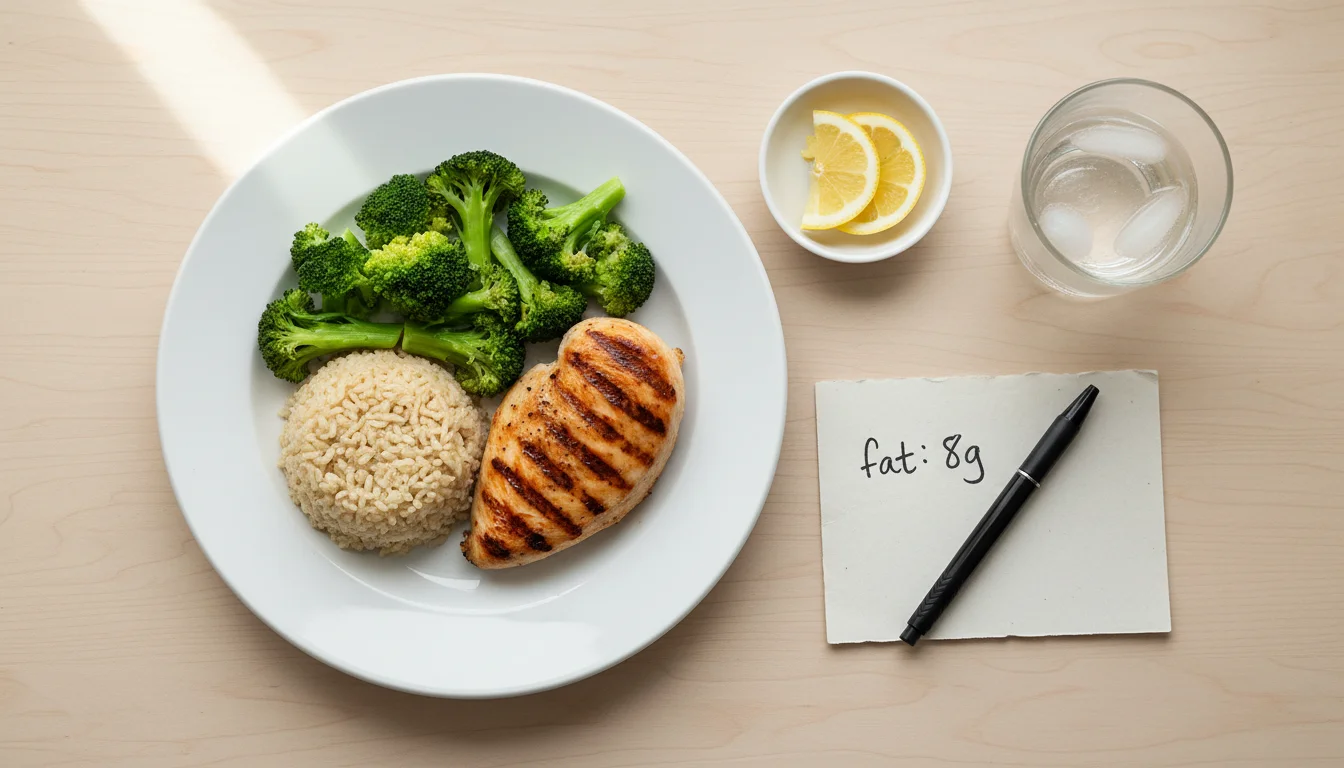
Keep fat intake under 30% of total daily calories, with individual meals ideally under 10g of fat. That’s a real threshold to track, not an approximation. A standard restaurant entree often runs 40-60g of fat between cooking oils, sauces, and cheese. Even meals that seem light – a Caesar salad, a turkey wrap – frequently exceed 20g. Read labels on processed foods; crackers, soups, canned goods, and condiments accumulate fat in ways that aren’t obvious.
The main triggers: fried food, fatty cuts of meat (bacon, sausage, high-fat beef), full-fat dairy, butter, pastries, anything deep-fried. Spicy foods and very large meals (regardless of fat content) provoke contractions in some people. Track what sets off your attacks specifically – individual responses vary, but high-fat single meals are nearly universal.
Safe territory: lean proteins (chicken breast, fish, turkey), most vegetables, fruits, whole grains, legumes, low-fat dairy. Small amounts of healthy fats – a small drizzle of olive oil, half an avocado – are tolerable for most people and needn’t be cut entirely.
Don’t go completely fat-free. This is counterintuitive but matters: a gallbladder that never empties can actually develop more stones over time. The goal is reducing fat to a level that prevents painful contractions, not eliminating it. Gradual reduction also matters – sudden extreme dietary changes can trigger an attack in some people, so adjust over days rather than switching overnight.
Portion size is a factor independent of fat content. Large meals stimulate gallbladder contraction through sheer volume. Four or five smaller meals spread through the day are easier to manage than two large ones.
2. NSAIDs for attack pain
When an attack starts, ibuprofen or naproxen are your best OTC options. Both are NSAIDs – they reduce inflammation and provide direct pain relief for biliary colic. Acetaminophen (Tylenol) is a reasonable fallback if NSAIDs are contraindicated (stomach issues, kidney problems, blood thinners), but it’s a weaker option for this type of pain because it doesn’t address the inflammatory component the same way.
Take them at the first sign of pain. Not after it peaks. NSAIDs are substantially more effective when taken early – once the pain is fully established, you’re playing catch-up. Standard dosing: ibuprofen 400-600mg (two to three standard 200mg tablets) every 6-8 hours with food; naproxen 220-440mg (one to two standard tablets) every 8-12 hours with food. The food is not optional – NSAIDs on an empty stomach during an attack that’s already causing nausea will make things worse.
Diclofenac is the first-choice drug for biliary colic in most clinical settings (often given as a 75mg intramuscular injection in emergency departments because it works faster at that route), but it’s prescription-only in most countries. OTC ibuprofen or naproxen is the practical home equivalent.
If the pain requires more than the standard OTC dose to get to a manageable level, or doesn’t respond at all, that’s a presentation that needs emergency evaluation – not a reason to take extra doses.
3. Warm compress during an attack
A warm compress on the right upper abdomen during an attack helps with the muscle tension and spasm component of biliary colic. It doesn’t dissolve stones or treat inflammation, but biliary colic has a muscular component (the bile duct cramping around a partially obstructed stone), and heat reduces that.
Soak a cloth in warm (not hot) water, wring it out, and hold it against the upper right abdomen for 15-20 minutes. Re-wet when it cools – a room-temperature cloth isn’t doing anything. Repeat as needed during the attack.
Some people microwave a damp cloth for 15-20 seconds to hold heat longer, or use a hot water bottle with a cloth layer between bottle and skin. Either works. Keep it warm, not hot enough to burn.
This is a comfort measure during an active attack, not a treatment. Use it alongside NSAIDs, not instead of them.
4. Ursodiol (prescription dissolution)
Ursodiol (ursodeoxycholic acid, sold as Actigall or URSO) is the only evidence-based non-surgical option for actually dissolving gallstones. It’s a prescription bile acid that reduces the amount of cholesterol the liver secretes into bile and increases bile’s ability to dissolve existing cholesterol deposits.
It only works on cholesterol stones (the lighter, more common type) – not pigment stones (the darker, calcium-based type). Your doctor will confirm stone type by ultrasound before prescribing it. Cholesterol stones appear radiolucent on X-ray; pigment stones don’t.
The success rate for appropriate candidates is 30-50%. Success criteria: small stones (under 10mm respond better than larger ones), functioning gallbladder, and mild to moderate symptoms. Dosing is typically 8-10mg per kg of body weight per day, split into two doses, taken consistently – missed doses meaningfully reduce effectiveness.
Dissolution takes 6-24 months. Small stones resolve faster; larger ones can take the full two years or not dissolve at all. Treatment continues until ultrasound confirms clearance, then another 3 months to reduce recurrence.
The big limitation: stones come back in roughly 50% of people within 5 years of stopping treatment. Ursodiol manages the condition; it doesn’t cure it. Cholecystectomy is the only cure with no recurrence risk. Ursodiol makes sense for people who have small cholesterol stones, aren’t surgical candidates, or strongly prefer to avoid surgery and are prepared for ongoing management.
Side effects are generally mild. Diarrhea is the most common, particularly at higher doses, and usually improves after the first few weeks. Liver function tests should be done every 6 months during treatment – it’s a routine check, not a sign the drug is dangerous at normal doses.
Ursodiol has a second use worth knowing: people undergoing bariatric surgery face significantly elevated gallstone risk during rapid weight loss. A preventive course of ursodiol during the weight-loss phase reduces this risk substantially, which is why many bariatric programs prescribe it routinely post-surgery.
5. Hydration
Bile is roughly 85% water. Chronic dehydration concentrates the bile – raising the relative levels of cholesterol and bile salts that can crystallize into stones. This is more relevant to prevention and long-term management than to stopping an active attack, but it’s worth doing consistently.
Aim for 2-3 liters (68-100 fl oz) of water daily, spread through the day. Gulping large amounts at once does less than steady intake. Plain water is the most efficient option. Coffee and tea count toward daily fluid intake at normal consumption levels – the diuretic effect of caffeine is minor and fully offset by the fluid. Alcohol is a real diuretic and doesn’t count.
There’s no RCT showing that increased hydration prevents gallstone attacks. The mechanism is plausible and the intervention is free and harmless, which is why it belongs here – it complements everything else rather than competing with it. Don’t skip the diet management and expect hydration to compensate.
When to go to the emergency room
Dietary management and OTC pain relief are appropriate for mild, infrequent attacks. These situations require emergency care, not home treatment:
- Severe abdominal pain (8-10/10 intensity) lasting more than 4-5 hours
- Fever with chills alongside abdominal pain – this suggests cholecystitis (infected gallbladder) or cholangitis (infected bile duct), both of which are medical emergencies
- Jaundice – yellowing of the skin or whites of the eyes
- Dark urine with pale stools (bile duct obstruction)
- Pain severe enough that you cannot find a comfortable position
Cholecystitis and cholangitis are not situations to manage at home and monitor. Both require prompt treatment with antibiotics and often urgent surgery. If you have fever with right upper quadrant pain, that’s an ER visit.
FAQ
Can gallstones go away without surgery?
Small cholesterol stones sometimes dissolve spontaneously. Ursodiol (prescription bile acid) can dissolve small cholesterol stones in 30-50% of appropriate candidates, but takes 6-24 months and stones recur in roughly half of cases after stopping treatment. Dietary management (low-fat diet) prevents attacks but doesn’t dissolve existing stones. Surgery (laparoscopic cholecystectomy) is the only definitive cure. For people with infrequent mild attacks and small cholesterol stones, watchful management plus diet is reasonable. For frequent attacks, larger stones, or complications, surgery is the clearer choice.
What dissolves gallstones fast?
Nothing dissolves them fast. Ursodiol (prescription) dissolves small cholesterol stones over 6-24 months – that’s the legitimate non-surgical option. The gallbladder cleanse protocols you’ll find online (olive oil + lemon juice, apple cider vinegar, various combinations) don’t dissolve gallstones. Studies show the "stones" passed after a cleanse are saponified fat globules – soap balls formed when olive oil reacts with digestive juices. They are not gallstones. Surgery removes the gallbladder entirely and takes about an hour. If speed matters, surgery is the answer.
How do you relieve a gallstone attack at home?
OTC ibuprofen or naproxen taken at the first sign of pain, before it fully establishes. A warm compress on the right upper abdomen helps with the muscular spasm component of biliary colic. Most attacks peak and resolve within 1-5 hours. If pain is severe, lasts more than 5-6 hours, comes with fever, causes vomiting you can’t control, or you notice yellowing skin or eyes – that’s an emergency room situation, not home management.
Does the gallbladder cleanse work?
No. The olive oil and citrus juice cleanse doesn’t dissolve gallstones. The green pellets people pass are saponified fat – formed when olive oil reacts with bile and pancreatic secretions in the small intestine. Multiple controlled studies have confirmed this using chemical analysis of the passed material. Some people feel better afterward, possibly from caloric restriction during the fast or placebo effect. The real risk: fasting and large amounts of olive oil can trigger a gallbladder attack in people with existing stones. Skip it.