Table of Contents
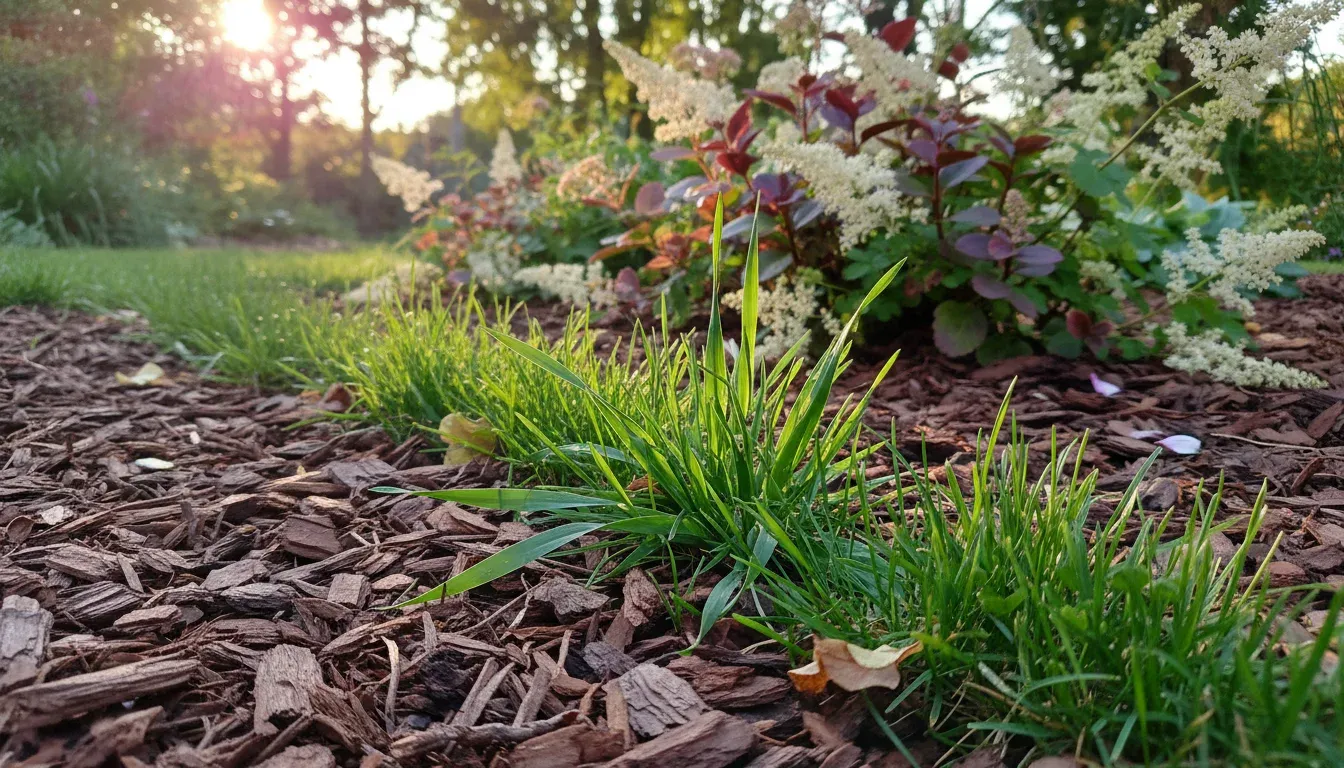
Grass invades flower beds through runners, seed dispersal, and underground rhizomes. It competes with your flowers for nutrients and water, and left unchecked, it’ll take over completely. The problem compounds because grass grows faster than most ornamentals – by the time you notice it’s there, it’s already spreading.
Different grass types require different approaches. Annual grasses like crabgrass have shallow roots and die off each winter. Perennial grasses like bermudagrass and quackgrass develop deep, interconnected root systems that regrow from any fragment left behind. Identifying what you’re dealing with determines which methods will actually work.
1. Hand Pulling (For Small Infestations)
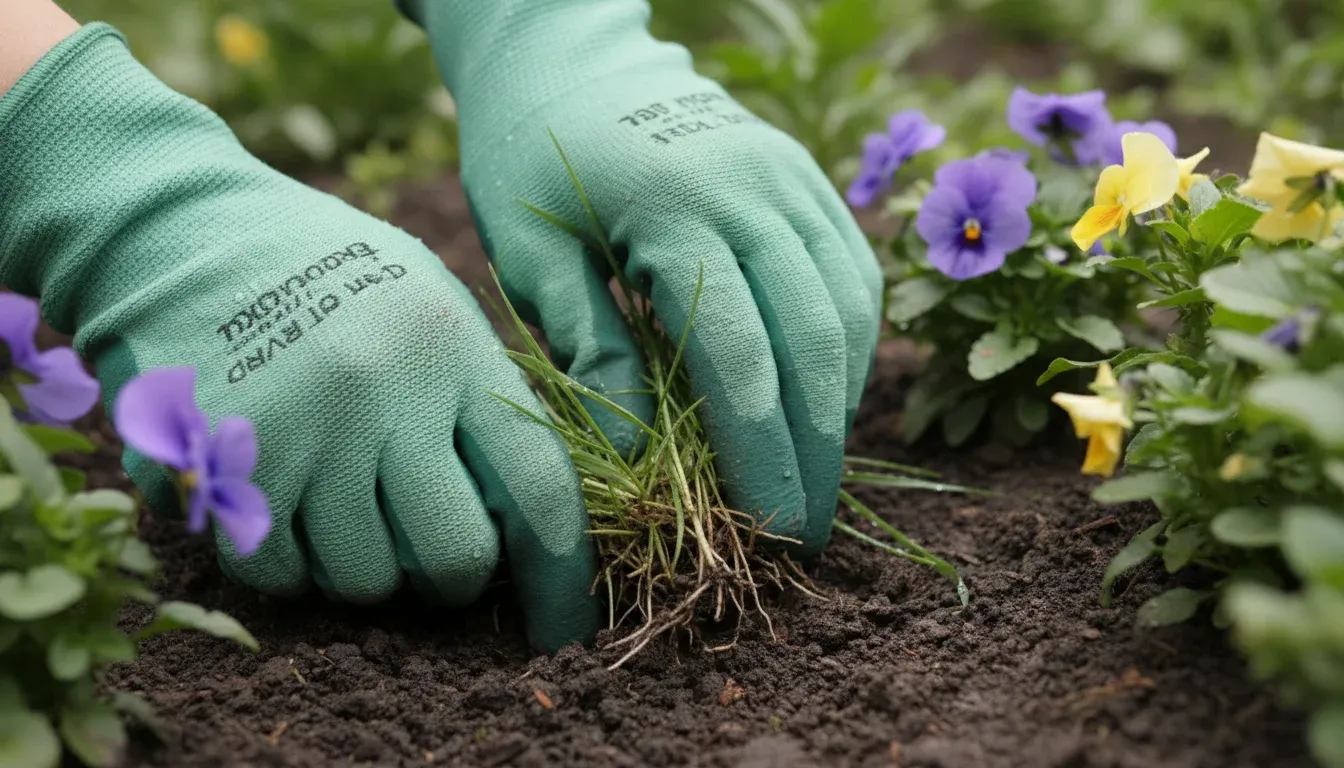
Get the whole root system or you’re wasting your time. Wait until after rain when soil is damp – grass pulls easier and you’re more likely to get the roots intact. Grip close to the base and pull slowly. Fast yanking breaks stems and leaves roots behind. If you feel resistance, rock the clump back and forth to loosen the root ball before pulling.
Work systematically in sections so you don’t miss spots. Check back in a week because you probably missed some roots. Best for clumping grasses and isolated patches. Terrible for established bermudagrass or crabgrass with extensive root networks.
2. Digging Out Root Systems
For persistent grasses with deep runners, you need a trowel or garden fork. Dig 15-20cm down around the grass clump, then lift the entire root ball. Shake off the soil and check for white runner roots extending outward. Follow those runners and dig them out too. Bermudagrass runners can extend 1-2m from the visible clump, so keep digging until you hit clean soil.
Inspect the excavated soil for root fragments. Even 2cm pieces of bermudagrass rhizome will resprout. Time-consuming but permanent if you’re thorough. This is the only method that actually works for quackgrass and bermudagrass.
3. Cardboard Smothering
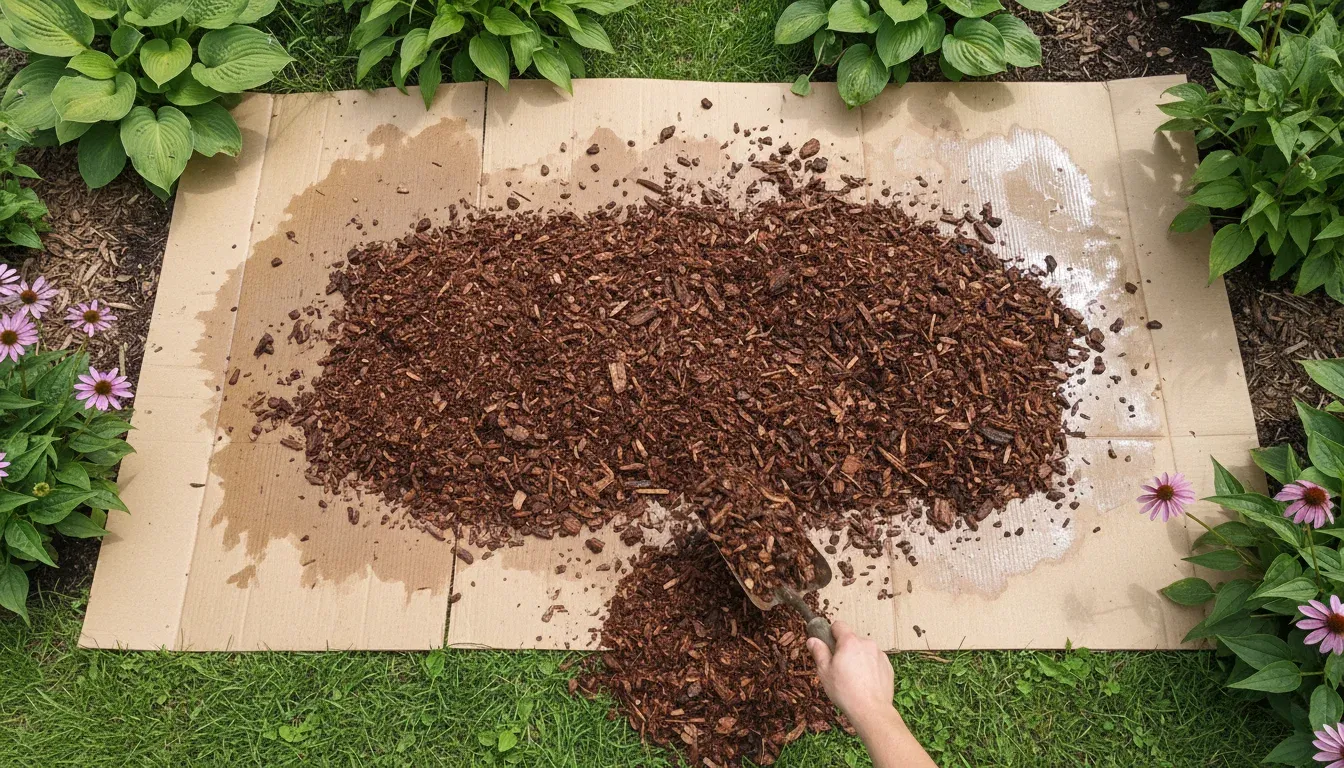
Lay down thick cardboard (not glossy, no tape) directly over grass areas between your flowers. Overlap edges by 15cm. Wet it thoroughly, then cover with 8-10cm of mulch. The grass dies from lack of light over 6-8 weeks. Water kills grass faster than dry smothering because decomposition depletes oxygen in the root zone.
You can plant through holes cut in the cardboard immediately. The cardboard breaks down into the soil as the grass dies. Free if you save shipping boxes. Double-layer it over aggressive grasses like bermudagrass or you’ll get shoots poking through.
4. Newspaper Layering
Similar concept to cardboard but works faster because you can mold it around plant stems more easily. Use 10-12 sheet thickness. Wet each layer as you go, overlapping edges generously. Cover with mulch.
Breaks down in 4-6 weeks. Good for tight spaces where cardboard is too rigid. The newspaper disintegrates faster, so you might need to reapply if grass is aggressive.
5. Landscape Fabric Barriers
Install fabric around established flowers to block grass from spreading. Cut X-shaped slits for plant stems. Stake edges down with landscape pins every 30cm. Cover with mulch to hide it and weigh it down.
Not a removal method, but stops grass from recolonizing after you’ve cleared it. Skip the cheap stuff – it tears and lets grass through within a season.
6. Vinegar Spot Treatment
Spray 20% acetic acid vinegar directly on grass blades. Avoid flowers completely. The acid burns grass leaves and sets back root systems. Reapply weekly for 3-4 weeks until grass stops resprouting.
Kills grass tops quickly but doesn’t eliminate deep roots. You’ll need multiple applications. Household 5% vinegar is too weak. Buy horticultural vinegar or this is a waste of time.
7. Boiling Water
Pour boiling water directly onto grass crowns, saturating the soil. The heat kills roots down about 5-8cm. Good for grass growing against bed edges or between pavers where you can’t dig.
Immediate results on annual grasses. Perennial grasses with deeper roots might need 2-3 treatments. Don’t splash your flowers – boiling water doesn’t discriminate.
8. Sod Cutter for Large Areas
Rent a manual or powered sod cutter if grass has overrun entire sections. Cut 3-5cm deep, roll up the grass layer, shake out the soil, and compost the sod (if it’s not seed-heavy). Manual cutters work for beds under 10 sq m. Anything larger justifies the powered model.
Mark your flower locations before cutting. Sod cutters don’t distinguish between grass and perennials. Fast for reclaiming beds. Leaves clean soil ready for replanting. The rental costs 40-60 dollars per day but handles what would take you weeks of hand removal.
Grass returns if you don’t address why it got in there in the first place. Edge your beds with a 10cm deep trench or install metal edging to block lateral spread. Mulch 8-10cm deep to suppress seeds. Organic mulches like wood chips work better than decorative rock because they block more light.
Check weekly during growing season. Catching grass when it’s young saves you from having to dig out established clumps later. Most grass invasions start at bed edges where lawn meets flowers, so patrol that boundary line first.