Table of Contents
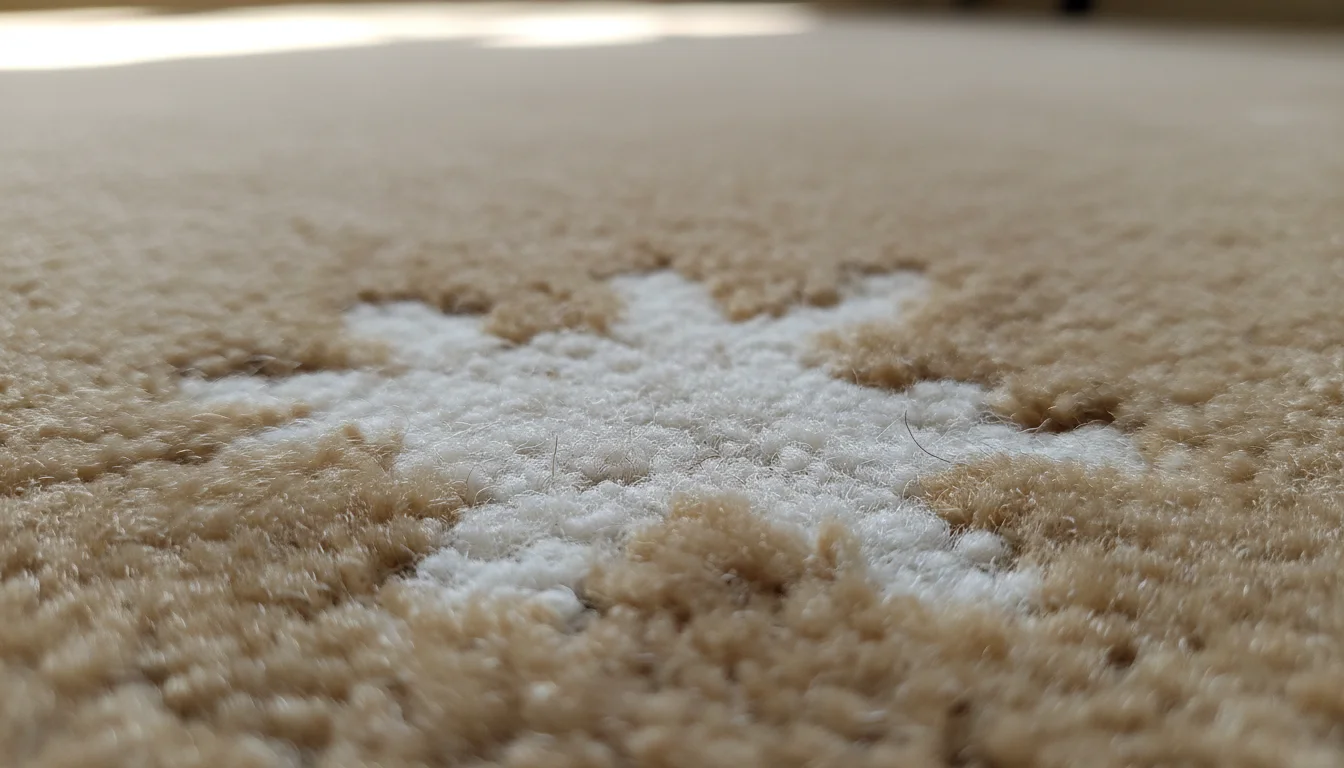
Bleach doesn’t stain carpet. It destroys the dye in the fibers permanently. So you’re not removing a stain here, you’re doing damage control on a chemical burn. The faster you act, the less color you lose. And if the bleach has already dried, you’re shifting into disguise mode instead. Both are fixable, just differently.
The good news: most bleach disasters on carpet are small (a splash, a drip from a cleaning bottle) and the methods below handle those well. A full gallon spill on white carpet in a rental apartment? That’s a different conversation, and it probably involves your security deposit.
1. Blot and Flush Immediately
Speed matters more than technique. Grab any absorbent cloth or paper towels and blot (don’t rub) the bleach. Rubbing pushes it deeper and wider, turning a small spot into a bigger one. Once you’ve soaked up what you can, pour cold water over the area to dilute whatever bleach remains in the fibers. Blot again. Repeat the pour-and-blot cycle three or four times. You won’t reverse damage that’s already done, but you’ll stop it from spreading.
2. Neutralize with Baking Soda
Active bleach keeps stripping color even after you’ve blotted. Mix three tablespoons of baking soda with one cup of water to make a paste, then spread it over the affected area. Leave it for 10 minutes. The baking soda neutralizes the alkaline bleach and stops the chemical reaction. Wipe it off with a damp cloth and let the spot dry completely. Skip this step and any dye or color fix you apply later may not hold.
3. Dish Soap Solution
One teaspoon of mild dish soap in a cup of warm water. Pour it over the spot, let it sit five minutes, then work it in with a cloth from the outside edge inward. That direction matters because working outward pushes bleach into clean carpet. Rinse with a clean wet cloth three or four times, wringing your cloth between passes. Layer white paper towels over the damp area, weigh them down with a ceramic bowl or similar, and leave overnight. Vacuum once dry to lift the fibers back up.
4. White Vinegar Rinse
Two tablespoons of white vinegar in a cup of warm water, applied the same way as the dish soap method. Vinegar’s acidity helps neutralize any remaining bleach and can slightly restore pH balance in the carpet fibers. Some people find it works better than soap on fresh spills, though the difference is marginal. Don’t combine vinegar with the dish soap method in the same session. Pick one.
5. Color with a Matching Crayon
This sounds ridiculous and it works surprisingly well for small spots. Find a crayon that matches your carpet color (take a fiber sample to the store if you need to), then literally color in the bleached fibers. Press firmly enough to deposit wax into the carpet. Blend it with a damp cloth using small circular motions until the color looks even. Let it dry, then vacuum. The wax bonds to the fibers and holds up to foot traffic reasonably well. Not a permanent fix, but an effective one that costs about 50 cents.
6. Carpet Dye Pen or Kit
Purpose-built for exactly this problem. Carpet spot dye kits (Bleachstain and Americolor are the main brands) come with multiple dye shades you blend together to match your carpet color, plus a bleach neutralizer. Apply the neutralizer first, then build up color with the dye pens in light layers. The key is blending two or three shades rather than trying to find one exact match. Results are semi-permanent and survive vacuuming. Kits run around $20-30 and handle spots up to roughly baseball size.
7. Fabric Marker Touch-Up
For dark carpets (navy, black, charcoal), a fabric marker in a matching shade does the job faster than a dye kit. Color in the bleached fibers with short strokes, let it dry for 15 minutes, then dab with a damp cloth to blend. Fabric markers outlast crayons and regular markers because the ink is designed to bond with textile fibers. Test on a hidden spot first to make sure the color match is close. Sharpie’s Rub-a-Dub laundry markers work, and so do Tulip fabric markers.
8. Patch from a Hidden Area
When the bleach spot is too big or too white for color tricks, cut it out and replace it. Find a matching piece of carpet in a closet, under a piece of furniture, or behind a door. Use a utility knife to cut out the damaged section in a clean square, cut a matching piece from your donor spot the same size, and glue it in with carpet seam tape or double-sided carpet tape. Press it flat with a heavy book for 24 hours. Fill the donor spot with a cheap remnant or leave it hidden. This is the nuclear option but it’s the only one that truly makes a large bleach mark disappear.
Bleach damage on carpet is permanent in the strictest sense (the original dye is gone and isn’t coming back). But between neutralizing, coloring, dyeing, and patching, you have real options that range from a 50-cent crayon to a surgical patch job. Start with the fast methods if the spill just happened. Move to the color-matching methods once it’s dried. And if all else fails, rearrange the furniture.