Table of Contents
Some plants don’t just grow. They invade. They conquer. They turn your carefully planned garden into their personal empire while you weren’t looking. And by the time you realize what’s happening, you’re already losing the war.
The worst offenders aren’t weeds you can just yank out on a Sunday afternoon. These are the botanical equivalent of that houseguest who said they’d stay for a weekend and now it’s been three months and they’re rearranging your furniture. Bamboo, mint, English ivy, daylilies, kudzu. Each one has a different trick for sticking around forever, and standard weeding techniques just make them angry.
Here’s how to actually get rid of invasive plants that have dug into your ground. Some of these fights you’ll win. Others you’ll manage. And one or two you might just learn to live with, but at least you’ll know what you’re dealing with.
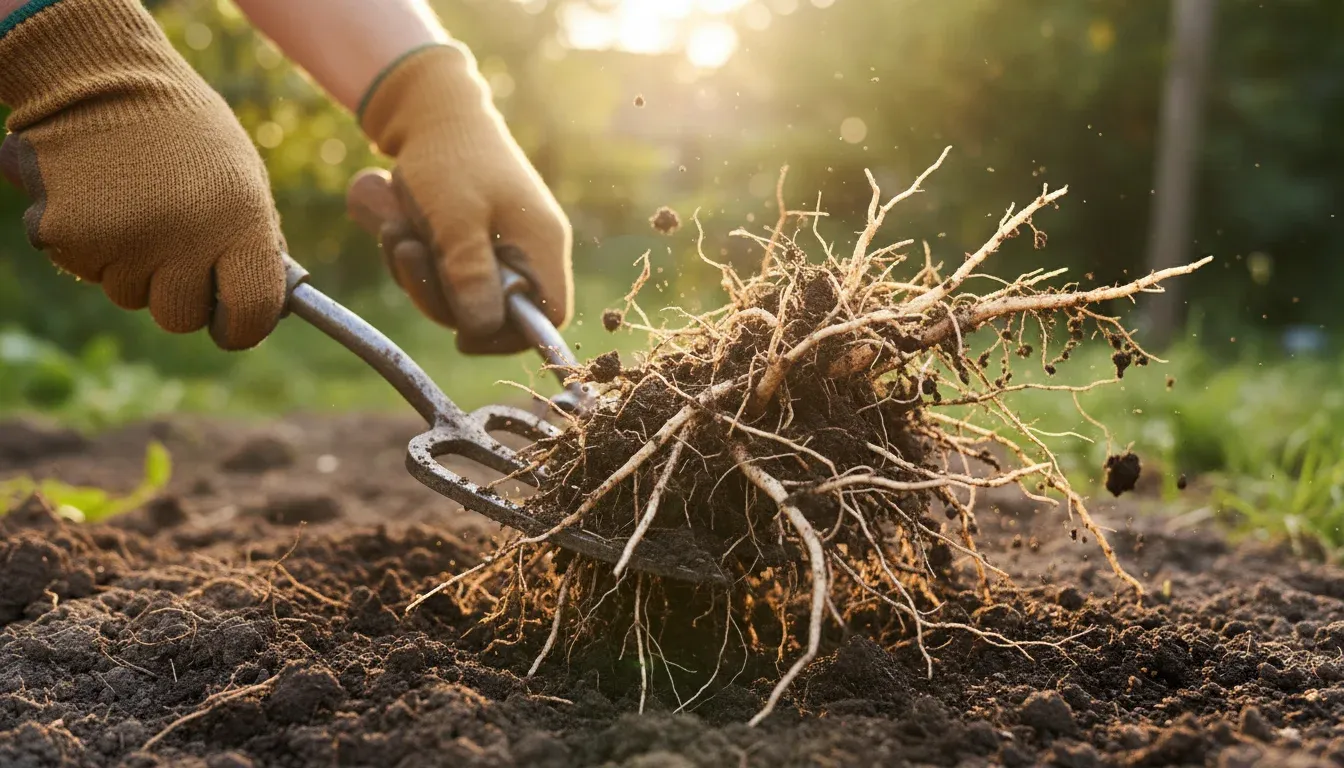
1. Dig Out Every Last Root Fragment
Bamboo laughs at surface weeding. It spreads through rhizomes that tunnel horizontally like underground highways, popping up shoots ten feet from where you started. Leave even a thumb-sized piece of root in the soil and you’re back to square one in a month.
Digging works, but only if you’re obsessive about it. We’re talking shovel-depth trenches, following every runner you find, sifting the soil through your hands to catch fragments. It’s exhausting, tedious, and absolutely necessary for bamboo and mint. The running varieties of bamboo (as opposed to the clumping types) are the real nightmare here. If you didn’t check what you planted three years ago, now’s the time to find out which category you’re dealing with.
For mint, which spreads through surface runners called stolons, you have slightly better odds. But "better" is relative. Dig in a circle around the original planting spot at least two feet wider than the visible spread. Assume there’s more. There always is.
2. Install Physical Root Barriers
Prevention beats cure, and root barriers are your best defense if you absolutely must plant something known to misbehave. Heavy-duty plastic or metal barriers installed two feet deep can slow the march of bamboo rhizomes. Key word: slow. Not stop. Slow.
The barrier needs to extend above ground level too, because some of these plants are crafty enough to send runners over the top if they hit a wall underground. Check the barrier edges annually. Roots find gaps. They always find gaps.
This works best for containing problem plants you want to keep. If you’re trying to keep invaders out of a specific area, barriers help but aren’t foolproof. Combine them with regular patrols of the perimeter.
3. Smother Everything Under Cardboard and Mulch
Sometimes you don’t need to dig. Sometimes you just need to cut off the light and wait.
Sheet mulching works on English ivy, daylilies, and anything else that needs sunlight to photosynthesize. Lay down cardboard (remove the tape first) directly over the infestation, overlapping the edges like shingles. Wet it thoroughly so it doesn’t blow away. Then pile on eight to twelve inches of wood chips, leaves, or compost.
The cardboard blocks light and the thick mulch makes it hard for new shoots to punch through. Six months later, check what’s still alive underneath. The survivors will be weakened and easier to pull. Repeat the process if needed.
This method takes patience, which gardeners famously have in short supply when there’s a crisis happening. But it’s less backbreaking than digging, and for large areas it’s often the only realistic approach.
4. Cut and Starve the Root System
Kudzu grows up to a foot per day in ideal conditions. English ivy regenerates from any leaf node left behind. These plants store massive energy reserves in their roots, which means they can bounce back from cutting faster than you can get the loppers out.
But they can’t bounce back forever. The strategy here is repeated cutting, timed to exhaust the root system. Cut everything back to ground level as soon as new growth appears. Don’t let a single leaf develop and start feeding the roots again. For kudzu, this means cutting multiple times per week during growing season. For ivy, every two weeks is usually enough.
After a full growing season of this treatment, the roots will be depleted and the plant will either die or be weak enough to pull out easily. This is not a weekend project. This is a commitment. But it works on plants that laugh at everything else.
5. Container Prison for Repeat Offenders
Some plants you actually want. Mint is delicious. Some bamboo varieties are stunning. But neither belongs in open ground unless you enjoy endless maintenance battles.
The solution is container planting with a twist: sink the container into the ground. Use a deep pot or fabric grow bag, plant your mint or clumping bamboo inside, then bury the container so the rim sits at soil level. The roots stay contained, you get the plant you wanted, and your garden stays yours.
Check the container edges annually for escape attempts. Roots are persistent and will eventually find any crack or gap. For especially aggressive spreaders, consider using a container one size larger than you think you need, just to buy yourself more time between inspections.
6. Solarize the Soil with Clear Plastic
For large areas where digging isn’t practical and plants aren’t wanted at all, soil solarization can help. This works best in hot climates during peak summer. Clear plastic sheeting (not black, clear) laid tight over the soil traps heat and essentially cooks everything underneath.
Leave it in place for four to six weeks. The heat penetrates several inches down, killing seeds, roots, and rhizomes in the top layer of soil. It’s not a complete solution for deep-rooted problems like bamboo, but it can reduce the fight significantly before you start digging.
Be aware that solarization kills the good guys too. Beneficial soil bacteria, earthworms, and non-target plants all die. Only use this method for areas you’re planning to replant completely, and expect to add compost and rebuild soil life afterward.
7. Know When to Surrender
Some battles aren’t worth fighting. If you’re facing mature kudzu covering an acre, or bamboo that’s had five years to establish, complete eradication might be impossible without professional help and heavy equipment.
In these cases, containment becomes the goal. Cut back what you can reach. Install barriers to protect areas you care about. Learn to live with the plant in designated zones where it can’t do much harm. This isn’t defeat. It’s strategic retreat.
The plants on this list are famous for a reason. People have been fighting them for centuries with mixed results. Do what you can, protect what matters, and remember that gardens are never really finished. They’re just managed chaos with better aesthetics.