Table of Contents
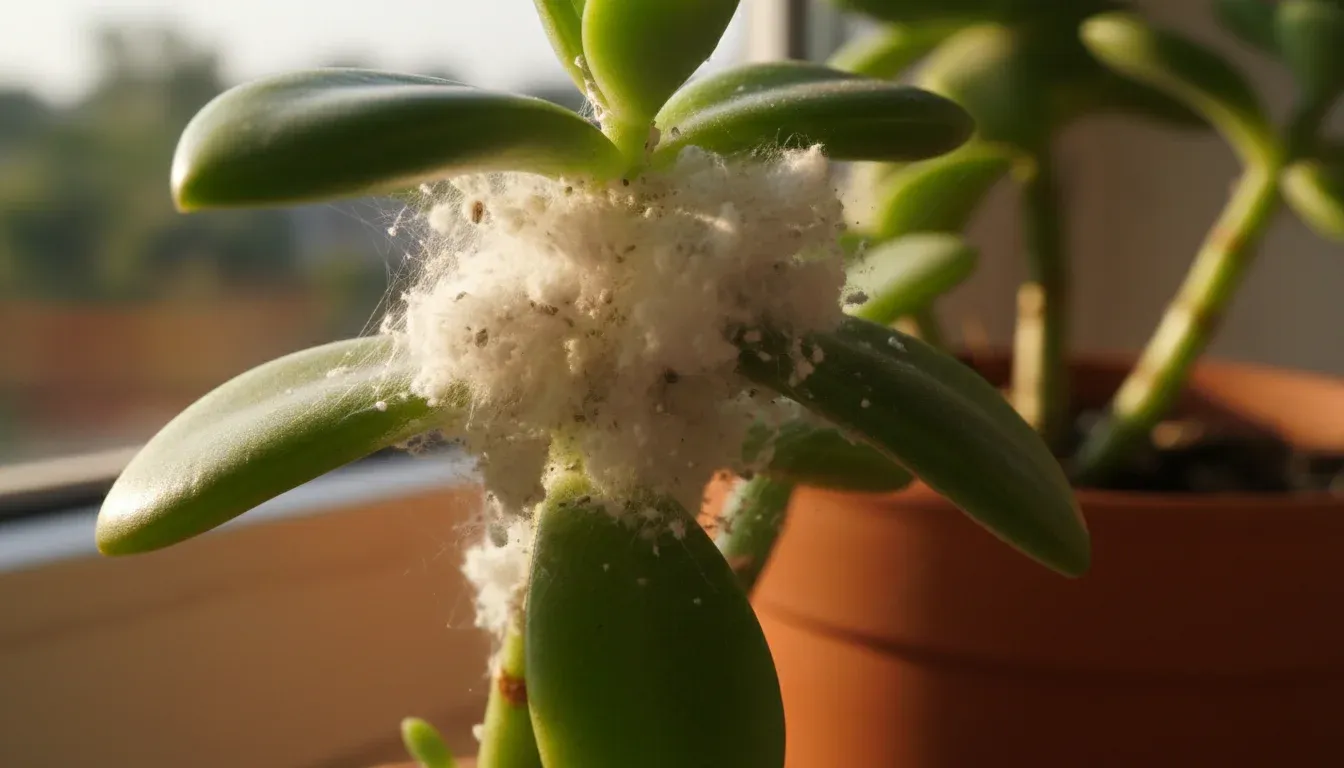
You spotted the white cottony clusters on your plant stems and knew exactly what you were dealing with. Mealybugs are persistent little parasites that suck the life out of houseplants, and they multiply fast if you don’t act. The good news is they’re not invincible. Here’s how to eliminate them.
1. Quarantine the Infected Plant Immediately
Move the affected plant away from your other plants right now. Mealybugs spread easily through physical contact and crawling between pots. Put it in a separate room or at least several feet away from anything else. Check neighboring plants while you’re at it because if one’s infested, others probably are too.
2. Blast Them Off with Water
Take the plant outside or to your shower and hit it with a strong spray of water. Focus on the undersides of leaves, stem joints, and anywhere you see those white fuzzy masses. This physically removes a huge portion of the population and disrupts their feeding. It won’t kill them all, but it knocks down the numbers before you follow up with treatment.
3. Swab with Rubbing Alcohol
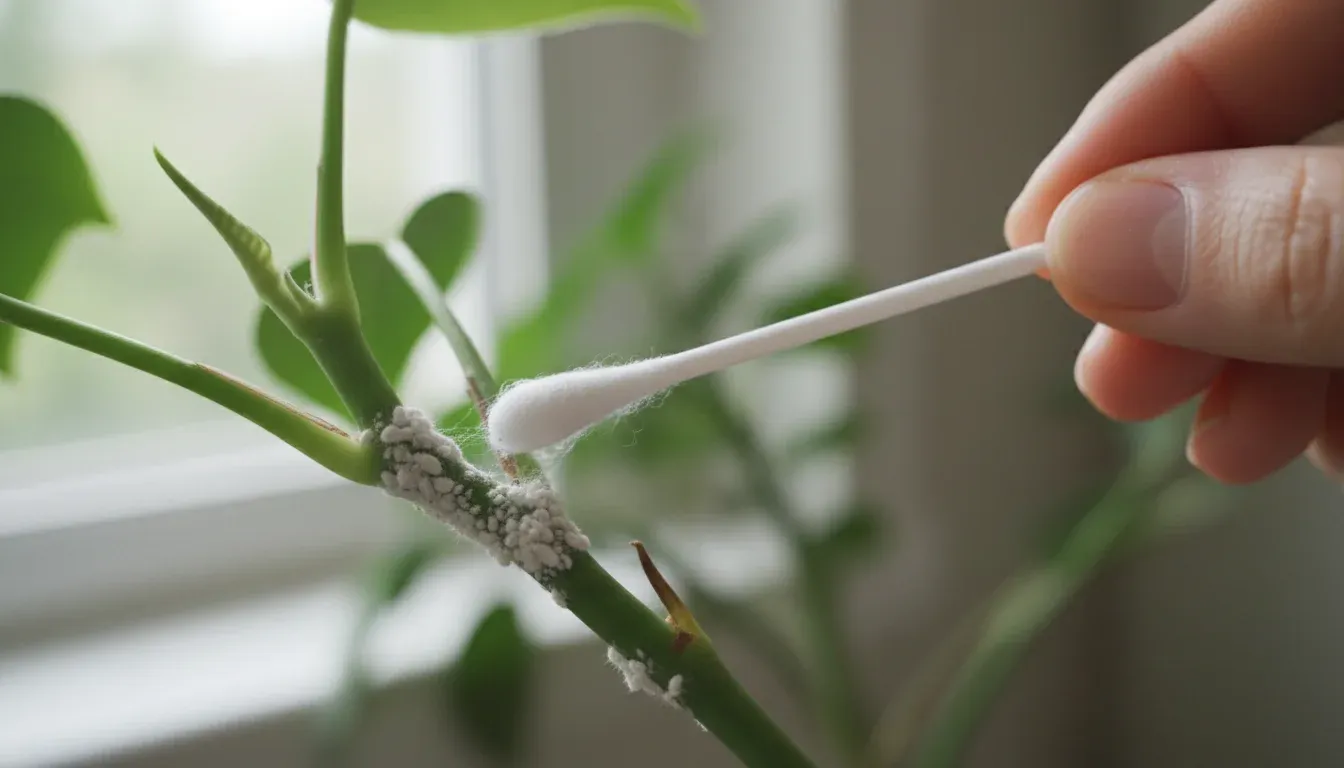
Dip a cotton swab in 70% isopropyl alcohol and scrub every visible mealybug and egg sac you can find. The alcohol dissolves their protective waxy coating and kills them on contact. This method works best for light infestations or as a spot treatment after you’ve used other methods. Tedious, yes, but effective for getting into tight spots between leaves.
4. Spray with Insecticidal Soap
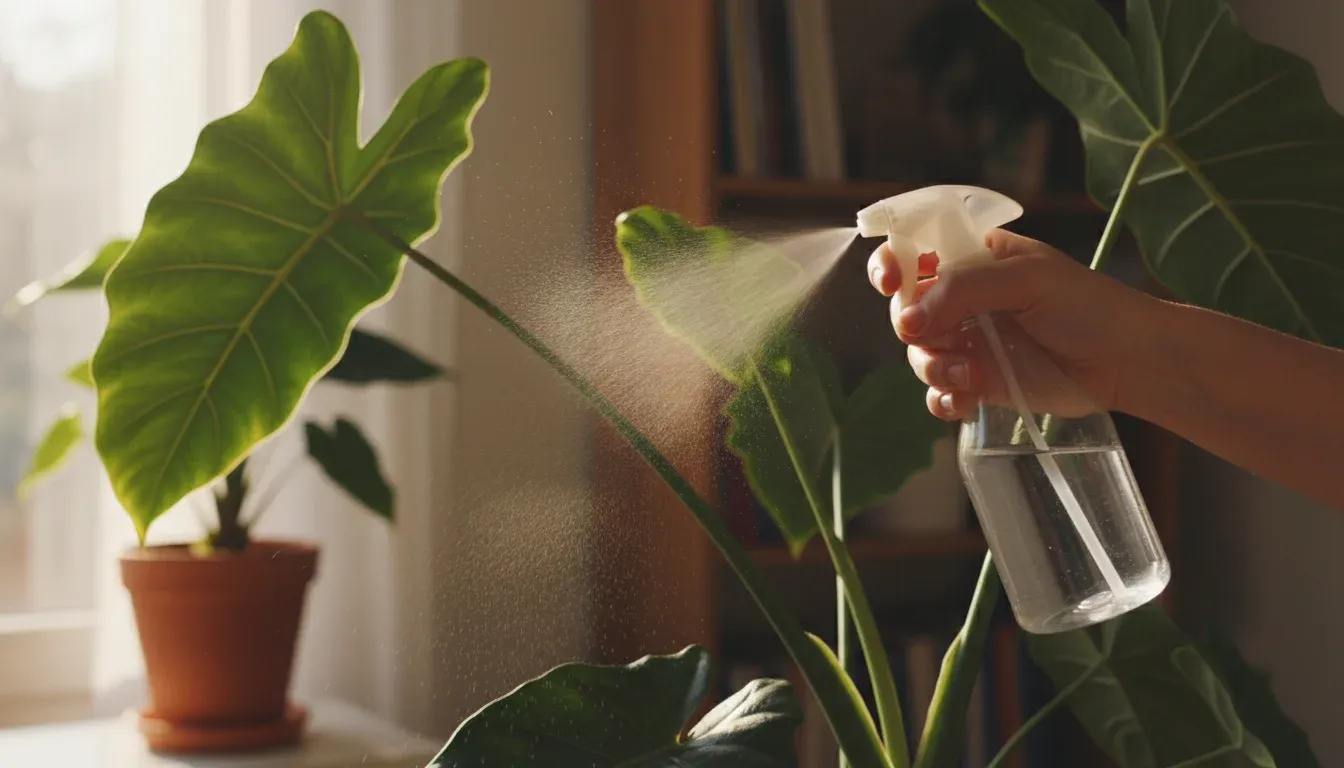
Mix insecticidal soap according to package directions and coat the entire plant, especially the undersides of leaves and stem crevices where mealybugs hide. The soap breaks down their waxy coating and dehydrates them. Reapply every 4-7 days until you stop seeing new bugs. Regular dish soap diluted in water (1 teaspoon per quart) works in a pinch, but insecticidal soap is more reliable.
5. Apply Neem Oil
Neem oil smothers mealybugs and disrupts their life cycle, preventing eggs from hatching. Mix it with water and a drop of dish soap as an emulsifier (check the product label for ratios), then spray the entire plant thoroughly. Apply in the evening to avoid leaf burn if your plant gets direct sun. Repeat weekly for three to four weeks. Neem has the bonus of being a systemic treatment once absorbed, so it keeps working after you spray.
6. Use Horticultural Oil
Horticultural oil works like neem but without the smell. It coats and suffocates mealybugs at all life stages. Spray every surface of the plant until it’s dripping, then repeat in 7-10 days. Don’t use horticultural oil on stressed or drought-stricken plants, and avoid spraying in direct sunlight or temperatures above 85°F.
7. Hit Them with Pyrethrin-Based Insecticide
For heavy infestations, pyrethrin (derived from chrysanthemum flowers) knocks mealybugs down fast. Spray according to label instructions, making sure to cover all plant surfaces. Pyrethrin breaks down quickly in sunlight, so it’s relatively safe for indoor use, but don’t skip the reapplication in a week because it doesn’t kill eggs.
8. Apply a Systemic Insecticide
Systemic insecticides absorb into the plant’s vascular system, poisoning any mealybug that feeds on it. Use granules mixed into the soil or a liquid drench. This method takes a week or two to start working but provides longer-lasting protection. Good for persistent infestations or plants that are hard to spray thoroughly. Follow the product instructions carefully because systemics stay in the plant tissue for weeks.
9. Introduce Beneficial Insects
If you have multiple infested plants or a greenhouse, release ladybugs, lacewings, or parasitic wasps (Leptomastix dactylopii). These predators feed on mealybugs and can establish a population that keeps future infestations in check. You can order them online. This method works best outdoors or in enclosed growing spaces where the beneficials can’t just fly away.
10. Toss the Plant if Nothing Works
Sometimes an infestation is too far gone, especially if the plant is already weakened or if mealybugs have gotten into the root system. If you’ve treated it multiple times with no improvement, throw it out. Seal it in a plastic bag first so you don’t scatter bugs on the way to the trash. It’s not worth keeping a dying plant that’s a mealybug breeding ground threatening everything else you own.
After you’ve cleared the infestation, keep an eye on the plant for at least a month. Mealybugs can reappear from eggs you missed, so inspect weekly. Wipe down leaves occasionally and keep your plants healthy with proper watering and light. Stressed plants attract pests.