Table of Contents
You know they’re up there. The scratching at 2 AM, the droppings along the rafters, the insulation that looks like someone threw confetti. Whatever tipped you off, the answer is the same: you need to get them out.
Here are the methods that work for finding and removing mice from an attic, from detection through elimination.
1. Watch for Signs of Infestation
Before you set a single trap, confirm you actually have mice and get a sense of where they’re concentrated. Look for:
- Droppings: Black grains of rice along walls, near rafters, in corners
- Grease smudges: Dark marks along baseboards where their oily fur rubs off
- Gnaw marks: Holes chewed in insulation, cardboard boxes, or stored items
- Shredded materials: Paper or fabric gathered in corners for nesting
- Sounds: Scurrying or squeaking at night, usually in the walls or ceiling
- Smell: A musky, ammonia-like odor in enclosed spaces
Seeing mice during daylight means the infestation is large. Mice are nocturnal – if they’re out in the day, the colony has grown to the point where weaker individuals are being pushed to forage at unusual hours. Act faster.
2. Use Baby Powder to Track Movement
If you’re not sure where they’re traveling, sprinkle baby powder or baking soda along baseboards, under rafters, and near suspected entry points. Mice leave tiny footprints and tail drag marks in the powder. Check daily, and refresh as needed until you’ve mapped their main routes.
This tells you exactly where to put traps. Skip this step and you’re guessing.
3. Use Snap Traps Along Travel Routes
Snap traps work. A basic Victor snap trap baited with peanut butter will kill mice just as reliably as anything more expensive.
Mice follow walls and edges because their eyesight is poor. Place traps perpendicular to walls with the trigger end facing the wall, so mice run directly into them. Work the rafters, baseboards, corners, and anywhere near stored boxes.
Use at least six traps. More if your attic is large. Check daily and reset as needed. Gloves on when handling dead mice – dispose in sealed bags.
4. Use Electric Traps for High-Traffic Areas
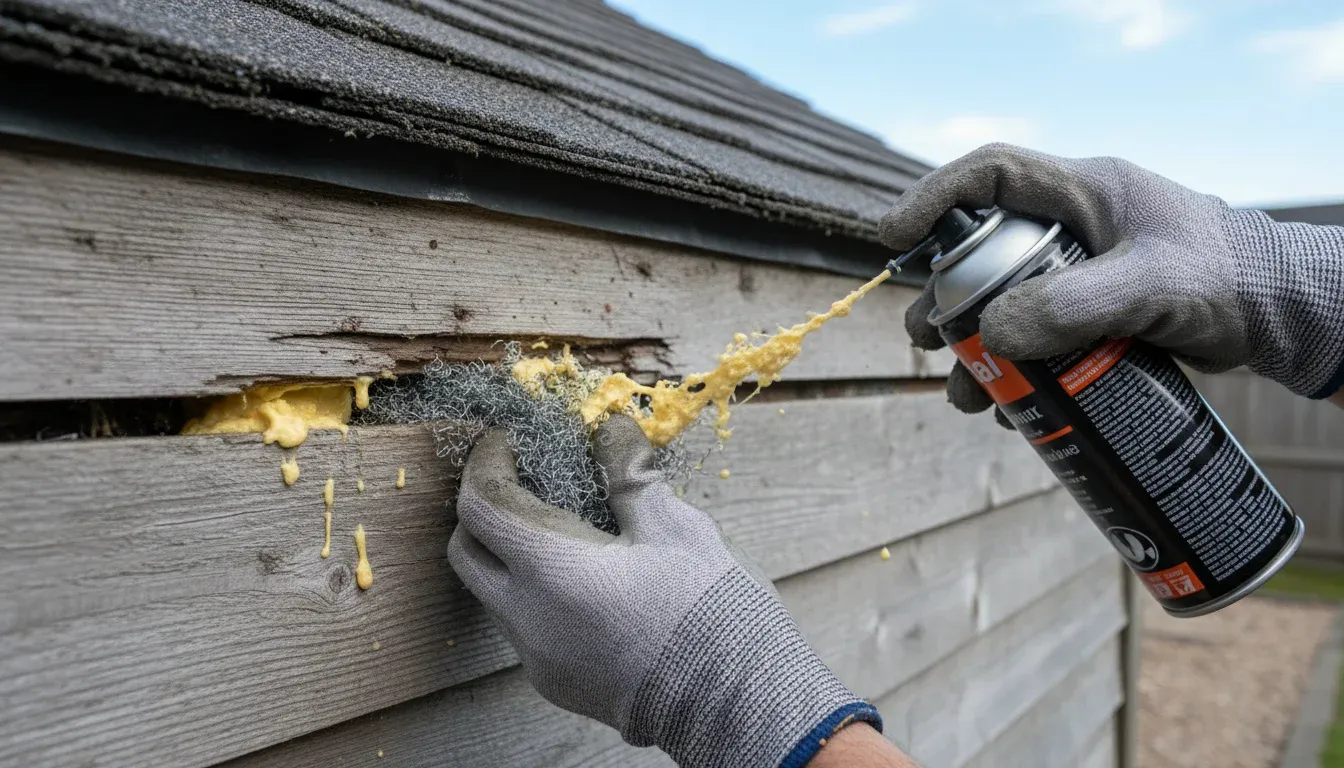
Electric traps cost more but they kill instantly and you don’t have to touch the result. Place them where you’ve confirmed activity from your powder tracking. Run on batteries, empty the chamber into a plastic bag. Good option if you’re squeamish about snap traps or have kids who might access the attic.
5. Place Bait Stations 8-12 Feet Apart
If you’d rather use poison than traps, bait stations are the safer option, especially if pets or kids might get into the attic.
Space stations 8 to 12 feet (2.4 to 3.7 m) apart along walls and near rafters, where you’ve seen droppings. Tomcat, d-CON, and JT Eaton all make reliable stations. Refresh bait daily for at least 15 days – mice are cautious eaters and won’t always take it immediately. If it’s untouched after a week, move the station.
One warning: poisoned mice sometimes die inside walls or insulation. If you can’t deal with the smell of decomposition, stick with traps.
6. Set Glue Traps as Last Resort
Glue traps are effective in tight spaces where snap traps won’t fit. But they’re also the cruelest option on this list – mice get stuck and die slowly from stress and dehydration. If you use them, check constantly and dispose of caught mice quickly. Don’t leave them and forget about them.
Only reach for glue traps when you’ve tried everything else and you’re dealing with a space where no other trap physically fits. Even then, electric traps are usually a better option.
7. Use Dry Ice to Suffocate Mice in Nests
If you can locate an active nest, dry ice is a fast, chemical-free way to deal with it. Place about a pound (0.45 kg) of dry ice near the nest entrance, seal off other exits with cardboard or foam. As the CO2 spreads, the mice suffocate quickly. Works best in confined spaces like wall voids or tight attic corners where the gas concentrates.
Wear gloves (dry ice causes frostbite). Ventilate the attic afterward. Don’t do this while you’re working in the attic.
8. Use Peppermint or Ammonia Repellent Spray
Neither will eliminate an active infestation, but both make your attic less inviting to new arrivals.
For peppermint: 10-15 drops of pure peppermint essential oil in water, spray along baseboards and near entry points. Reapply every few days.
For ammonia: soak cotton balls in ammonia, place in shallow dishes. Mimics predator urine. Replace weekly. Skip this if ventilation is poor or you’ll be up there regularly.
9. Use Live Traps
Live traps catch without killing – metal or plastic boxes with one-way doors. Bait with peanut butter or sunflower seeds. Check every few hours; leaving an animal trapped overnight is cruel.
You’ll need to release catches at least a mile (1.6 km) away, in wooded areas away from other homes. Not parks, not neighbors’ yards. Live traps are slower and more work than lethal options, and there’s no guarantee the mice won’t find their way back. But it works if kill traps aren’t an option for you.
10. Know When to Call an Exterminator
If you’re catching mice daily for more than a week, there’s an active nest inside the walls or a large colony nearby. Mice carry disease and chew electrical wiring. At that point, professionals have tools and techniques you can’t replicate: tracking powder, commercial traps, and exclusion methods that find entry points you missed.
Don’t wait until you’re hearing scratching in multiple rooms or seeing mice in daylight. By then, the population has grown fast.
After Clearing the Infestation
Once you’ve removed the mice, seal the house so they can’t come back. See how to prevent mice in your attic for exclusion methods: sealing entry points, adding chimney caps, trimming vegetation, and eliminating food sources. That’s the step that makes the difference between a one-time problem and a recurring one.