Table of Contents
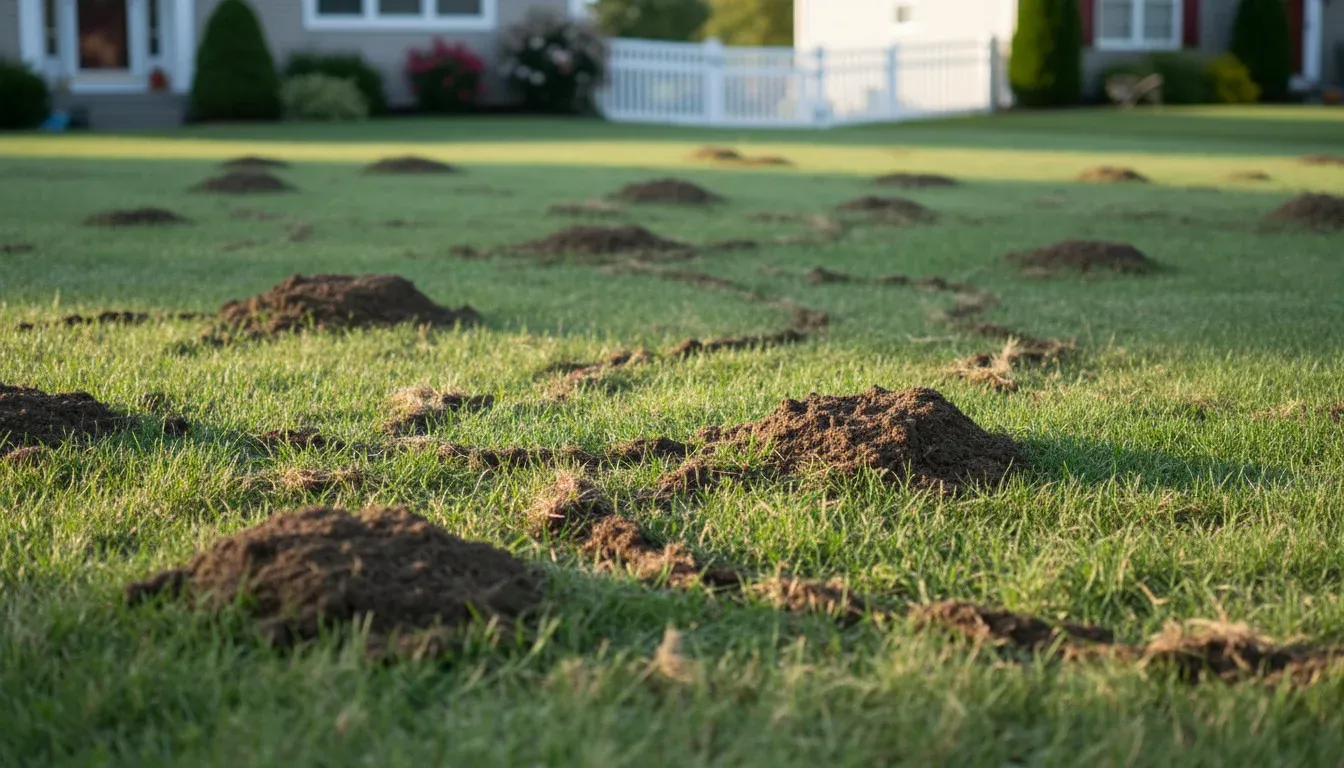
Moles can turn a decent lawn into something that looks like it was attacked from underground – which is basically what happened. One mole can dig 100 ft (30 m) of tunnel per day and produce the kind of spongy, heaved-up, ridge-riddled mess that makes you want to scream into the lawn itself. The good news: most infestations are one or two animals. Get that right and you’re done.
1. Identify Active Tunnels First
Before you do anything else, figure out where the moles are actually working. Not all tunnels are active. Look for raised ridges that feel spongy when you step on them. Flatten a small section with your foot, then check back in 24 hours. If it’s raised again, that tunnel is live.
Moles dig two types: shallow surface runways (the visible ridges) for daily travel, and deeper feeding tunnels marked by mole hills – the volcano-shaped piles of loose dirt. Traps and most other methods work in surface tunnels, not mole hills. Get this step wrong and nothing else here will work.
2. Use Scissor-Jaw or Harpoon Traps
Trapping is the clear winner. Scissor-jaw and harpoon traps are faster and more reliable than anything else on this list, and they’re what extension services and experienced gardeners agree on: set them in active tunnels, not anywhere else.
Set traps in active surface tunnels. Dig a section of tunnel slightly wider than your trap and clear loose dirt from the bottom so the trap sits on firm ground. Set the trigger mechanism for light pressure. Cover with a bucket to block light. Check daily – moles notice disturbance and may avoid an untriggered trap that’s been sitting there.
Place multiple traps along the same tunnel. Moles live alone outside breeding season, so one animal per tunnel system is typical. Patience matters more than hardware here.
3. Apply Castor Oil Repellent
If you don’t want to kill the moles, this is the most credible non-lethal option. Mix 1 cup warm water, 2 tablespoons dish soap, and 8 tablespoons castor oil. The soap acts as a surfactant, helping the oil penetrate soil and coat the moles’ food sources – grubs and earthworms – so they taste terrible. Moles move on to find better hunting.
Spray or pour onto active mole hills and tunnel ridges. Reapply after rain or every two weeks until activity stops. Safe for pets, kids, and beneficial garden wildlife.
Commercial castor oil repellents work too. Buy concentrated formulas you dilute yourself – the ready-to-spray bottles are mostly water at an inflated price.
4. Maintain a Dry Lawn
Moles follow earthworms, and earthworms follow moisture. Overwatered lawns push worms to the surface where moles hunt easily. Dry it out and the hunting gets harder.
Adjust sprinklers to water deeply but less often. Aim for 1 to 1.5 in (2.5 to 4 cm) per week including rainfall. Morning watering beats evening because the surface dries during the day. Won’t fix an existing infestation overnight, but it makes your property less attractive once they’re gone – and less attractive to the next ones.
5. Install Underground Barrier Fencing
Worth the labor if you’re protecting a specific area – a vegetable garden, expensive borders, a landscaped bed you can’t afford to have destroyed. Dig a trench 24 in (60 cm) deep around the perimeter. Install hardware cloth or wire mesh with quarter-inch openings, extending 18 in (45 cm) deep with 6 in (15 cm) bent outward at the bottom to stop tunneling underneath.
Backfill the trench, leaving 2 to 3 in (5 to 8 cm) of mesh above ground. Labor-intensive to install, effectively permanent once it’s done. Doesn’t remove existing moles inside the perimeter – only keeps new ones out.
6. Plant Mole-Repelling Bulbs
Daffodils, alliums, marigolds, and fritillaries repel moles by smell and taste. Plant them around your garden perimeter and moles won’t cross into the protected space. This is prevention, not a cure – existing moles don’t care about new bulbs, but they stop new ones from moving in.
Plant 4 to 6 in (10 to 15 cm) deep in fall for spring blooms. Space daffodils 6 in (15 cm) apart, alliums 8 to 10 in (20 to 25 cm) apart. You’ll need at least 50 bulbs to create an effective barrier around a typical suburban backyard. Takes a full season to establish. Low maintenance after that.
7. Use Ultrasonic Solar Stakes
Solar stakes emit vibrations and ultrasonic pulses every 20 to 30 seconds that irritate moles enough to make them relocate. Each stake covers roughly 6,500 sq ft (600 sq m) – space them 80 ft (25 m) apart in a grid across the lawn. Position them in full sun so they stay charged.
Two things to be honest about: they take 2 to 4 weeks to show results, and they only make sense on larger properties. If your lawn is under half an acre, the math doesn’t work and trapping is a better use of your time. For larger lawns where running around setting traps isn’t practical, they’re worth trying.
8. Flood Tunnels with Water
Find a fresh, active mole hill – loose dirt, not collapsed. Stick your garden hose into the tunnel entrance and run it full blast for 15 to 20 minutes. The tunnel floods and the mole either evacuates or doesn’t.
Works in clay-heavy soil that holds water. Fails in sandy soil that drains too fast. Expect a muddy mess. Expect to repeat it more than once. The case for it: free if you own a hose, no chemicals, no hardware.
9. Remove Food Sources
Moles eat grubs and earthworms. That’s it. Starve the food supply and you make your lawn significantly less worth their while.
Treating your lawn for grubs removes a big part of what’s drawing them in. Milky spore (for Japanese beetle grubs) works long-term but takes a season to establish. Beneficial nematodes are faster and work on a broader range of grub species – water them in during spring or fall when soil is moist and grubs are near the surface. Chemical grub killers like imidacloprid work faster but come with the usual caveats about soil ecology.
This pairs well with the dry lawn approach: fewer surface worms and fewer grubs means less reason for a mole to stay. Combined, they’re better than either alone.
10. Professional Wildlife Removal
If you’ve already trapped, if the infestation is large, or if a mole has gotten into a crawl space, call a professional. Wildlife control operators remove the animals, seal entry points, and handle cleanup – including any contamination or odor remediation that’s harder than it sounds.
Professional removal costs $200 to $600 (roughly £160 to £475) depending on location and complexity. Worth it if the animal is in a hard-to-access area or you’ve already burned through several methods without results.
FAQ
What’s the fastest way to get rid of moles in your yard?
Trapping. Scissor-jaw or harpoon traps set in active surface tunnels are faster and more reliable than anything else here. Repellents take weeks. Habitat changes take months. If speed matters, trap.
Will vinegar kill moles in the yard?
No. Vinegar poured into tunnels dissipates too fast in soil to have any sustained effect. The vinegar-and-marshmallow advice circulating online has no credible basis. Skip it.
How do you use Dawn dish soap to get rid of moles?
Soap alone does nothing. Dawn is useful only as part of the castor oil repellent recipe – 2 tablespoons per batch, where it acts as a surfactant to help castor oil penetrate soil. "Just spray dish soap in the tunnels" is not a method.