
Table of Contents
These four treatments don’t require a dermatologist appointment or a prescription. They work at different timescales – some give you immediate (if temporary) results, others build over weeks of consistent use. Knowing which does what helps you set realistic expectations.
1. Clay Mask
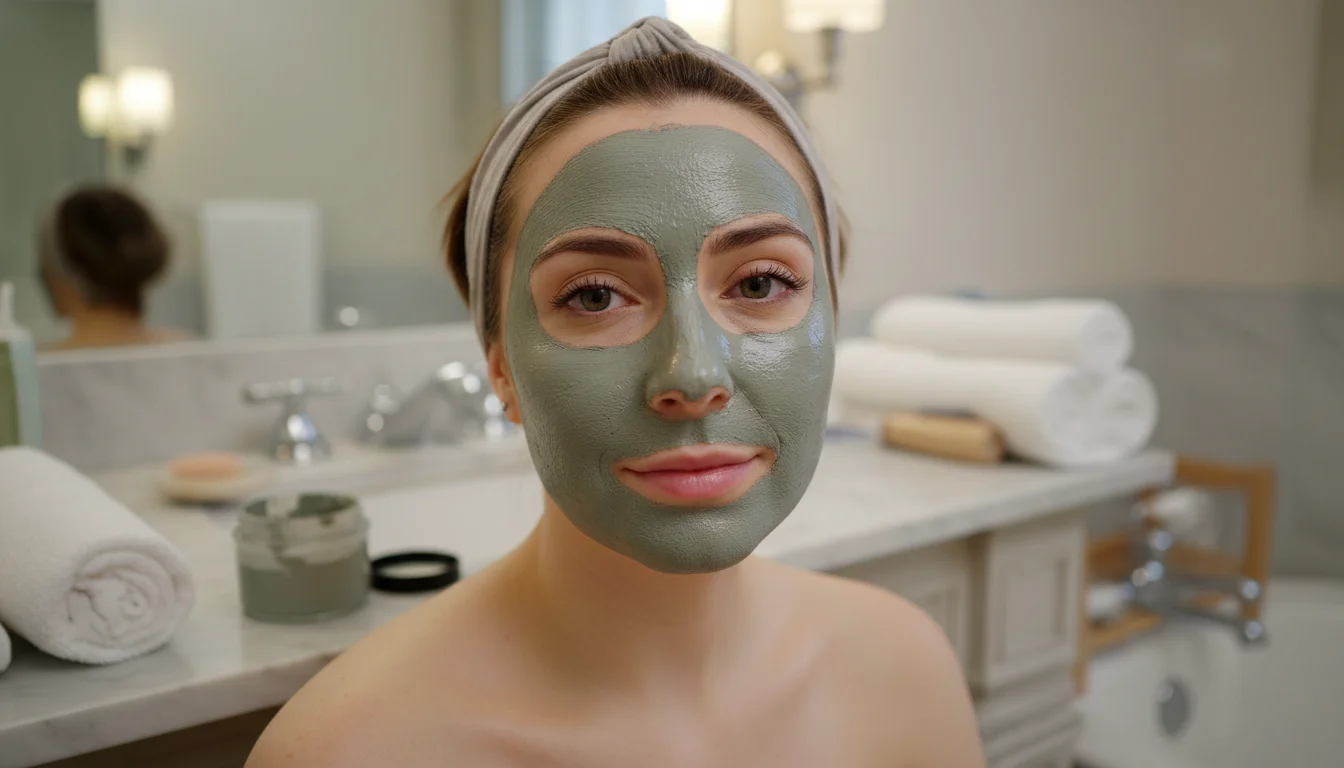
Kaolin and bentonite clay are genuinely effective for pores because they do something rare: they absorb oil and draw out impurities from inside them rather than just cleaning the surface. Used consistently, they reduce the oil buildup that stretches pores and makes them visible.
Apply a thin layer to clean skin, avoiding the eye area. Leave it on until it’s almost dry but not cracked and pulling at your skin – roughly 10-15 minutes for most formulas. Rinse with warm water and follow immediately with moisturizer; your face will feel very tight and you don’t want to send dry skin into oil-overproduction mode.
Once or twice a week is the right frequency. More than that strips too much moisture. Your skin will feel oddly smooth afterward – that’s the clay removing the surface layer of dead cells and excess sebum along with everything else.
2. Ice Cube Treatment
Cold causes vasoconstriction, which temporarily tightens everything including the skin around your pores. The effect is real but short-lived – 2 to 4 hours at most.
Wrap an ice cube in a thin cloth (never apply ice directly to bare skin – you’ll damage capillaries) and glide it over your face in slow circles for 30 seconds per area, focusing on pore-dense zones. Do this after cleansing and before applying products. The cold also reduces morning puffiness and inflammation.
Use this before an event when visible pores bother you, not as part of daily maintenance. It’s not treating the underlying cause. Think of it as a tool for immediate visual improvement, not a long-term strategy.
3. Witch Hazel Toner
Witch hazel is an astringent extracted from the Hamamelis virginiana plant – used in American folk medicine for skin tightening and inflammation reduction since at least the 19th century. It temporarily tightens pores, removes excess surface oil, and has mild anti-inflammatory properties.
The critical detail: use the alcohol-free version. Most witch hazel products are diluted with alcohol, which dries your skin and triggers rebound oil production that makes pores worse over time. Look specifically for alcohol-free formulas.
Apply with a cotton pad after cleansing, before serums or moisturizer. It works immediately for oil control and gives you a clean, tight feeling. Once or twice daily is fine for most skin types; back off to once daily if you notice dryness or irritation developing.
4. Chemical Peel
Chemical exfoliation removes the outer layers of dead skin cells, speeds cell turnover, and over time stimulates collagen production – all of which reduce pore appearance. Two types work differently:
Alpha hydroxy acids (AHAs) like glycolic and lactic acid are water-soluble and work on the skin surface. They’re good for texture, tone, and mild pore reduction. Start with a 2% glycolic acid toner or serum three times a week at night, and build frequency if your skin tolerates it.
Beta hydroxy acids (BHAs) – salicylic acid specifically – are oil-soluble, which means they penetrate into the pore itself. This makes them more effective for oily skin and clogged pores. A 2% salicylic acid toner used three nights a week is a reasonable starting point.
For deeper treatment, at-home peels with 30% glycolic acid or 20% salicylic acid can target more stubborn texture issues. Apply for 3-5 minutes maximum, then rinse thoroughly. Once a week is plenty. Don’t combine them on the same night.
Overusing acids destroys your moisture barrier, causing redness, sensitivity, and a cycle that makes pores look worse. Start low, add frequency gradually, and always follow with SPF the next morning – acids increase sun sensitivity significantly.

Comments