Table of Contents
Pink eye (conjunctivitis) falls into three types and they behave differently. Viral is the most common – red, watery, often starts in one eye and spreads to the other, and there’s genuinely nothing that shortens it. It clears in 7-14 days regardless of treatment. Bacterial produces thicker discharge, often yellowish, and responds to antibiotic drops (prescription). Allergic causes intense itching and clears when you remove the trigger. Home treatment is mostly the same across all three – compresses, lubricating drops, saline rinse – but a few methods are specific to the allergic type, flagged below.
None of the methods here treat the underlying cause. Viral pink eye resolves on its own. Bacterial requires prescription antibiotics if it doesn’t clear in a week. Allergic clears when the allergen is removed or blocked. What you’re doing here is managing symptoms, keeping the eye clean, and reducing the itch and irritation that make you rub your eyes and make everything worse. That’s not a small thing. Rubbing a red, inflamed eye spreads the infection from one eye to the other and from you to other people.
1. Warm Compress
This is the standard starting point. Every ophthalmologist and the CDC both recommend it, and it’s one of the few home measures with actual supporting evidence.
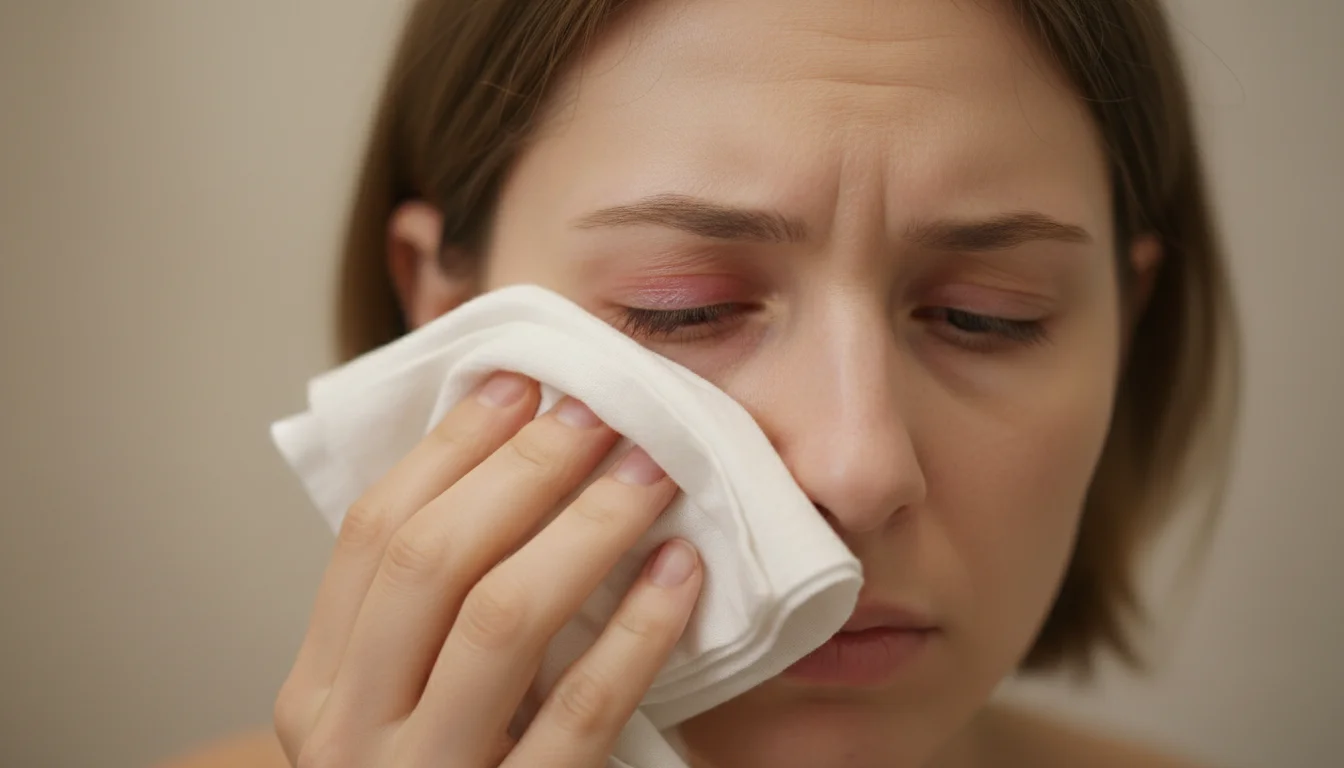
Soak a clean cloth in warm (not hot) water, wring it out, and hold it against the closed eye for 10-15 minutes. Do this 4-5 times a day. The warmth loosens discharge, soothes irritation, and keeps the eyelid from crusting shut overnight. Re-wet the cloth when it cools – a compress that’s gone room temperature isn’t doing anything.
Use a fresh cloth each session. Pink eye is contagious (viral and bacterial types), and a reused cloth reintroduces bacteria to the eye surface. Same rule applies to towels – use paper towels to pat your face dry during the infection, or use a fresh section each time.
Some people microwave a damp cloth for 10-15 seconds instead of running warm water, which holds heat longer. Either works. What doesn’t work: a compress that’s lukewarm after 30 seconds – that’s just wet cloth on your face.
For bacterial pink eye: do this in the morning before opening your eyes if discharge has sealed the lids overnight. Soak the compress a little warmer and hold it there until the crust softens, then gently wipe outward (away from the nose) with a clean wet cloth.
2. Artificial Tears (Lubricating Eye Drops)
Pink eye disrupts the normal tear film, leaving the eye surface dry, gritty, and irritated. Preservative-free artificial tears fill that gap and flush out loose debris and discharge at the same time.
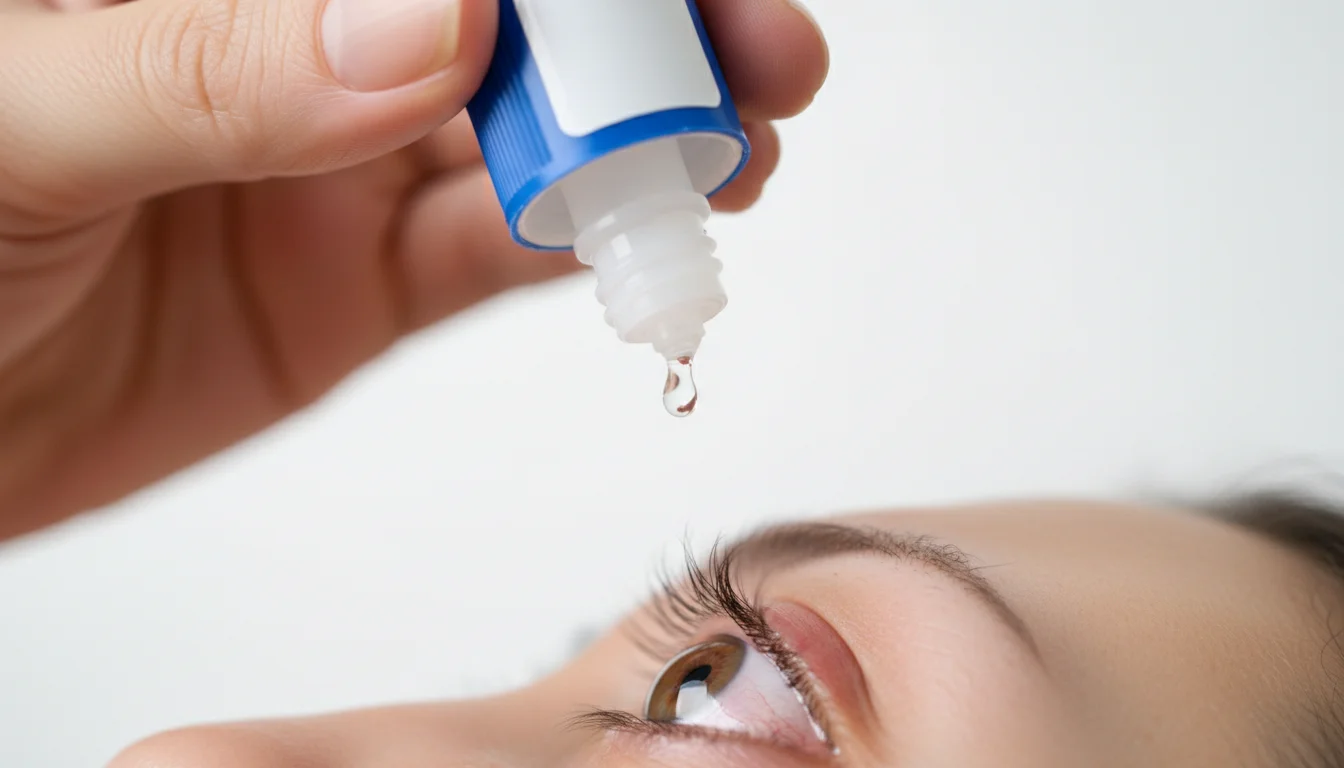
Use them 3-4 times daily, or whenever the eye feels uncomfortable. Pull the lower eyelid down gently, instill one drop, and blink once to spread it across the surface. Keep the dropper tip away from your eye – contaminating the bottle means reinfecting yourself every time you use it.
Get preservative-free formulas if you’re using drops more than four times a day. Preserved drops are fine for occasional use but can irritate eyes with prolonged application – the same preservatives that extend shelf life can cause low-level inflammation with repeated dosing.
Skip the redness-relief drops (Visine, Clear Eyes, anything that claims to "get the red out"). They work by vasoconstriction – constricting the blood vessels that make the eye look red. They don’t address the irritation that’s causing the redness, and with repeated use they cause rebound redness that makes the problem worse. Your eye looks temporarily whiter, then redder when the effect wears off. Not worth it.
3. Saline Eye Wash
When discharge is heavy, sticky, or building up at the corners, saline rinse clears it more effectively than drops. Rinsing flushes out discharge, allergens, and loose debris from the conjunctival surface.
Use a sterile saline eyewash solution – sold at pharmacies as eyewash or contact lens saline. Tilt your head back, hold your eye open, and pour or squeeze the solution across the surface for 30-60 seconds. Do this 2-3 times a day during active symptoms, and any time the eye is stuck or gummed shut.
Never use tap water to rinse your eyes. It sounds paranoid but it’s not – tap water can introduce Acanthamoeba, a microorganism that causes a serious corneal infection that’s both difficult to treat and can damage vision. The infection is rare but the treatment is brutal (months of intensive eye drops) and outcomes aren’t guaranteed. Sterile saline is cheap, a few dollars at any pharmacy, and the risk isn’t worth bypassing it.
Contact lens saline works if it contains no cleaning agents or preservatives – check the label. Single-use sterile pods are the most convenient for home use and eliminate the contamination risk from an open bottle.
4. Cold Compress (For Allergic Type)
If itching is the dominant symptom – severe, constant eye-rubbing itch rather than just irritation – you’re probably dealing with allergic conjunctivitis. Cold is what you want here, not warm. Cold constricts blood vessels and blunts the histamine response directly at the tissue.
Ice wrapped in a cloth, a bag of frozen peas, chilled cucumber slices, or cold tea bags all work. Hold it against the closed eye for 10 minutes. If it starts to feel uncomfortable before that, take it off – an ice burn on your eyelid is a worse problem than red eyes.
Frozen peas are often cited for good reason: they conform to the face shape, stay cold for a reasonable time, and you can refreeze them between uses (label them clearly so you don’t accidentally serve them at dinner). Chilled gel eye masks also work and are more convenient for repeated use.
This is symptomatic relief, not treatment. The allergic response doesn’t stop until you remove the allergen or use antihistamine drops (next method). But cold compress reduces the itch enough to stop the reflex eye-rubbing that makes allergic conjunctivitis worse.
5. Antihistamine Eye Drops (For Allergic Type)
For allergic conjunctivitis specifically, OTC antihistamine eye drops are the targeted treatment. They block histamine receptors in the conjunctiva, which is where the inflammatory response is happening – so they address the actual mechanism rather than just covering symptoms.
Look for ketotifen as the active ingredient. It’s available OTC in products like Zaditor, Alaway, and Refresh Eye Itch Relief. Apply one drop per eye twice daily. The itch reduction is noticeable within a few minutes. Unlike cold compresses which are purely symptomatic, ketotifen also functions as a mast cell stabilizer – it reduces how much histamine gets released on subsequent allergen exposures, so regular use improves over time rather than just providing momentary relief.
These are for allergic pink eye only. They have no effect on viral or bacterial conjunctivitis and shouldn’t be used as a substitute for medical evaluation if you’re not certain of the type. The distinguishing symptom for allergic: intense, compelling itching. Viral and bacterial pink eye are uncomfortable and irritating; allergic pink eye makes you want to scrub your eyes constantly.
Avoid decongestant drops for this. The "get the red out" drops reduce redness via vasoconstriction but don’t touch the histamine response, and cause rebound redness with regular use.
6. Discard Contact Lenses During Infection
Contact lens wearers: stop wearing them immediately when symptoms start. Not "reduce wear time" – stop entirely and switch to glasses until fully cleared.
The lens sits directly against the infected conjunctival surface, trapping discharge and pathogens against the eye, and reducing oxygen to the cornea. It prolongs the infection, increases the risk of corneal involvement, and can cause serious complications that standard pink eye doesn’t.
Discard the lenses you were wearing when symptoms started – they’re contaminated. Also discard any lenses opened in the week before onset. Discard your current lens case and start fresh (cases harbor biofilm that resists cleaning and can reintroduce infection). If you use multipurpose solution, replace the open bottle too.
Don’t resume wearing contacts until all symptoms have cleared completely – no redness, no discharge, no irritation. If the infection was bacterial, wait until you’ve completed the full course of antibiotic drops and a doctor has confirmed it’s cleared. Contact lens-related pink eye – especially bacterial types – progresses faster than standard conjunctivitis and needs prompt attention.
If you develop eye pain (distinct from irritation – actual aching pain), sensitivity to light, or any change in vision alongside the redness, and you wear contacts, seek same-day evaluation rather than waiting it out. Contact lens-related corneal infections progress faster than standard conjunctivitis and the window for effective treatment is narrow. Don’t wait to see if it gets better.
When to See a Doctor for Pink Eye
Most pink eye resolves without medical care. Go same-day if you have:
- Eye pain (distinct from irritation or grittiness)
- Light sensitivity (photophobia)
- Vision changes or blurring
- Worsening redness and discharge after 7-10 days rather than improving
- Pink eye in a newborn (requires immediate evaluation)
- You wear contact lenses and have any of the above
For bacterial pink eye, a prescription for antibiotic drops (chloramphenicol or fusidic acid in most countries, erythromycin ointment for children) is often needed. These aren’t available OTC. A standard GP or urgent care visit handles it.
FAQ
What gets rid of pink eye quickly?
Depends on the type. Bacterial pink eye with prescription antibiotic drops: most cases clear in 2-5 days. Allergic pink eye with antihistamine drops (ketotifen): itch and redness reduce within an hour of the first dose. Viral pink eye: there is no treatment that shortens the course. It takes 7-14 days regardless. For all types, warm compresses and preservative-free artificial tears manage symptoms throughout.
How long is pink eye contagious?
Bacterial and viral types are contagious until discharge stops and redness clears – typically 3-5 days after symptoms start, or 24 hours after starting antibiotic drops (for bacterial). During that window: wash your hands constantly, don’t share towels or pillowcases, and avoid touching your face. Allergic conjunctivitis isn’t contagious at all.
Will pink eye clear by itself?
Viral: yes, 7-14 days. Bacterial: mild cases often resolve without treatment, but it can take 2 weeks and there’s a risk of spreading to the other eye and to other people in the meantime. Antibiotic drops shorten this significantly. Allergic: it won’t clear on its own unless you remove or avoid the allergen that’s triggering it. Antihistamine drops manage it; avoidance resolves it.
How do I know if my pink eye is viral or bacterial?
Viral: watery, clear or slightly mucous discharge, often follows a cold or respiratory infection, frequently spreads to the second eye within a few days. Bacterial: thicker, stickier discharge – yellow or green – that builds up and crusts the eyelids closed overnight. Either way, a pharmacist or GP can assess and advise on treatment. Don’t try to diagnose based on appearance alone if you’re uncertain.