Table of Contents
A lot of shoulder pain isn’t from one specific injury – it’s from accumulated stress on a joint that’s been loaded wrong for months or years. Bad sleep position, poor desk setup, slumped posture. These are fixable. They just require some consistency, because the same habits that created the problem also take time to undo. Here’s where to start.
Sleep Positioning
If you’re sleeping on the sore shoulder, that’s the first thing to change. Hours of compressive body weight on an already irritated joint undoes whatever recovery you achieved during the day. Sleep on your back or the opposite side.
For side sleepers: hug a pillow to keep the top shoulder from rolling forward, and make sure the pillow under your head fills the space between your shoulder and ear without tilting your neck upward. Neutral alignment through the night gives the shoulder genuine recovery time instead of just horizontal loading.
Fix Your Posture
Rounded shoulders and a forward head position are the most common contributors to chronic shoulder aches that people chalk up to "getting older" or "sleeping wrong." The real cause is hours of looking down at phones and laptops with no correction.
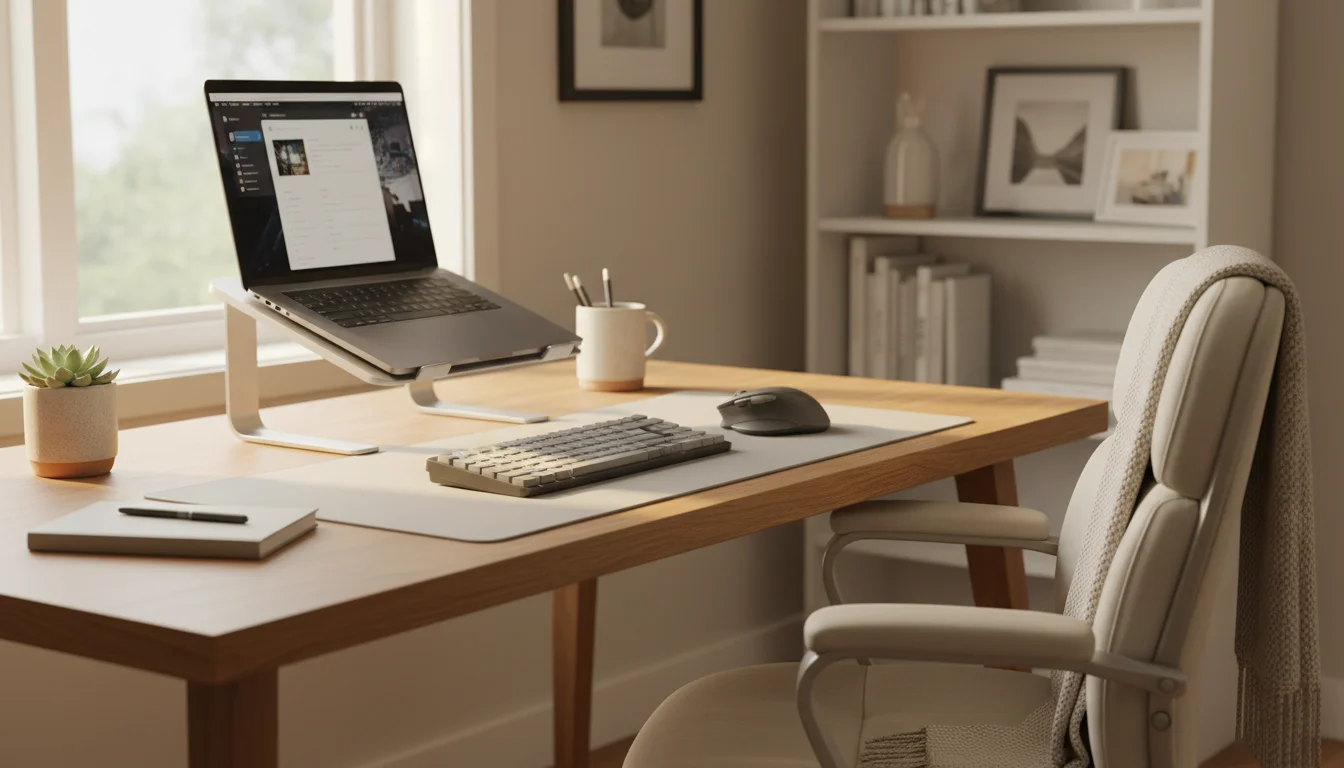
Your monitor should sit at eye level. If you’re on a laptop, a stand plus an external keyboard is cheaper than physiotherapy. Set hourly reminders to reset – roll your shoulders back, lengthen your neck, tuck your chin slightly. It feels deliberate at first but becomes reflexive in a few weeks.
Sleep position matters too. High pillows that push your head forward reproduce the same forward-head position you’re trying to fix during the day. One thin pillow for back sleepers, a slightly thicker one for side sleepers – just enough to keep the neck neutral without any lateral tilt.
Postural correction takes 4-8 weeks of consistency to show real improvement. That’s not slow, it’s fast considering how long the problem took to develop.
Get a Massage
Tight muscles in the upper trapezius, levator scapulae, and around the shoulder blade are often the direct source of shoulder aches even when the joint itself is fine. Self-massage with your opposite hand or a tennis ball pressed against a wall can release these. Deep thumb pressure into the muscle belly, held for 20-30 seconds, then released.
Professional deep tissue massage is more effective if the problem is significant. It’ll hurt in the useful way – a releasing sensation, not a sharp stabbing. If a practitioner is just making things more painful, ease off on the pressure request. You want tissue release, not trauma.
Try Acupuncture
Some people get real, measurable relief from acupuncture for shoulder pain. Thin needles placed at specific points related to shoulder function and pain pathways, sessions running 20-30 minutes. Conventional explanation: needles trigger endorphin release and interrupt pain signal transmission. Results vary considerably by practitioner and by person.
If massage and stretching haven’t moved the needle after a few weeks, it’s worth trying. It’s not a placebo for everyone who reports improvement.
Adjust Your Workstation
Reaching forward or sideways to your mouse and keyboard all day is repetitive strain in slow motion. Your keyboard should sit with elbows at about 90 degrees and close to your body. Mouse positioned so you’re not reaching across your desk or extending your arm. Screen at eye level.
Take a break every 30 minutes to change position and move. Staying locked in one posture all day causes muscle fatigue even with perfect ergonomics, because static load is still load. The shoulder needs variation, not just correct positioning.
Skip Overhead Activities
While the shoulder is healing, avoid lifting things overhead, carrying bags on the sore side, or doing any exercise that loads it in elevation. That means the overhead press can wait. So can the top shelf reorganization project.
This isn’t excessive caution – it’s basic tissue healing logic. Most shoulder problems that turn into months-long issues do so because the person tried to push through them at week one. Two weeks of reducing load usually means a much faster total recovery than one week of grinding through pain followed by six weeks of setback.