Table of Contents
Stink bugs have one very effective defense: if you startle, crush, or vacuum them wrong, you get the smell. It’s not dangerous, but it’s persistent, and it’s exactly the kind of problem that makes people do something impulsive and regret it. The good news is that most stink bug management is mechanical – seal the gaps they use to get in, remove the ones already inside without disturbing them, and manage the garden conditions that let populations build up. None of this is complicated. It just requires knowing which methods trigger the smell and which ones don’t.
Exclusion and Sealing
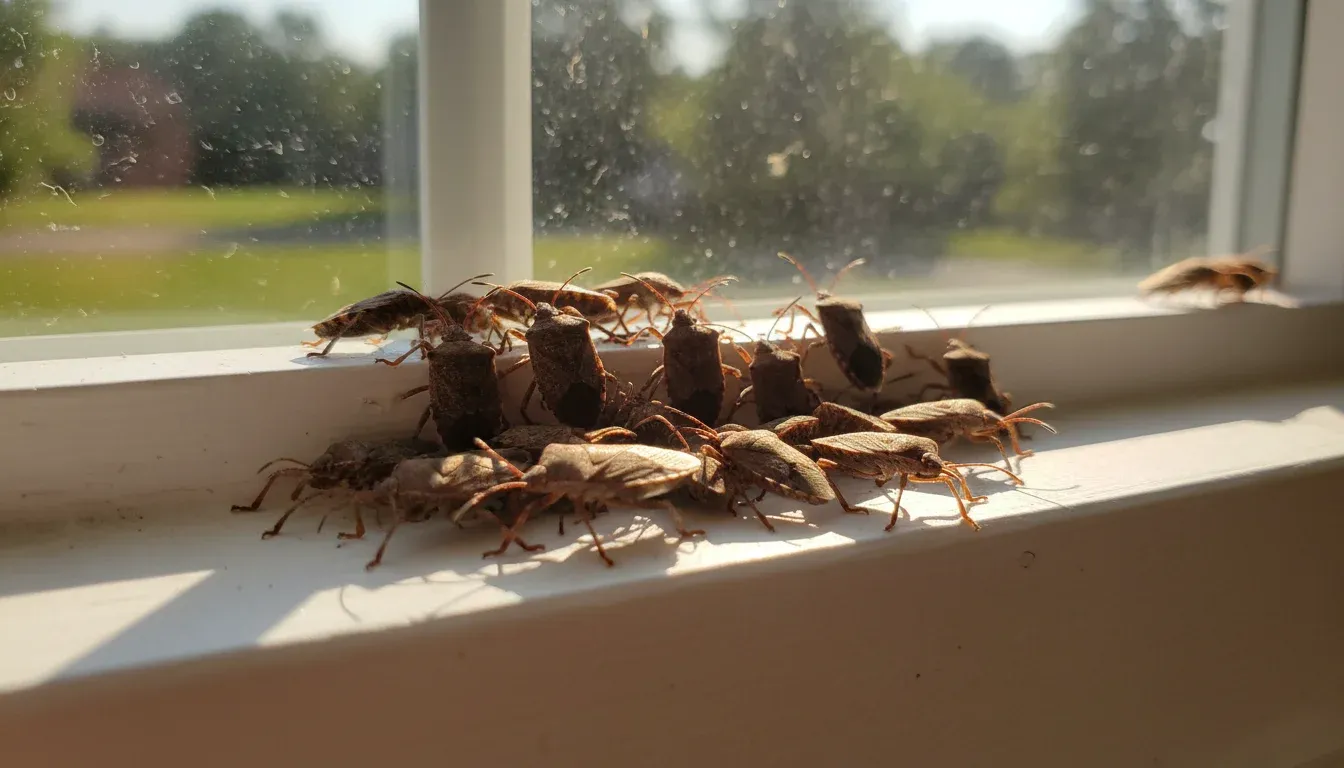
The most effective long-term control is keeping stink bugs out of the house entirely. They come inside in fall looking for warm overwintering sites. Prevent that, and you prevent the indoor problem.
Sealing entry points is the foundation. Stink bugs enter through gaps around windows, doors, pipes, and utility penetrations. Caulk works for static gaps; foam for larger irregular ones. Focus on the south and west-facing sides of buildings first – stink bugs aggregate on warm surfaces before entering.
Repairing damaged screens closes the most common entry route. Even small tears are sufficient. Checking weather stripping handles gaps at door bottoms and sides. Both are quick fixes that make a real difference during the fall migration period.
Indoor Removal
The problem with stink bugs inside is that you can’t just grab them. Crushing releases the smell. Agitation releases the smell. The key is removing them without triggering the defensive response.
Flushing with tissue – picking them up gently with a tissue and dropping them in the toilet – is the simplest method. Don’t squeeze. The bucket method with soapy water works for larger numbers: hold a container of soapy water under the bug and nudge it in. Soap breaks the surface tension; the bug drowns without being able to release the smell first.
Vacuum removal is efficient for multiple bugs but comes with a trade-off: the smell transfers to the vacuum. Use a shop vac with soapy water in the tank, or accept that the vacuum will smell for a while. Empty it immediately outside.
Traps and Light Management
Stink bugs are attracted to light, which you can use against them and for you.
Light traps at night exploit this directly: a funnel trap with an LED light source in a dark room attracts and catches bugs overnight. Effective for reducing indoor populations during peak season.
Reducing outdoor lighting and shutting window blinds at night make your home less attractive. Light from inside or outside draws stink bugs to building surfaces, where they find or exploit entry points. Blocking or reducing that signal matters particularly in late September through October.
Natural and Organic Treatments
For stink bugs already on plants or surfaces, several organic options work without chemical residues.
Neem oil mixed with water and a few drops of dish soap works as a contact spray and feeding deterrent. It won’t knock down large populations instantly but degrades more slowly than soap alone and discourages return.
Diatomaceous earth applied along windowsills, door thresholds, and other entry points creates a physical deterrent. Stink bugs avoid crossing it where possible.
Garlic spray repels rather than kills – effective at keeping bugs off specific plants without harming anything else. Dish soap spray is a direct contact killer: the soap penetrates the exoskeleton and kills on contact. Use it on visible bugs rather than as a broad spray.
Botanical insecticide (Pyganic) is a pyrethrin-based organic option for serious infestations on food crops. It breaks down quickly, has a short re-entry interval, and is approved for organic use.
Garden and Habitat Management
Stink bugs don’t just appear indoors. They build up on garden plants first, particularly tomatoes, peppers, beans, and fruit trees. Managing the garden reduces the pressure on the house.
Crushing eggs on leaf undersides is a direct intervention. Stink bug eggs are laid in neat rows of 20-30 on leaf undersides and are easy to spot and destroy before they hatch.
Removing weeds from the garden eliminates habitat and early-season food sources. Many weedy host plants support stink bug populations before they move to garden crops.
Removing food sources – fallen fruit, overripe produce left on plants – reduces what’s keeping populations high. Less food, fewer bugs staying in the area.
Where It Shows Up
Stink bugs hit every part of the home and garden in different ways. How to get rid of stink bugs with exclusion covers sealing, screens, weather stripping, and the lighting management that reduces fall migration indoors. How to get rid of stink bugs with removal covers every method for dealing with bugs already inside: traps, vacuuming, and safe contact removal. And how to get rid of stink bugs in the garden handles the outdoor population with organic sprays, egg removal, and habitat management.