Table of Contents
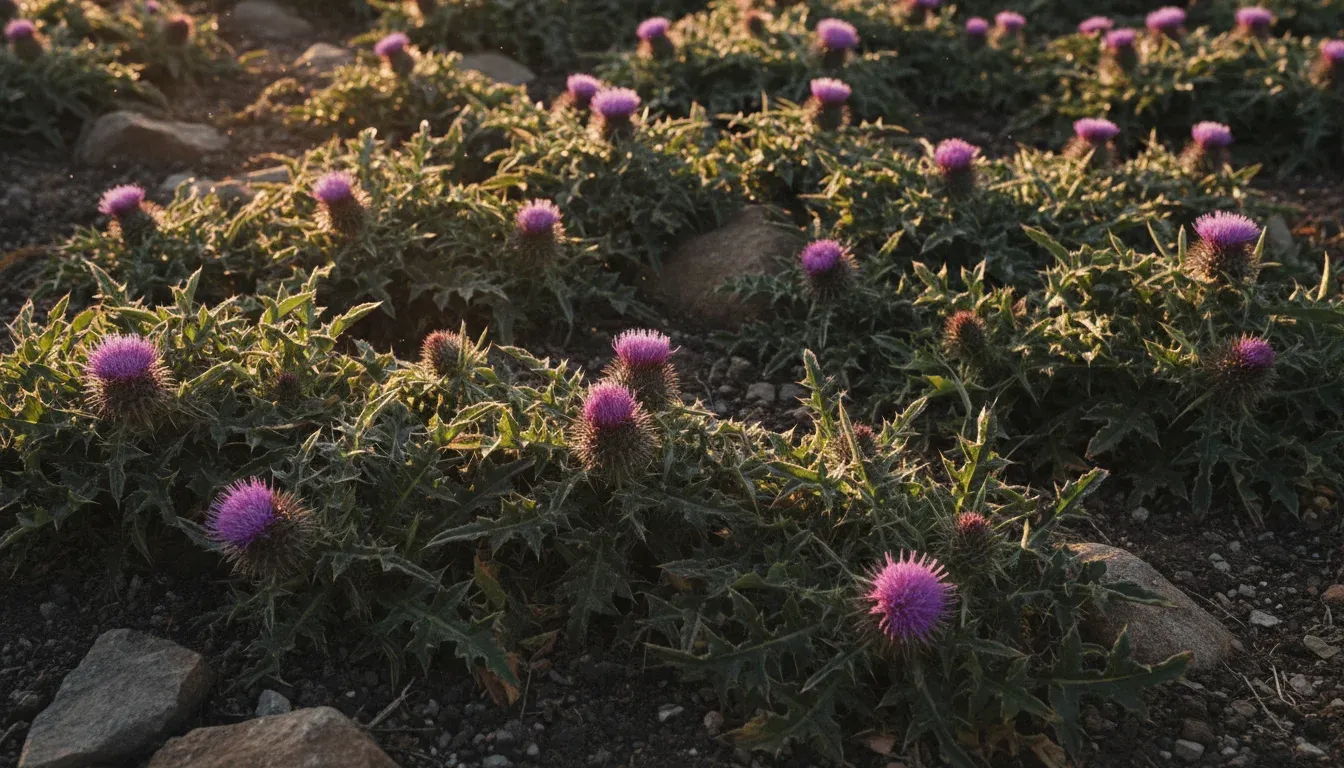
Thistle spreads fast and fights back hard. Those taproots go deep, and every missed piece grows back with reinforcements. You need a strategy that actually kills the root system, not just the stuff you can see.
Here’s what works.
1. Dig out the entire taproot
This is the method that actually solves the problem if you do it right. Thistle has a taproot that can go 6-10 feet deep, but you don’t need to excavate the entire thing. You need to get the top 6-8 inches where the growth nodes are.
Wait until the soil is moist (day after rain is perfect). Use a dandelion digger or a long-handled weeding tool to get leverage. Push it in at an angle, rock it back to loosen the root, then pull straight up. If the root snaps and you leave a chunk behind, that chunk will resprout. That’s why the moist soil matters – you get the whole thing in one pull.
2. Cut flower stalks before they seed
One thistle plant produces up to 5,000 seeds. Let it flower and you’re not dealing with one plant anymore, you’re dealing with a few thousand.
Mow or cut the stalks as soon as you see buds forming. The plant will try to resprout new stalks – cut those too. You’re not killing the plant this way, but you’re preventing it from turning your thistle problem into an infestation. Do this while you’re working on the root removal.
3. Smother with cardboard and mulch
For a patch of thistle you can’t dig out (maybe it’s too established or the roots are under a pathway), cut everything to ground level and smother it.
Lay down cardboard (not weed fabric, actual cardboard) in overlapping sheets. Cover with 4-6 inches of wood chip mulch or shredded leaves. Leave it for a full growing season. Thistle can’t photosynthesize through cardboard and eventually the roots starve.
This works, but it takes time. You’ll still see some shoots poking through gaps in the first few months. Pull those or add more cardboard.

4. Use boiling water for spot treatment
If you’ve got a few thistle plants in a bed where you can’t dig without damaging other roots, boiling water kills the plant without chemicals.
Boil a kettle and pour it directly on the crown (where the leaves meet the soil) and down the center of the plant. This scalds the root tissue. You’ll need to repeat this 2-3 times over a few weeks because the deep taproot can resprout. But it’s faster than waiting for cardboard to work and it won’t harm the soil.
5. Apply thick organic mulch for prevention
After you’ve cleared thistle, keep it from coming back by making the soil hostile to germination. Spread 3-4 inches of organic mulch (wood chips, straw, shredded bark) over bare soil.
Thistle seeds need light to germinate. Mulch blocks that light. The seeds can stay dormant in soil for 20 years, so you’re not preventing them from existing, you’re preventing them from sprouting. Refresh the mulch every year.
6. Crowd them out with dense ground cover
Thistle thrives in bare or disturbed soil. Once you’ve removed the existing plants, plant something that fills the space before thistle can.
Clover, creeping thyme, or vinca work well. These spread laterally and form a dense mat that blocks light and occupies the root zone. Thistle seedlings can’t compete with established ground cover. This is a long-term prevention method, not a removal method, but it’s the reason some gardens never see thistle and others fight it every year.
7. Salt the soil (only as a last resort)
If you have thistle in a gravel path or a crack in your driveway where nothing else should grow anyway, you can salt the area to kill everything. Mix 3 parts salt to 1 part water and pour it on the thistle crown.
Salt kills thistle, but it also kills everything else and stays in the soil. Don’t use this method anywhere near garden beds, lawns, or trees. Runoff will damage plants you care about. This is only for areas where you want permanent scorched earth.
The best approach is digging if you can, smothering if you can’t, and mulching after you’re done. Thistle comes back if you leave any root behind, so whatever method you pick, commit to it and don’t stop halfway.