Table of Contents
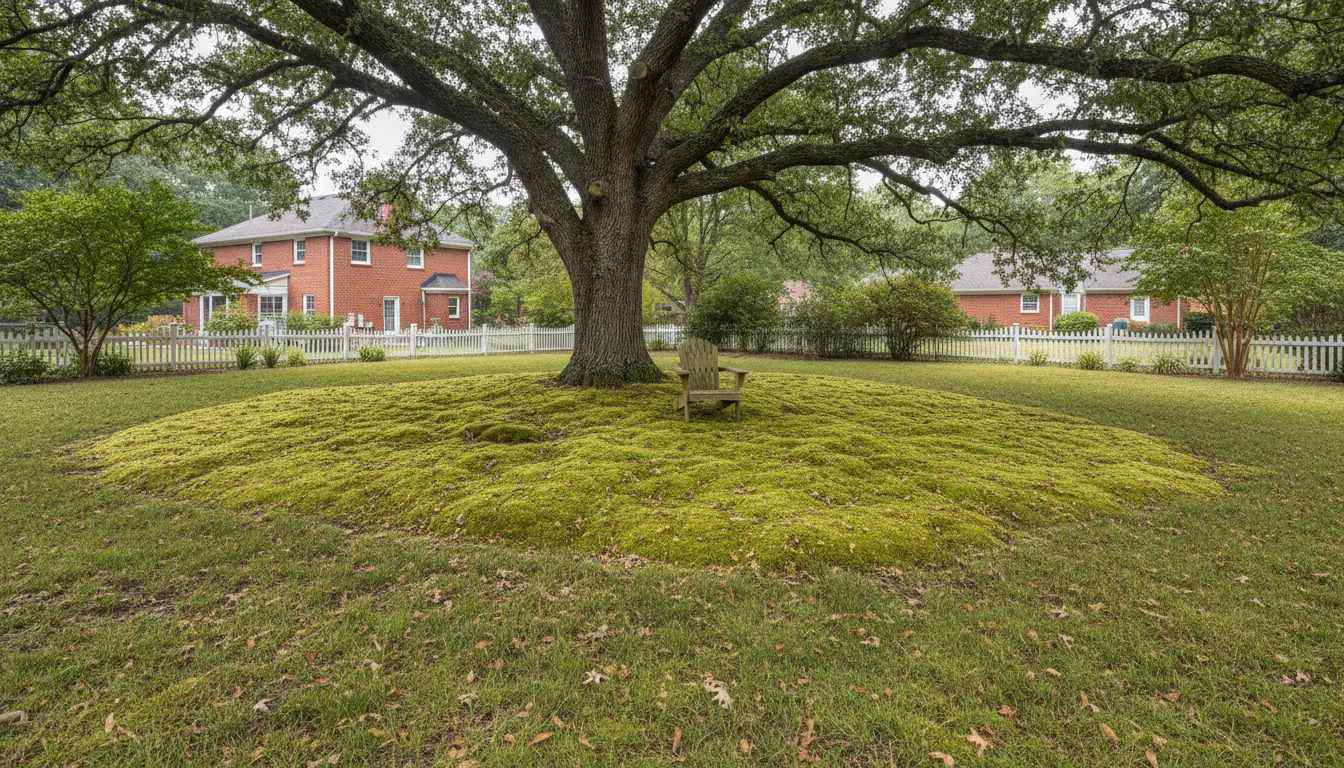
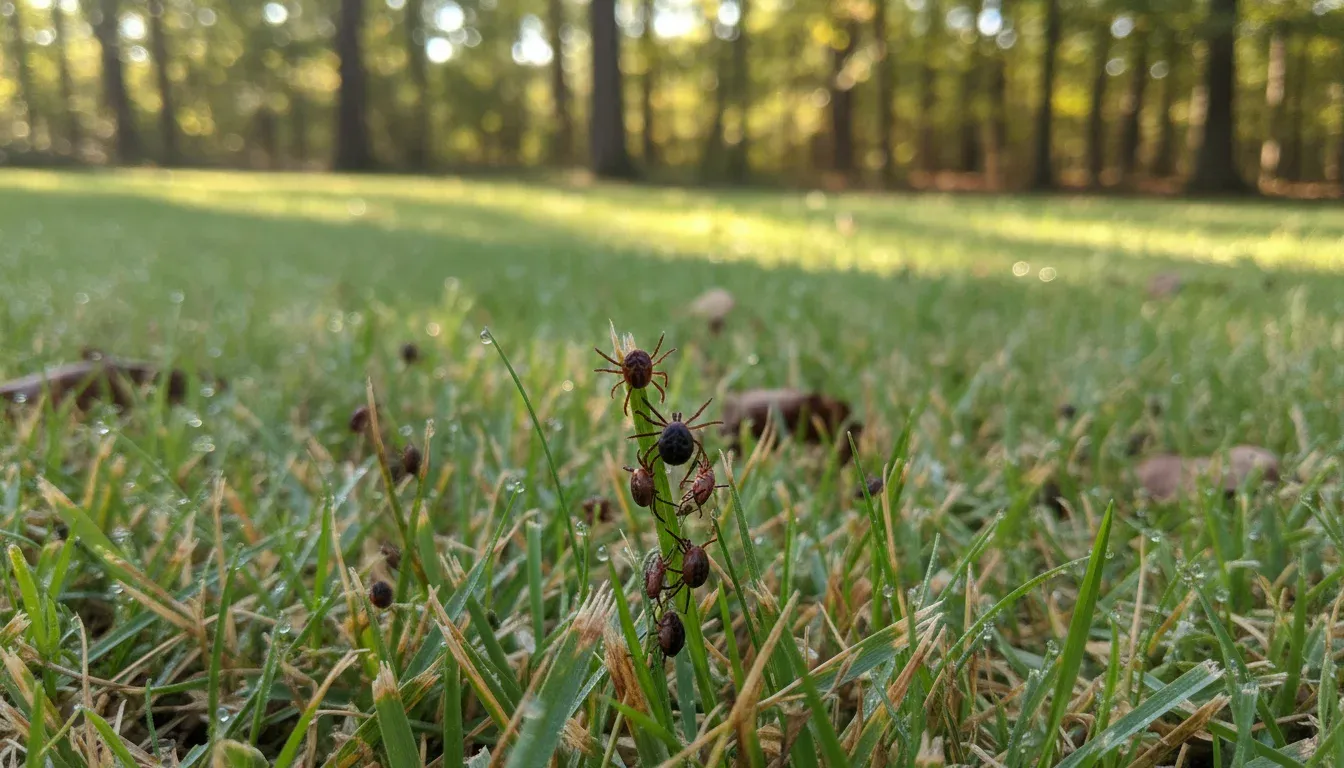
Ticks don’t spread evenly across your yard. They cluster in the transition zone between your lawn and wild areas – where the shade is, where the moisture is, where the mice are. That 3-foot strip along your fence line or woodland edge is where 90% of your exposure happens. Fix that zone and you’ve fixed the problem.
1. Mow your lawn aggressively short
Ticks need shade and moisture. Keep your grass below 3 inches (7.5 cm) and they lose both. Mow weekly during peak season (May through September). The edges matter most – that strip where lawn meets woods or brush is tick territory.
Don’t bag clippings and call it done. Rake them away. A pile of decomposing grass is its own humidity trap.
2. Remove yard debris and leaf litter
Leaf piles, fallen branches, brush stacks – anything that holds moisture gives ticks somewhere to wait. Rake weekly in fall. Pull up dead plants. If you compost, keep the bin at least 30 feet (9 m) from where people spend time – the decomposing material draws in rodents.
This pairs directly with mowing. You’re denying them habitat at every layer.
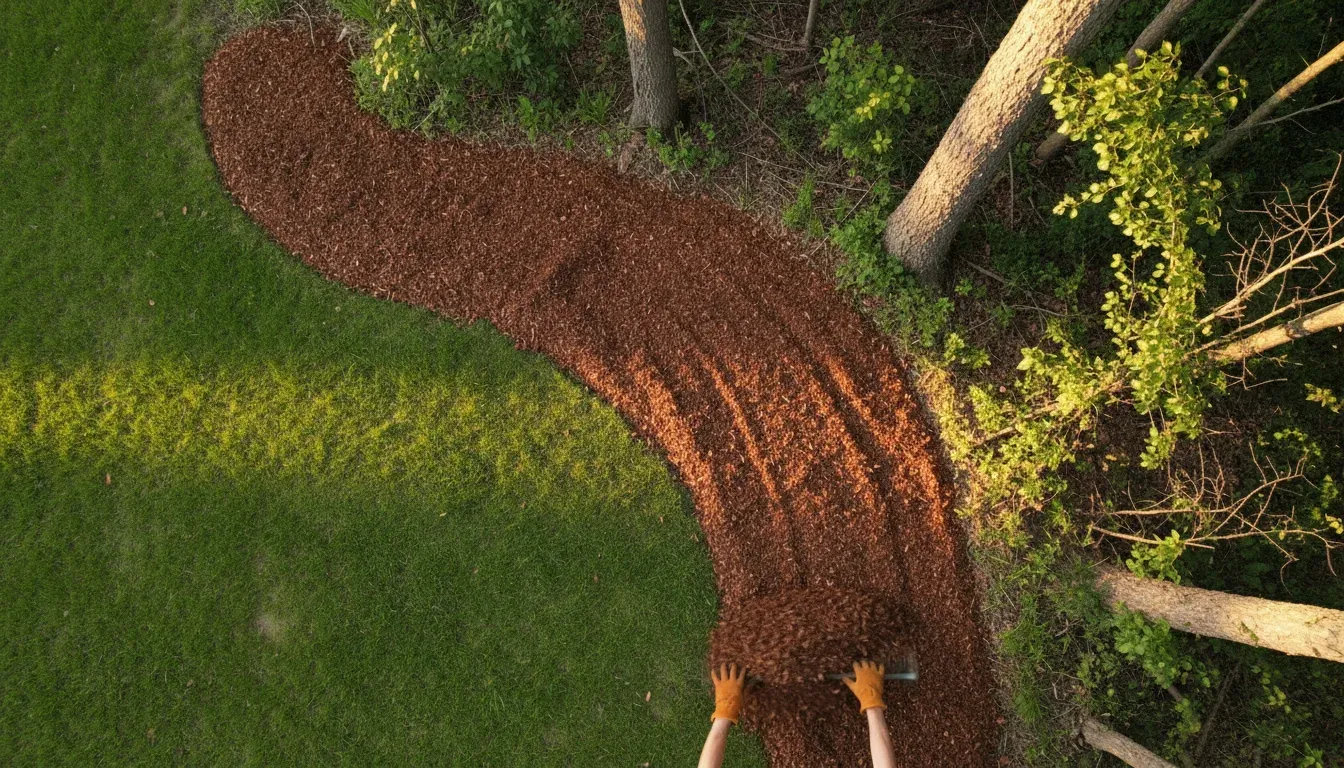
3. Install a 3-foot wood chip barrier
Run a strip of wood chips or gravel at least 3 feet (90 cm) wide along any edge where lawn meets woods or brush. Ticks crossing it dehydrate before they reach your lawn. It also disrupts the mice and other small animals that ferry ticks in.
Use wood chips over mulch – they dry faster and last longer. Replenish annually once they start decomposing.
4. Deploy tick tubes
Cardboard tubes stuffed with permethrin-treated cotton. Mice collect the cotton for nesting, the permethrin kills ticks on the mice, and you break the tick lifecycle without spraying your entire yard.
Place 10-20 tubes per half-acre, twice a year: once in spring and again in late summer. Focus on wooded edges, stone walls, and anywhere you’ve seen mouse activity. A box of 24 runs around $30-40 at garden centers or online.

5. Diatomaceous earth
Food-grade DE is a fine powder that shreds the waxy coating on tick exoskeletons, causing them to dehydrate and die. Apply a thin line along wooded borders, fence lines, and the edge of your wood chip barrier – anywhere ticks are likely to cross into your lawn.
One major limitation outdoors: it stops working the moment it gets wet. Reapply after every rain or heavy dew. It’s slow and maintenance-heavy compared to permethrin, but it’s non-toxic and works as an extra layer along the perimeter between treatments. Don’t rely on it as your only active control.
6. Spray permethrin in targeted zones
If ticks are showing up on people or pets regularly, a permethrin treatment will knock the population down fast. Focus on wooded edges, tall grass, ground cover, and the perimeter of play areas – not the open lawn, because ticks aren’t there anyway.
One treatment lasts 4-6 weeks. Time your first for late spring, before peak season. A second in late summer covers the fall surge. Use a garden sprayer with concentrate (follow the label) or hire a pro. This is the escalation step, not the starting point.
7. Install deer fencing
Deer are the primary host for adult ticks. Where deer browse regularly, tick pressure stays high regardless of what else you do. A 7-8 foot (2.1-2.4 m) fence is the minimum height that actually stops them.
This only makes sense if deer are a confirmed, ongoing problem. It’s expensive and permanent. But for heavily wooded properties with regular sightings, it’s one of the most effective long-term fixes available.
8. Add guinea fowl or chickens
Birds eat ticks. Guinea fowl are obsessive about it – they’ll work your yard all day. Chickens do it too, though less single-mindedly. A flock of 4-6 birds makes a real dent in tick numbers and handles other insects as a bonus.
You need space, a coop, and tolerance for noise. Guinea fowl especially are genuinely loud. Not background-noise loud – they’ll wake you up. If you’ve got rural property and can handle it, they’re a passive tick-control system that runs itself.
Start with the free stuff: mow short, clear debris, put in a barrier. That removes the habitat. Layer in tick tubes and diatomaceous earth along the perimeter, then escalate to permethrin if ticks are still showing up. Fencing and birds are for specific situations. You don’t need all eight – you need the right three or four for your yard.