Table of Contents
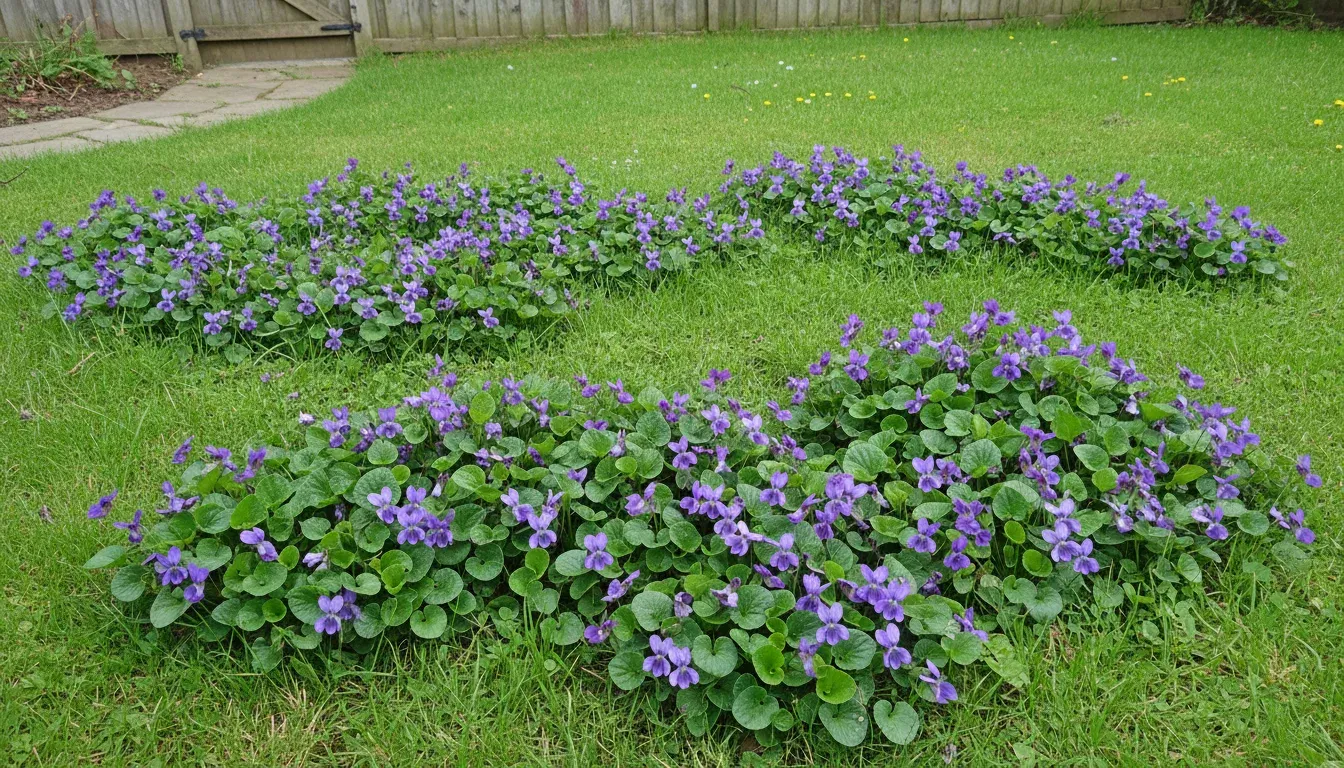
Violets look charming in a garden bed. In your lawn, they’re weeds that spread fast and choke out grass. Their waxy leaves shed water and most herbicides, and their root systems are stubborn. But they’re not invincible.
The key is hitting them when they’re vulnerable (spring and fall) and fixing whatever lawn conditions let them take hold in the first place. Here’s how to reclaim your turf.
1. Hand Pull When the Soil Is Wet
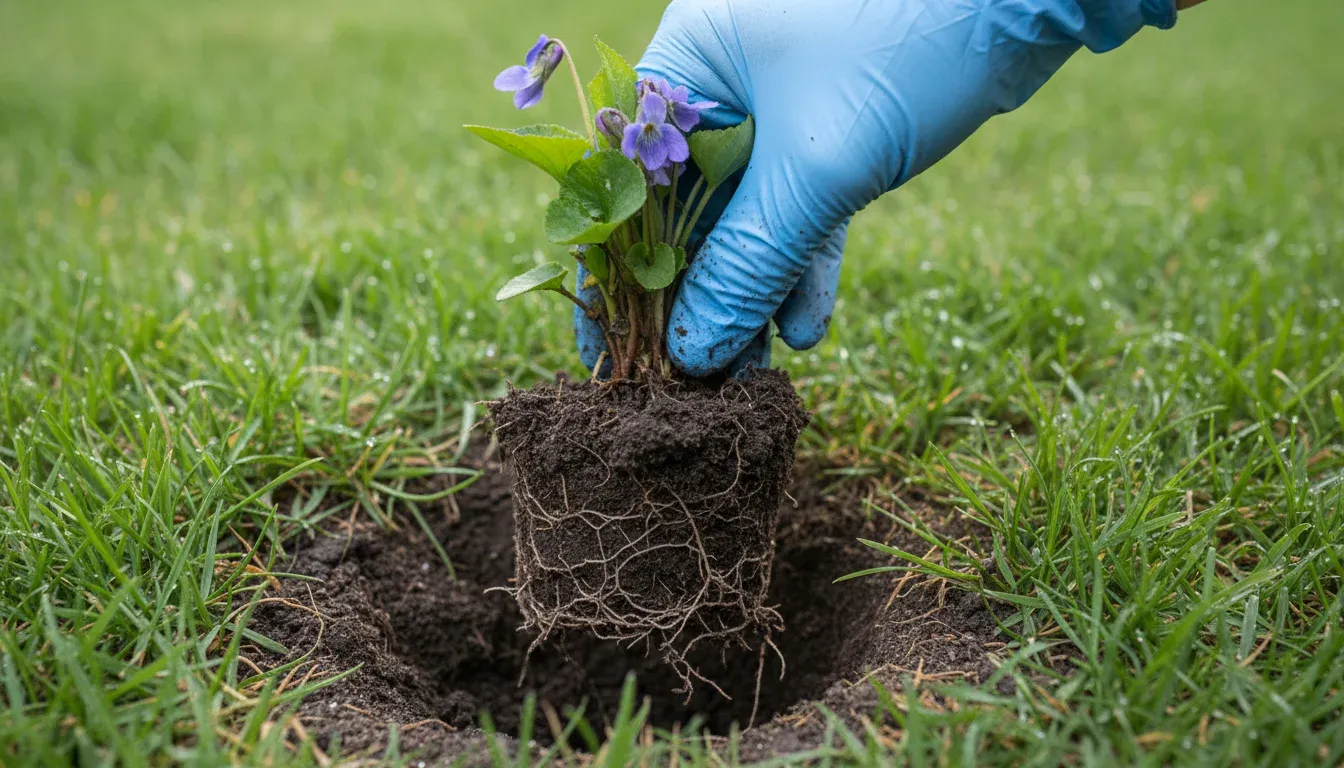
The simplest method, but only if you catch them early. Water the lawn thoroughly or wait for a rainy day, then pull violets out by hand. You need to get the entire root system – if you leave any behind, they’ll regrow.
This works for small patches. If violets have colonized half your lawn, skip to chemical methods.
2. Apply a Broadleaf Herbicide in Fall
Fall application (September through October) is more effective than spring because violets are storing energy in their roots for winter. Herbicide travels down into the root system and kills the whole plant.
Use a product containing triclopyr or 2,4-D labeled for wild violet control. Ortho Weed B Gon works, but check that it specifically lists wild violets on the label. Some generic broadleaf killers don’t touch them.
Apply when temperatures are between 50-85°F and no rain is forecast for 24 hours. You’ll need a second application 2-4 weeks later. Violets are tough.
3. Spot Treat with Triclopyr in Spring
Spring treatment (April-May) works but requires more persistence. Violets are actively growing, so herbicide uptake is good, but they’re also producing seeds and spreading.
Mix triclopyr according to label directions and spray directly on violet foliage. Avoid spraying nearby grass. Triclopyr is selective but can damage turf if overapplied.
Expect to treat the same areas multiple times. Violets that survive the first round will recover.
4. Improve Lawn Density Through Overseeding
Violets thrive in thin, patchy lawns where there’s space to establish. A thick lawn crowds them out.
Overseed bare spots in early fall (cool-season grass) or late spring (warm-season grass). Use a grass variety suited to your region and light conditions. If your lawn is shaded, pick a shade-tolerant cultivar – thin grass in shade is an open invitation for violets.
Water new seed consistently. Once grass fills in, violets have nowhere to go.
5. Raise Soil pH If It’s Acidic
Violets prefer acidic soil (pH 5.5-6.5). Most lawn grasses prefer neutral to slightly alkaline conditions (pH 6.5-7.0). If your soil is too acidic, you’re giving violets an advantage.
Test your soil pH with a home kit or send a sample to your local extension office. If pH is below 6.0, apply lime according to test recommendations. This won’t kill existing violets but makes your lawn more competitive over time.
Retest every 2-3 years. Soil pH shifts slowly.
6. Aerate Compacted Soil
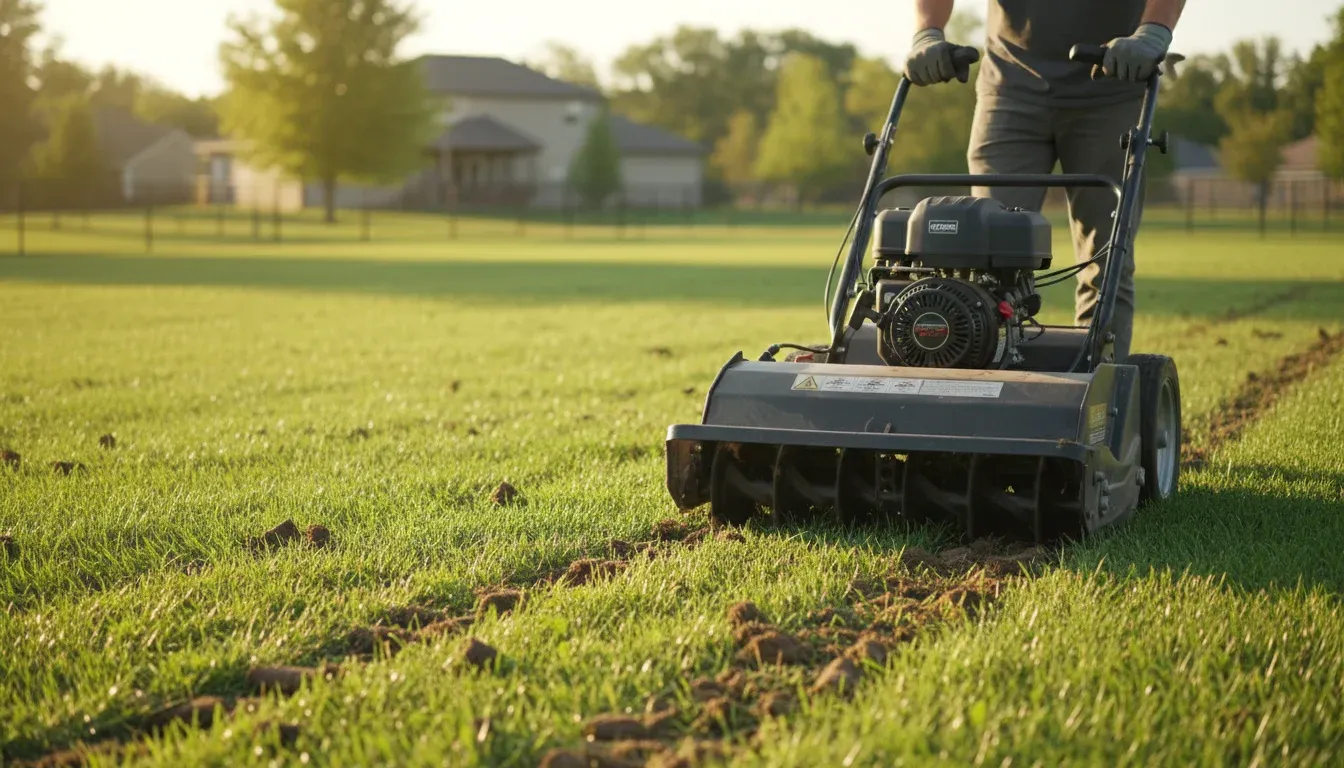
Compacted soil stresses grass and creates openings for violets. Core aerate in fall (cool-season lawns) or late spring (warm-season lawns) to improve root growth and drainage.
Rent a core aerator or hire it out. One pass per year is enough for most lawns. Two passes if your soil is heavily compacted.
Follow up with overseeding and fertilizer. Healthy grass fills in faster than violets can spread.
7. Fertilize to Favor Grass Over Violets
Violets tolerate low-nitrogen soil better than most grasses. A well-fed lawn out-competes them.
Apply nitrogen fertilizer in early fall and late spring at rates recommended for your grass type. Avoid overfeeding – excess nitrogen can burn grass and create other problems.
Use a slow-release formula. Quick-release fertilizers give a temporary boost but don’t sustain thick turf.
8. Mow High to Shade Out Violets
Violets like sunlight reaching the soil surface. Taller grass shades the ground and makes it harder for violet seeds to germinate.
Set your mower to the highest recommended height for your grass type (usually 3-4 inches for cool-season grasses, 2-3 inches for warm-season). Never remove more than one-third of the blade length in a single mowing.
This won’t kill established violets but prevents new ones from taking hold.
Your lawn won’t clear up overnight. Violets take multiple seasons to eliminate completely, especially if they’ve been there a while. But consistent treatment – herbicide in fall, overseeding, aeration, proper mowing – will eventually tip the balance in favor of grass. Once your turf is thick enough, violets can’t regain a foothold.