Table of Contents
A smelly washing machine defeats the entire purpose of doing laundry. Instead of fresh, clean clothes, you end up with garments that smell musty, moldy, or like stagnant water. The irony is painful: the appliance designed to clean is itself filthy.
Washing machine odors come from a buildup of detergent residue, fabric softener, dirt, and moisture that creates a perfect environment for bacteria and mold. Front-loading machines are particularly prone to this problem because water pools in the rubber door seal. But top-loaders aren’t immune—any machine that isn’t properly maintained will eventually start to stink.
Here’s how to eliminate washing machine odors and keep them from coming back.
1. Pour Boiling Water into the Detergent Drawer
This simple hack targets a part of your washing machine you probably never think about: the tube that runs from the detergent drawer down to the drum. This tube only ever gets cold water during normal operation, which allows soap scum and bacteria to accumulate over time.
Boil a kettle of water and carefully pour it directly into the detergent drawer compartment. The hot water flushes the tube, dissolving buildup that cold water can’t touch. Do this two or three times for a thorough clean.
Be careful pouring boiling water into plastic components—go slowly to avoid splashing. This method is particularly effective for older machines where the tube has never been cleaned. The difference in odor can be immediate and dramatic.
2. Clean the Detergent Drawer
Remove the detergent drawer completely from the machine. Most pull out with a firm tug or after pressing a release button. You’ll likely find a disgusting mixture of old detergent, fabric softener residue, and black mold lurking in the corners.
Wash the drawer in hot soapy water, using an old toothbrush to scrub the narrow compartments and the underside where gunk accumulates. Pay special attention to the softener compartment—it’s the worst offender for harboring bacteria.
While the drawer is out, look into the cavity where it sits. Wipe down any visible surfaces with a damp cloth. Let everything dry completely before reassembling. Consider leaving the drawer slightly ajar between washes to improve airflow.
3. Clean the Door Seal
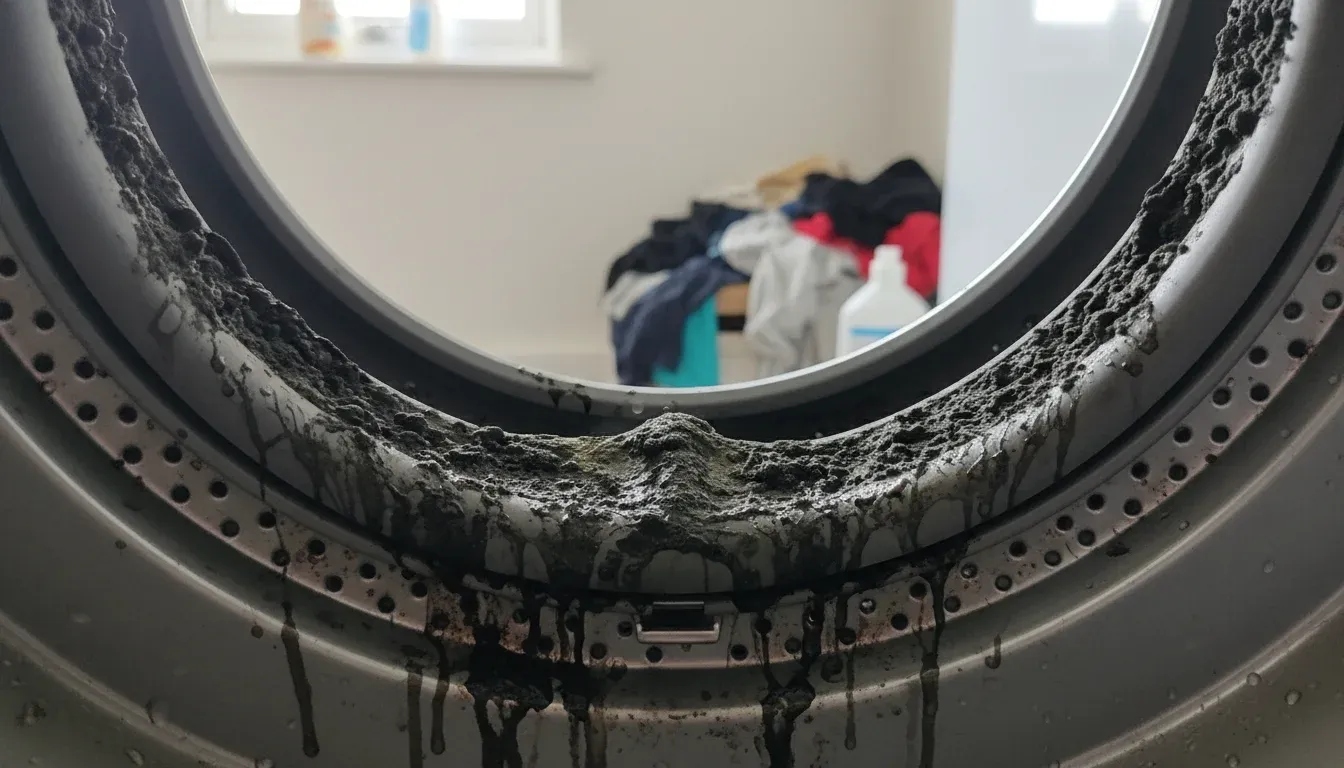
The rubber door seal (gasket) is the number one source of washing machine odors, especially on front-loading machines. Water, lint, and soap get trapped in the folds, creating a breeding ground for mold and mildew.
Pull back the rubber seal to expose the inner surfaces. You’ll probably find a revolting collection of hair, slime, and black mold. Wipe it all away with a cloth soaked in white vinegar or a solution of hot water and baking soda.
For stubborn mold, use an old toothbrush to scrub the folds. Get deep into the crevices where the seal meets the drum—this is where the worst buildup hides. Dry the seal thoroughly with a towel when you’re done.
Make this a weekly habit: after your last load of laundry, wipe the seal dry and leave the door open for several hours. Just this simple practice prevents 90% of odor problems.
4. Clean the Drum
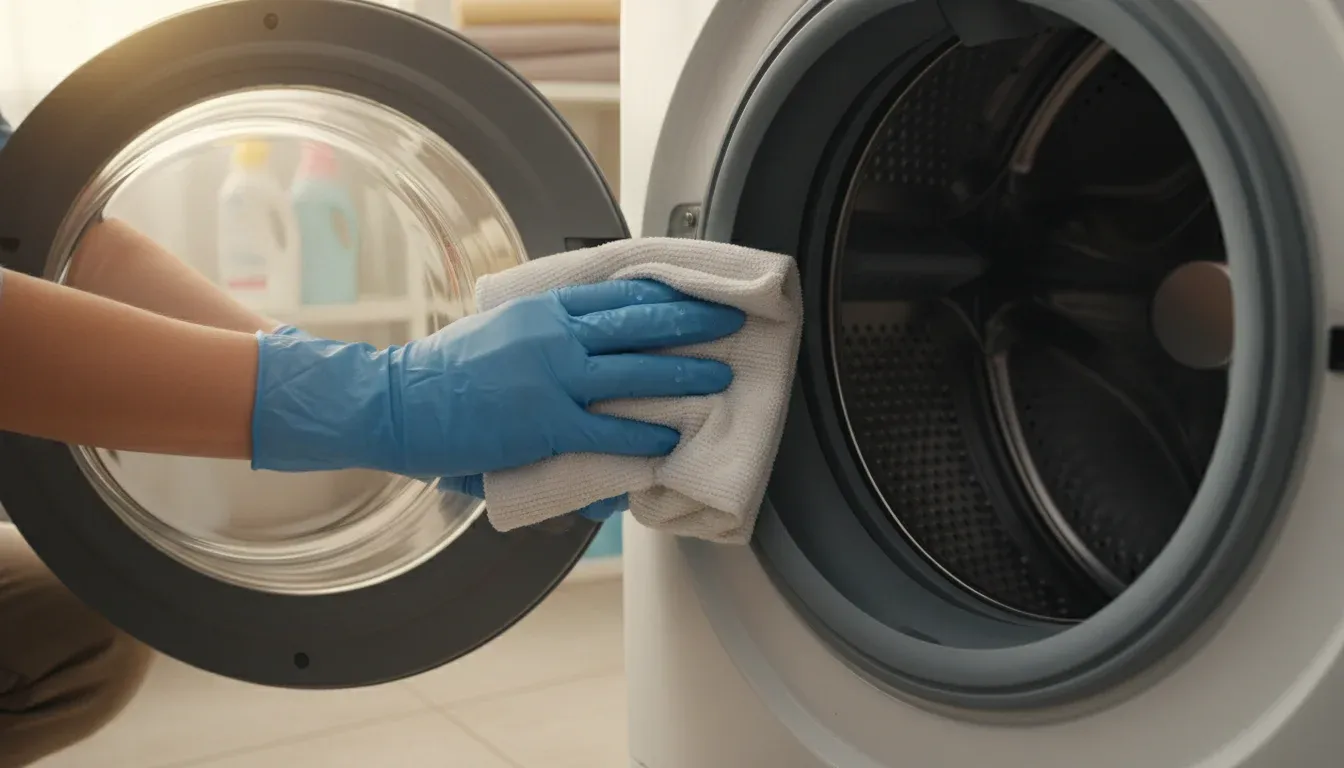
Run an empty hot wash cycle with two cups of white vinegar poured directly into the drum. The vinegar dissolves mineral deposits, detergent buildup, and kills odor-causing bacteria. Use the hottest water setting your machine offers.
Alternatively, you can use washing machine cleaner tablets or liquid products specifically designed for this purpose. Follow the package directions—some require running a specific cycle type.
For severe odors, add half a cup of baking soda to the vinegar wash. The combination creates a foaming reaction that scrubs the drum interior without you having to touch it. Run a second rinse cycle afterward if you notice any residue.
5. Clean the Filter
Your washing machine has a filter, probably near the bottom front behind a small access panel. This filter catches coins, hair, and debris that could damage the pump. It also traps organic material that rots and smells.
Place a towel on the floor—water will spill out when you open the filter housing. Unscrew the filter cap slowly and let the water drain into a shallow pan or directly onto the towel. Remove the filter and rinse it under hot water.
You’ll likely find a disgusting collection of hair, lint, and sludge. Clean it thoroughly and check the filter housing for any remaining debris. Screw the cap back on firmly but don’t overtighten.
Clean the filter every month. If you have pets or long-haired family members, check it every two weeks. A clogged filter not only smells terrible but can burn out your washing machine’s pump—a costly repair.
6. Leave the Door Open Between Washes
Prevention is easier than cure. The simplest way to prevent washing machine odors is to leave the door open when the machine isn’t running. This allows air circulation that dries out moisture and prevents bacterial growth.
If you have curious children or pets and can’t leave the door wide open, prop it ajar with a folded towel. Even a few inches of gap makes a huge difference in drying time.
Similarly, leave the detergent drawer pulled out slightly. This lets air reach the tube and drawer compartments, preventing the stagnant moisture that causes odors.
Washing machine odors are gross but completely fixable. Start with the boiling water hack for immediate improvement, then work through the deep cleaning steps for a thorough refresh. Once clean, adopt the simple habit of leaving the door open between washes. A few minutes of prevention saves hours of scrubbing and eliminates the embarrassment of clothes that smell worse coming out than they did going in.