Table of Contents
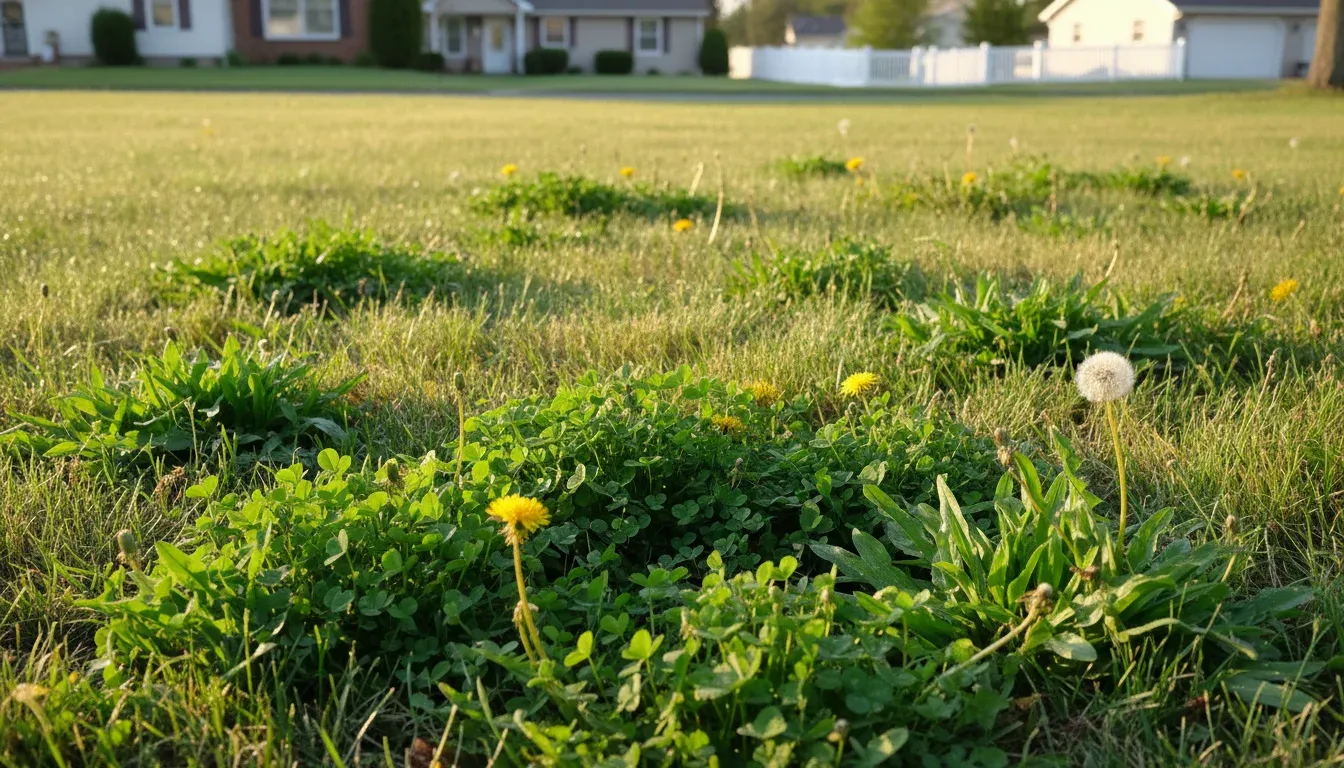
Weeds in your lawn steal water, nutrients, and light from your grass. Most problems start because the grass is weak (bare patches, thin growth, compacted soil). That’s where weeds move in. Pull and treat what’s there, but also fix the underlying conditions or they’ll keep coming back every season.
1. Hand-Pull Weeds (The Right Way)
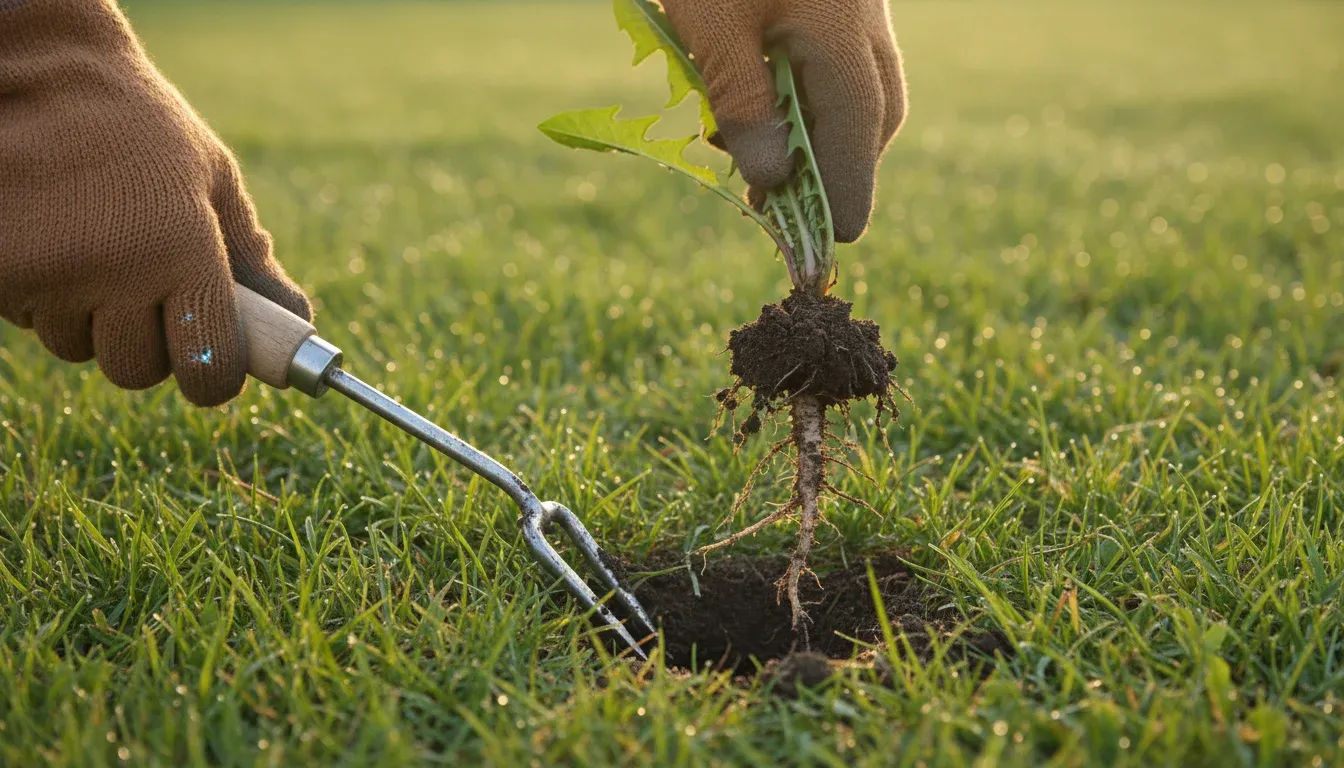
Pull when soil is moist. You need the entire root out or they’ll regrow. For tap-rooted weeds like dandelions, use a weeding knife to get at least 4 in (10 cm) down. A dandelion seedling pulls easily; a mature one with a 10 in (25 cm) taproot requires actual excavation work.
Go after them when they’re young. The difference between pulling a two-week-old dandelion and a two-month-old one is the difference between a quick tug and a five-minute dig.
Trash the pulled weeds. Don’t compost them unless you’re certain they haven’t gone to seed. One dandelion head produces 200 seeds.
2. Mow High
Set your mower to 3-4 in (7-10 cm). Taller grass shades soil and prevents weed seeds from germinating. It also develops deeper roots that outcompete weeds for water and nutrients.
Cutting short stresses your grass and creates bare spots where weeds establish. Those perfect golf-course lawns? They require constant maintenance specifically because short grass is inherently weak.
Don’t bag your clippings. Grasscycling returns nitrogen to the soil and adds a thin layer that suppresses weed germination.
3. Aerate and Overseed
Thin grass, compacted soil, and bare patches are where weeds establish. Aeration breaks up compaction; overseeding fills gaps so there’s no open ground for weeds to colonize.
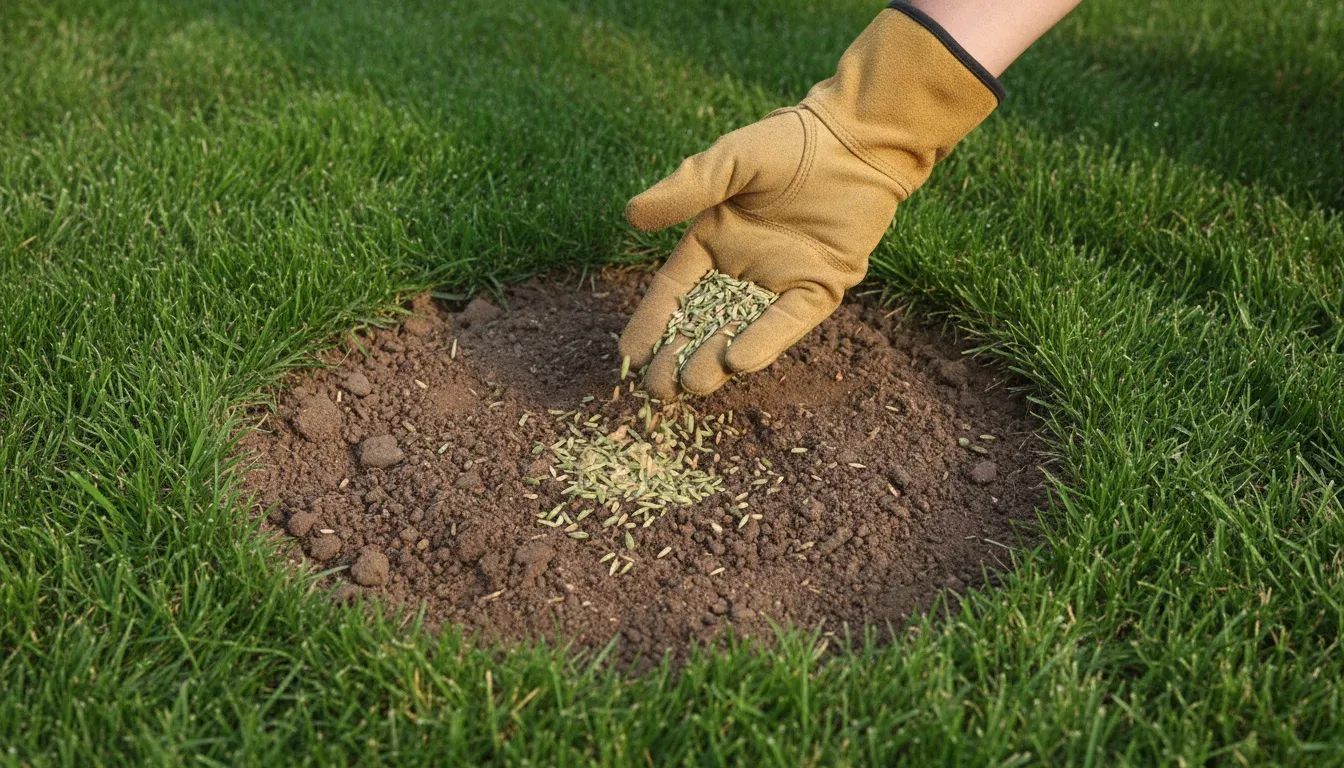
Rake bare areas, spread seed at the rate on the bag, cover lightly with compost, and keep moist for two weeks. Overseed in early fall for cool-season grasses or late spring for warm-season.
A dense lawn is the single most effective long-term weed defense. Once turf is thick, most weeds can’t get a foothold.
4. Aerate Compacted Soil
If water puddles after rain or you can’t push a screwdriver 6 in (15 cm) into the ground, you’ve got compaction. Rent a core aerator (not spike, spike makes it worse) and run it in spring or fall. It pulls out plugs of soil, letting air, water, and nutrients reach the root zone.
After aerating, overseed and topdress with compost. Grass grows aggressively into the new space and crowds weeds out.
5. Use Corn Gluten Meal as Pre-Emergent
Corn gluten meal stops weed seeds from germinating without affecting existing plants. Apply in early spring at 20 lb per 1,000 sq ft (1 kg per 5 sq m) when forsythia blooms. Water it in lightly, then let the lawn dry for a few days so it forms a barrier.
Don’t overseed within 6 weeks. It blocks grass seed too. Takes 2-3 years of consistent use to show major results, but it works.
6. Spot-Treat with Vinegar Solution
Use horticultural vinegar (20% acetic acid), not kitchen vinegar (5%). Add a small amount of dish soap to help it stick, and spray directly on weed foliage on a sunny day. It burns on contact.
Won’t kill deep-rooted perennials like dandelions outright, but repeated applications weaken them enough that hand-pulling becomes easy. Non-selective: it burns anything green, so use a targeted spray bottle, not a broadcast sprayer. Keep it away from grass you want to keep.
7. Apply Mulch Around Lawn Edges
The transition zone between lawn and garden beds is a weed entry point. Keep 2-3 in (5-7 cm) of mulch in beds right up to the lawn edge. This prevents weed seeds from germinating and creeping into your grass.
Edge cleanly with a spade or edging tool once or twice per season to cut off creeping roots (creeping Charlie, ground ivy) before they spread into the turf.
8. Water Deeply and Infrequently
Shallow, frequent watering favors shallow-rooted weeds like crabgrass. Water once or twice per week with 1-1.5 in (2.5-4 cm) instead. This builds deep grass roots and leaves the top inch of soil dry between waterings, which is bad conditions for weed germination.
Water in the morning so blades dry out during the day. Wet grass overnight invites disease, which weakens turf and opens the door for more weeds.
Pull weeds small, keep your grass thick, don’t leave bare soil exposed. Do that consistently and you’ll spend a lot less time on your knees with a weeding knife.