Table of Contents
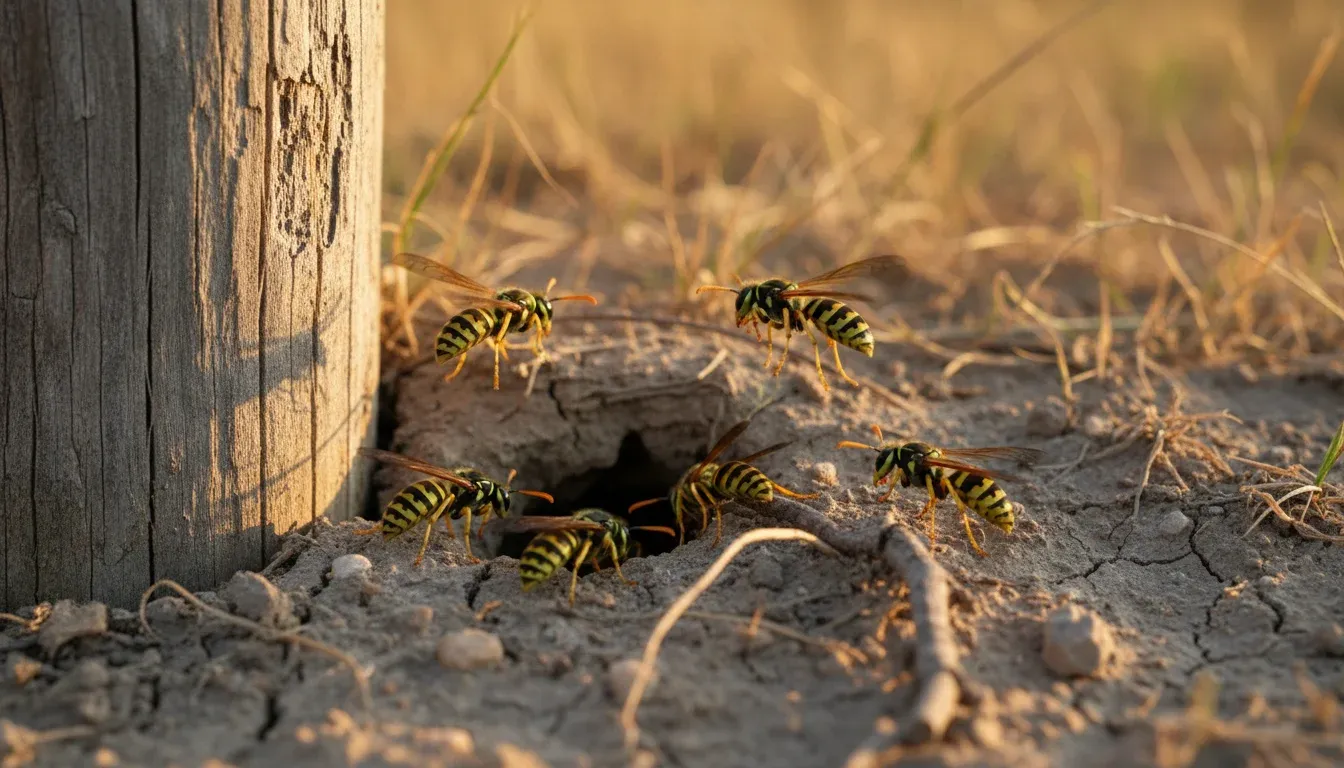
Yellow jackets are aggressive wasps that nest in the ground, walls, or under eaves, and they don’t take kindly to anyone getting close. Unlike honeybees, they can sting multiple times, and they will. If you’ve got a nest on your property, here’s how to deal with it without ending up in the ER.
1. Commercial Wasp Spray
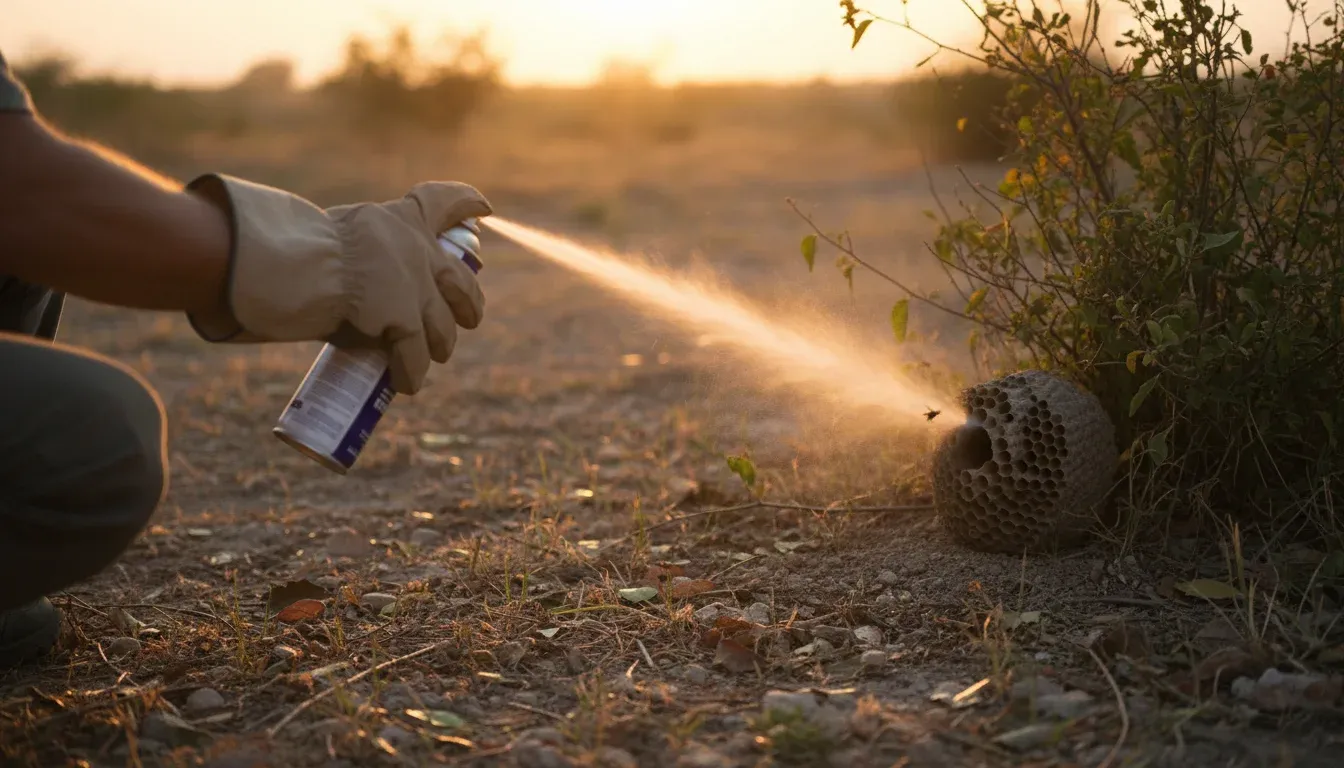
The standard approach. Get a can of wasp and hornet killer that shoots 20+ feet so you can stay back. Wait until dusk when yellow jackets are less active and most of them are back in the nest. Aim at the nest entrance and drench it thoroughly. Come back the next morning and hit it again if you see any activity.
Wear long sleeves and pants even though you’re spraying from a distance. Yellow jackets can fly fast when they’re angry.
2. Dish Soap and Water Trap
Mix a few tablespoons of dish soap with water in a spray bottle. The soap breaks down their waxy coating and they can’t fly or breathe properly. This works for small nests or individual yellow jackets but isn’t practical for large established colonies.
For an actual trap, cut a plastic bottle in half, flip the top half upside down into the bottom like a funnel, and fill the bottom with sugary water mixed with dish soap. They crawl in for the sugar and drown. Place it 20 feet from where people hang out so you’re not just attracting more to your patio.
3. Vacuum Removal for Indoor Nests
If they’ve built inside a wall void, you can vacuum them out through the entry hole. Use a shop vac with a long hose attachment. Tape the hose near the entrance at night, turn on the vac, and leave it running for a few hours. The suction pulls them in as they try to enter or exit.
Pour soapy water into the vacuum canister afterward to kill them, or they’ll just crawl back out. This method takes patience but works for nests you can’t spray directly.
4. Professional Pest Control
For nests near entries to your house, nests bigger than a softball, or if you’re allergic to stings, call someone who deals with this daily. Pest control can remove the nest entirely or use commercial-grade insecticides that knock out the colony in one treatment.
This isn’t cheap (usually $150-400 depending on location and nest size) but it’s cheaper than an ER visit.
5. Sealing Ground Nests with Gasoline
Old-school method that works: pour a cup of gasoline down the nest entrance at dusk, then cover it immediately with a shovel of dirt and a heavy rock. The fumes kill the colony overnight. Do this only if the nest is far from plants you care about, because gasoline kills vegetation.
And obviously, don’t smoke while doing this. Or use a lighter to "check if they’re gone." People have done that.
6. Diatomaceous Earth
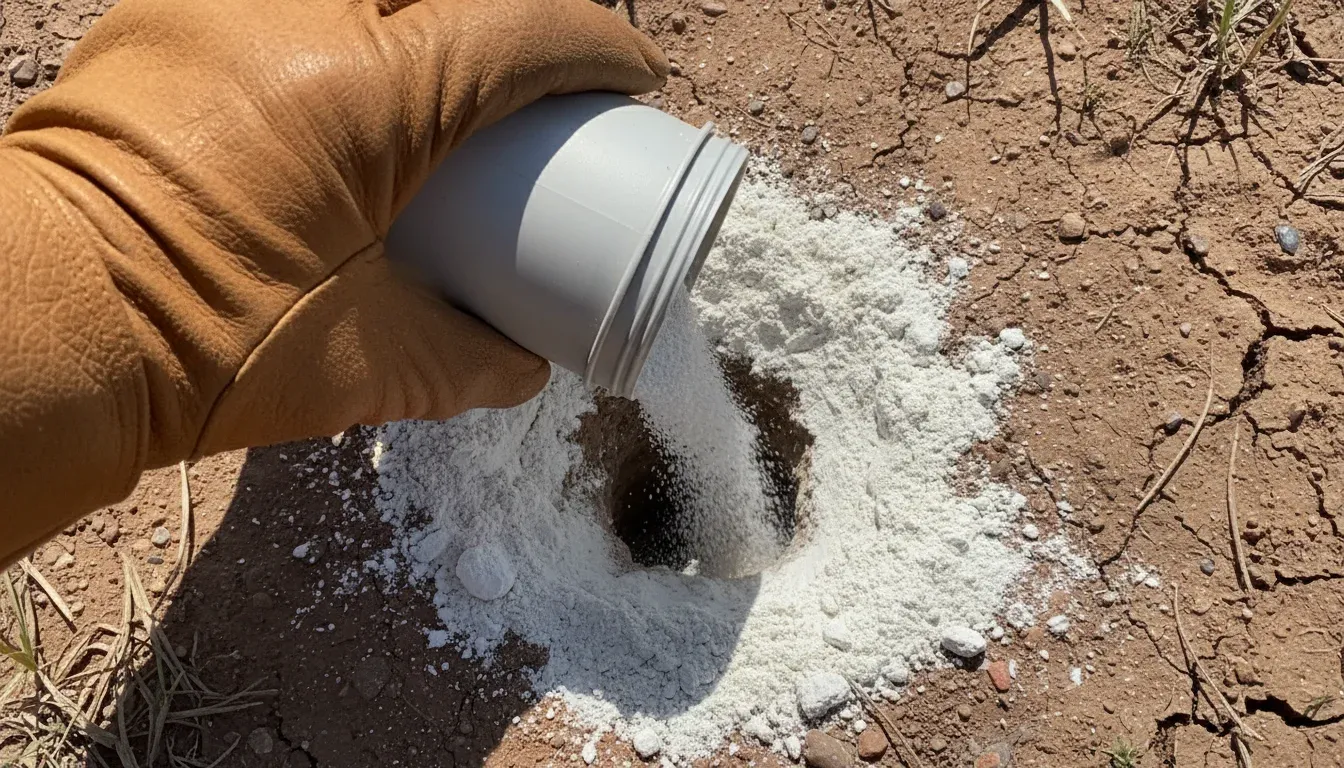
Food-grade diatomaceous earth (DE) is a powder that shreds insect exoskeletons on contact. Sprinkle it heavily around the nest entrance at night. Yellow jackets walk through it going in and out, and it dehydrates them within a day or two.
This is slower than spray but safer if you have pets or kids around. It also works on ground nests without having to pour chemicals directly into your yard.
7. Peppermint Oil Deterrent
Yellow jackets hate peppermint. Mix 20 drops of peppermint essential oil with water in a spray bottle and spray areas where they’re showing up. This won’t kill an active nest but it can keep scouts from deciding your porch is a good place to build.
Reapply every few days. It’s prevention, not removal.
8. Nighttime Bag-and-Seal for Hanging Nests
If the nest is hanging from an eave or branch and smaller than a grapefruit, you can bag it at night. Get a heavy-duty garbage bag, a flashlight with red cellophane over it (they can’t see red light well), and a long stick or pole.
Move slowly. Slip the bag over the entire nest, twist the opening shut, seal it with tape, and cut the nest free. Drop the bag in a bucket of soapy water overnight. This only works for small, accessible nests and requires nerve.
Yellow jackets are most active in late summer when their colonies are largest. If you’re dealing with them in September or October, the colony will die off naturally when cold weather hits. Sometimes the best move is just to avoid the area for a few weeks and let winter handle it.