Table of Contents
Scratching in the walls means they’re already in. Mice move indoors when it gets cold and squeeze through gaps the width of a pencil, so hunting entry points first is a losing game. Bait clears what’s inside. Then seal them out.
1. Use Two Types of Bait (Cubes and Wedges)
Cubes go in the attic. Wedges go around the perimeter. Different shapes for different spaces.
2. Get Into Your Attic
You don’t need to crawl around in there. Just open the hatch.
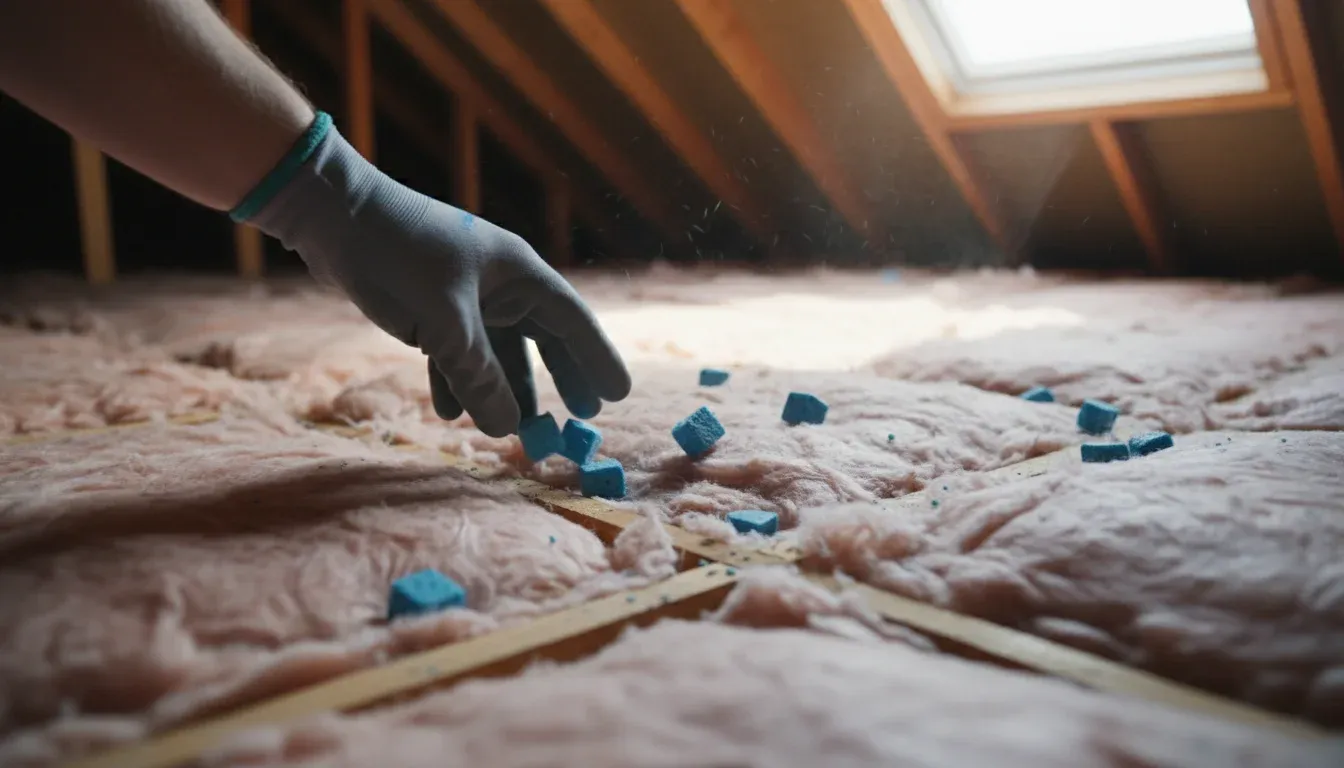
3. Toss the Bait Cubes Around the Attic Perimeter
Scatter them near the edges. Throw from the hatch if your attic is one of those insulation-filled nightmares you’d rather not enter. Some exterminators add peanut butter. Does it help? Probably. Necessary? No.
4. Place Bait Wedges in the Garage and Around the House Exterior
One in the garage, one on each side of the house at ground level. If you’ve got pets, use a bait box – the entrance is too small for dogs.
5. Wait 5 to 7 Days
The bait makes mice extremely thirsty. They head outside for water and don’t come back. No rotting mice in the walls – that’s what everyone worries about, but it doesn’t actually happen.
6. Add More Bait If You Still Hear Scratching After a Week
Double the attic cubes and add perimeter wedges. Either the colony is larger than you thought, or they’ve found new ways in.
7. Find Entry Points Under Cabinets and Appliances
Mice live within a 20-foot area. Check under cabinets, behind appliances, dryer vents, and gaps where pipes enter walls.
8. Repair Leaky Faucets and Pipes
A dripping faucet is a reliable water source. Fix leaks under sinks, around toilets, and behind appliances.
9. Set Snap Traps Along Walls
Perpendicular to walls, trigger side facing the baseboard. Mice run along edges, not across open floor. Use at least six. Peanut butter beats cheese. Check twice daily.
10. Store Dry Foods in Airtight Containers
Grains, cereals, pasta, and flour go into glass, metal, or thick plastic containers. Remove easy food sources and mice either leave or take more risks around your traps.
11. Use Copper Wool for Wet Areas
Steel wool rusts out in 6 months and reopens the gap. Copper doesn’t. Stuff it into dryer vents, floor drains, and pipe gaps, then seal with waterproof caulk.
12. Use Plant-Based Repellents
EarthKind Stay Away Rodent and Fresh Cab use essential oils to deter mice. One pouch per 125 sq ft (11.6 sq m), replaced monthly. Prevention or backup only – not a standalone fix.