Table of Contents
Rats gnaw through walls, contaminate food, and breed fast enough to turn one problem into twenty. They’re predictable though, and predictable things are beatable. Here’s what works.
1. Rat Trap
Forget the cheese. Peanut butter works better – rats love anything that smells sweet, and it won’t fall off the trigger plate. Use a snap trap and tie dental floss or thread to the bait. Rats are fast enough to snatch bait and bolt before the spring fires. The thread tangles them long enough for the bar to come down.
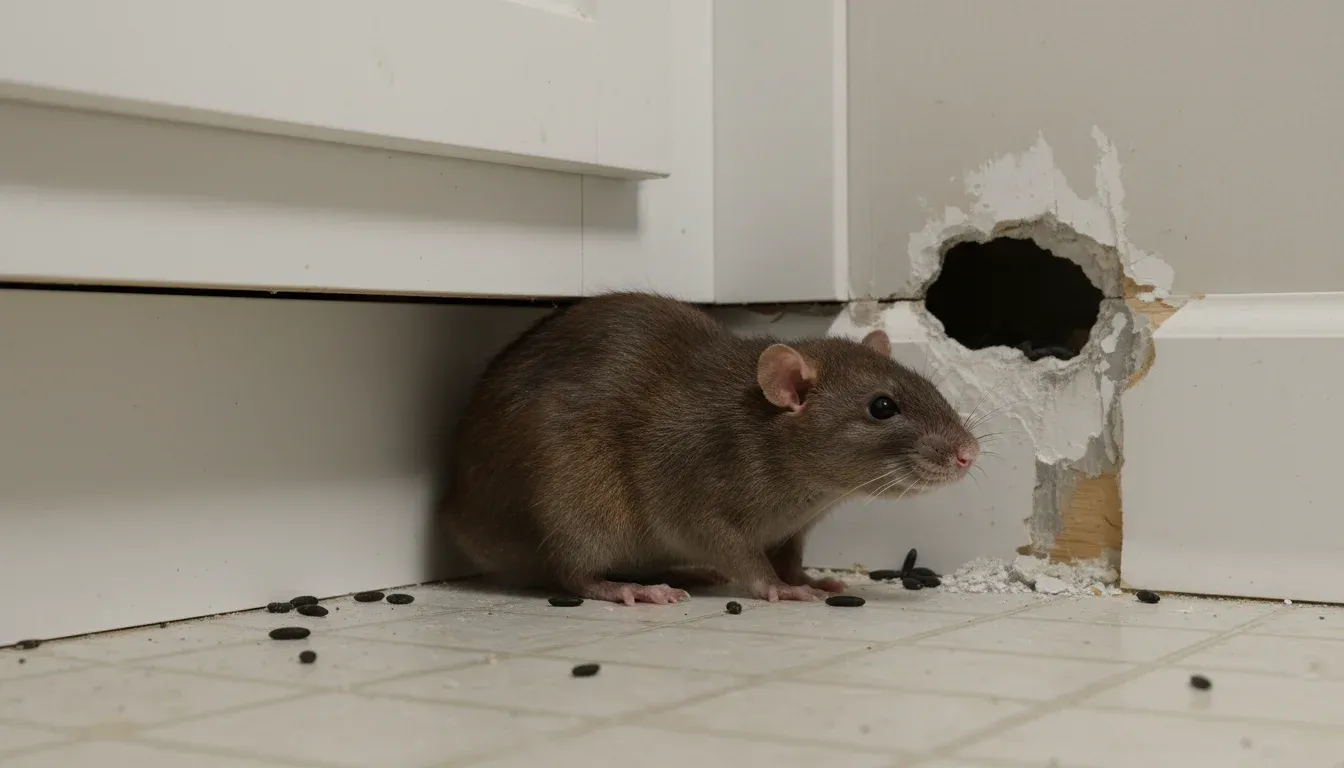
Place traps along walls where you’ve seen droppings. Rats hug baseboards when they move. Set them at dusk – rats are nocturnal and peak activity hits in the first few hours after dark.
2. Rat Poison
Rat poison works, but it’s messier than traps. Rats eat it, crawl into your walls, and die there. You’ll smell them for a week or two. That’s the trade-off.
If you’ve got kids or pets, skip poison entirely. Even "pet-safe" versions aren’t worth the risk. A dog eating a poisoned rat can get secondary poisoning. A toddler finding bait blocks under the sink is a worse problem than the rats.
If you’re using it anyway, put bait in tamper-resistant stations and place them where only rats can reach – attics, crawl spaces, behind appliances.
3. Seal Them Off
Rats squeeze through holes the size of a quarter. Without exclusion, you’re just cycling through rats indefinitely.
Check every wall, floor, and cabinet for gaps. Look behind the fridge, under sinks, around pipes, and in the garage. Stuff openings with steel wool or wire mesh – the kind with sharp edges. Seal over it with caulk or expanding foam. Rats chew through wood and drywall without a second thought, but they won’t bother with metal.
4. Clean the Kitchen (and Keep It That Way)
Rats can smell a crumb from across the house. Wipe down counters, sweep floors, and clean behind appliances where grease and food particles build up. The toaster tray, the space under the stove, the utensil drawer – those overlooked spots are rat magnets.
Take out garbage daily. A full trash can overnight is an open invitation.
5. Lock Down Food Storage
Open boxes and bags are fair game. Rats chew through cardboard and thin plastic in seconds.
Transfer cereals, grains, pasta, flour, and sugar into hard plastic, glass, or metal containers with tight-sealing lids. Mason jars work for smaller quantities; bins with gasket seals handle bulk. Store ripe fruit in the fridge. If you find bite marks in your pantry, trash the affected food and seal everything else immediately.
6. Remove Pet Food
Leaving a dog or cat bowl out overnight is setting up a buffet. Feed pets on a schedule and pick up bowls when they’re done. Store pet food in a sealed bin – not the bag it comes in.
7. Remove Food Sources
The kitchen and pantry are the obvious targets, but rats work the whole property. Secure garbage cans and compost bins with locking lids. Clean up fallen fruit and nuts from the yard promptly – a pile of windfall apples under a tree is a rat hotel. Keep bird feeding areas tidy; spilled seed on the ground is free food.
If you’ve got an outdoor wildlife feeder, rats are eating there too. Move it well away from the house or take it down until the problem’s resolved.
The logic is simple: make your property less rewarding than your neighbor’s, then close off the access points that bring them inside.
8. Essential Oil Repellents
Not a standalone fix, but useful for keeping rats out of specific areas while traps and sealing do the heavy work.
Mix 10-15 drops of peppermint, eucalyptus, or tea tree oil in 250 ml (8.5 fl.oz) of water with a small squirt of dish soap to help it bind. Spray around entry points, under sinks, and along walls where you’ve seen activity. Reapply every few days – the oils evaporate quickly. This won’t eliminate an infestation, but it makes treated areas less appealing as rats look for somewhere else to set up.