Table of Contents
Table of Contents
Toggle
- 1. Dehumidifier
- 2. Moisture Absorber
- 3. Improve Ventilation
- 4. Open Windows Regularly
- 5. Use Extractor Fans
- 6. Salt Bowls
- 7. Double Glazing
- 8. Proper Heating
Condensation turns your home into a damp mess. Those foggy windows and wet walls breed mold and rot your property. But you don’t need expensive renovations or specialists. A few strategic changes will control moisture levels and keep your home dry.
1. Dehumidifier
Start here. A dehumidifier is the most effective tool you can buy for condensation problems. These devices pull moisture directly from the air, and they work fast.
Place it in your worst room (usually bathroom or kitchen). Run it for a few hours daily, or continuously if the problem’s severe. You’ll need to empty the water tank regularly, though some models drain directly into a sink. Results show up within 24-48 hours. Moisture levels drop, condensation disappears.
2. Moisture Absorber
For smaller spaces, moisture absorbers beat dehumidifiers. No electricity, no noise, no ongoing costs beyond the crystals. Just set them and forget them.
UniBond AERO 360 or DampRid containers work for weeks before you need replacements. Stick them on windowsills, in corners, anywhere condensation shows up. Water collects in the container so you can actually see them working. They’re best overnight when condensation peaks.
3. Improve Ventilation
Poor air circulation feeds condensation. Fix it with changes that cost nothing.
Open interior doors. Move furniture away from walls. Keep those small trickle vents at the top of windows open. Check that air bricks and wall vents aren’t blocked by furniture or decorations. Better airflow stops moisture settling on cold surfaces.
4. Open Windows Regularly
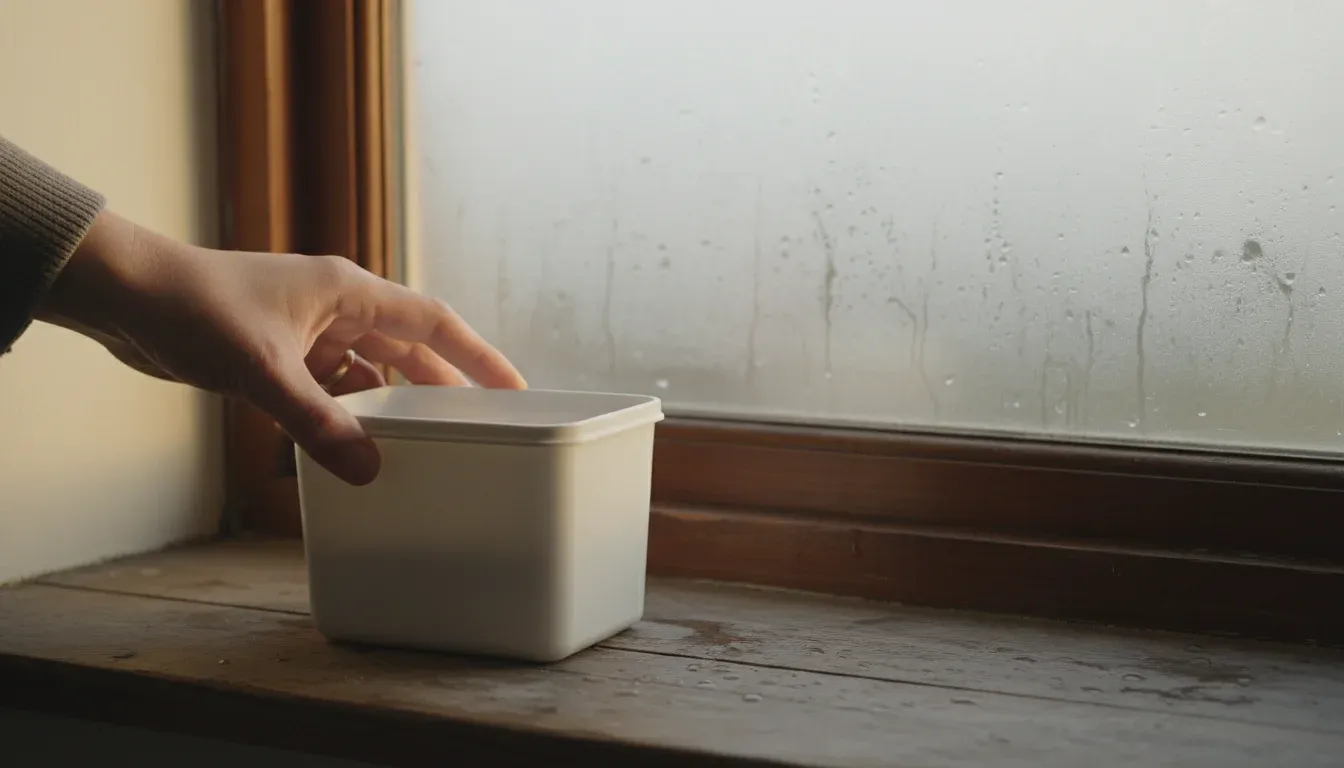
Open your windows. Sounds obvious, but most people skip this because it’s cold outside. Don’t. Even 10-15 minutes daily cuts moisture buildup dramatically.
Time it right: after showers, while cooking, first thing in the morning when condensation is heaviest. You don’t need a wind tunnel. A small gap on opposite sides of your home creates enough cross-breeze to carry moisture out. You’ll lose some heat, sure. But that beats mold and structural damage.
5. Use Extractor Fans
If you have extractor fans, use them. Every single time you cook or shower. Not just when you remember.
Run bathroom fans for 15 minutes after showering, even after mirrors clear. Turn kitchen fans on before you start cooking and leave them running until steam’s gone. Fans seem weak? Check filters for blockages or upgrade to something stronger. Catch moisture at the source before it spreads.
6. Salt Bowls
Old trick. Costs nothing. Actually works.
Salt absorbs moisture naturally (it’s hygroscopic). Fill shallow bowls with table salt or rock salt and stick them in problem areas. Replace when the salt gets wet and clumpy (every few weeks). Not as powerful as a dehumidifier, but it makes a difference in bedrooms, bathrooms, windowsills. Add essential oil if you want it to smell nice. Perfect for rentals where you can’t install permanent fixes.
7. Double Glazing
Single-pane windows are condensation factories. Cold glass meets warm air, water appears. Double glazing adds an insulating air gap that keeps the inner pane warmer.
This is the expensive option. But it’s permanent, cuts heating bills, and blocks outside noise. Can’t afford new windows? Secondary glazing is cheaper (adds an extra pane inside existing windows). Even plastic film insulation kits from hardware stores help during winter.
8. Proper Heating
Consistent heating beats blasting heat occasionally. Keep your home at a steady temperature and condensation has nowhere to form.
Maintain 18-21°C (64-70°F) throughout the day instead of turning heat off when you’re out. Walls, windows, and furniture stay warm enough that moisture won’t condense on them. Low, steady heat is more effective than high intermittent heat (and often cheaper). Can’t afford to heat everything? Keep at least one or two main rooms at stable temperature.
Start with the cheap stuff. Open windows daily, run extractor fans every time, throw down some salt bowls or moisture absorbers. That solves most condensation problems without spending real money. Still dripping? Buy a dehumidifier. Still bad? Look at heating upgrades or double glazing. Whatever you do, do it consistently. Moisture control is a daily habit, not a one-off project.