Table of Contents
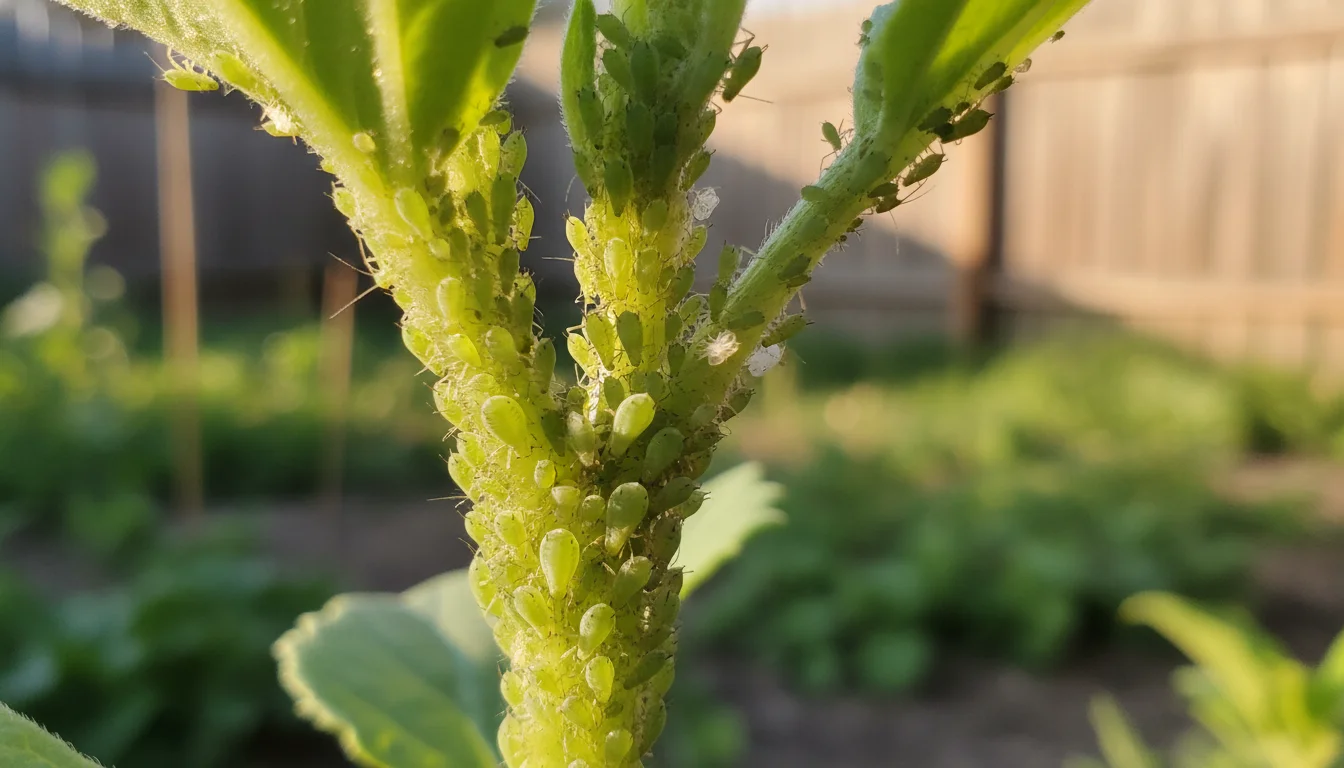
Aphids reproduce fast. A single aphid can produce 80 offspring in a week without needing to mate, which means a light infestation can become a serious one between your Tuesday and Friday garden checks. That’s why the reapplication intervals in every method below aren’t optional – skip a round and you’re starting over.
The damage shows up as curled leaves, stunted growth, and a sticky honeydew residue that draws ants and breeds black sooty mold. Start with the methods that cost nothing and escalate from there.
1. Blast Them Off With Water
The free first step. Aphids are soft-bodied and terrible at climbing back up after being knocked off, so a strong spray from a garden hose dislodges most of them before they can regroup.
Focus on the undersides of leaves – that’s where aphids cluster and hide. Get right up close and aim at the colonies. Do it in the morning so the plant dries out before nightfall. Repeat every morning for a week for light infestations.
This handles early-stage problems well. Once you’ve got hundreds of aphids coating every stem, water alone won’t cut it – move to soap or neem.
2. Remove Heavily Infested Leaves
If a few leaves are completely covered, cut them off and bag them. Don’t compost infested material – you’ll spread the problem. Sometimes removal is faster than treatment.
Check for ant trails while you’re at it. Ants actively patrol plants and drive off ladybugs and lacewings to protect their aphid colonies – aphids produce a sticky honeydew that ants feed on, so ants have a direct incentive to keep the aphid population alive. If you’re seeing ants on the plant, manage them first. Natural predators can’t do their job while ants are running interference.
3. Insecticidal Soap
Kills on contact by dissolving aphids’ protective outer coating – they dehydrate and die. Fast, effective, and safe for plants when mixed correctly.
Mix 1 tablespoon of pure castile soap with 1 quart (1 L) of water. Don’t use dish soap with degreasers or antibacterial additives – they burn leaves. Spray directly onto aphid clusters, covering both the tops and undersides of leaves. The soap has to physically contact the insects to work.
Apply in cool, shady conditions to prevent leaf burn. Reapply every 5-7 days to catch newly hatched aphids. Soap doesn’t leave residue, so it won’t harm beneficial insects that arrive after the spray dries.
4. Neem Oil
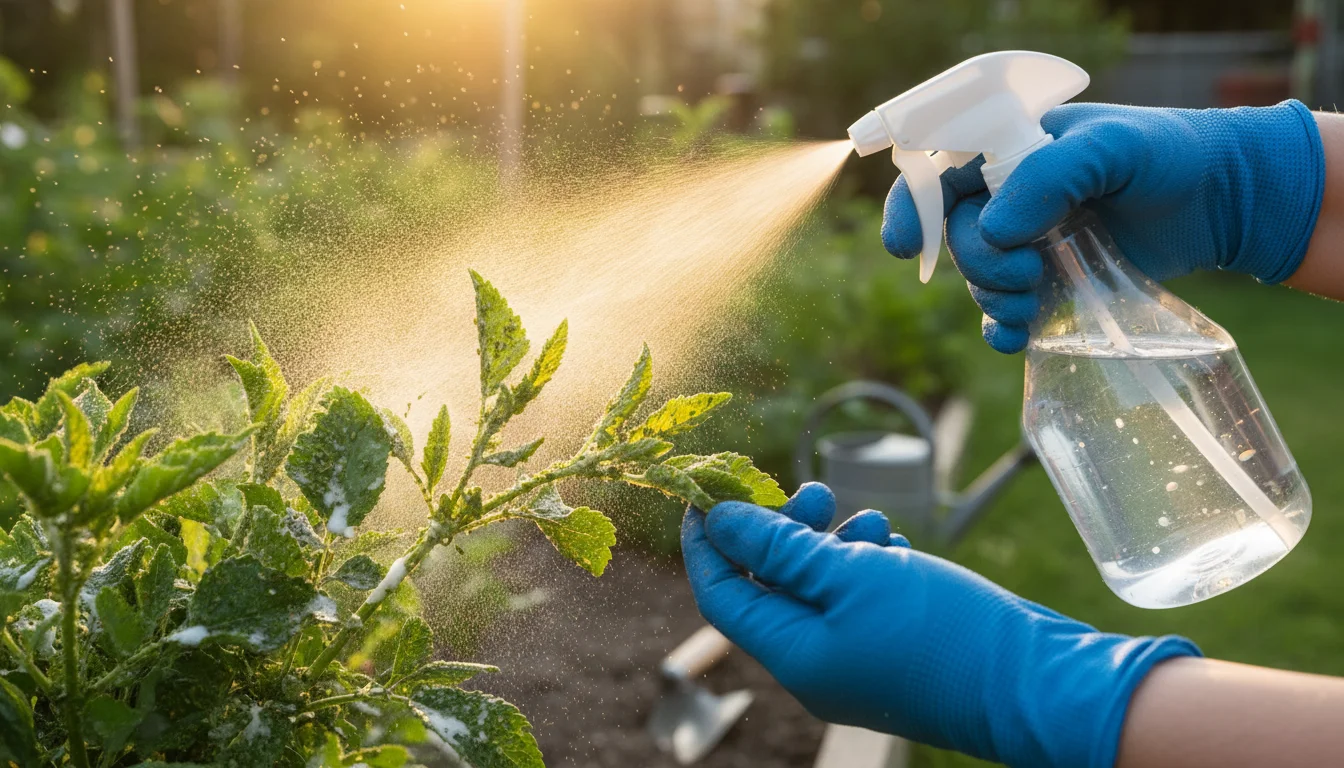
Neem works differently from soap – it doesn’t just kill on contact. The active compound (azadirachtin) disrupts feeding and prevents larvae from developing, and it stays active as a repellent after it dries. This makes it better for persistent or recurring infestations.
Mix 1-2 tablespoons of neem oil per 1 gallon (3.8 L) of water with a few drops of dish soap as an emulsifier. Spray all plant surfaces, especially leaf undersides. Apply in early morning or evening – hot sun causes the oil to burn leaves. Reapply every 7-10 days until the infestation clears. The strong smell fades within a day but the repellent effect persists longer.
Test on a small area first if you’re working with a plant you haven’t used neem on before.
5. Tomato Foliage DIY Spray
Tomato leaves contain alkaloids (tomatine and solanine) that are toxic to soft-bodied insects. This is the method most competitors don’t bother listing, and it works.
Chop 2 cups of fresh tomato leaves and soak them in 2 cups of water overnight – at least 12 hours, up to 24. Strain out the plant material, dilute the liquid with 2 more cups of water, pour into a spray bottle. Spray directly on aphid clusters and leaf undersides. Reapply every 3-4 days or after rain, in early morning or evening to avoid leaf burn.
Two restrictions: don’t use it on other nightshade family plants (peppers, eggplants, potatoes) since they already produce these compounds and extra application stresses them. And don’t spray edible parts within 3 days of harvest.
Best for light to moderate infestations. For heavy ones, lead with soap or neem and use tomato spray for maintenance after you’ve knocked the numbers down.
6. Diatomaceous Earth
Food-grade DE is a powder that physically shreds insect exoskeletons, causing dehydration. Dust it on dry plants and the soil around them. Reapply after rain or watering – it stops working once it gets wet.
DE is slow and only works on contact, so it’s not a first-line solution for a heavy infestation. Where it earns its place: applying it around the base of plants disrupts ants – the same ants that are protecting your aphid colonies. Knock out the ants’ access and predators can move in freely.
Wear a mask when applying. It’s non-toxic but fine enough to irritate lungs.
7. Ladybugs and Other Predators
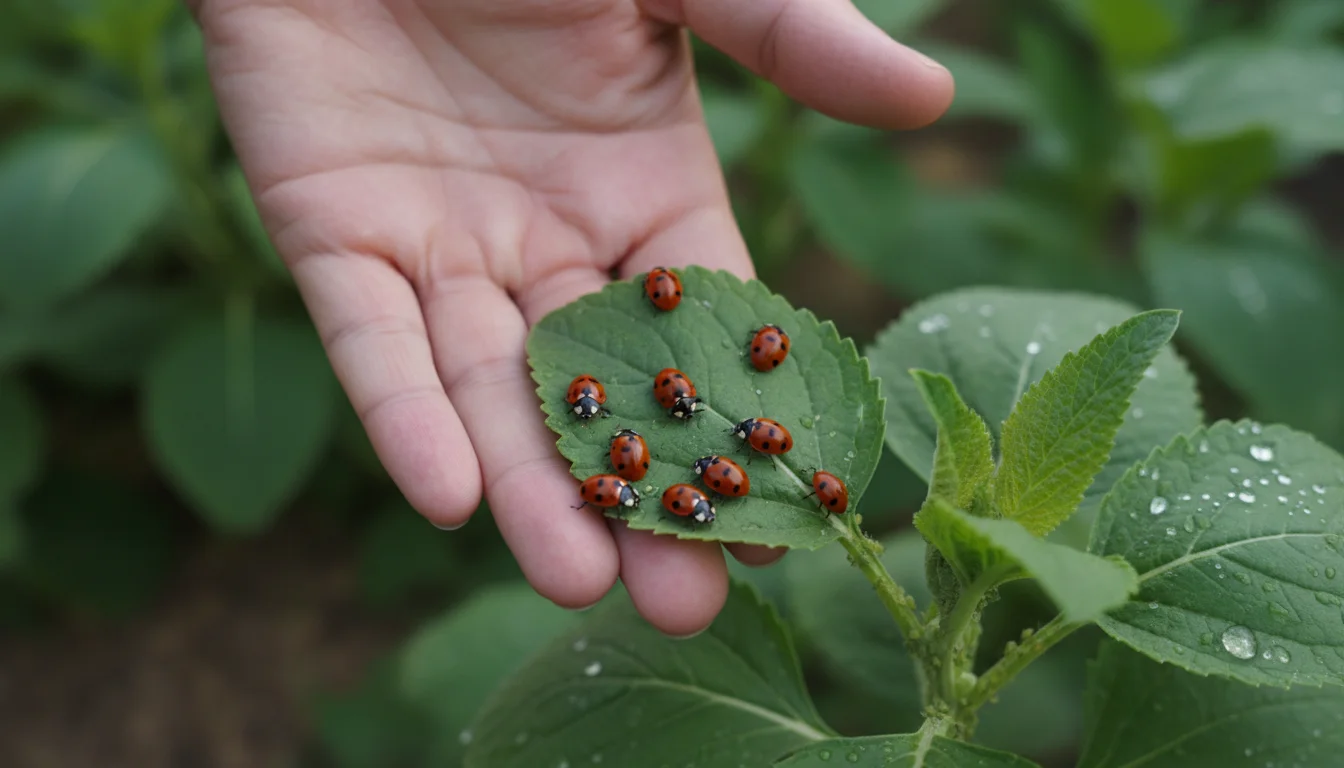
One ladybug eats 50 aphids a day. Lacewing larvae are even more effective hunters. You can buy both online and release them onto infested plants.
Release at dusk so they don’t immediately fly off looking for better territory. Mist the plants first – it gives them water and a reason to stay. Put them directly on the affected plants, not scattered around the garden. To keep them around long-term, plant dill, fennel, yarrow, and sweet alyssum nearby – these provide nectar and pollen for adult beneficial insects.
Avoid broad-spectrum pesticides. They kill your pest control alongside the pests. This is a long-game method – don’t expect results in 48 hours, but once a predator population establishes, it maintains itself.
8. Companion Plants That Repel Aphids
This won’t fix an active infestation, but it’s the best passive prevention in a vegetable garden. Plant garlic, chives, and onions near aphid-prone plants – the allium smell puts aphids off and they tend to move elsewhere.
Marigolds and nasturtiums add another layer. Nasturtiums in particular work as a sacrificial plant: aphids preferentially colonize them instead of your vegetables, letting you concentrate any treatment on one spot rather than chasing aphids across the whole bed.
9. Aluminum Foil Mulch
Lay aluminum foil or reflective mulch around the base of plants. The reflected light disorients aphids and they avoid landing. Sounds like garden folklore. Works.
Effective for young seedlings and transplants. The limitation: once the plant canopy fills in and the foil stops reflecting upward, aphids come back. Best used during the vulnerable early stage, not as a permanent solution.
10. Sticky Traps
Yellow sticky traps hung just above the foliage catch winged aphids before they can land and start new colonies. This won’t eliminate an established infestation – it’s monitoring and population reduction, not eradication.
Useful as a supplement to other methods and as a diagnostic tool. What you catch tells you where activity is concentrated and whether new winged aphids are still arriving. Replace traps when they fill up or lose stickiness.