Table of Contents
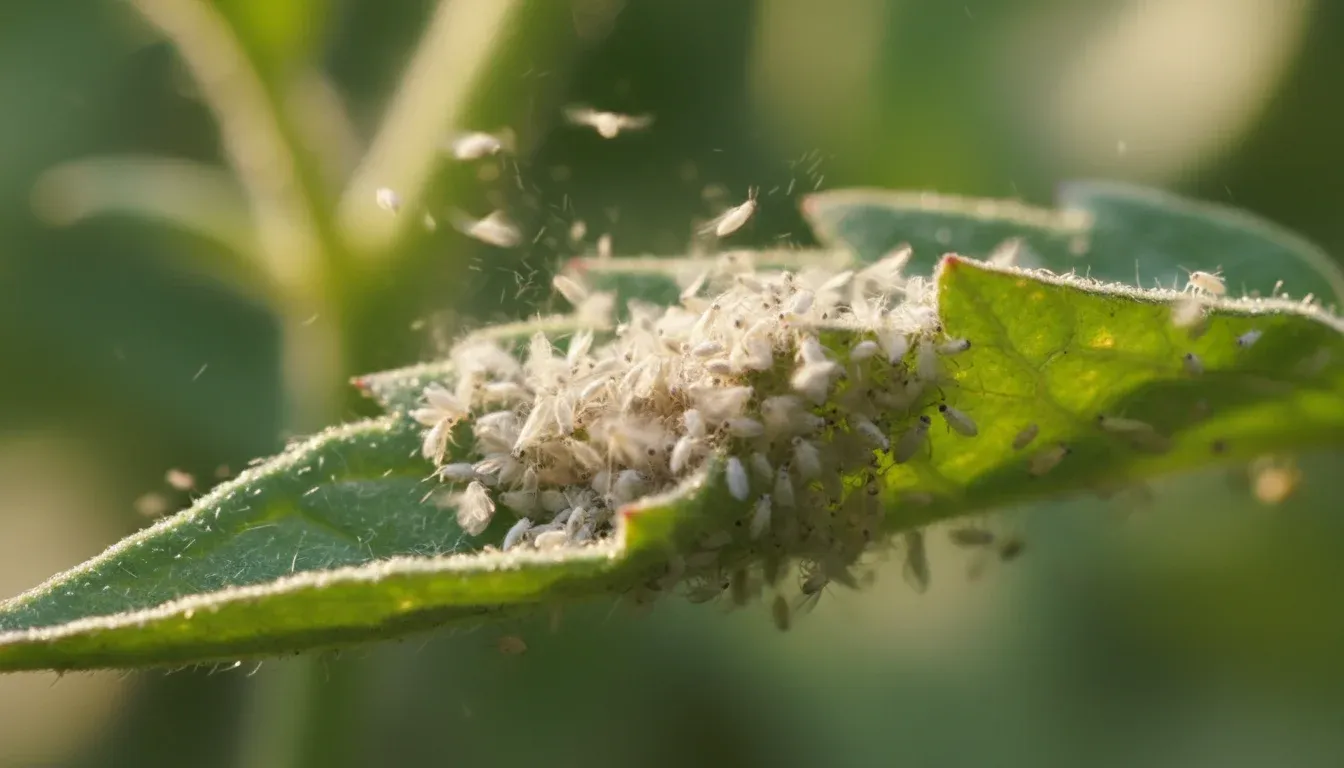
Flip over a leaf and there they are. Tiny white specks that explode into a cloud the second you disturb the plant. Whiteflies. By the time you notice them, you’ve already got a problem.
They’re not actually flies. They’re closer to aphids – soft-bodied sap-suckers that cluster on leaf undersides, drain nutrients, and leave behind sticky honeydew that invites mold. A single female lays up to 400 eggs. In warm weather, a new generation matures every two to three weeks. The math is not in your favor if you wait.
The good news: they’re manageable. You just need to hit them from a few angles at once and keep the pressure on.
Physical Removal
The fastest way to cut down a population is to physically remove them. No products, no waiting.
A strong blast from a garden hose knocks whiteflies, nymphs, and eggs off leaves in seconds. Focus on the undersides – that’s where they live. Do it in the morning so the plant dries before nightfall. A handheld vacuum works for the same job indoors or in a greenhouse: hold the nozzle under infested leaves, move slow (they scatter), and seal the contents in a bag immediately after. If a plant is already covered, strip the worst leaves and bag them. Don’t compost them. Toss it.
Physical removal won’t solve a heavy infestation on its own, but it knocks the population down fast so your other methods have less to fight through.
Sprays and Treatments
This is where most people spend their time, and for good reason – sprays hit whiteflies at multiple life stages.
Insecticidal soap kills on contact by breaking down the insects’ outer coating. Spray the undersides of leaves thoroughly and reapply every five to seven days – soap doesn’t affect eggs, so you need to catch each new hatch. You can use a commercial product or mix one tablespoon of pure castile soap with one quart (about 1 L) of water. Don’t use dish soap with degreasers. It burns leaves, especially in heat.
Neem oil works differently – it disrupts the whitefly life cycle by preventing larvae from molting. It’s slower, but it targets every stage. Mix according to package directions and apply in the morning or evening when it’s cooler. Reapply every seven to ten days.
Horticultural oil smothers eggs, nymphs, and adults by coating them. It works, but don’t apply it within two weeks of a sulfur-based fungicide – the combination can damage plants.
Diatomaceous earth (food grade) is the physical option in this category. Dust it lightly on leaf undersides and around the plant base. It shreds exoskeletons and dehydrates the insects. Reapply after rain. Wear a mask when applying – the powder irritates lungs.
Traps and Barriers
Whiteflies can’t resist the color yellow. Sticky yellow traps catch adults before they lay more eggs. Hang them about 6 inches (15 cm) from infested foliage. They’re not a cure, but they cut down the breeding population and give you a read on how bad the infestation is. If the traps are covered in a day, you’ve got a serious problem.
Reflective aluminum mulch works at the other end – it disorients adults and reduces egg-laying near the ground. Lay it around the base of susceptible plants. Works best early in the season before colonies establish. Once they’re dug in, mulch alone isn’t enough.
Biological Controls
If you’re gardening outdoors, the most sustainable whitefly control is setting up an ecosystem that fights them for you.
Lacewings and ladybugs eat whitefly eggs and nymphs. You can buy them from garden suppliers and release them in the evening near infested plants. They need time to establish, so don’t expect overnight results – but once they’re settled, they provide ongoing control without any spraying.
Sweet alyssum attracts parasitic wasps and hoverflies that prey on whitefly eggs and larvae. It’s low-maintenance, flowers most of the season, and acts as a living trap crop. Plant it as ground cover near anything whiteflies target.
Marigolds and basil near tomatoes, peppers, and other favorites make those plants less attractive to whiteflies. Not because of any magic – the scents throw them off and the flowers draw in predatory insects. Nasturtiums and sunflowers do similar work.
Prevention
Two habits prevent most whitefly problems before they start.
Ease up on nitrogen-heavy fertilizer. Lush, fast-growing plants are exactly what whiteflies want. Heavy synthetic fertilizer makes your plants a buffet. Back off on nitrogen and use balanced, slow-release formulas instead. A plant growing at a normal pace handles light whitefly pressure fine.
Inspect new plants before bringing them indoors or adding them to your garden. Check the undersides of leaves for white specks, sticky residue, or tiny insects that scatter when disturbed. Quarantine any new plant for two weeks before putting it near your existing collection. This one habit stops most houseplant infestations before they start.
Where It Shows Up
- Whiteflies on Plants – covers indoor plants, houseplants, greenhouse plants, and vegetable garden beds
How Long Does It Take?
Most infestations break within two to three weeks if you’re consistent. The key is not treating once and hoping. You need to treat, wait five to seven days, treat again, and keep going until you’ve broken the reproductive cycle. Miss a round and the next generation hatches.