Table of Contents
A groundhog can destroy a garden in a single afternoon and undermine a deck foundation over a summer. They’re not random visitors – once one moves in, it’s staking out territory, digging burrows up to 5 ft (1.5 m) deep, and potentially overwintering on your property. The good news is that groundhogs are relatively predictable animals. They have favorite foods, predictable movement patterns, and specific preferences for where they dig. That predictability is what you use against them.
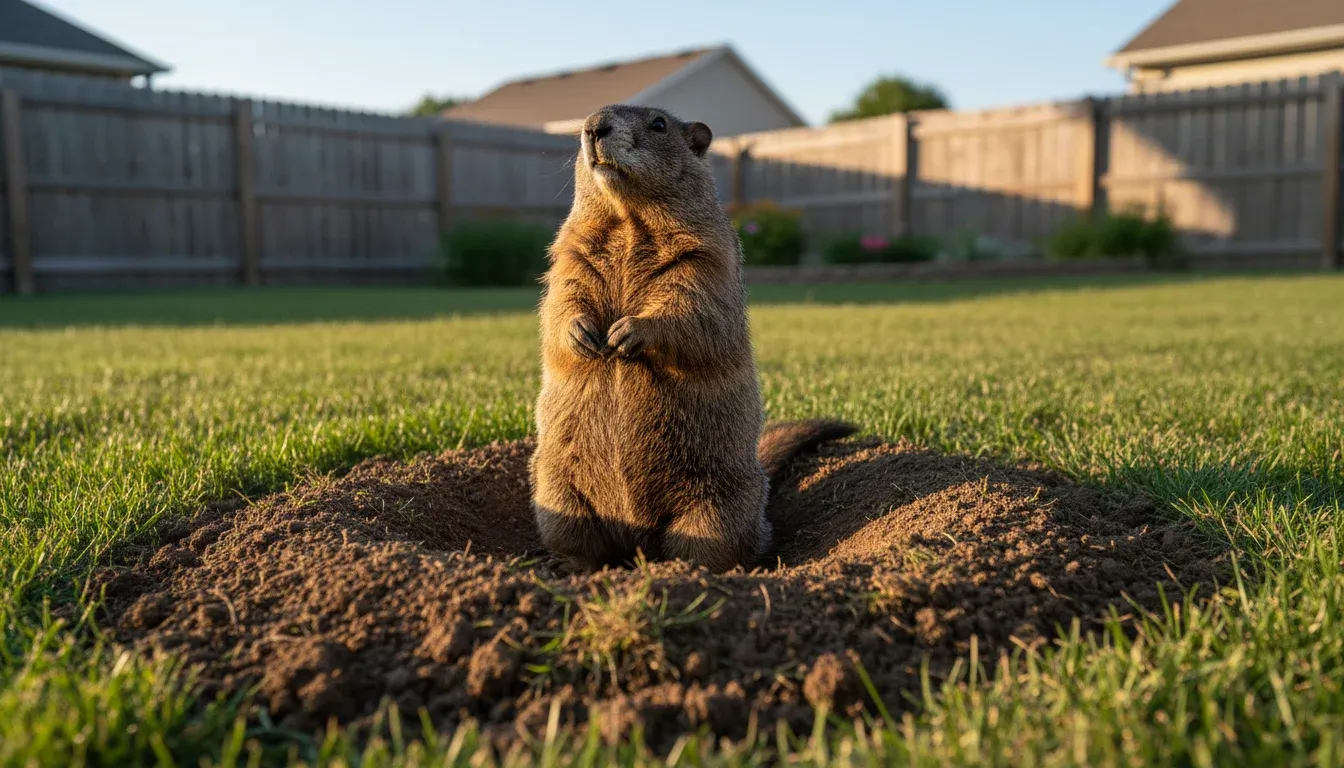
Before doing anything else, confirm you’re actually dealing with a groundhog. Moles create raised ridges and mounds but don’t burrow into garden beds the same way. Woodchucks (same animal, different name) leave entrance holes 6 to 10 inches (15-25 cm) wide with a mound of excavated soil nearby. If that’s what you’re seeing, you’re in the right place.
Identification and Assessment
Get eyes on the actual problem before spending money. Confirm it’s actually a groundhog – the burrow entrance is the clearest sign, typically 6 to 10 inches wide at ground level with loose soil pushed out in a fan shape. Groundhogs are heavyset and brown, move with a waddling gait, and are active during daylight hours, particularly in the morning and late afternoon. A video camera or a quick morning watch will confirm what you’re dealing with.
Knowing where the burrow is matters for everything that follows – repellents, traps, and fencing all depend on understanding the animal’s base of operations.
Habitat and Attractant Removal
Groundhogs eat vegetables, fruit, and clover. If you’re growing any of those things, they have a reason to be there. But habitat matters as much as food.
Eliminate food and cover by clearing brush piles, tall grass, and dense vegetation around the perimeter of your yard and garden. Groundhogs need cover to feel safe moving around – open ground is risky to them. Remove wood piles stored on the ground, which double as shelter. Keep grass mowed short near garden beds. This won’t make your yard unattractive to a determined groundhog, but it removes the conditions that make your property an obvious first choice.
Repellents and Deterrents
Repellents work best as early-season deterrents before a groundhog has established a burrow on your property. Once it’s dug in, repellents become one layer of a larger strategy, not a standalone fix.
Commercial repellents with putrescent egg solids (the main active ingredient in most wildlife repellents) irritate groundhogs’ sense of smell and taste. Spray around garden perimeters and reapply after rain. They genuinely work as a deterrent, not as a one-time treatment.
Ammonia-soaked rags stuffed into active burrow entrances creates an aversive environment inside the den. Groundhogs dislike the smell. Refresh every few days. This is most effective when used alongside exclusion so there’s no easy alternative site.
Motion-activated sprayers are probably the most effective repellent tool available. A jet of water triggered by movement startles the groundhog and conditions it to associate your garden with an unpleasant experience. Position one near the burrow entrance and another at garden entry points. They’re persistent in a way that manually-applied repellents aren’t.
Exclusion and Fencing
For gardens, exclusion fencing is the only method that provides reliable, ongoing protection.
Install proper fencing with hardware cloth at least 3 ft (90 cm) tall, buried at least 12 inches (30 cm) into the ground with the bottom 6 inches (15 cm) bent outward at a right angle underground. This L-shape prevents them digging under. The fence should extend 18 inches (45 cm) above ground – groundhogs can climb but generally won’t bother if it requires effort. A single strand of electric wire 4 to 5 inches (10-13 cm) above the ground at the base is a proven addition for persistent animals.
Block access under structures by burying hardware cloth around the perimeter of decks, sheds, and porches. The same L-shaped underground configuration applies. Do this in late winter before groundhogs emerge from hibernation and start scouting for den sites.
Install one-way exclusion doors over active burrow entrances to evict a groundhog already in residence. The door lets the animal exit but not re-enter. Seal all secondary entrances first – groundhogs typically have two or three exits. Leave the device in place for at least five days to confirm the animal is gone before permanently sealing the burrow.
Trapping and Removal
When deterrents and exclusion haven’t worked, or when a groundhog is already established under a structure, trapping is the direct solution.
Use live traps (wire cage traps at least 10 x 12 x 32 inches / 25 x 30 x 80 cm) baited with cantaloupe, sweet corn, or leafy greens. Place the trap directly in front of the burrow entrance or along the animal’s established travel path. Check traps at least twice daily and shield them from direct sun – trapped animals can overheat quickly.
Relocate trapped groundhogs at least 5 miles (8 km) away in suitable habitat. Check your state’s regulations on relocation – some states restrict it. Release near a wooded area with water access, away from agricultural land where they’ll be someone else’s problem immediately.
Humane euthanization is the option when relocation isn’t practical or permitted, carried out by a wildlife professional or veterinarian. Shooting where legal is straightforward where distance from neighbors allows it; check local ordinances.
Call a wildlife control specialist when the animal is under a structure that’s difficult to access, when multiple animals are involved, or when trapping and exclusion haven’t produced results after two or three weeks.
When to Call a Professional
Call a professional when you’re dealing with a groundhog under a deck or foundation, or when there’s evidence of multiple animals. Colonies are uncommon but not rare – an established female will have pups in spring, and a single burrow system can house a family. Professional wildlife removal includes the exclusion work you can’t easily do yourself, and most operators guarantee results.
Also worth a call if you’re seeing burrow damage near a foundation or under a concrete slab. The undermining risk is real, and assessing the extent of the tunneling requires a physical inspection.
Where It Shows Up
Groundhogs with deterrents – covers the full range of repellent and deterrent approaches for keeping groundhogs out of gardens and off your property. Includes identifying burrows, eliminating attractants, commercial repellents, ammonia treatments, motion-activated sprayers, and proper fencing that actually holds.
How to get rid of groundhogs with deterrents
Groundhogs with trapping and removal – for when the groundhog is already established and you need to remove it. Covers live trapping, bait selection, relocation, exclusion doors, blocking access under structures, and when to bring in a wildlife specialist.