Table of Contents
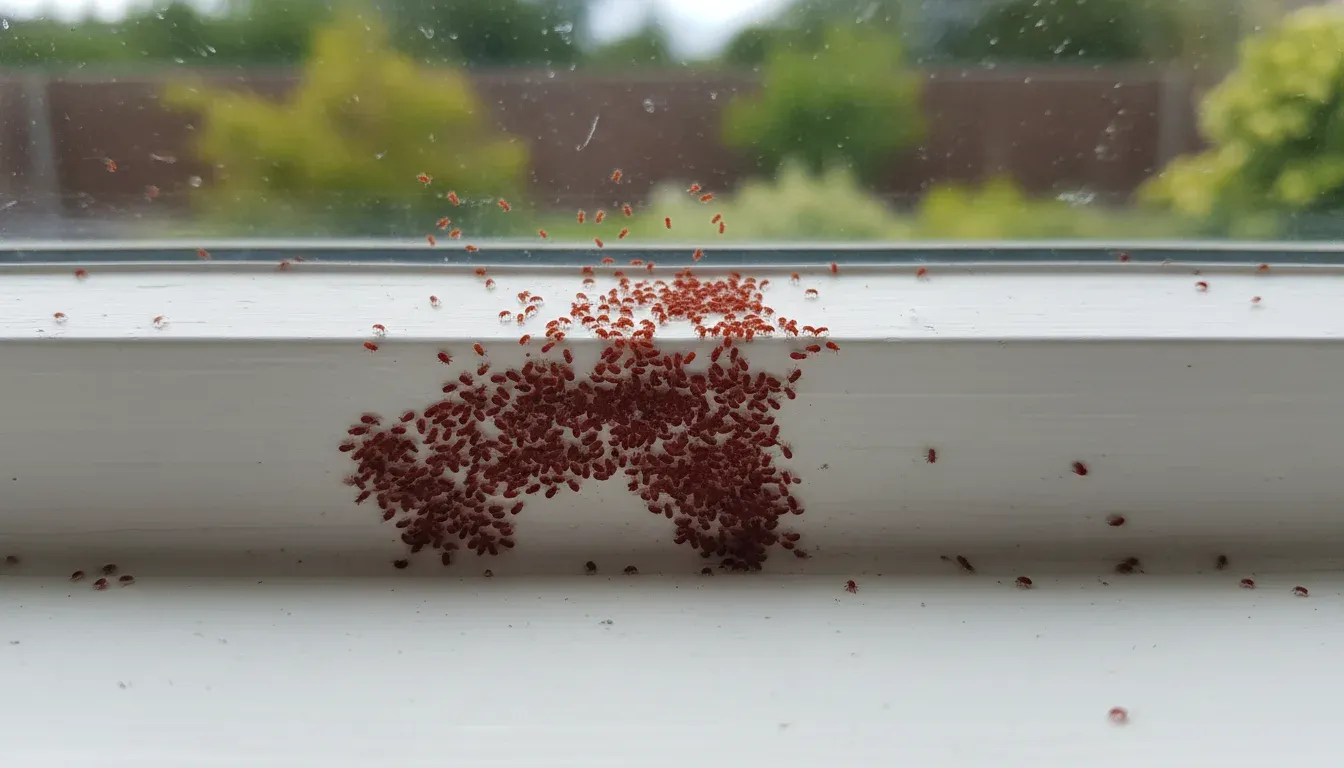
Clover mites are those tiny red bugs that show up by the thousands, usually around windows and sunny walls in spring and fall. They’re not dangerous, but they’re annoying and they leave red smears when crushed. Here’s how to get rid of them without making things worse.
1. Vacuum Them Up (Carefully)
Use a vacuum with a hose attachment to pick them up without crushing them. If you squash clover mites, they leave rust-colored stains on walls, windowsills, and fabrics. Work slowly and hold the nozzle close to the surface. Empty the canister or bag immediately outside, away from your foundation, or they’ll just crawl back in.
If you’ve got a bagless vacuum, consider putting a paper towel tube or sock over the nozzle end secured with a rubber band. When you’re done, pull it off, seal it in a plastic bag, and toss it.
2. Dab Them with a Damp Cloth
For smaller clusters, use a wet rag or sponge to dab (don’t wipe) the mites. The moisture immobilizes them and you can lift them off without smearing. Rinse the cloth frequently in a bucket of soapy water. This method takes longer but works well on delicate surfaces like painted trim or wallpaper where vacuuming might cause damage.
3. Spray a Perimeter with Soap Solution
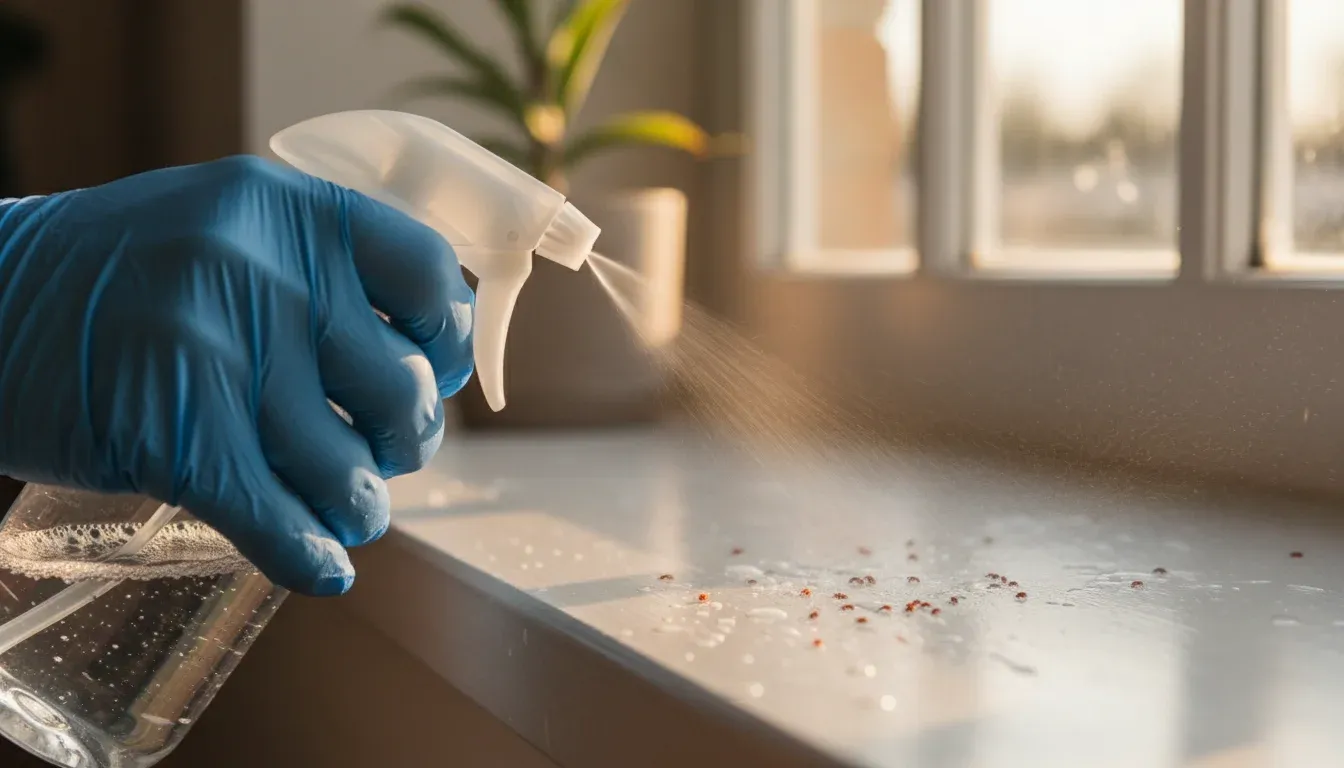
Mix 2 tablespoons of dish soap in a spray bottle filled with water. Spray along windowsills, door frames, and foundation edges where mites are entering. The soap breaks down their exoskeletons and creates a barrier that discourages more from crossing. Reapply after rain or every few days during peak season.
This won’t kill existing populations outside, but it stops the constant indoor march.
4. Seal Entry Points
Clover mites are small enough to fit through microscopic cracks. Use silicone caulk around windows, doors, foundation cracks, and utility penetrations. Pay attention to weep holes in brick (cover these with mesh screening, don’t seal them shut). Check weather stripping on doors and replace it if it’s compressed or cracked.
You won’t seal every gap, but closing the major highways makes a measurable difference.
5. Create a Gravel or Mulch-Free Zone
Clover mites thrive in thick grass and mulch right up against your foundation. Pull mulch, plants, and grass back at least 18 inches from the house and replace it with a bare strip of gravel or pea stone. Clover mites hate dry, bare surfaces.
This is the single most effective long-term prevention method. If you’ve got plants climbing your siding or mulch piled against the foundation, you’re rolling out a welcome mat.
6. Remove Moisture Sources and Rotting Wood
Clover mites need moisture. Check for leaking gutters, dripping spigots, poor drainage, or rotting wood near the foundation. Fix the leaks, regrade soil away from the house, and replace any soft or spongy wood trim. If your downspouts dump water right at the foundation, extend them at least 3 feet out.
Even if you don’t see mites now, damp wood and soil create conditions that attract them seasonally.
7. Spray Outdoor Populations with a Hose
If you’ve got massive clusters on your siding or around windows, hit them with a strong spray from a garden hose. It knocks most of them off and washes them away from entry points. Do this in late afternoon or early morning when they’re most active on sunny walls.
This is a temporary fix but buys you time while you work on sealing and habitat modification.
8. Apply Diatomaceous Earth Around the Foundation
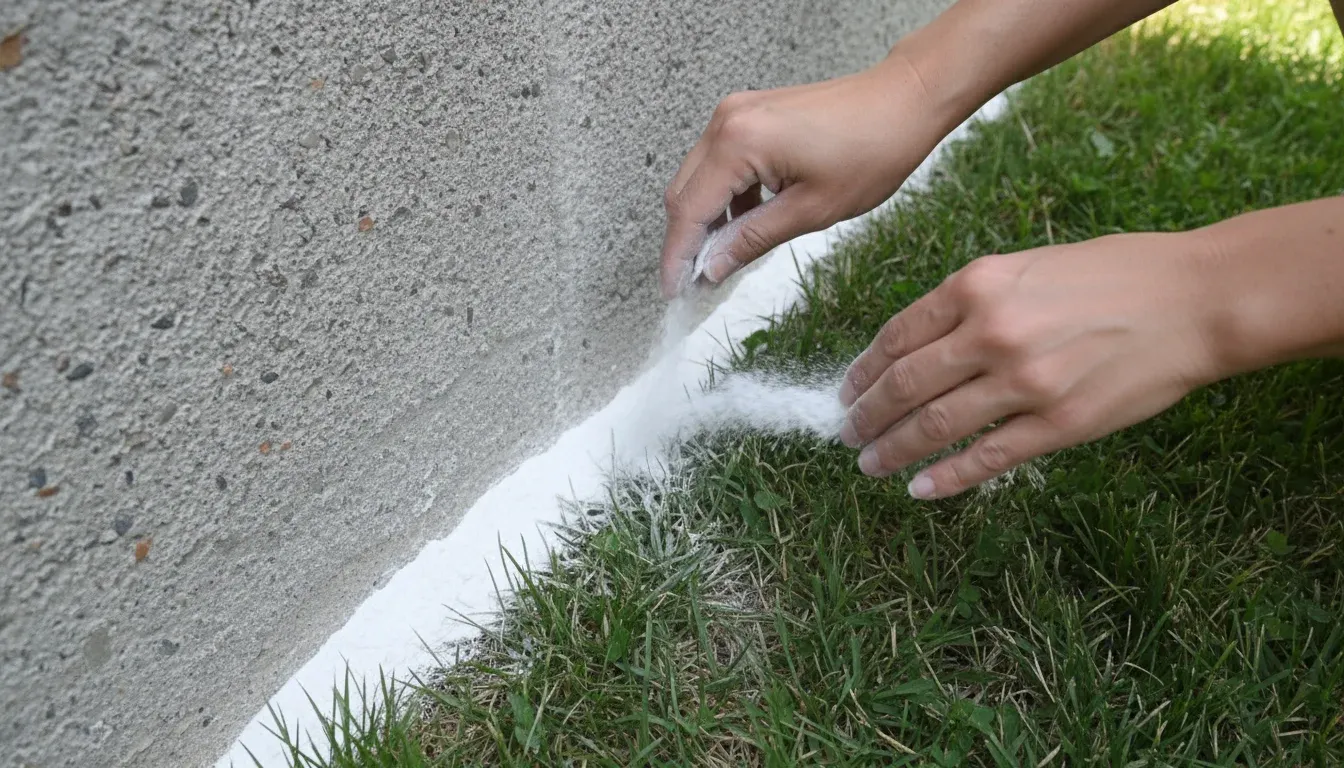
Food-grade diatomaceous earth is a powder that damages the exoskeletons of clover mites and desiccates them. Spread a thin line around the foundation perimeter, focusing on areas where you see the most activity. Reapply after rain.
DE works slowly and only on mites that crawl through it, so it’s not a fast solution. But it’s non-toxic and adds another layer of defense when combined with habitat changes and sealing.
Once you’ve knocked down the indoor population and sealed up entry points, the key is keeping vegetation and moisture away from the foundation. Clover mites live outside year-round, but they only invade when conditions are right. Make your house less appealing and they’ll stay in the lawn where they belong.