Table of Contents
Mold is a moisture problem wearing a biology costume. The fuzzy black or green patches on your wall aren’t the actual issue – they’re the symptom. The real problem is that something in your home is holding too much water, and mold moved in because conditions were perfect. Fix the conditions, and the mold loses its footing. Chase the mold without addressing the moisture and you’re painting over rust.
That said, you do need to clean the mold too. Both things matter. Mold spreads by releasing spores into the air, and an untreated patch expands. Some species are more irritating than others, and people with respiratory issues or mold sensitivities feel it fast. So the approach is always two-part: remove what’s there, then cut off the conditions that let it grow.
The good news is that most household mold – bathroom grout, a damp wall corner, the ceiling above a shower – is well within DIY territory. You don’t need a hazmat team for a patch smaller than a dinner plate. But you do need to do it properly, and you need to know when to call someone who will.
Cleaning & Removal
The cleaning step gets more complicated when people skip protective gear. Wear gloves and an N95 or FFP2 mask before you touch anything. Mold spores become airborne the second you disturb the colony, and breathing them in is pointless and avoidable. This isn’t being precious – it’s basic.
For the cleaning itself, the best option depends on the surface. Vinegar (undiluted white vinegar, sprayed on and left for an hour before wiping) is genuinely effective on non-porous surfaces and kills most common household mold species. It smells bad for a bit, but it works. Hydrogen peroxide (3% solution from any pharmacy) does the same job and is less pungent – spray it on, wait 10 minutes, scrub and wipe. On tiles and bathroom fixtures, either of these is your starting point.
Commercial mold remover sprays – brands like HG or Astonish – are useful when you’re dealing with grout lines or textured surfaces where scrubbing is awkward. They’re typically bleach-based and do work quickly. The trade-off is ventilation requirements and the fact that bleach doesn’t penetrate porous materials the way people think it does.
For walls and more porous surfaces, a mild detergent solution (warm water plus a few drops of dish soap) is the gentler option, though it’s more about cleaning up surface growth than killing deep-seated mold. On drywall, honest answer: if the mold has penetrated the surface, you may be cutting that section out rather than cleaning it.
One rule that people ignore: dispose of cleaning cloths after use. A mold-covered cloth sitting in your bin is a spore distribution point. Bag it, bin it.
Moisture & Ventilation Control
This is where the actual fix lives. Mold needs humidity above roughly 60-70% to thrive. Drop the indoor humidity below 50% consistently and you make your home inhospitable to it. That’s the target.
Ventilation is the free version. Open windows when weather allows. Run extractor fans during and after cooking and showering – and run them for longer than you think is necessary. A bathroom fan running for 20 minutes after a shower makes a real difference. If your extractor fans are old and sluggish, replace them. A decent fan is a cheap mold-prevention device.
Dehumidifiers are the direct tool. A good dehumidifier in a problem room – a damp basement, a bathroom without a window, a bedroom that retains moisture – will pull significant volumes of water out of the air daily. Pair it with a humidity monitor (they cost almost nothing) so you know when you’re in the danger zone instead of guessing. Install one in each room that gets damp.
Smaller habit changes matter too. Don’t dry clothes on radiators – it dumps moisture directly into the air. Dry outside or use a vented tumble dryer. If you dry indoors in a dedicated room, run a dehumidifier in there. Same goes for washing clothes regularly – damp laundry sitting in a pile is a humidity source and potential mold substrate.
AC units need periodic cleaning and inspection because the coils and drainage trays are exactly the kind of dark, damp environment mold loves. If your AC starts smelling musty, that’s your cue.
HEPA air purifiers with activated carbon filters won’t stop mold at the source, but they do capture airborne spores and reduce the amount you’re breathing in during remediation or in an active problem area. Worth running in affected rooms.
Diagnosis & Identification
You can’t fix what you haven’t properly found. Mold is often more extensive than what’s visible.
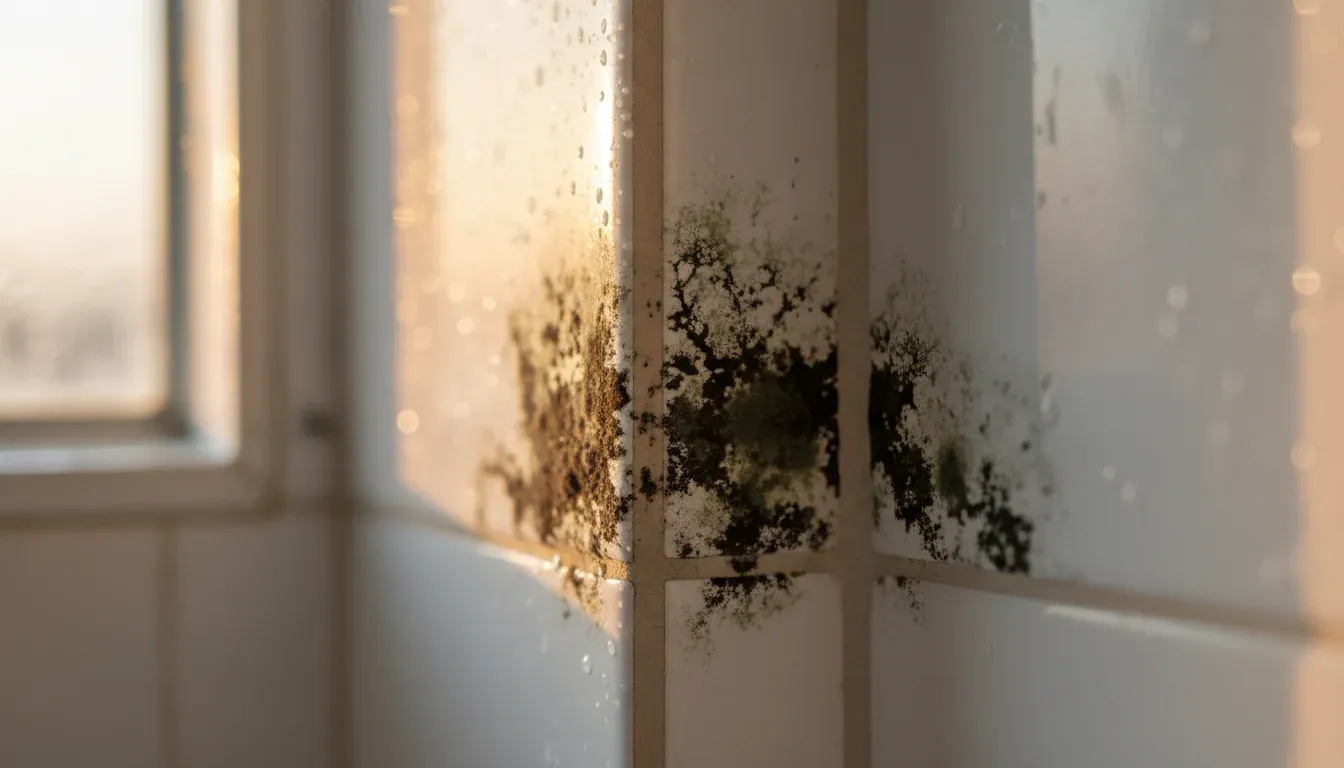
Visual inspection is the obvious start. Look for black, green, or orange patches – mold comes in different colours depending on species and surface. Check behind furniture that sits against exterior walls, under sinks, around window frames, in the corners where walls meet ceilings in bathrooms, and inside wardrobes on outside-facing walls.
The smell test is underrated. That damp, musty odour is a reliable signal that mold is present somewhere, even if you can’t see it yet. Follow the smell. It’s often strongest near the source.
Monitor wooden furniture against outside walls – the cold surface meeting warm interior air creates condensation, and mold frequently establishes behind wardrobes before anyone notices. Pull furniture slightly away from exterior walls to allow airflow.
Understanding what’s causing the growth matters because the fix differs. Mold from condensation requires better ventilation. Mold from a leak requires finding and repairing the leak first. Mold from rising damp requires addressing the structure. Cleaning without diagnosing is just delaying the same problem.
Structural & Damp Fixes
Some mold problems can’t be solved with a spray bottle. If you’ve got mold repeatedly returning in the same spots despite cleaning and ventilation, there’s a structural moisture source feeding it.
Rising damp is where groundwater moves up through a wall by capillary action, bypassing or through a failed damp-proof course. Signs include a tidemark pattern on lower walls, salt deposits (efflorescence), and paint that bubbles or peels from the bottom up. This isn’t a DIY fix – it’s a specialist assessment job.
Penetrating damp is rain or groundwater getting in through an external defect – damaged pointing, a cracked render, a failed window seal, blocked gutters, or a roof issue. The fix is outside: find and repair the entry point. Interior damp-proofing treatments applied without fixing the external cause are a waste of money.
Condensation is the most common cause of household mold in the UK specifically, and it’s the one most people have. Warm, moist indoor air hits a cold surface (exterior walls, windows, behind furniture) and deposits water. The fix is better ventilation and better heating of those cold surfaces. Avoid wall-to-wall carpeting in bathrooms – carpets trap moisture and provide the perfect substrate for mold growth near the floor.
Where It Shows Up
Mold in the Bathroom
The bathroom is where most people first notice mold, and it makes sense – high humidity, fluctuating temperature, and surfaces that stay damp. The good news is that bathroom mold is usually surface-level and responds well to cleaning. The bad news is it returns fast without habit changes. Our bathroom mold guide covers how to get on top of it and keep it there.
Mold in Your House Generally
Mold found throughout a house – rather than in one obvious room – usually signals a ventilation problem or a structural moisture issue that’s more widespread. Humidity management becomes the priority: dehumidifiers, extractor fans, and closing the gap between where moisture is generated and where it escapes. The whole-house mold guide goes into the full toolkit.
Mold on Walls
Wall mold gets its own treatment because the surface type changes everything. Paint, plaster, drywall, and brick all behave differently, and some materials need to be cut out rather than cleaned. Diagnosis is more important here than anywhere else – wall mold is often the visible signal of a moisture issue behind or within the wall itself. The mold on walls guide covers assessment and removal by surface type.
Causes & Prevention
The single biggest preventable driver of household mold is inadequate ventilation combined with modern sealed buildings. Older houses breathed – draughts that people complained about were actually cycling out moist air. Energy-efficient double glazing and well-sealed homes hold moisture in unless you actively manage it.
Daily activities generate a lot of water vapour – cooking, showering, breathing, washing. A family of four adds several litres of water to their indoor air every day. That moisture has to go somewhere. If it’s not going outside through ventilation, it’s condensing on your walls.
Prevention checklist:
- Keep indoor humidity below 50% (buy a monitor, actually check it)
- Run extractor fans during cooking and showering, plus 15-20 minutes after
- Open windows when possible, even in winter for short periods
- Don’t dry clothes on radiators
- Keep furniture slightly away from exterior walls
- Fix any leaks promptly – even slow drips create damp patches
- Inspect roof, gutters, and window seals annually
When to Call a Pro
Most household mold is DIY-manageable. But there are situations where professional remediation is the right call.
Call a professional if:
- The affected area is larger than roughly 10 square feet (1 square metre) – this is the threshold most guidelines use
- The mold keeps returning despite repeated cleaning and ventilation improvements
- You suspect mold inside walls, in your HVAC system, or in the ceiling void
- Anyone in the house has a mold allergy, asthma, or respiratory condition that’s worsening
- You’ve found black mold (Stachybotrys) – proper testing and containment matter here
- The source of moisture hasn’t been identified despite the mold continuing to grow
Professional inspection and spore counting is worth it if you’re buying a house and there’s any sign of damp, or if you have symptoms (persistent cough, runny nose, itchy eyes at home) but can’t find visible mold. Professionals use moisture meters and air sampling to find what you can’t see.
Professional mold remediation involves containment to prevent cross-contamination, proper removal (including affected materials where necessary), and treatment of surfaces. It’s not cheap, but it’s the correct approach for large or complex infestations.
FAQ
Can I get rid of mold myself?
For most household mold – patches on grout, a corner of a bathroom ceiling, some spots around a window frame – yes, you absolutely can. Protective gear, vinegar or hydrogen peroxide, proper cleaning, and then fixing the moisture cause. The cases where you need a professional are specific and mostly involve size (10+ sq ft), structural involvement, or health factors.
Does bleach kill mold?
On hard, non-porous surfaces (tiles, glass, sealed countertops), bleach does kill mold. On porous surfaces like drywall or wood, it doesn’t penetrate deeply enough to reach the root structure – it bleaches the surface colour and makes it look clean without actually solving the problem. Use bleach on tiles. Don’t rely on it for walls.
How do I stop mold coming back after I’ve cleaned it?
Fix the moisture source. That’s it. Cleaned mold returns when conditions stay right for it. Cut indoor humidity below 50%, ventilate properly, address any structural damp – and the mold won’t be able to re-establish. If it keeps coming back despite all of that, there’s a moisture source you haven’t found yet.
Is mold dangerous?
Most household molds are a nuisance rather than a serious health risk for healthy adults. They can cause or worsen respiratory symptoms, particularly in people with asthma or mold sensitivities. Black mold (Stachybotrys chartarum) gets outsized coverage online – it produces mycotoxins, but you’d typically need significant exposure to substantial quantities for serious health effects. That said, no mold should be left untreated, and if people in your household are symptomatic, take it seriously and remediate properly.