Table of Contents
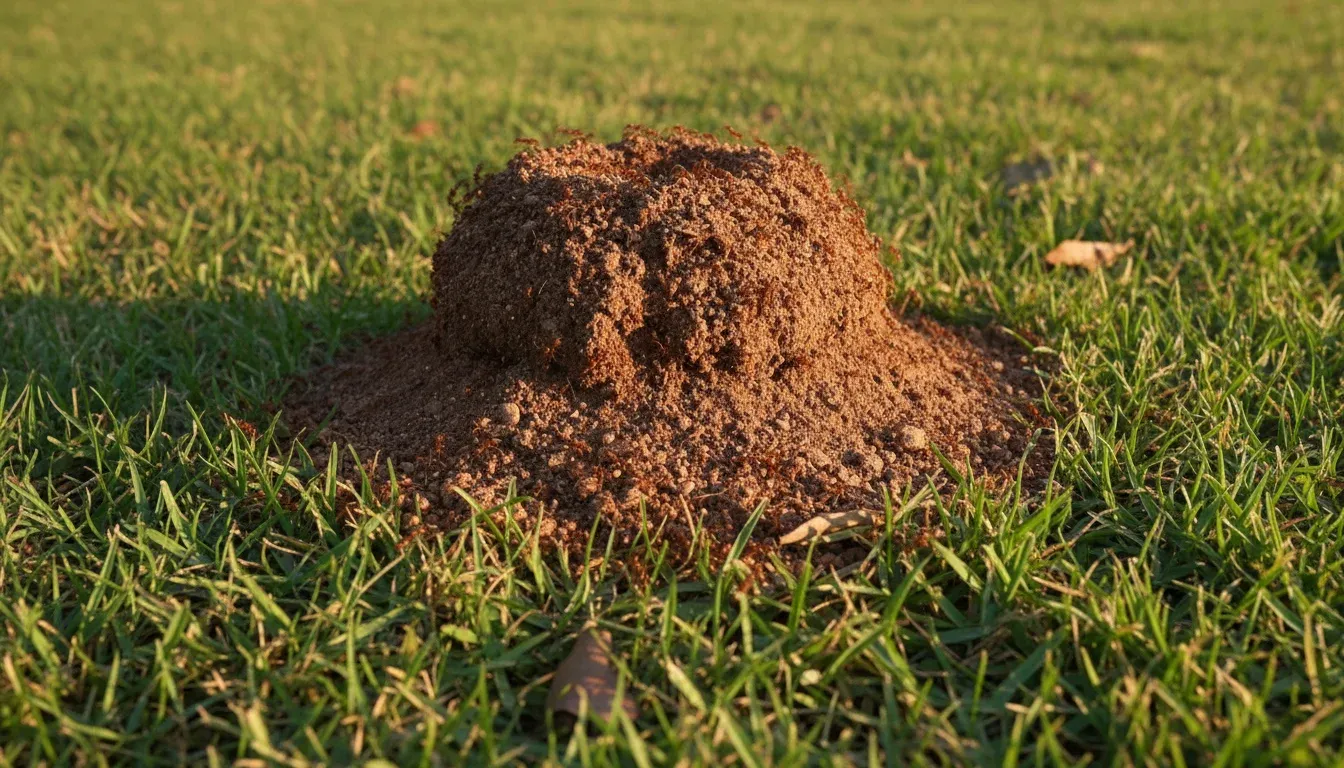
Fire ant mounds pop up overnight and turn your yard into a minefield. Step on one and you’ll know it – those stings burn like hell and the welts stick around for days. Getting rid of the mounds isn’t just about knocking down the dirt pile. The queen’s buried deep, and if you don’t reach her, they’ll rebuild in 24 hours.
You’ve got options ranging from boiling water to commercial insecticides. Some work in minutes. Others take weeks but kill the whole colony. The right method depends on how fast you need results and whether you’ve got kids or pets running around. Here’s what actually works.
1. Boiling Water
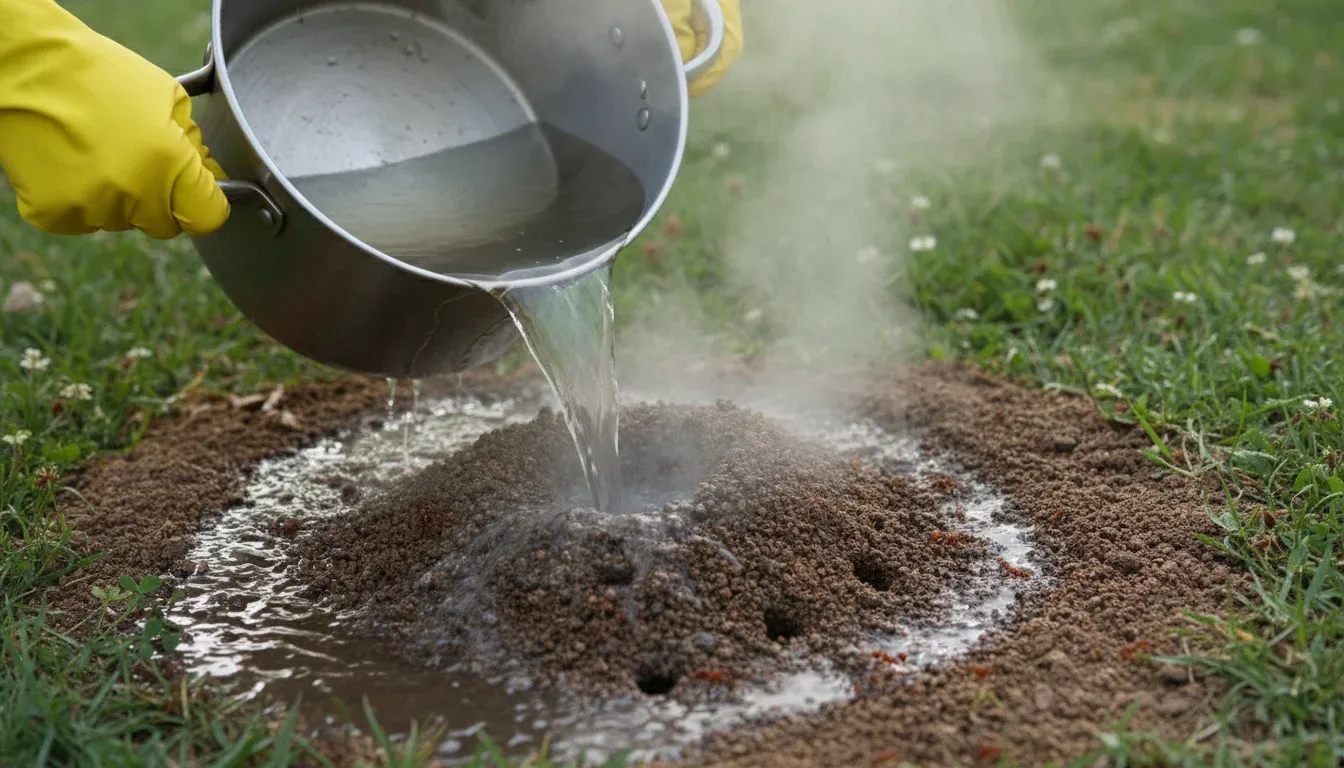
The fastest free method. Boil 3 gallons of water and pour it directly on the mound. The heat kills on contact and penetrates deep enough to reach the queen about 60% of the time. Pour in a circular pattern starting from the outside, working toward the center.
The catch: you need to hit the colony when it’s home. Fire ants move the queen based on soil temperature, and if she’s not in the mound when you pour, you’ve just made them angry. Works best in early morning when the colony is shallow. You’ll kill thousands of workers but if the queen survives, they’re back in three days.
2. Commercial Fire Ant Baits
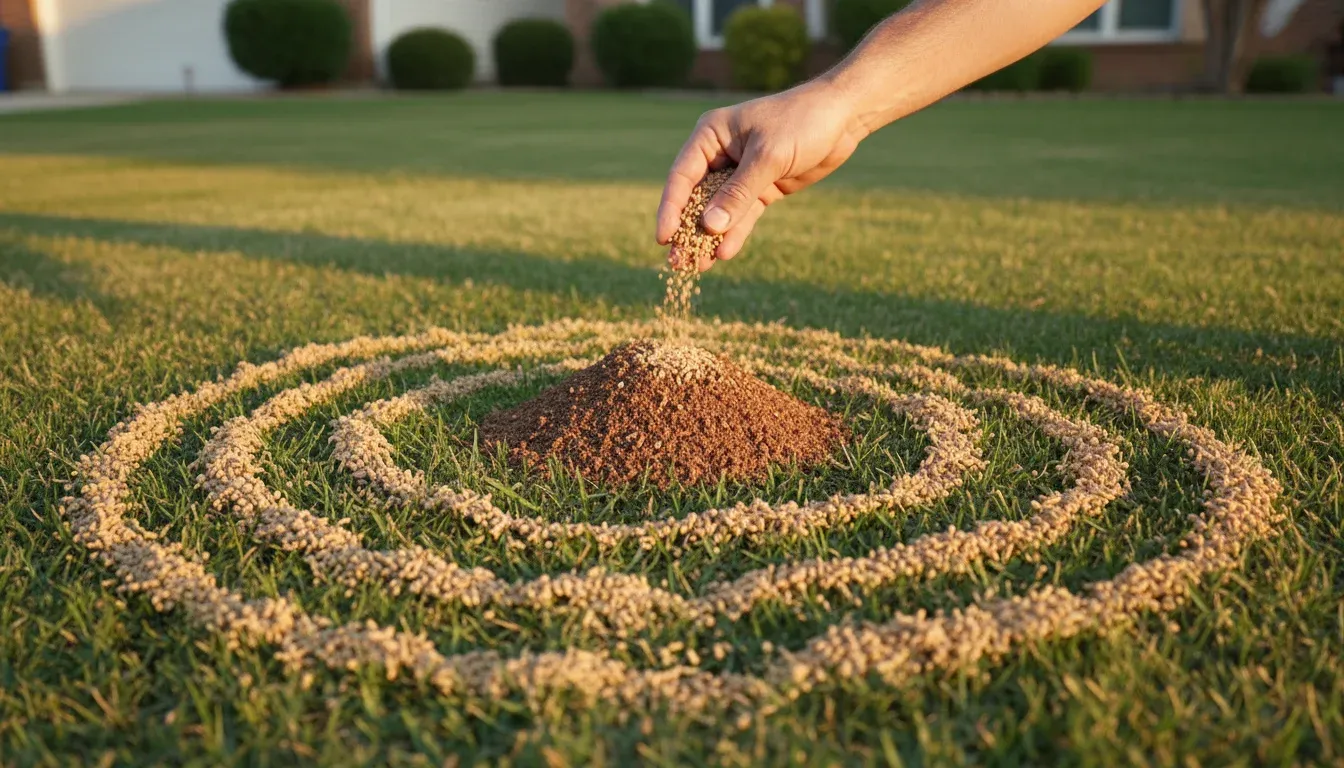
The patient approach that actually works. Baits like Amdro or Advion use slow-acting poison that workers carry back to feed the queen. She dies, colony dies. Spread the granules in a circle around the mound (not directly on it – they won’t forage on disturbed soil).
Results take 1-2 weeks but the kill rate is close to 100%. The toxin is specifically designed for fire ants, so it’s safer around pets than broadcast insecticides. Reapply monthly during warm months because new queens fly in constantly.
3. Liquid Insecticide Drenches
When you need results today. Products with bifenthrin or permethrin (like Ortho Fire Ant Killer) pour directly onto the mound. Use 1-2 gallons per mound, mixing according to label directions. The liquid soaks through the tunnels and chambers, killing everything it touches.
You’ll see dead ants within an hour. The queen dies within 24 hours if you use enough product. More expensive than baits but faster. The downside is you’re dumping a lot of pesticide in one spot – don’t use near vegetable gardens or wells.
4. Two-Step Method (Bait + Drench)
The professional approach. Broadcast fire ant bait across your entire yard first, then drench any mounds that are near high-traffic areas (like the mailbox or patio). The bait handles colonies you can’t see. The drench handles the visible threats.
This costs more upfront but it’s the only method that keeps fire ants off your property long-term. Reapply bait quarterly. Drench new mounds as they appear.
5. Diatomaceous Earth
The natural option that sort of works. Food-grade DE is fossilized algae that shreds insect exoskeletons on contact. Sprinkle it heavily on and around the mound. It kills workers that walk through it, and they track it back to the colony.
Effectiveness is maybe 40% because it doesn’t reach deep chambers where the queen hides. Rain washes it away. It takes weeks to see results. But if you’ve got kids and pets and you’re willing to be patient, it won’t poison anything.
6. Mound Drench with Dish Soap
The old farmer’s trick. Mix 2 tablespoons of liquid dish soap per gallon of water and pour 2-3 gallons on the mound. The soap breaks down the ants’ waxy coating and they dehydrate.
Hit-or-miss on queen kills. Works better than plain water because the soap helps the liquid penetrate tunnels. Cheaper than commercial drenches but you’ll probably need to retreat the mound 2-3 times. Don’t use this if you care about the grass – that much soap can damage roots.
7. Spinosad-Based Organic Insecticides
The compromise between "natural" and "works." Spinosad (like Conserve SC) is derived from soil bacteria, approved for organic gardening, and deadly to fire ants. Mix it as a drench or use it as a bait additive.
Slower than synthetic pyrethroids but faster than plain baits. Takes 3-5 days to kill the colony. Breaks down quickly in sunlight so it won’t persist in soil. Good option if you’re treating near edibles.
8. Gasoline (Don’t)
People swear by it. It’s a terrible idea. Gasoline kills fire ants but it also kills everything else in your soil for months, creates a fire hazard, and the fumes are toxic. It’s illegal in most places to use petroleum products as pesticides. Just don’t.
Fire ant mounds aren’t going away on their own. If you want them gone today, use a liquid drench or boiling water. If you want them gone for good, use baits or the two-step method. Skip the home remedies that sort of work sometimes – your time is worth more than that. And if you’ve got a whole yard full of mounds, call a pest control company. Some problems are worth paying someone else to fix.