Table of Contents
Ground wasps (usually yellow jackets or digger wasps) build nests in the dirt, and you won’t know they’re there until someone steps too close. They’re aggressive when disturbed, which makes removal tricky. But it’s doable if you time it right and use the right approach.
Most ground wasp activity happens during the day. That’s when they’re out hunting and most likely to sting you for getting near their nest. The smart move is to wait until evening when they’re all back home and sluggish from the temperature drop.
1. Wait Until Evening to Treat
Don’t even think about tackling a ground wasp nest during daylight. They’re too active, and you’ll get swarmed. Evening (dusk or later) is when the colony is back in the nest and the cooler air slows them down. This gives you the safest window to approach and treat.
Mark the nest location during the day so you can find it in low light. A small flag or stake works.
2. Use Aerosol Wasp Spray With 10+ Foot Range
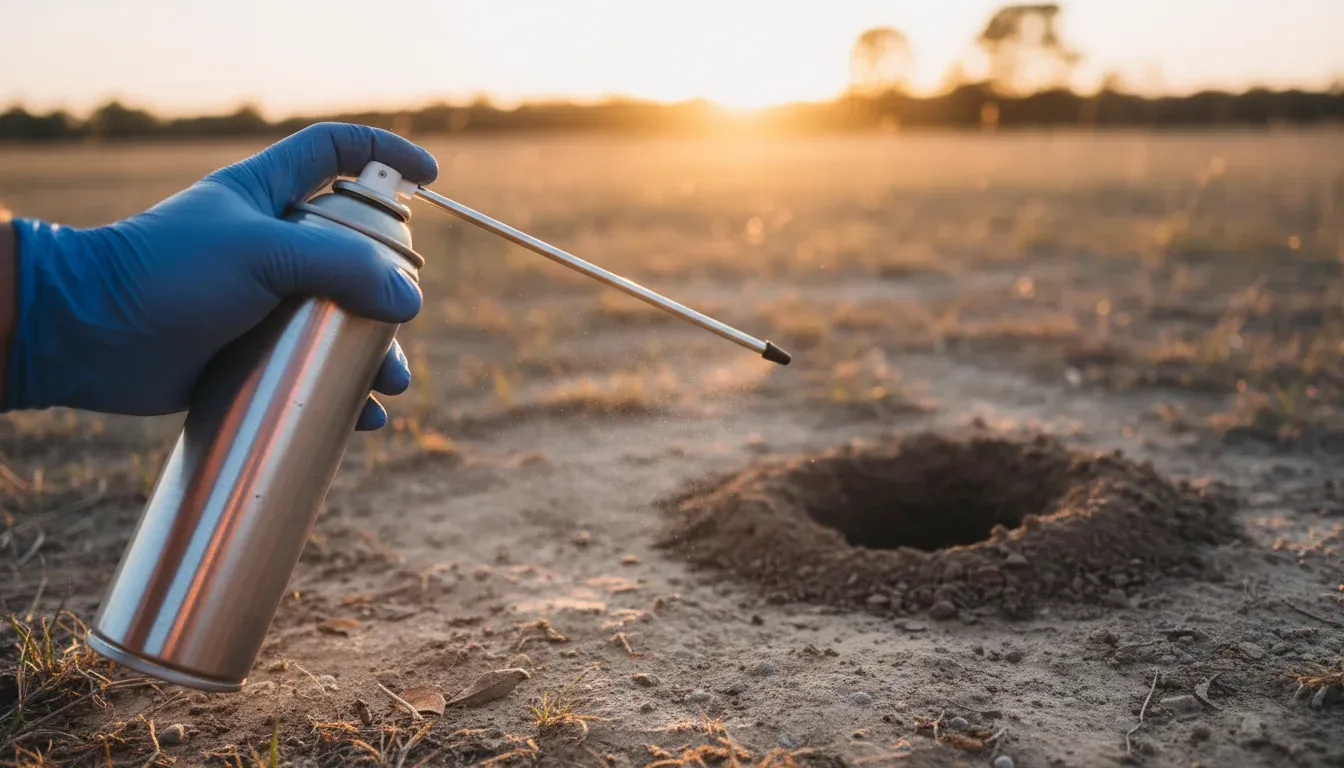
Long-range aerosol wasp spray is your best bet for direct treatment. Look for products that shoot 10 to 20 feet so you can keep your distance. These sprays are designed to knock down wasps quickly and work well when aimed directly into the nest entrance.
Approach slowly and quietly. Fast movements or vibrations can trigger an alarm response even at dusk.
3. Spray Directly Into the Hole
Stand upwind if possible (so the spray doesn’t blow back at you), then aim the nozzle directly into the entrance hole. Give it a solid 5 to 10 second burst. The spray needs to penetrate the nest, not just coat the surface.
Back away immediately after spraying. Don’t stand around to see if it worked. Wasps can still emerge even after treatment.
4. Avoid Shining Flashlight Into the Hole
If you need light, use a red-lens flashlight or keep the beam pointed at the ground near the nest. Shining a bright white light directly at the entrance will alert and agitate the wasps. They’ll come out to investigate, and that’s the opposite of what you want.
Some people tape red cellophane over a regular flashlight. It works.
5. Wait 24 Hours After Treatment
Don’t dig up or disturb the nest the next morning. Wait a full 24 hours to make sure the colony is dead. Check for activity from a distance. If you still see wasps coming and going, treat again that evening.
Once you’re sure they’re gone, you can fill the hole with dirt to prevent recolonization.
6. Use Insecticide Dust With Squeeze Bottle Applicator
Dust formulations (like those containing deltamethrin or permethrin) work better than sprays for some situations, especially nests near stone walls or tree roots where liquid might not penetrate well. The dust clings to wasps as they move through the nest and spreads the insecticide throughout the colony.
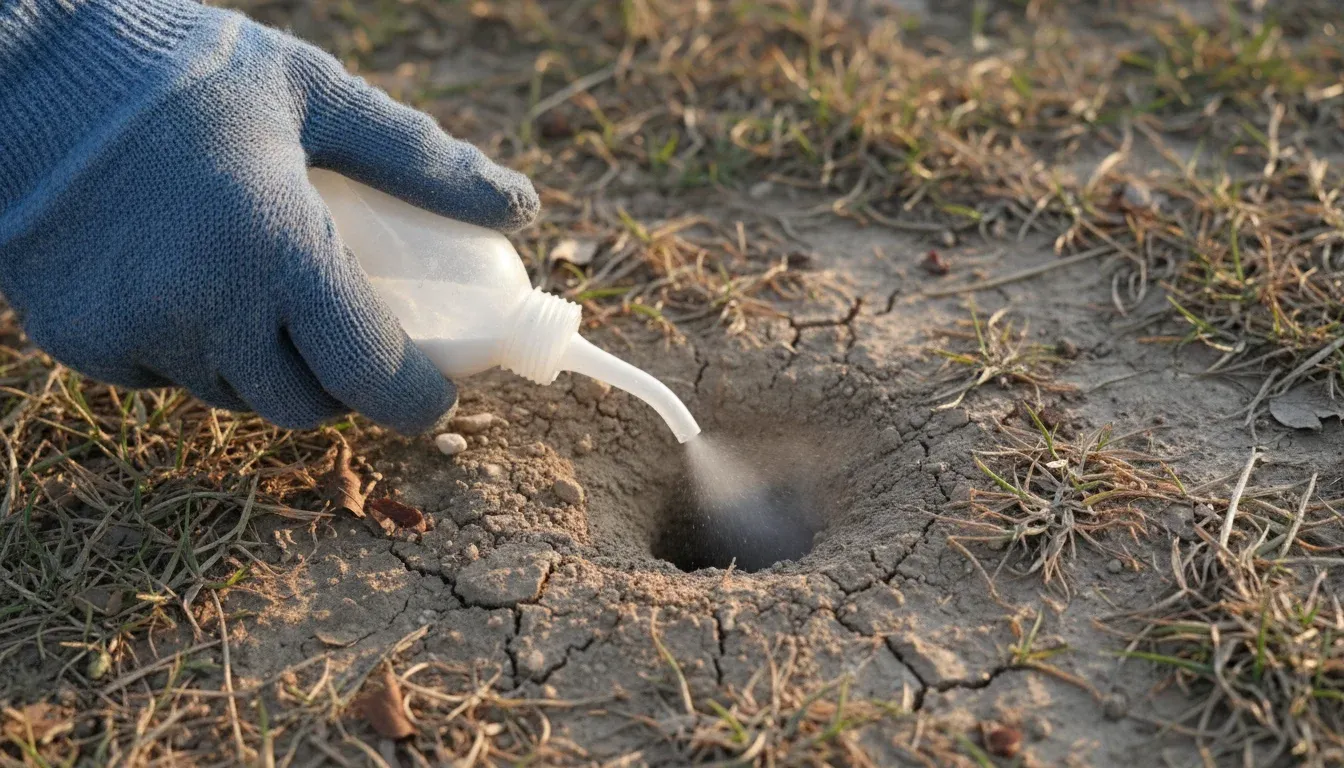
Use a hand duster or squeeze bottle applicator to puff the dust into the entrance. Same timing rule applies: do this at dusk or later.
7. Flood the Nest (Physical Removal)
If you want to avoid chemicals, flooding can work for shallow nests. Wait until evening, then use a garden hose to pour water directly into the entrance. Keep the water flowing for several minutes to collapse the tunnels and drown the wasps.
This method is hit or miss. Deep nests or ones with multiple exits won’t flood effectively. And wet, angry wasps can still sting, so don’t assume water makes them harmless.
8. Apply Diatomaceous Earth Around the Entrance
Food-grade diatomaceous earth (DE) is a natural desiccant that damages the waxy coating on insect exoskeletons. Sprinkle a ring of DE around the nest entrance in the evening. Wasps entering and exiting will pick up the powder, which dehydrates them over the next few days.
This is a slower method. It won’t kill the colony overnight, but it’s a low-risk option if you’re not in a hurry and the nest isn’t in a high-traffic area.
9. Remove Attractants and Lawn Debris
Ground wasps prefer areas with loose soil, low ground cover, and nearby food sources (like garbage or compost). After you’ve eliminated the active nest, make the area less inviting. Keep grass mowed, remove wood piles or debris near the old nest site, and seal outdoor trash cans.
This won’t get rid of an existing nest, but it reduces the chance of another colony moving in.
10. Call a Professional If Unsuccessful or High-Risk
If the nest is near a doorway, play area, or anywhere you can’t safely approach, call a pest control professional. Same goes if you’re allergic to stings or if you’ve treated the nest twice and it’s still active.
Professionals have better equipment, protective gear, and access to stronger insecticides. It’s not worth the hospital trip to save $150.
Ground wasps are a problem you can handle yourself in most cases, but timing and distance are everything. Treat at dusk, keep your range, and don’t rush the follow-up. If the situation is risky or the nest won’t die, bring in someone with better tools.