Table of Contents
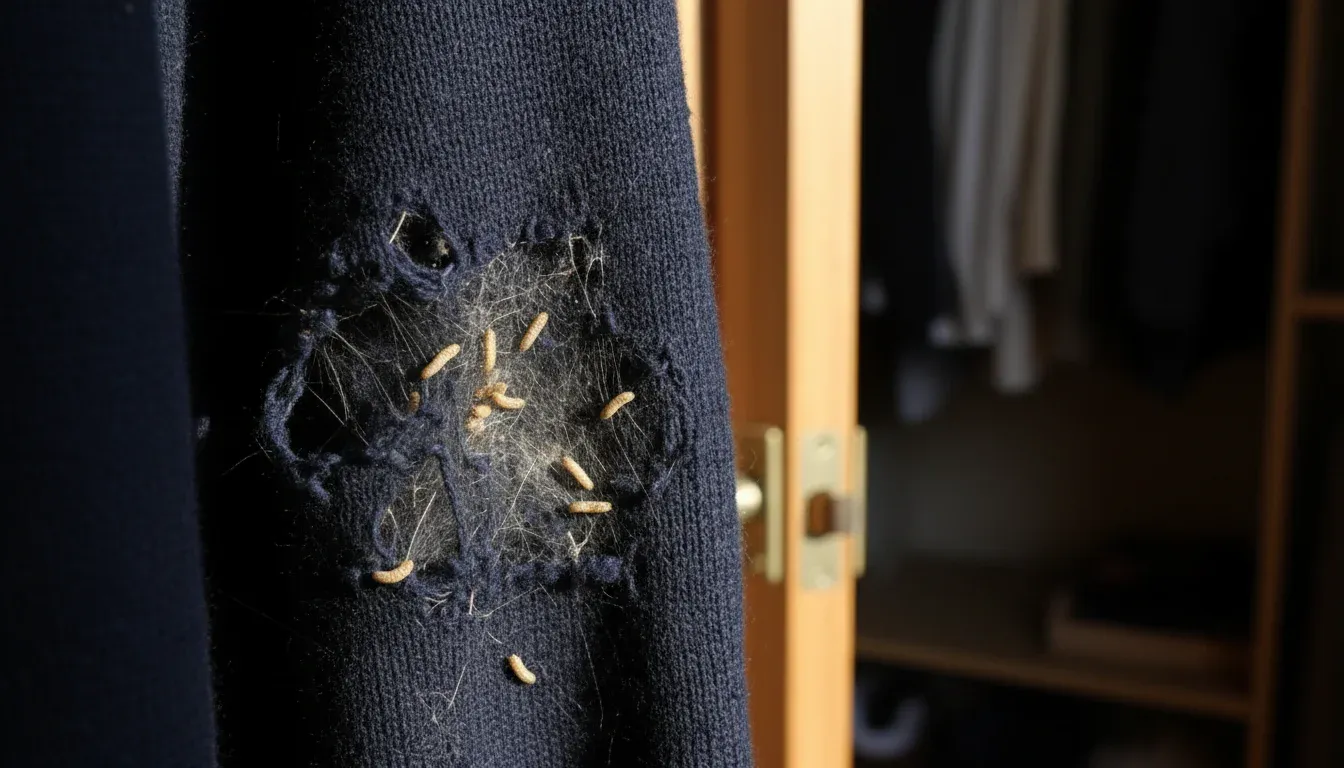
Moths are silent destroyers. You don’t notice them until you pull out a sweater and it’s got holes, or you open a bag of flour and see tiny larvae squirming around. By then, they’ve already set up camp.
There are two types you’re dealing with: clothes moths (the ones eating your cashmere) and pantry moths (the ones contaminating your food). The methods overlap, but knowing which you have helps you target the problem. Both hate vinegar, extreme temperatures, and having their hiding spots disturbed.
Here’s what actually works to get rid of moths and keep them from coming back.
1. Inspect Pantry and Toss Infested Food
For pantry moths, start with a complete inventory. Check every bag, box, and container in your pantry and cupboards. Look for webbing, tiny holes in packaging, clumping in grains, or larvae crawling around. Common targets include cereal, grains, beans, nuts, flour, dried fruit, birdseed, pet food, spices, tea, chocolate, and candy.
Don’t try to salvage partially infested items—the eggs are microscopic and impossible to remove. Toss anything suspect immediately. Check unopened packages too; larvae can chew through cardboard and thin plastic. Be ruthless here. One forgotten infested box can restart the entire problem in weeks.

2. Clean Food Storage Containers with Hot Water and Soap
After removing infested food, wash every container, jar, and storage bin that was in the pantry. Use hot soapy water and scrub thoroughly, paying attention to lids and seals where eggs hide. Rinse well and dry completely before refilling.
If you had loose items in bins or baskets, wash those too. Moth eggs stick to surfaces you wouldn’t expect. For wire shelving, use a brush to get into the grooves. The goal is removing every trace of eggs, webbing, and food residue that could attract new moths.
3. Vacuum Everything Obsessively
Start here for clothes moths and follow up after pantry inspection. Moths lay eggs in cracks, under furniture, in closet corners, anywhere dark and undisturbed. Vacuuming sucks up eggs, larvae, silk webbing, and adult moths in one go.
Hit the baseboards, closet floors, under shelves, and inside drawers. Use the crevice tool to get into corners and along edges where larvae hide. Empty the vacuum immediately after and seal the bag or canister contents in plastic before throwing it out. Otherwise, you just gave them a mobile breeding ground.
Repeat every few days for two weeks to catch newly hatched larvae before they mature.
4. Take Trash Outdoors Immediately
Don’t let infested items sit in your kitchen trash. As soon as you bag up contaminated food or cleaning debris, take it outside to your outdoor bin. If your outdoor trash is far from the house, double-bag infested materials to prevent escapees during transport.
This prevents moths from escaping back into your home and laying eggs in the trash can. For severe infestations, consider taking trash directly to an outdoor dumpster rather than letting it sit in your garage. The goal is breaking the lifecycle, not just moving it to another room.

5. Freeze Infested Items for 3+ Days
Clothes moths can’t survive freezing. If you’ve got infested clothing, blankets, or fabric items, bag them in plastic and stick them in the freezer for at least 72 hours. A week is better.
This kills all life stages: eggs, larvae, pupae, adults. After freezing, shake items out outside (you don’t want dead moths and eggs in your house) and wash or dry clean them before putting them back.
Don’t freeze delicate items without checking care labels. And if you’re dealing with pantry moths, this works for grains and flour too. Just make sure containers are airtight so you don’t get freezer burn on your food.
6. Heat Vinegar and Spray Into Cracks
Moths despise vinegar. The smell repels them and the acidity disrupts their breeding.
Mix equal parts white vinegar and water in a spray bottle. Heat it in the microwave for 30 seconds (it works better warm). Spray into closet corners, along baseboards, inside drawers, anywhere moths might hide or lay eggs.
For pantry moths, spray shelves after emptying them. Let it sit for a few minutes, then wipe down. The smell dissipates quickly but moths remember it.
7. Add Baking Soda or Salt to Vinegar for Pantry Moths
If you’re fighting pantry moths specifically, upgrade the vinegar spray. Mix 2 cups vinegar with 1 tablespoon baking soda or 1 tablespoon salt. The abrasive particles help scrub away eggs and webbing while the vinegar does its chemical work.
Spray directly onto shelves and let it foam for 5 minutes before wiping. This is especially good for getting into the grooves of wire shelving where eggs get stuck.
Don’t use this on fabric or clothing. It’s for hard surfaces only.

8. Use Pheromone Traps to Catch Males
Pheromone traps are sticky cards coated with synthetic female moth hormones. Male moths fly to them and get stuck, which breaks the breeding cycle.
Place traps near infested areas (one per closet or pantry shelf). They won’t eliminate an infestation by themselves, but they reduce the population and show you where moths are active.
Replace traps every 2-3 months. If you stop seeing moths on the traps after a few weeks, you’re winning. If they keep filling up, you’ve got a bigger problem and need to combine this with other methods.
9. Run a Dehumidifier for 2-3 Days
Moths thrive in humidity. Drop the moisture level and you make your home less hospitable.
Run a dehumidifier in infested rooms for 48-72 hours straight. Aim for 40-50% humidity or lower. This dries out eggs and larvae, slowing reproduction and killing some outright.
If you’ve got air conditioning, crank it down to 65°F (18°C) or cooler at the same time. Cold, dry air is moth kryptonite.
10. Store Everything in Airtight Containers
Prevention is half the battle. Moths can chew through cardboard, paper, and thin plastic bags. They can’t get through sealed glass, metal, or thick plastic containers with tight lids.
For pantry moths: Transfer all grains, flour, cereal, pasta, pet food, and dried fruit into airtight containers immediately. Check for webbing or larvae before transferring.
For clothes moths: Use vacuum-sealed bags for off-season clothing. Cedar chests work but only if they’re sealed tight. Regular plastic bins with snap lids are fine for everyday storage.
11. Group Remaining Items in One Area to Monitor
After cleaning and treating your pantry, consolidate the uncontaminated items into one zone. This serves two purposes: it lets you monitor a smaller area for recurring signs of moths, and it isolates any items that might still harbor undetected eggs.
Keep this grouping temporary—two to three weeks is usually enough. Check the area daily for new webbing, larvae, or adult moths. If you see activity, you’ve missed something and need to repeat the inspection process. If the area stays clean, you can redistribute items back to their normal storage spots.
12. Wash or Dry Clean All Fabric in Infested Areas
If clothes moths are the issue, everything fabric needs to be cleaned. Wash in hot water (at least 120°F / 49°C) if the fabric can handle it. For delicate items, dry clean or use the hot cycle in the dryer.
Don’t skip curtains, throw pillows, or fabric storage bins. Moths will hide eggs anywhere.
After washing, don’t immediately put items back in the closet. Clean the closet first (see method 13). Otherwise, you’re just reintroducing clean clothes to a contaminated space.
13. Empty and Paint the Closet with Insect-Resistant Paint
If you’ve got a serious clothes moth infestation, consider going nuclear. Empty the entire closet, vacuum every surface, wipe down with vinegar, then repaint with paint that contains insecticides or mold inhibitors.
This is overkill for a small problem but makes sense if you’ve been fighting moths for months. The paint creates a barrier that repels insects and prevents eggs from sticking to surfaces.
Let it cure for 48 hours before putting anything back.
14. Mix Essential Oils with Vinegar as a Deterrent
Lavender, cedarwood, and peppermint oils repel moths. Add 10-15 drops of any combination to your vinegar spray for extra repellent power.
Spray onto fabric storage areas, closet shelves, and pantry corners. The smell fades for you in a few hours but lingers for moths much longer.
You can also soak cotton balls in the oil blend and place them in closet corners or on pantry shelves. Replace monthly.
15. Check for Overlooked Breeding Sites
Moths hide in places you forget to check. Common spots: pet food bags, birdseed, dried flowers, old wool rugs rolled up in storage, lint traps in dryers, forgotten boxes of sweaters in the attic.
Do a full search of your home. Open every bag, box, and container. Look for webbing, cocoons, or tiny beige larvae. If you find an infested item, bag it and toss it or freeze it.
The faster you eliminate all breeding sites, the faster you stop the cycle.
Moths are persistent but they’re not invincible. Hit them with multiple methods at once and you’ll break their hold on your home. The key is consistency: don’t stop after one round. Keep vacuuming, keep monitoring, and don’t give them a place to hide.