Table of Contents
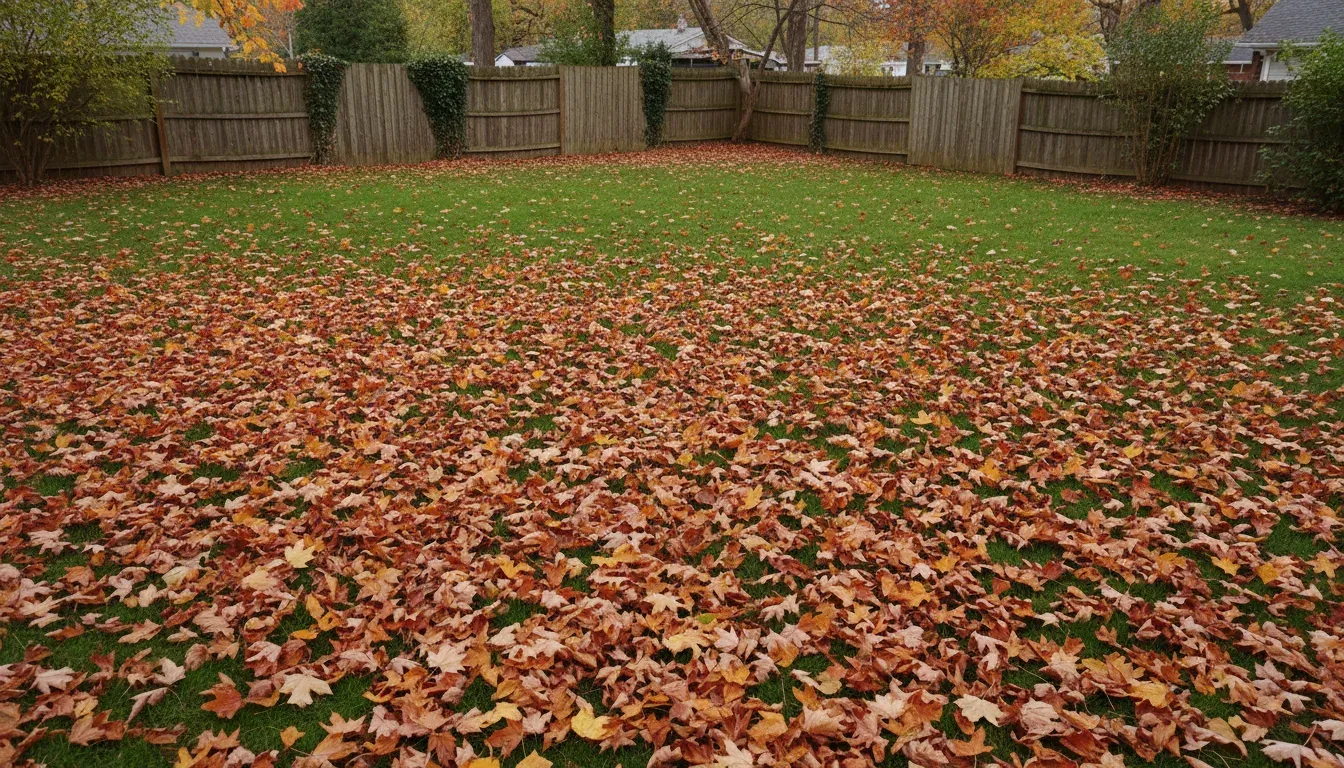
Leaves pile up fast, and waiting makes it worse. The longer they sit, the heavier they get, the more they mat together, and the harder they are to move. Pick your method based on your yard size and how much effort you want to spend.
1. Mulch Them With a Mower
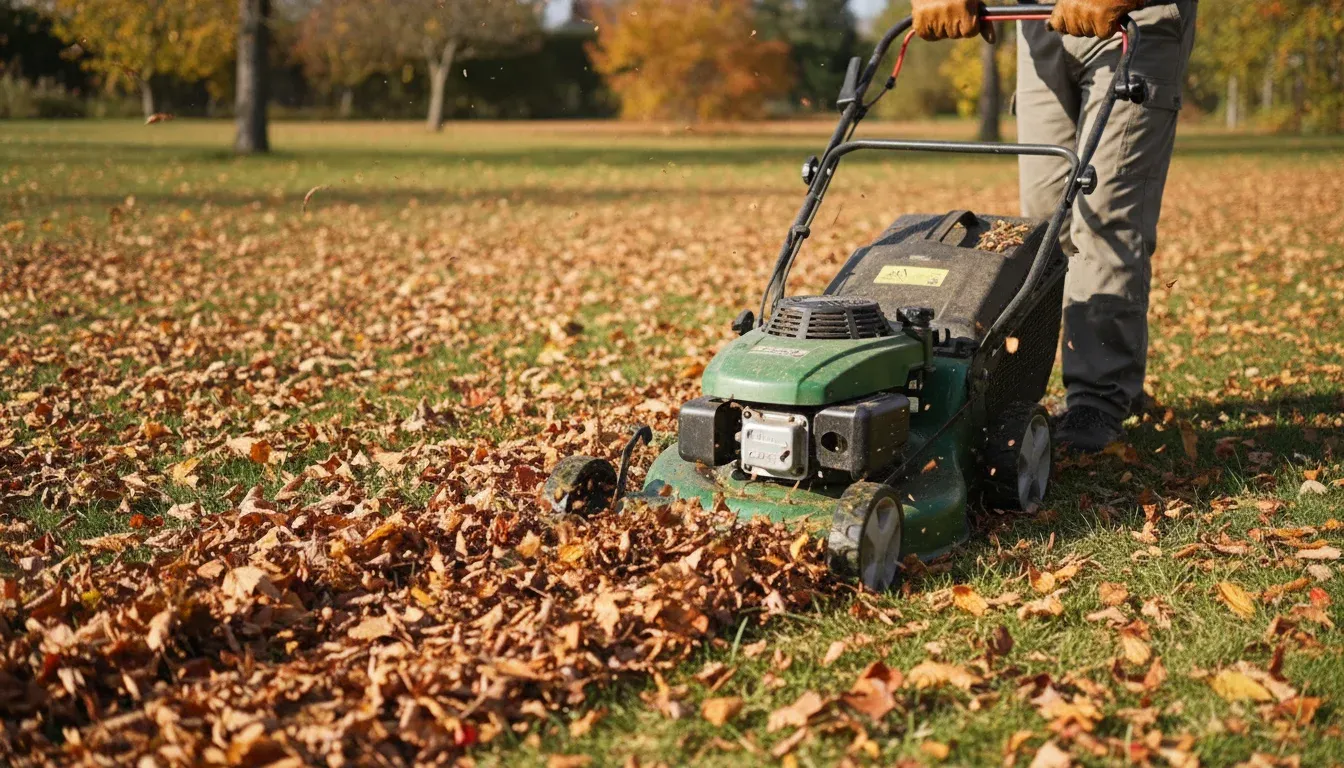
The best option if your mower has a mulching blade. You chop the leaves into small pieces that fall between the grass blades and decompose over winter, feeding the soil. One pass clears the yard and there’s no pile to deal with afterward.
Set the blade to 2-3 inches (5-8 cm). That’s the sweet spot for shredding leaves fine enough to break down without matting on the grass. For thick layers, make two passes at 90 degrees to each other rather than trying to grind everything at once.
Doesn’t work on wet leaves or heavy piles. If you’ve got a thick mat built up, blow or rake first to thin it out, then mulch what’s left.
2. Blow Them Into Piles
Fast on open lawn, driveways, and patios. A leaf blower clears a large yard in 20 minutes versus an hour of raking. The trade-off is noise, and you still have piles to deal with afterward.
Work downwind. Blow leaves into a corner or against a fence line, then scoop onto a tarp and drag to the curb or compost pile. Don’t bother with wet leaves – you’ll push them around without actually moving them anywhere useful.
3. Rake Them
No power needed, works on any yard size, and you’ve got total control over where leaves go. Use a wide fan rake for open areas and a narrower one for corners or around plants.
The move is raking onto a tarp, not into piles you’ll have to shovel into bags afterward. Drag the tarp directly to your disposal spot. Cuts the job time roughly in half and saves your back.
Good for any yard, any weather, and it costs nothing if you already own a rake. The obvious downside is that it’s the most physical option – a half-acre of leaves by hand takes a while.
4. Vacuum Them Up
Lawn vacuums suck up leaves and shred them into a collection bag, reducing volume by about 10:1. Good for detail work around flower beds and tight spaces where blowers just scatter debris.
Most models double as blowers, so you get both in one tool. They’re heavier than a standard blower and you’ll empty the bag often, but if you’ve got a lot of leaves in awkward spots, they earn their place.
5. Use a Lawn Sweeper
Push or tow-behind sweepers use rotating brushes to collect leaves into a hopper. Fast, quiet, and genuinely useful on large flat yards. If you’ve got a riding mower, a tow-behind sweeper covers acres without you getting off the seat.
The limits: they’re bulky, they need storage space, and they don’t handle steep slopes or rough terrain – the brushes lose contact with the ground and stop picking up.
6. Compost Them
Leaves are carbon-rich and make excellent compost. Shred them first with a pass of the mower, then layer with nitrogen-rich material: grass clippings, kitchen scraps, or a handful of fertilizer to kick-start decomposition. A 3-to-1 ratio of leaves to greens is about right. By spring you’ve got finished compost for garden beds.
One rule: don’t compost diseased leaves. They’ll spread the problem to whatever you fertilize.
7. Let Them Decompose in Place
Works if you’ve got a light layer and aren’t trying to win any lawn competitions. Clear leaves off walkways and dense grass areas, but leave a thin layer on the rest. They’ll break down over winter and return nutrients to the soil.
Doesn’t work with a thick mat, and your HOA will have opinions. But it’s the lowest-effort option and better for soil health than hauling everything away.