Table of Contents
Some cooking smells are pleasant while you’re eating and turn into problems once they’ve lingered for an hour. Fish, curry, fried foods, garlic, and cabbage all release odor molecules that settle into fabrics, carpets, and walls. The proteins and oils in these foods break down and continue releasing scent long after the meal is over. But you don’t need to burn sage or repaint. You just need the right methods.
These techniques work for all kinds of cooking odors, from the sharp smell of fried fish to the lingering aroma of last night’s curry. The key is acting fast and using multiple approaches.
1. Open Windows and Run Fans While Cooking
Ventilation is your first line of defense. Turn on the kitchen exhaust fan before you even unwrap the fish, and crack a window or two to create airflow. This pushes odor molecules out instead of letting them settle into curtains, upholstery, and carpet fibers. If you’ve got a box fan, point it toward an open window to actively pull air out of the room.
2. Simmer a Pot of Lemon and Ginger
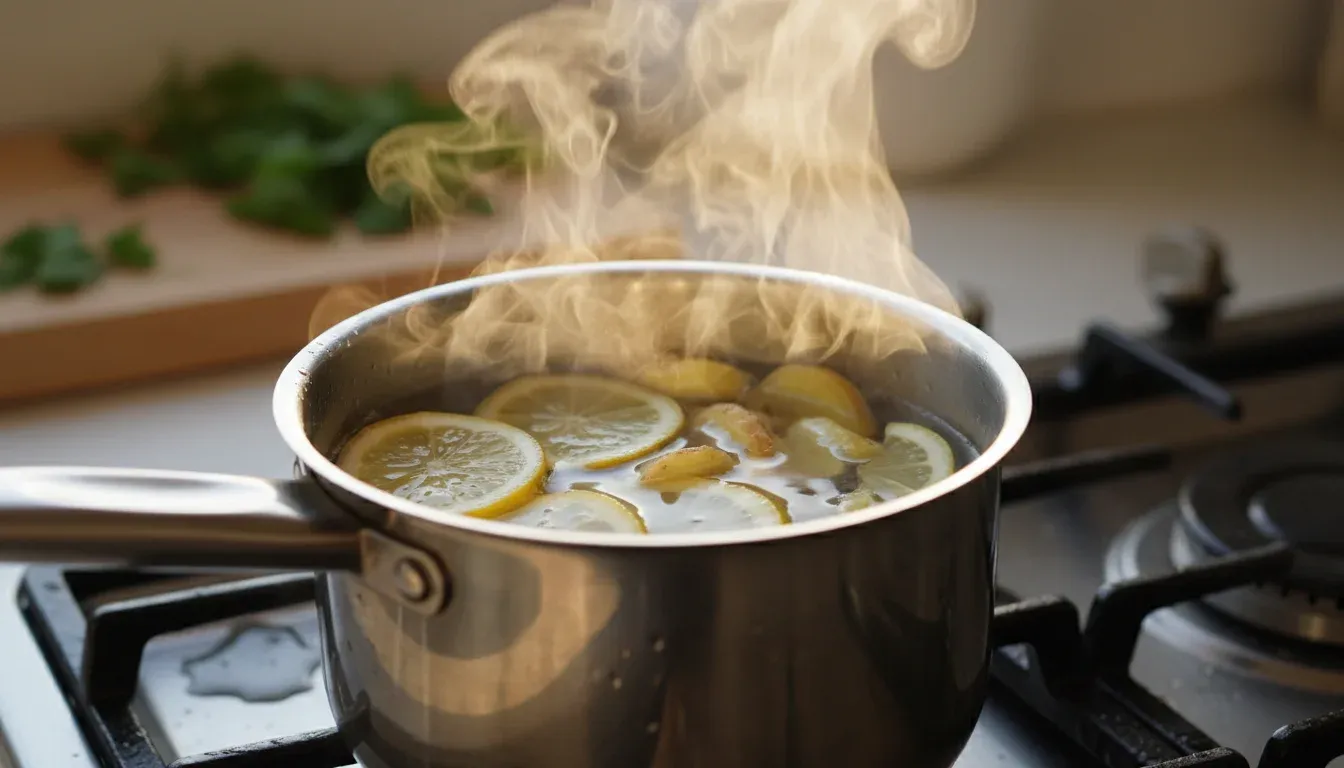
Fill a small saucepan with water, toss in a few sliced lemons and a handful of fresh ginger slices, and let it simmer on low heat for 30-45 minutes. The steam carries citrus and spice oils through your kitchen, masking and neutralizing fish odors. Works better than candles because it actually breaks down odor molecules instead of just covering them up.
3. Spray Surfaces with Vinegar Solution
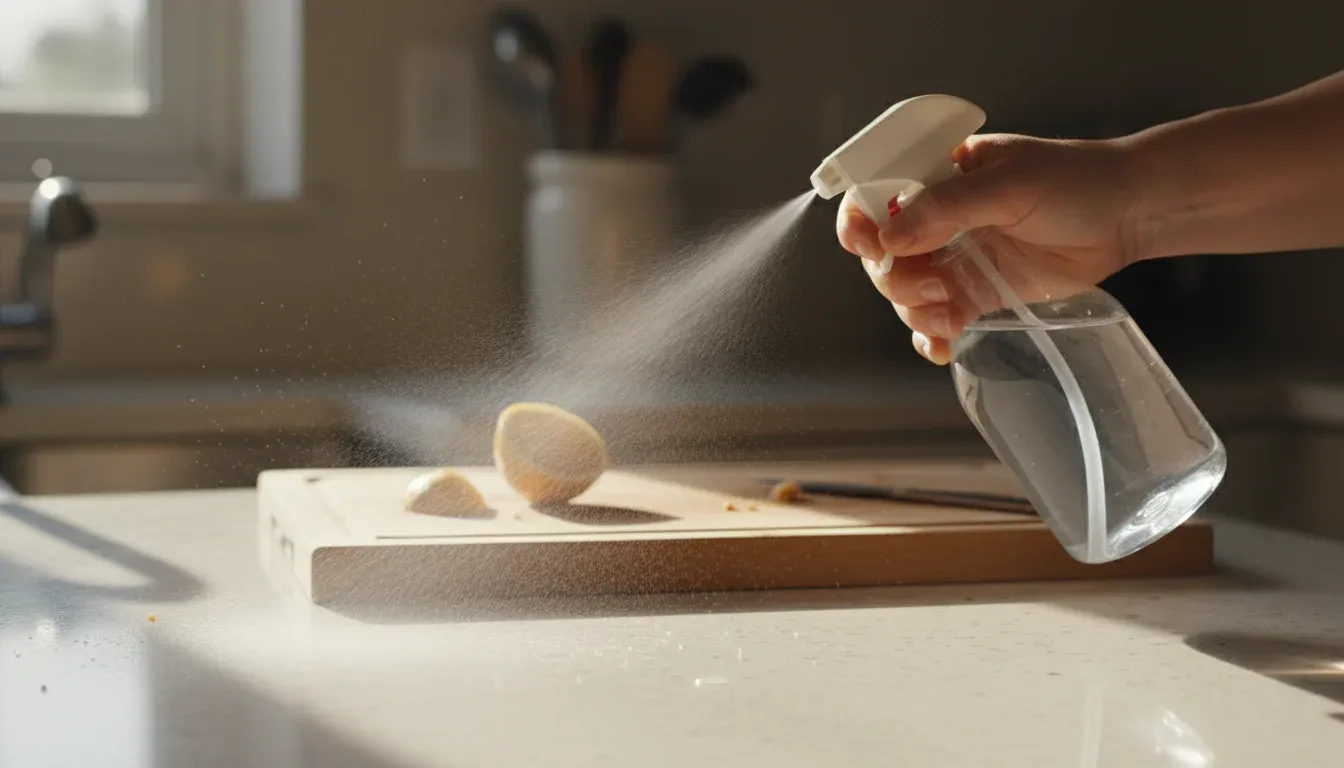
Mix equal parts white vinegar and water in a spray bottle. After cooking, spray down counters, cutting boards, stovetops, and any other surface that touched food. Let it sit for a minute, then wipe clean. Vinegar’s acetic acid neutralizes alkaline odors from foods like fish and fried items. The vinegar smell dissipates in 10-15 minutes and takes the cooking odors with it.
4. Wash Your Hands with Lemon or Stainless Steel
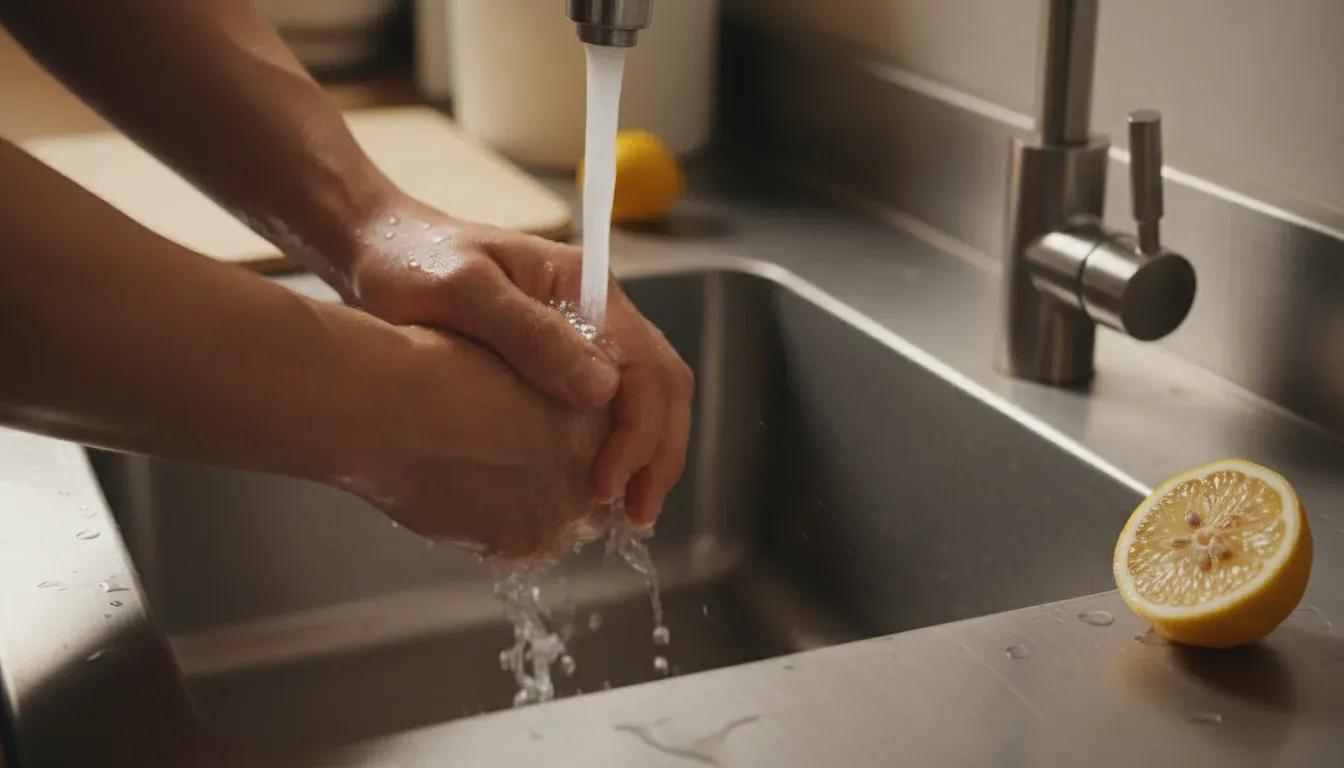
Cooking odors cling to skin, especially garlic, onion, and fish smells. Rub your hands with lemon juice or a stainless steel "soap bar" (or just rub them on your stainless sink) under cold water. The sulfur compounds in stainless steel bind to the odor molecules on your skin. Lemon does the same thing through citric acid. Skip regular soap for the first rinse since it can trap oils.
5. Set Out Bowls of Baking Soda Overnight
Baking soda absorbs airborne odors. Place shallow bowls of it around the kitchen and any adjoining rooms where the smell has spread. Leave them overnight and toss in the morning. If the smell is stubborn, add a few drops of essential oil to the baking soda for active deodorizing while it absorbs.
6. Use Disposable Gloves and Remove Trash Immediately
Wear disposable gloves while handling raw meat, fish, or strong-smelling ingredients like garlic to keep oils off your hands. When you’re done cooking, tie up the trash bag (including food packaging, scraps, and peels) and take it outside right away. Food scraps in an indoor trash can will keep releasing odor for hours.
7. Run Lemon Slices Through the Garbage Disposal
If food scraps went down the disposal, toss in a few lemon slices and run cold water while grinding. The citrus oils coat the disposal blades and drain pipe, breaking down lingering food particles. Follow with a handful of ice cubes to knock loose any stuck debris.
8. Cook Fish in Parchment or Foil Packets
Wrapping fish in parchment paper or foil before baking or grilling traps oils and steam, preventing them from spreading through your kitchen. It also makes cleanup faster since you’re tossing the wrapper instead of scrubbing baking sheets.
9. Boil Cinnamon Sticks and Cloves
If the lemon-ginger simmer pot doesn’t cut it, try cinnamon sticks and whole cloves. Simmer three cinnamon sticks and a tablespoon of cloves in water for 30 minutes. The spice oils are more potent than citrus and work especially well for stronger fish like mackerel or sardines.
10. Wash Fabrics Exposed to the Odor
Curtains, dish towels, tablecloths, and even throw blankets near the kitchen can absorb cooking smells. Toss them in the wash with a cup of white vinegar added to the rinse cycle. For upholstered furniture, sprinkle baking soda on the fabric, let it sit for an hour, then vacuum it up.
11. Clean Your Oven Regularly
Baked foods leave oils on oven walls that release odor every time you preheat. Wipe down the interior with a paste of baking soda and water (3 parts baking soda, 1 part water). Let it sit for 15 minutes, then scrub and rinse. Run the oven at 200°F for 10 minutes afterward with a pan of lemon water inside to clear residual smells.
12. Place Activated Charcoal Bags Around the Room
Activated charcoal absorbs odors more aggressively than baking soda. Buy small mesh bags (often marketed for shoe or gym bag odor) and place them in corners, near vents, or on countertops. They work for 2-3 days before needing replacement or reactivation (some types can be recharged in the sun).
13. Scatter Coffee Grounds in Open Containers
Dry coffee grounds absorb and neutralize odors. Fill small bowls or jars with fresh grounds and place them around the kitchen. Replace them after 24 hours. This works best for lingering ambient smells, not active cleanup.
Cooking smells don’t have to linger for days. Hit them from multiple angles – ventilation while cooking, immediate surface cleaning, and odor absorption overnight – and your kitchen will smell fresh again by morning.