Table of Contents
Spotted lanternflies are invasive pests that showed up in Pennsylvania in 2014 and have been spreading aggressively ever since. They feed on over 70 plant species, including grapevines, fruit trees, and hardwoods, leaving behind sticky honeydew that attracts mold and weakens plants. If you’ve got them on your property, you need to act fast because they reproduce quickly and a single female can lay 30-50 eggs.
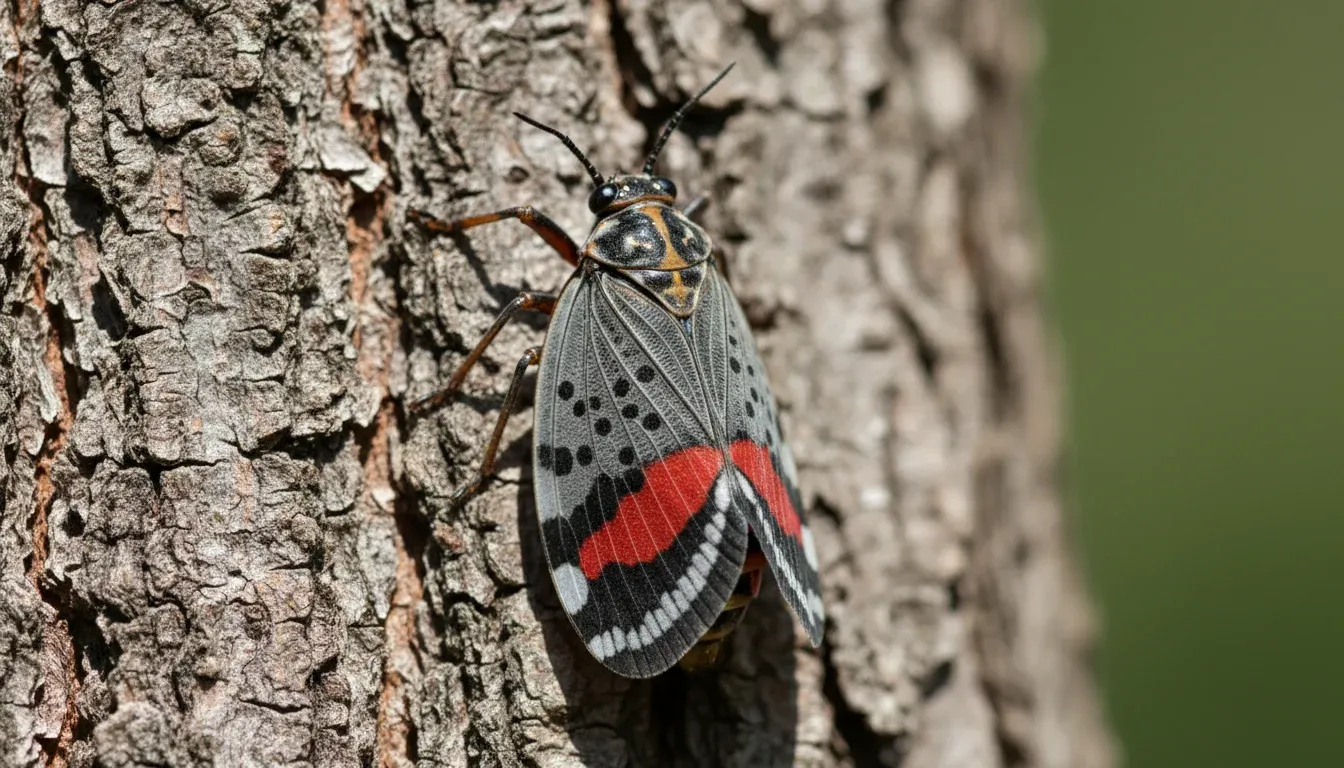
The good news is they’re not subtle. Adults are about an inch long with gray wings spotted with black, and bright red underwings you’ll see when they jump. Nymphs start black with white spots, then turn red as they mature. You’ll usually spot them in clusters on tree trunks, outdoor furniture, or the side of buildings. Here’s how to get rid of them.
1. Scrape and Destroy Egg Masses
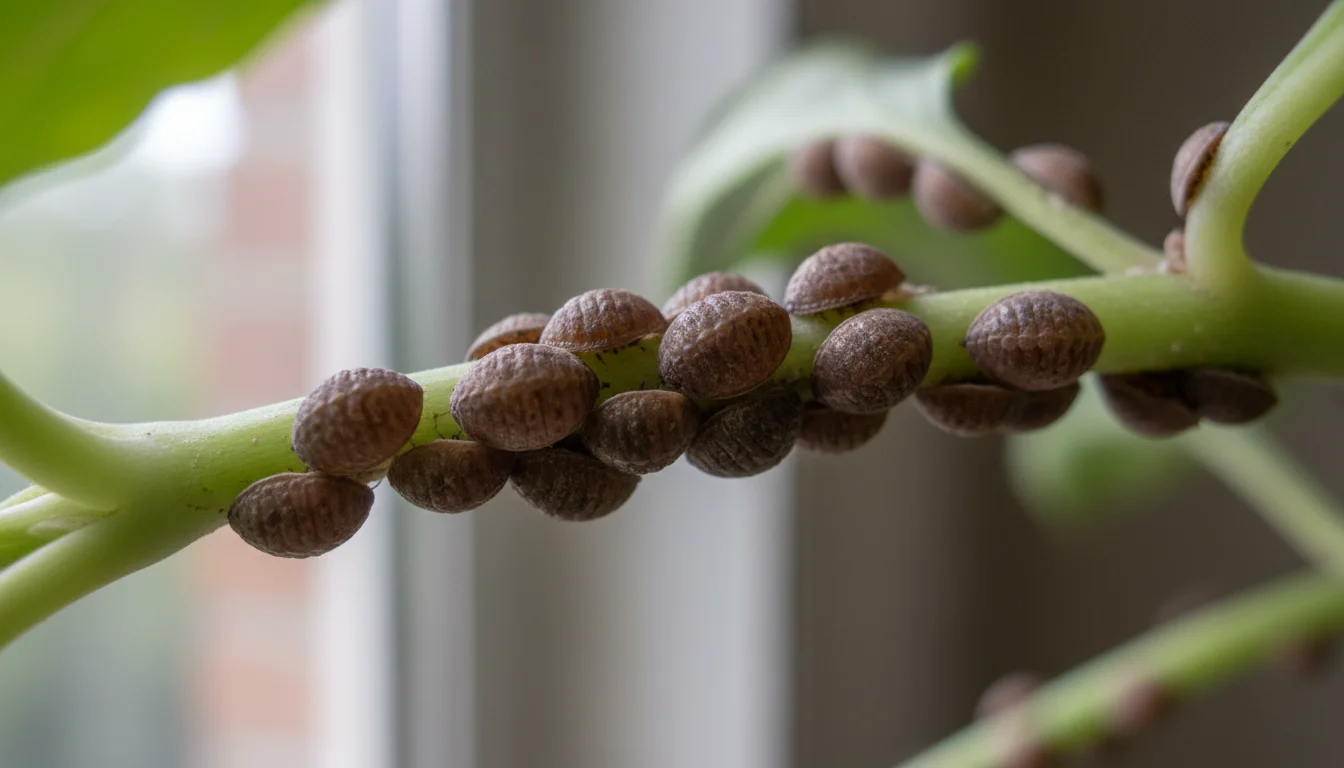
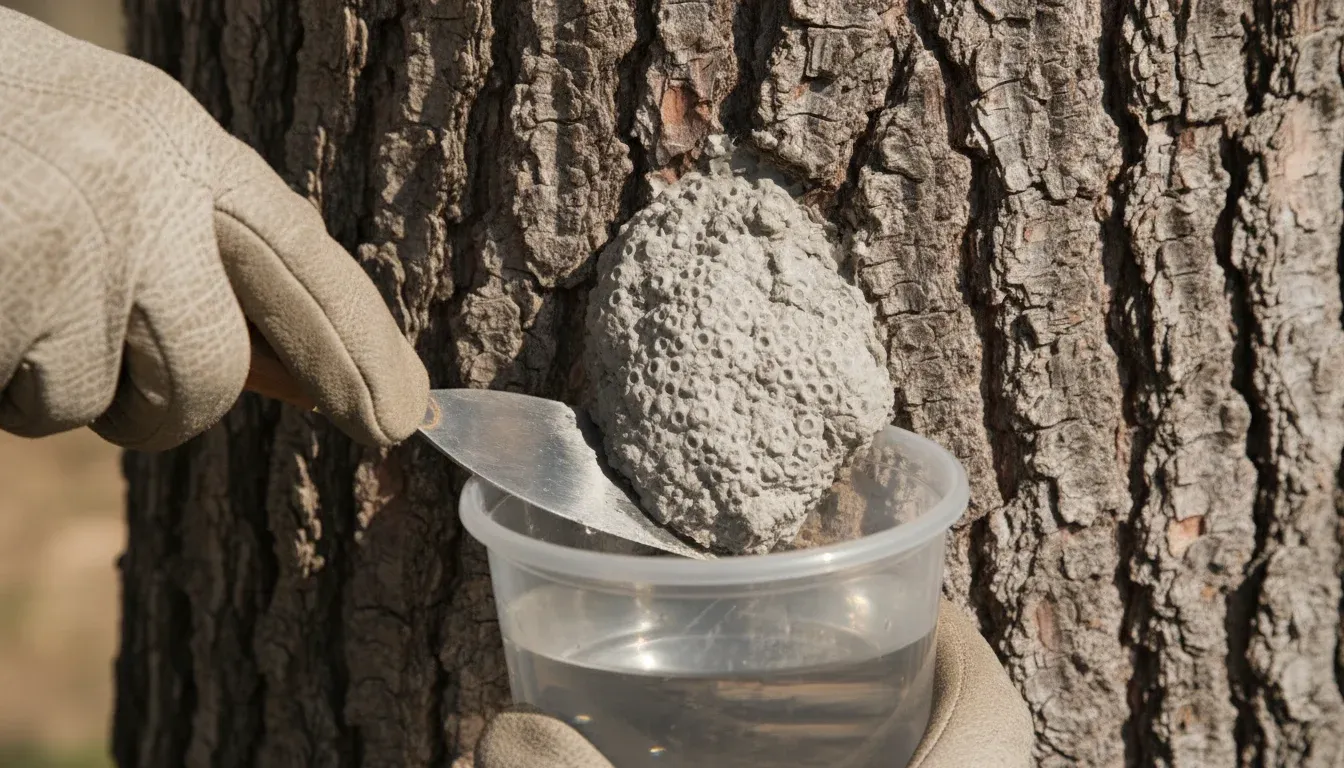
This is your best shot at stopping them before they even hatch. Egg masses look like gray or brown mud smears on smooth surfaces – think tree bark, fence posts, outdoor equipment, even your car. They’re most visible from fall through early spring.
Scrape them off with a putty knife or old credit card into a container of rubbing alcohol or hand sanitizer. The alcohol kills the eggs on contact. Don’t just knock them to the ground because they can still hatch. Check everything: patio furniture you stored for winter, the underside of decks, propane tanks, anything that’s been sitting outside.
2. Wrap Tree Trunks with Sticky Bands
Spotted lanternfly nymphs crawl up trees to feed, and sticky bands catch them mid-journey. Wrap duct tape or specialty tree banding material around the trunk (sticky side out) at chest height. You can make it yourself with duct tape and a coating of Tanglefoot, or buy pre-made bands.
Check the bands every few days and replace them when they’re covered. Fair warning: you’ll also catch beneficial insects, so some people use a top guard (chicken wire or window screen) to keep birds and small animals from getting stuck. This method works best in spring when nymphs are actively climbing.
3. Use Residual Insecticides on Tree Trunks
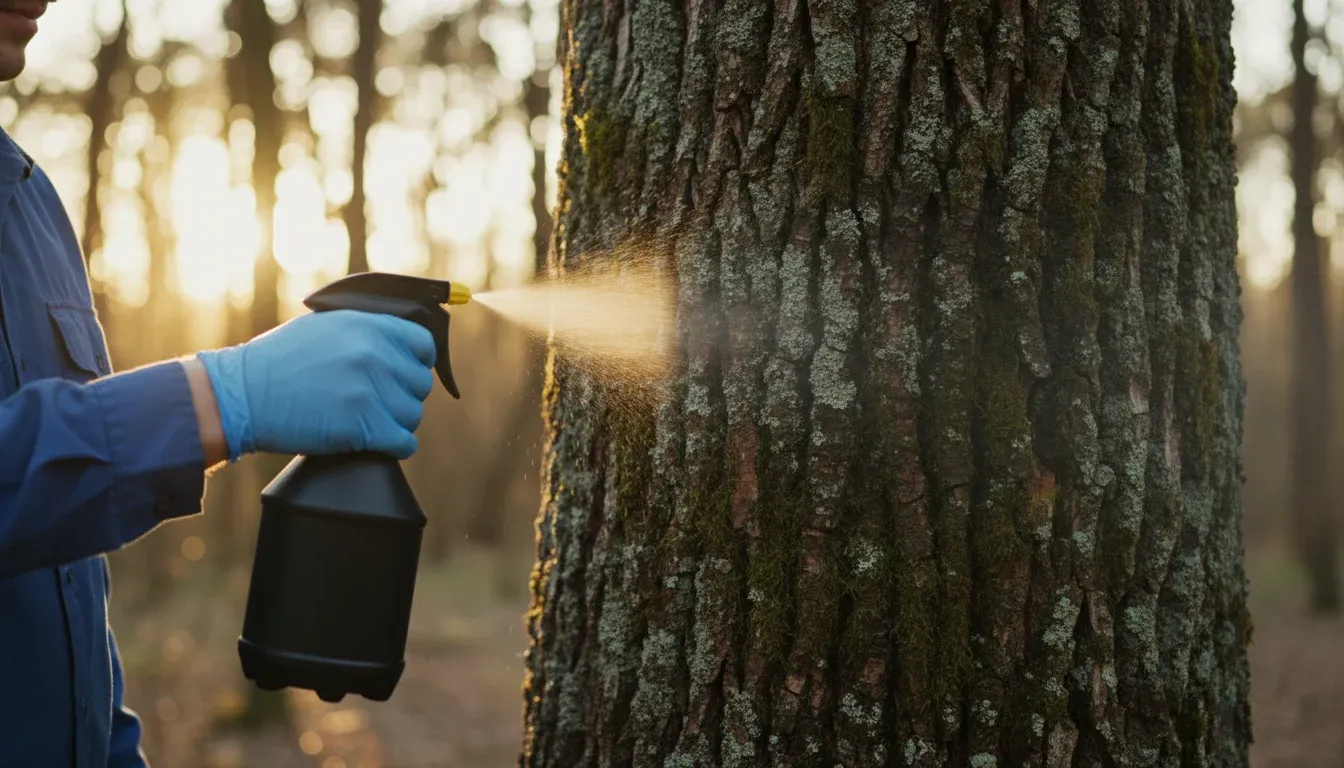
Treating tree bark with residual insecticides creates a barrier that kills lanternflies on contact for weeks. Products with bifenthrin, permethrin, or carbaryl work well. Spray the trunk from ground level up to about 15 feet, focusing on the areas where you see the most activity.
Apply in late spring or early summer when nymphs are hatching and moving around. Reapply according to the product label, usually every 2-4 weeks during peak season. This won’t stop egg masses, but it drastically cuts down the population before they can reproduce.
4. Hit Them with Contact Sprays
For immediate kills, contact sprays work fast. Sevin (carbaryl) and other pyrethroid-based insecticides drop them instantly. Spray directly on the bugs, not just the surface. They’re often in clusters, so you can take out dozens at once.
Neem oil and insecticidal soap are lower-toxicity options that work on nymphs and adults if you get good coverage. They’re not as fast-acting as synthetic chemicals, but they’re safer around edible plants. You’ll need to spray more frequently, though.
5. Target Early Nymphs Before They Mature
Nymphs are easier to kill than adults and they can’t reproduce yet. The first nymphs appear in late spring (usually May in the mid-Atlantic) as tiny black specks with white spots. They move in groups and they’re slower than adults.
This is when your efforts pay off the most. A single treatment during the nymph stage can prevent hundreds of egg masses later. Focus on host plants like tree of heaven, grapevines, and black walnut where they congregate.
6. Vacuum Up Clusters
If you’ve got lanternflies swarming an area and you don’t want to spray, a shop vac works surprisingly well. Suck them up, then dump the canister contents into soapy water to kill them. This is especially useful for patios or decks where you don’t want insecticide residue.
Empty the vacuum immediately after or they’ll just crawl back out. Some people add a few inches of soapy water to the canister before vacuuming to drown them as they’re sucked in.
7. Cut Down Tree of Heaven (With Caution)
Tree of heaven (Ailanthus altissima) is the spotted lanternfly’s favorite host plant. If you’ve got one on your property, it’s a magnet. But don’t just chainsaw it down because it spreads aggressively from root sprouts and you’ll end up with ten more.
Instead, treat the stump with herbicide immediately after cutting (use triclopyr or glyphosate). Some people girdle the tree and treat it with herbicide while it’s still standing. Either way, you need to kill the root system or it’ll come back worse.
8. Use Exclusion Netting on High-Value Plants
If you’re protecting grapevines or fruit trees, fine mesh netting can physically block lanternflies. Use netting with openings smaller than 1/4 inch and drape it over the plant, securing the bottom edges so they can’t crawl underneath.
This is labor-intensive and only practical for smaller plantings, but it works. Commercial vineyards in infested areas use this method to protect crops during peak feeding times.
9. Report Sightings to Local Authorities
If you’re in a state where spotted lanternflies are just starting to show up, reporting sightings helps track the spread and trigger control efforts. Most state agriculture departments have online reporting forms. Take a clear photo if you can.
This won’t get rid of the ones on your property, but it helps contain the overall invasion. Some states have quarantine zones where you’re required to inspect vehicles and equipment before moving them to prevent accidentally transporting egg masses.
10. Stomp Adults on Sight
Low-tech but effective. Spotted lanternflies are slow and clumsy fliers, so you can actually catch them by hand or just step on them. If you see them on the ground or climbing a wall, stomp first and feel slightly bad about it later.
Kill every adult you can before late summer when they start laying eggs. One dead adult means 30-50 fewer eggs next spring.
The most effective approach combines methods: destroy egg masses in winter and early spring, target nymphs with sprays or bands in late spring, and kill adults throughout summer and fall. Check your property weekly during peak season because new ones will keep showing up from neighboring areas. They’re not going away on their own.